

Civil construction safety controls start with separation, not paperwork
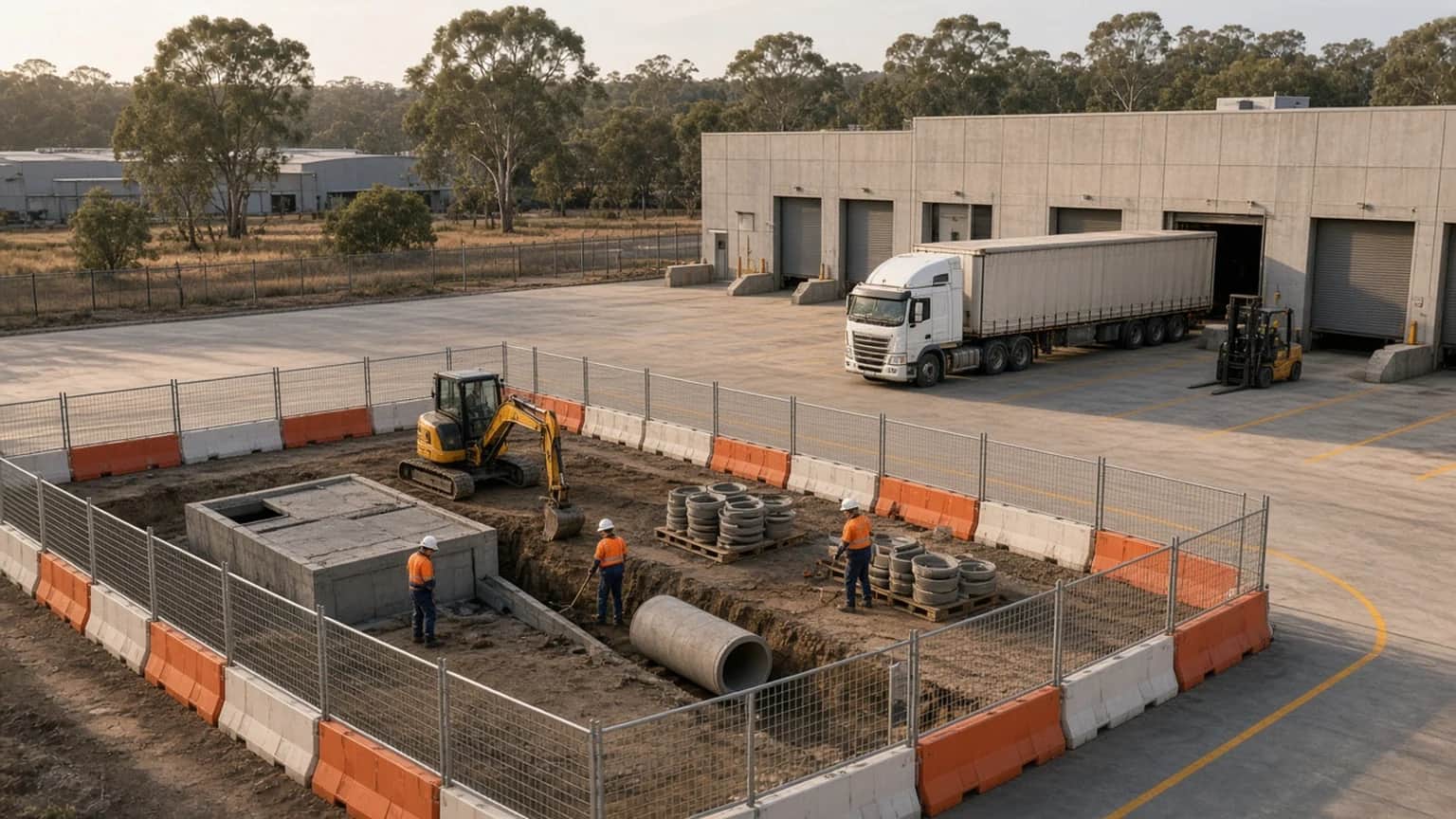
Civil construction safety controls in live and industrial environments should physically separate plant, workers, and host operations before any rule, sign, or permit is relied on. When a forklift route, a public lane, or an energised asset sits metres from an open excavation, the control that works is the one that removes the interaction—not the one that asks people to remember it.
The practical sequence is to map every live interface, design out the interactions you can, barrier what remains, and then use permits, safe work method statements, and pre-starts to keep that design current as the site changes. NEXTGEN applies this thinking across civil infrastructure packages where earthworks, drainage, and pavements are built beside facilities that cannot stop operating.
Why live and industrial environments change the risk picture
On a greenfield site, the civil contractor usually controls who enters, where plant travels, and when work stops. In an operating warehouse, manufacturing plant, port-side yard, or occupied estate road, those decisions are shared with a host whose trucks, forklifts, visitors, and shift changes continue around the works.
The hazards that hurt people in these settings often start outside the work zone: a prime mover reversing to a dock beside a trench, a delivery driver following an old route into a new closure, or a maintenance crew isolating—or re-energising—a service the civil team is exposing. A safety plan written only for the contractor's own activities misses most of that exposure.
Live road frontages, shared yards, and existing services therefore need to be treated as design inputs at planning stage, not as topics for the site induction.
Civil contractor checklist before mobilising into an operating site
Work through this civil contractor checklist with the host site and the principal contractor before the first machine arrives:
- A live-interface map showing host traffic routes, pedestrian paths, loading docks, public road frontages, and known services against each civil workfront.
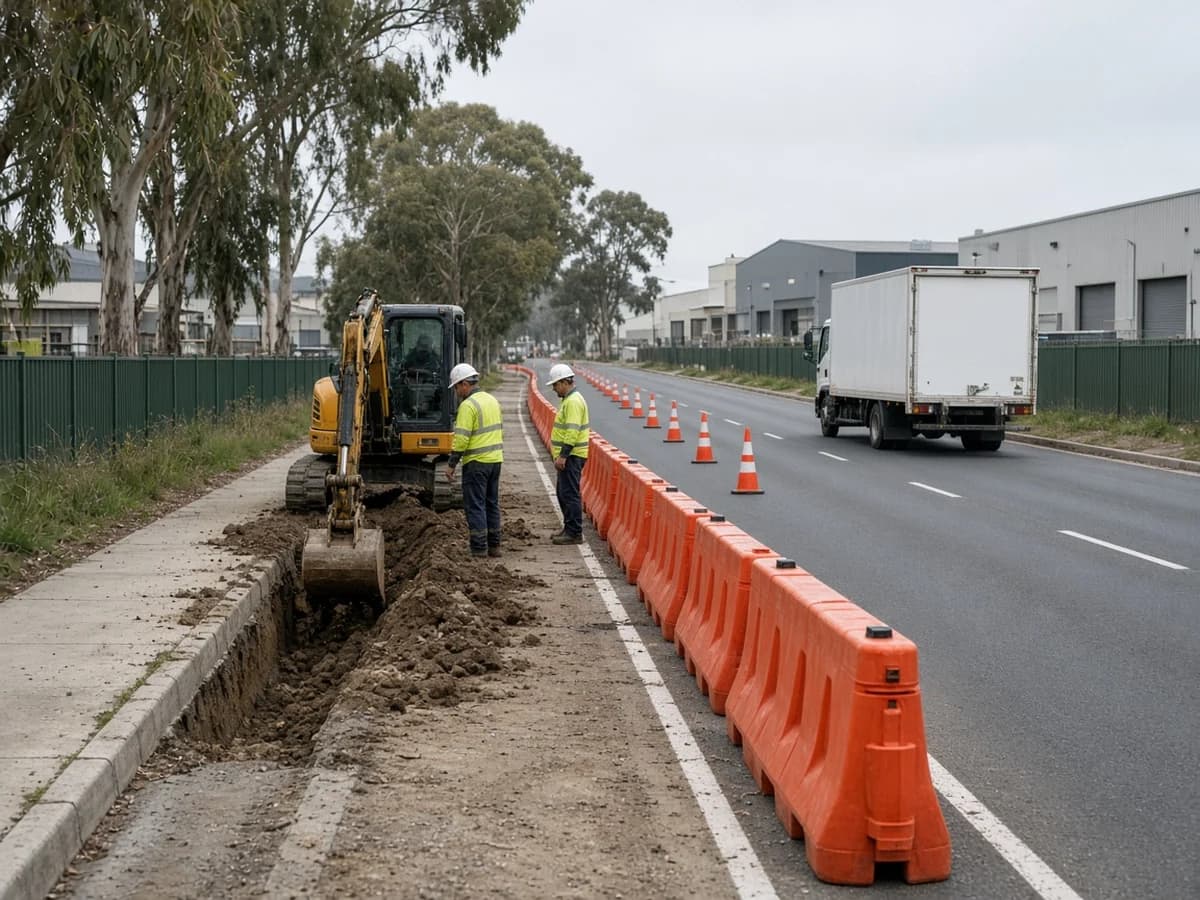
- Physical separation for every workfront, including barrier type, fence line, gate location, and who controls the gate.
- Agreed host rules covering the permit-to-work system, speed limits, isolation procedures, emergency assembly points, and restricted hours.
- Safe work method statements for each high-risk construction activity, written for this site rather than copied from the last one.
- Traffic management arrangements for plant, deliveries, and any public road interface, including who approves changes.
- Named stop-work authority on the civil team and a matching contact inside the host operation.
- Change triggers that force the controls to be reviewed before work continues.
Separate people, plant, and host traffic before relying on rules
The hierarchy of control is familiar, but live sites test whether it is actually applied. Elimination might mean staging a trench crossing during a planned host shutdown, or relocating a stockpile so haul trucks never cross a loading apron. Isolation means continuous barriers and fencing that define the work zone, with a controlled entry rather than gaps people learn to use.
Engineering controls follow: water-filled or concrete barriers where vehicles could strike the zone, lighting for early starts, and plant fitted with proximity or reversing aids suited to the task. Administrative controls—spotters, speed limits, one-way routes, and permits—then manage what cannot be engineered out, with personal protective equipment as the last layer rather than the main defence.
Buried and overhead services need their own method. Locating, potholing, and protecting existing assets are covered in live services management for civil works; here, the point is that exclusion zones around exposed services belong on the same separation plan as plant and traffic.
Who can stop the work? Permits, SWMS, and pre-starts on a shared site
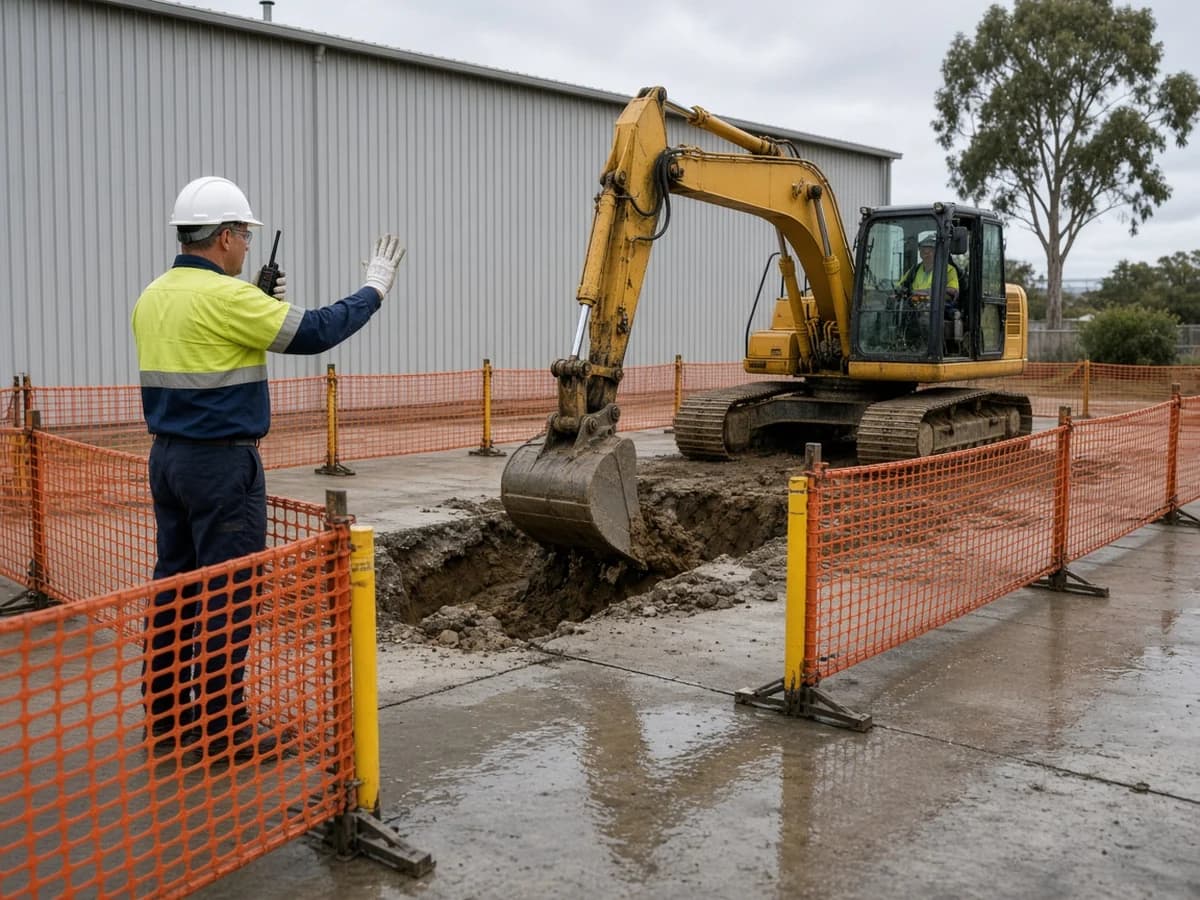
On an operating site, the civil contractor's paperwork has to connect with the host's own system. Excavation, hot work, isolations, and entry to restricted areas may all need host permits, and those permits should reference the civil method rather than sit beside it.
In NSW, a safe work method statement must be prepared before high risk construction work starts, and it must describe how controls are implemented, monitored, and reviewed. SafeWork NSW includes work adjacent to roads in use by vehicles, work in areas with moving powered mobile plant, and work near trenches deeper than 1.5 metres in that category, so most civil workfronts in industrial environments will need one.
Pre-starts are where the plan meets the shift. A useful pre-start covers what the host is doing today—deliveries, shutdowns, visitors, and maintenance—not only the civil task. Every worker should know who can stop work, and that stopping for an unplanned interaction will be supported rather than questioned.
Project delivery controls that prove the controls are working
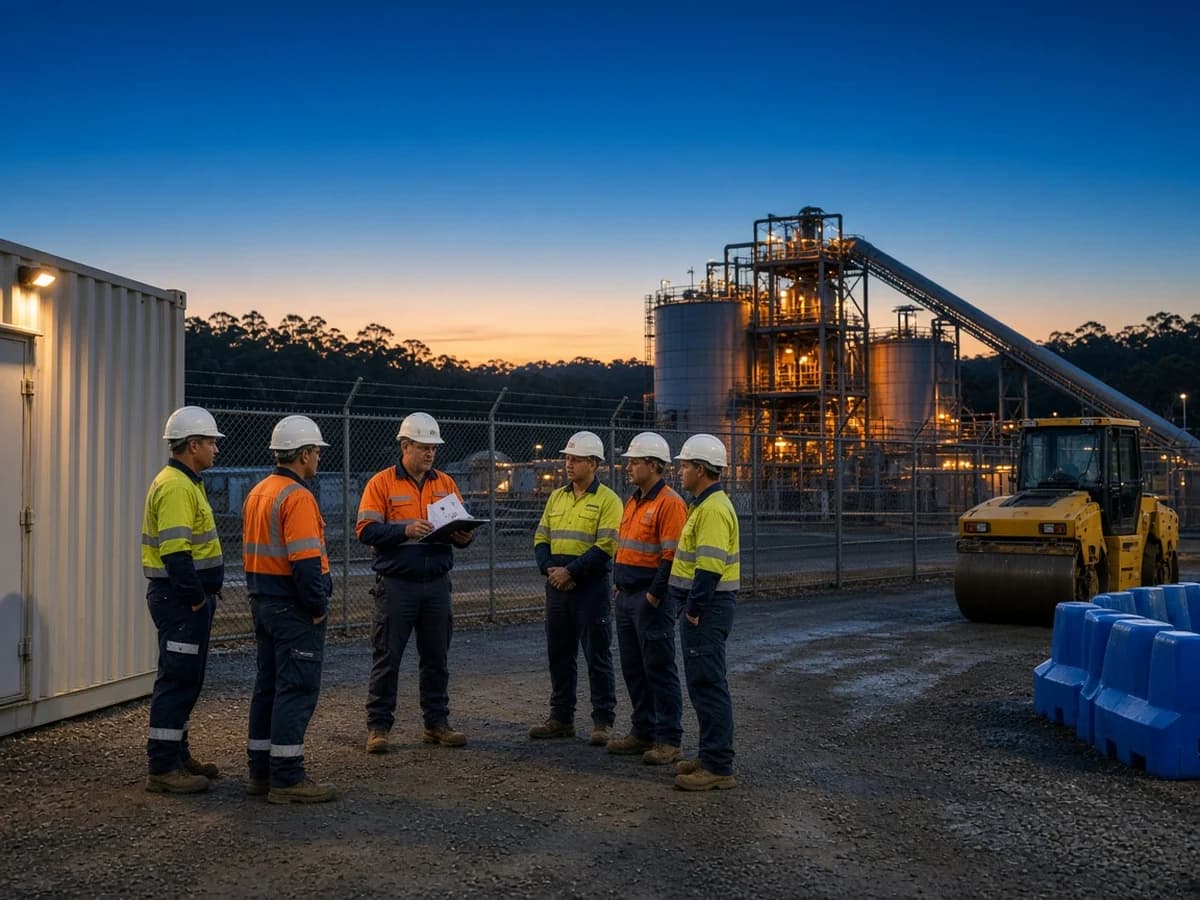
Project delivery controls turn the safety plan into evidence. Barrier lines and gates should be inspected at the start of each shift and after any plant move, exclusion zones should be rechecked when the workfront advances, and near misses involving host vehicles should be reported to both teams—not closed quietly inside one.
The most common failure point is change. A host moves a loading dock, a detour is extended, or an unexpected service is found, and the original controls no longer fit. Treat those events as triggers for a documented review before work resumes, and record who approved the revised arrangement.
Clients checking how NEXTGEN approaches supervision, records, and inquiry information can start with the project FAQ. The same expectation applies to safety records: they should be current during the works, not assembled at handover.
How civil tender requirements should test live-site safety
Civil tender requirements for work inside operating facilities should ask tenderers to show their separation plan on the client's drawings, list the high-risk construction activities they expect, and explain how they will integrate with the host permit system. A generic safety management plan without site-specific interfaces tells you very little.
Score those responses with the same discipline as price and programme, as outlined in civil tender evaluation NSW. Within a civil procurement NSW process, asking for a redacted SWMS or traffic management arrangement from a comparable live site is a fair test of whether controls exist beyond the tender document.
Review the NEXTGEN project showcase for the kinds of packages delivered, then send your project details with the site layout, host operating hours, known services, and any live road frontage so the right delivery team can respond.