

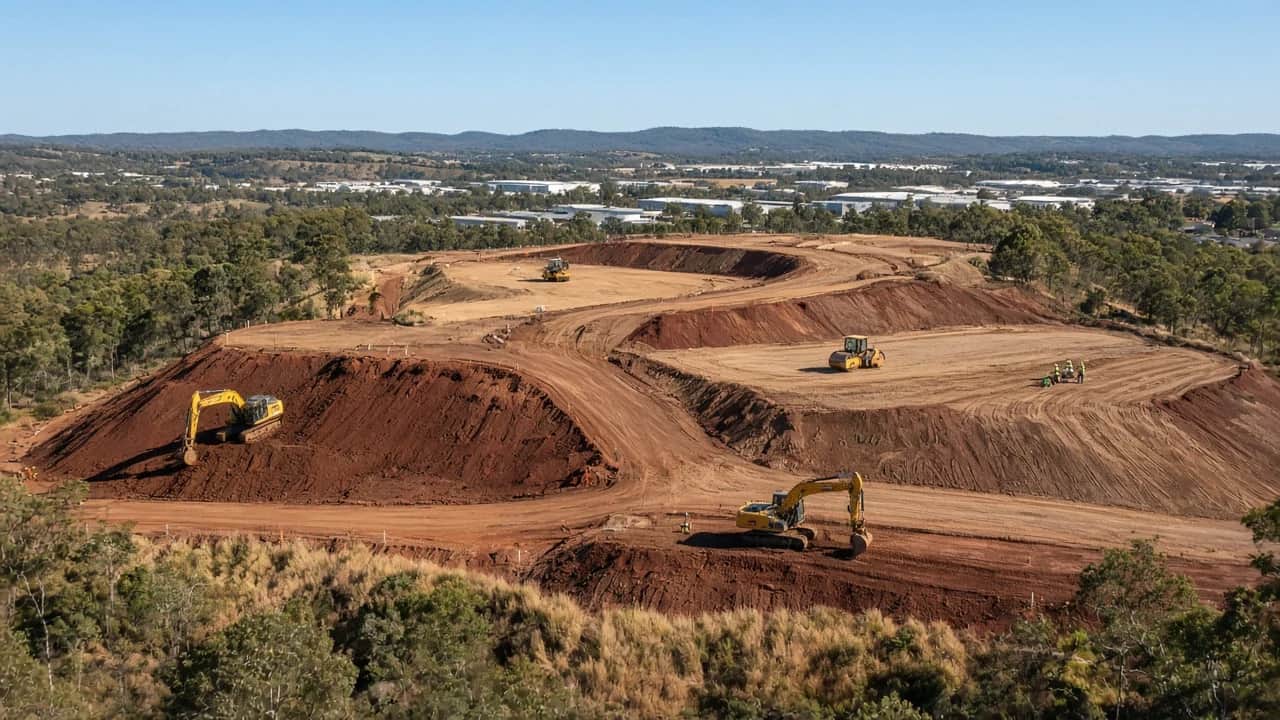
What does civil project staging NSW need to decide first?
Civil project staging NSW succeeds when the package names which workfront opens first, what must be proven before the next bay starts, and how plant, haul, and temporary drainage move between zones without sterilising finished formation. The practical answer is a single sequence drawing—not a plant list and a hope that crews will "work it out on site."
Idle plant usually traces to the same failures: access that arrives after formation starts, drains that open after pads soften, or utility holds that were never owned in the tender method. Staging is the map that prevents those collisions before mobilisation.
NEXTGEN treats staging as delivery intelligence alongside the assurance themes in the project FAQ and the package shapes on civil infrastructure.
Why workfronts stall on NSW civil packages
Workfronts stall when temporary roads, sediment controls, and laydown compete for the same strip of ground as production. A bay that looks ready on the Gantt chart is not ready if haul trucks still cross unfinished subgrade or if rain has nowhere to go after cut.
Industrial estates, renewable corridors, and council interfaces each add neighbour hours, public-road cleanliness, and permit lead times. If those constraints sit outside the staging drawing, supervisors invent daily workarounds that look like progress until the next wet week undoes them.
Access and pavement interfaces that choke staging should be checked against NEXTGEN roads and access delivery before earthworks claims the only available corridor.
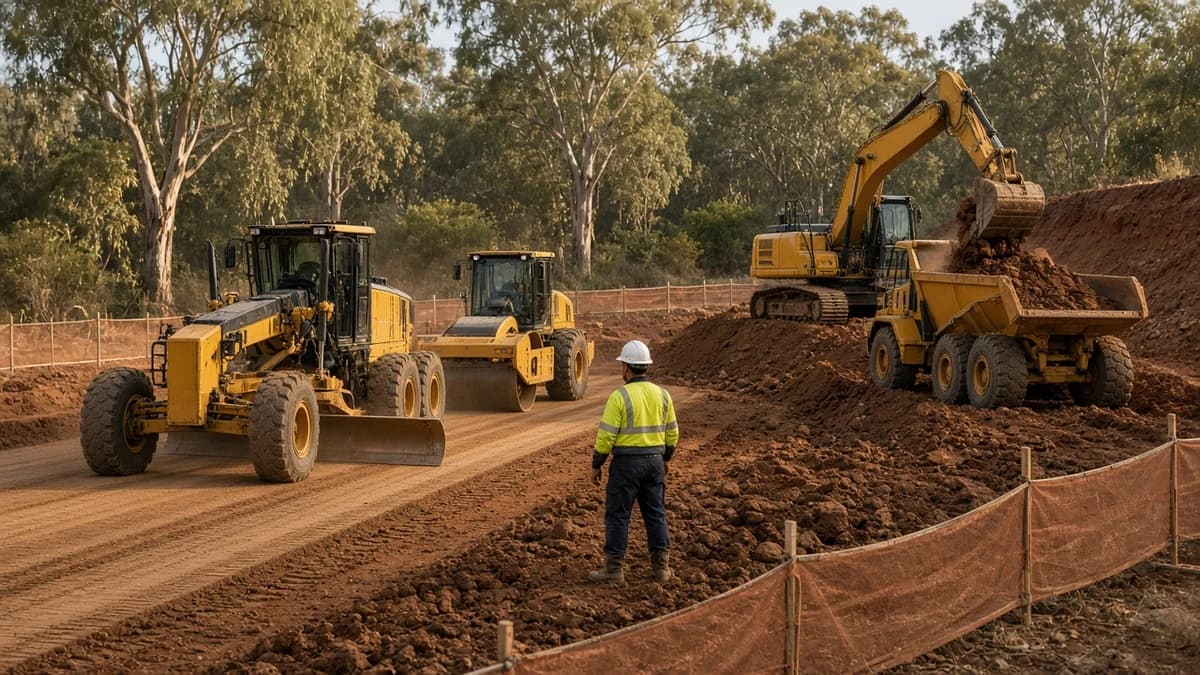
Sequence earthworks, drainage, and access as one package
Open with survey control, temporary diversions, and sediment fences that travel with each cut. Bulk earthworks should only close natural flow paths when temporary drainage is already in place—otherwise the first storm turns formation into a soft holding area.
Drainage and utilities need named invert checks and clearance holds before backfill sterilises trenches. Access lifts should prove a trafficable route for plant and following trades before the second workfront opens, or crews will destroy unfinished edges to reach the next pad.
When stormwater timing is the critical path, cross-check method language in stormwater drainage contractor NSW so pipework and formation share the same staging gates.
Project delivery controls that keep staging honest on site
Project delivery controls convert a staging drawing into daily discipline: hold points for formation proof, moisture limits, invert acceptance, and trafficable access before the next bay starts. Without those gates, supervisors advance workfronts on verbal confidence and reopen soft ground after rain.
Name who can stop or restart a bay when conditions change. A staging plan without decision rights becomes a poster when wet weather or a service clash arrives mid-shift.
Tie hold-point ownership to the evidence trail in inspection test plans for civil works so closed stages leave records the next trade can trust.
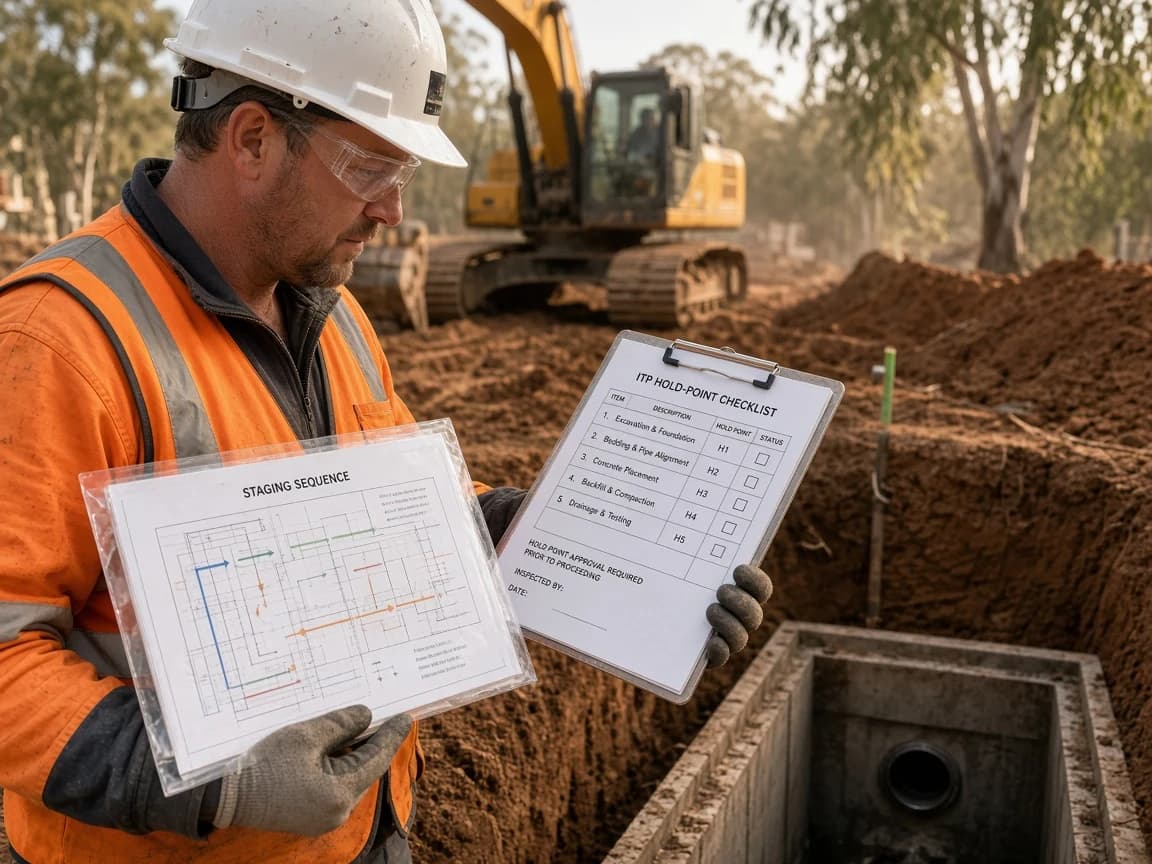
Civil tender requirements that force a real staging answer
Civil tender requirements should ask every tenderer to publish a workfront sequence, temporary works ownership, wet-weather restart logic, and assumptions about access and utilities. Price without that map ranks optimism, not delivery.
Score method statements for how plant moves between bays, where laydown sits, and what happens when one interface slips. Vague "standard industry practice" responses hide the idle time you will fund later.
Score comparable returns using civil tender evaluation NSW so staging claims are tested against shared gates—not brochure photography.
Civil contractor checklist for staging before award
Use this civil contractor checklist while civil procurement NSW panels are still comparable:
- A single staging drawing names workfront order, temporary drainage, haul routes, and laydown.
- Access and public-road cleanliness are proven before the second bay opens.
- Project delivery controls list hold points for formation, inverts, and trafficable access.
- Wet-weather restart logic and soft-spot ownership are written—not implied.
- Civil tender requirements require tenderers to restate inclusions, exclusions, and interface assumptions.
- Sample redacted staging or ITP evidence from a comparable NSW package is attached.
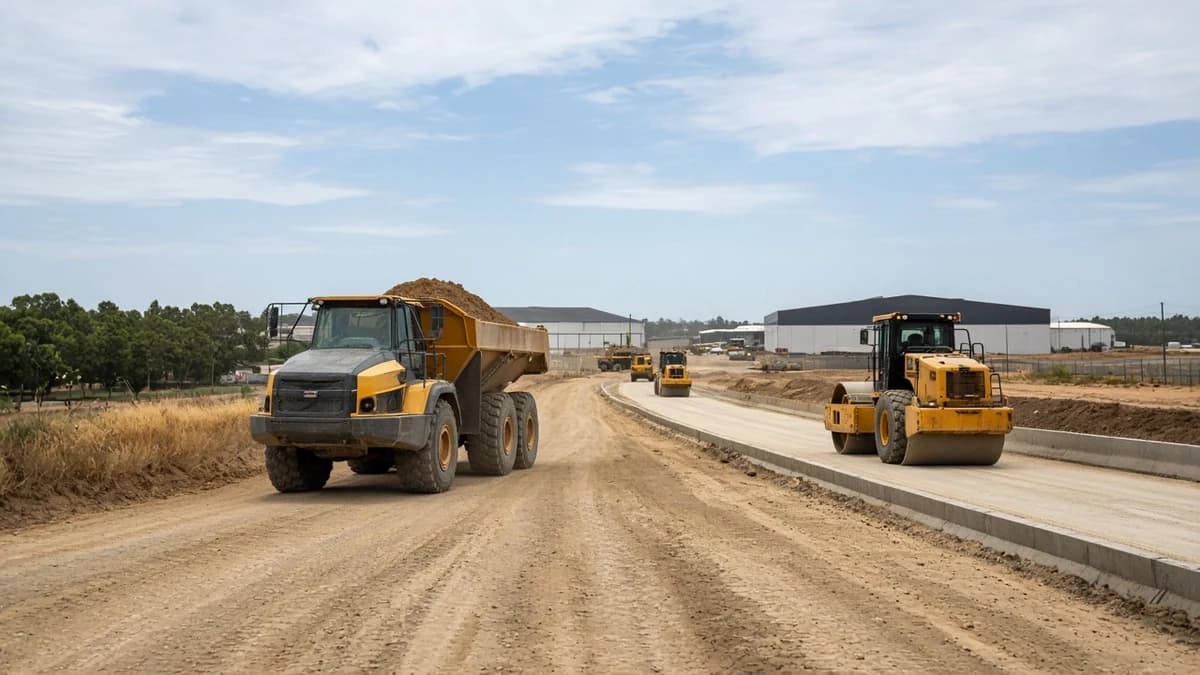
How civil procurement NSW should lock staging after award
After appointment, civil procurement NSW teams should treat the staging drawing as a live production control—not a tender appendix. Open interface items belong in pre-starts and weekly coordination until closed or formally accepted.
Reject practical completion narratives that leave unfinished temporary drains, unreinstated access, or open formation holds while claiming workfronts "mostly finished." Those gaps become defects and next-trade claims.
Map early access, ground, and authority risks that threaten the sequence using a civil project risk register before plant arrives—then keep those lines tied to staging holds through handover.
Brief NEXTGEN with a workfront-ready civil package
When drawings, programme drivers, access constraints, and known services are ready, contact NEXTGEN so civil project staging NSW can be reviewed against realistic delivery—not a plant roster. Browse comparable package context in the project showcase or strengthen the inquiry pack with what to include in a civil project inquiry before you ask for a price.