

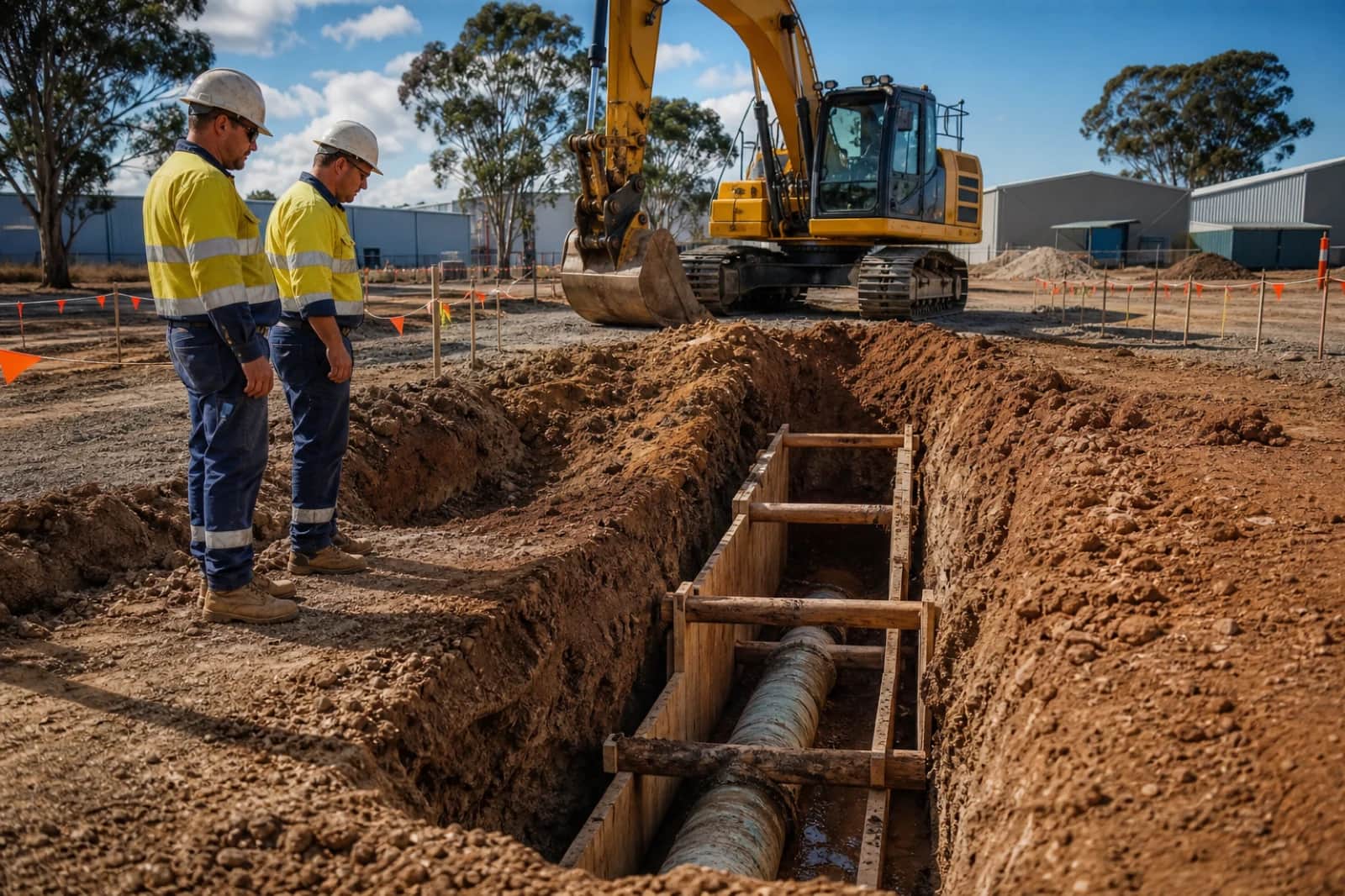
What live services civil works NSW must control before the first dig
Treat live services civil works NSW as a protection package first and a dig package second: confirm what is live, who owns it, how it will be exposed, and which temporary supports or diversions keep tenants and neighbours online while earthworks continue.
Packages fail when crews assume as-builts are complete, or when new utility trenching NSW is planned as if the corridor were empty. A strike, uncontrolled shutoff, or unsupported pipe costs more programme than a deliberate locate-and-expose sequence.
NEXTGEN coordinates these interfaces through its civil infrastructure division so live assets, stormwater, and reinstatement share one supervisor set—not separate digs arguing after a strike.
Step 1 — Locate and prove existing services before machine dig
Start with current plans, authority dial-before-you-dig style responses, and site marks—then prove critical crossings with pot-holing or vacuum excavation before the excavator commits. Marks alone are not enough where services have been relocated without updated as-builts.
Name exclusion zones, standby rules for unknown hits, and who has authority to stop plant. Live services civil works NSW methods without a stop-work path invite improvisation under time pressure.
Record chainages and depths that differ from drawings. Those records become the working model for later utility trenching NSW and pavement reinstatement.
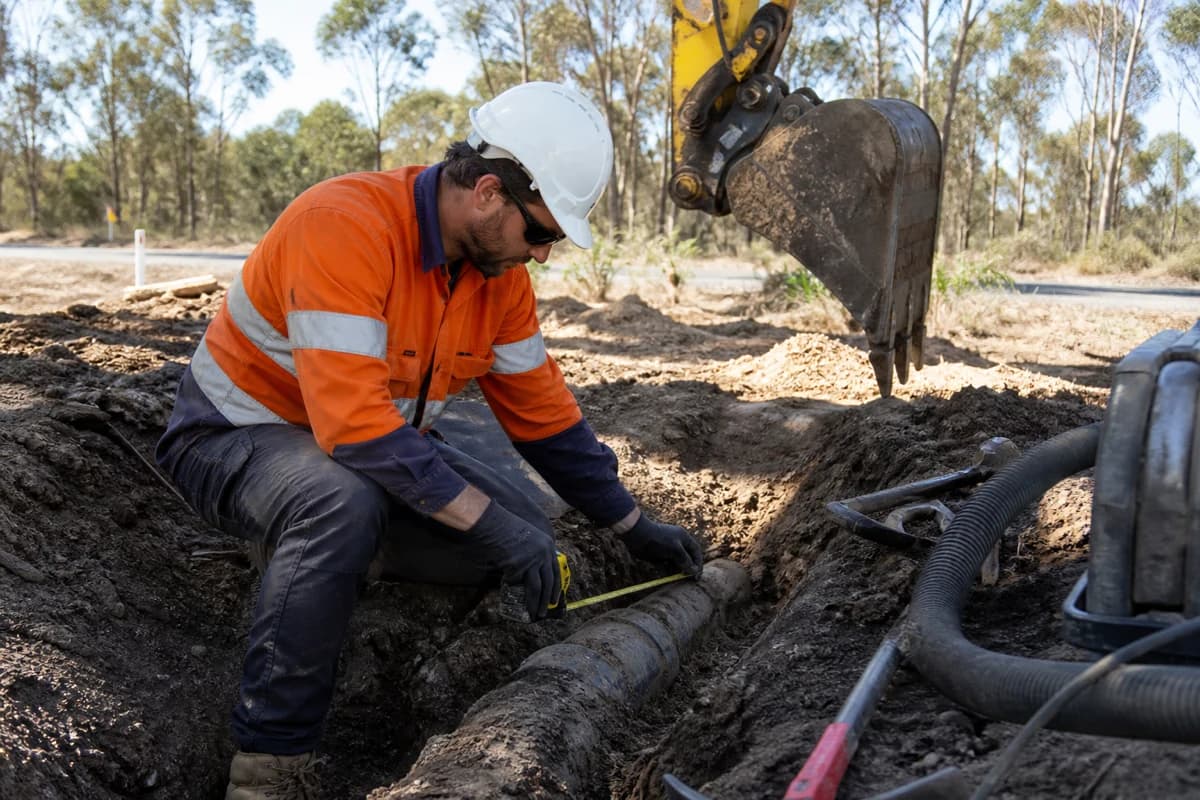
Step 2 — Protect and support live assets during open excavation
Once exposed, live pipes and cables need temporary support, bedding continuity, and protection from plant, spoil, and vibration. Unsupported spans and tracked plant over shallow covers are common failure modes on industrial and road verge digs.
Agree isolation windows only when owners approve them—and keep them short. Many live services civil works NSW packages must keep water, power, or communications online for adjacent lots while the trench is open.
New corridor planning before pavements is covered in service corridors for industrial sites; this guide focuses on working safely around services that already exist and must stay live.
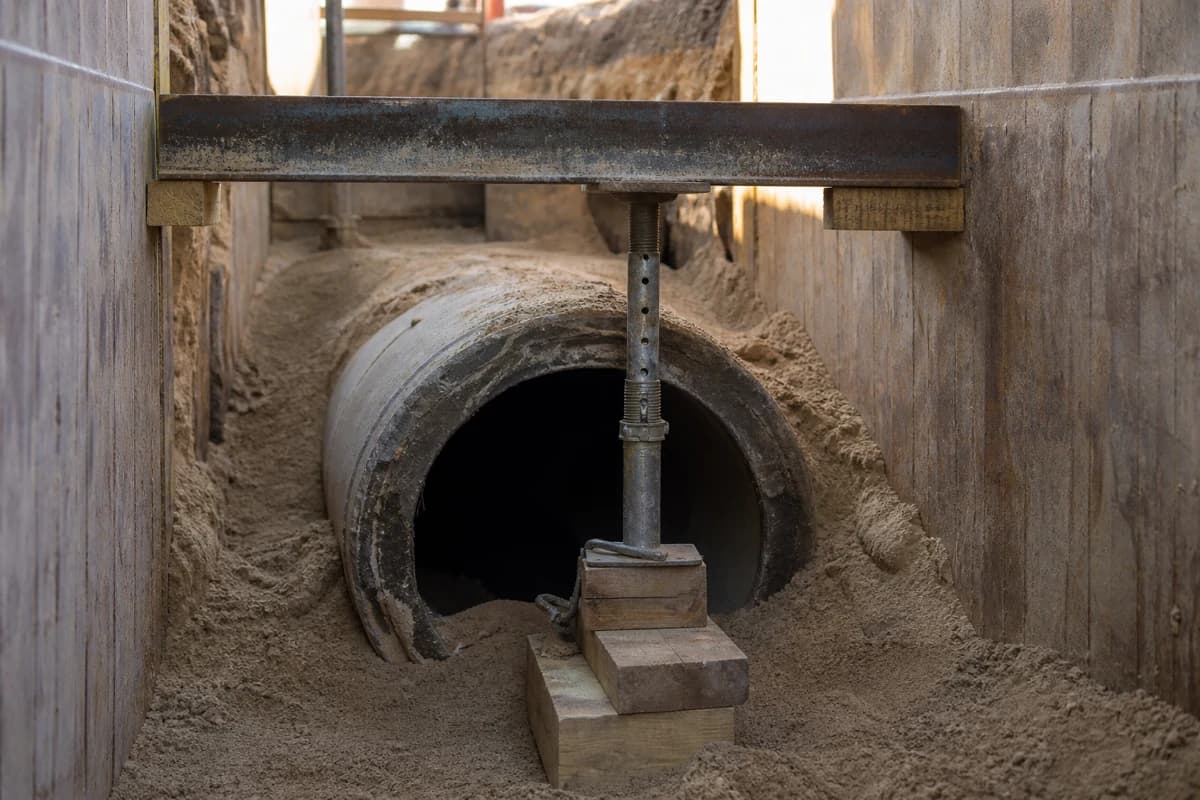
How stormwater drainage NSW and a civil drainage contractor fit the live corridor
Stormwater drainage NSW around live services needs temporary diversions so open trenches do not become drains, and so live stormwater pipes are not undermined by uncontrolled flow. A civil drainage contractor should own pit, pipe, and outlet levels relative to existing live assets—not invent connections after a trench collapse.
When new drains parallel or cross live services, set clearances, bedding, and backfill criteria before the dig. Soft spots left under live pipes become the next wet-weather failure.
Owner confirmation habits for drainage packages sit in what to confirm with a stormwater drainage contractor NSW; apply those holds with live-asset protection written into the method.
Utility trenching NSW and culvert installation NSW beside live assets
Utility trenching NSW next to live services needs tighter sequencing than greenfield corridors: prove clearances, stage crossings, and reinstate in lifts that do not leave live pipes on soft backfill. Mixing new and existing services in one trench without a shared survey datum creates clashes at every pit and road crossing.
Culvert installation NSW on roads that already carry live utilities must treat headwalls, barrels, and cover as interfaces with those services—not only as a stormwater crossing. Digging a culvert box through unmarked live cables is a classic access-road setback.
Corridor trenching methods are in utility trenching NSW for water, sewer, power and communications, and crossing holds in culvert installation NSW—localise both to live-service protection before plant arrives.
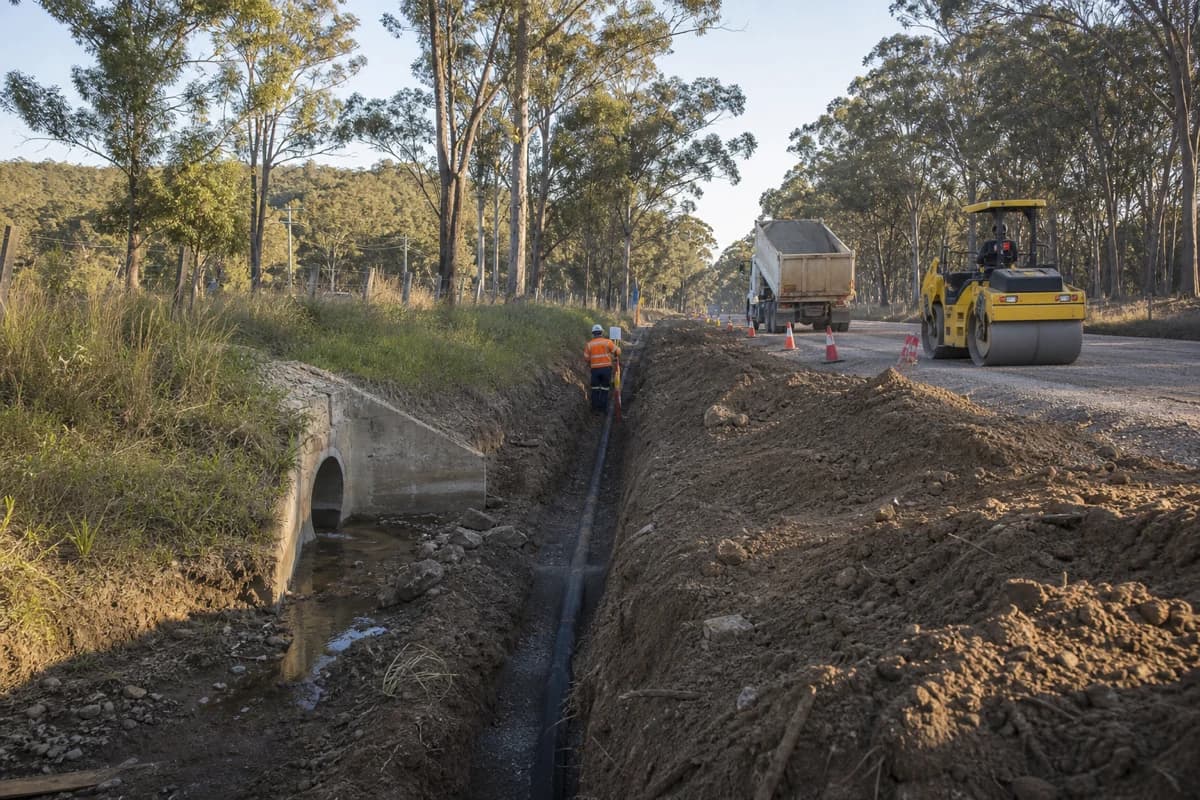
Live-services checklist before excavators commit
Clear these gates while the method is still editable:
- Current plans, marks, and pot-hole proofs cover critical crossings—not drawings alone.
- Support, protection, and isolation rules for live assets are named with owner contacts.
- Stormwater drainage NSW temporary diversions keep open trenches and live pipes dry enough to work.
- Utility trenching NSW and culvert installation NSW clearances are surveyed against existing services.
- A civil drainage contractor owns reinstatement levels so live assets do not sit on soft backfill.
Records, interfaces, and how to brief NEXTGEN
Keep a live-services register: what was found, depths, supports installed, isolations taken, and reinstatement proof. Those records protect the next pavement or building package and reduce disputes when as-builts differ from reality.
Compare multi-interface delivery in NEXTGEN's project showcase and delivery expectations in the project FAQ. Road verge packages that also need trafficable access should align with roads capability.
When drawings, known live services, and programme windows are ready, contact NEXTGEN to review live services civil works NSW against realistic locate, protect, and reinstate holds.