Civil Infrastructure Business UnitNEXTGEN Civil Infrastructure

Civil infrastructure contractor NSW for earthworks, drainage, utilities, and site development.

A civil infrastructure contractor delivers the earthworks, drainage, utilities, structures, and site-development packages that turn drawings into a construction-ready site. NEXTGEN’s Civil Infrastructure unit owns that scope across NSW—including Illawarra and the South Coast from Yallah—for industrial, public, and renewable-enabling workfronts.

  • Bulk earthworks, detailed excavation, grading, and site preparation
  • Stormwater drainage, culverts, water, sewer, and utility trenching
  • Structural concrete, retaining, foundations, plinths, and hardstands
  • Industrial, public, and renewable enabling civil packages
  • Illawarra and South Coast delivery from Yallah, NSW
What we deliver

What does a civil infrastructure contractor do?

A civil infrastructure contractor turns drawings into a construction-ready site. Bulk earthworks, detailed excavation, site grading, and site preparation set levels. Site development then locks drainage, service corridors, and platforms so following trades inherit one programme—not a stack of disconnected dig-and-drain quotes. Stormwater drainage, culverts, utility trenching, water and sewer services, power and communications corridors, structural concrete, retaining structures, foundations, plinths, hardstands, pavements, and industrial or public infrastructure sit in the same staging story. Renewable enabling works use the same civil controls when earthworks and utilities sit on the critical path before Energy or Roads packages start.

Renewable enabling earthworks sit beside Renewable Energy. Corridor roads sit with Roads. Brief a package via Contact.

  • Bulk earthworks, detailed excavation, site grading, and site preparation
  • Site development, service corridors, hardstands, and industrial pavements
  • Stormwater drainage, culverts, water services, and sewer services
  • Utility trenching for power corridors and communications corridors
  • Structural concrete, retaining structures, foundations, and plinths
  • Public infrastructure, industrial infrastructure, and renewable enabling works
Technical capabilities

What civil works does NEXTGEN deliver?

Each capability is scoped for hold points and handover records so following trades inherit one programme—not a stack of disconnected dig-and-drain quotes.

Earthworks and site preparation

Bulk earthworks, detailed excavation, and site grading to design levels, moisture, and compaction holds. Site preparation includes clearing coordination, stripping, proof rolling, and construction-ready pads before drainage or structures start.

Site development

Platforms, access, drainage, and service corridors sequenced as one site-development package so industrial, commercial, and public builds do not inherit clashes or soft formation.

Stormwater, culverts, and drainage

Stormwater drainage, pits, pipes, and culverts designed around inverts, discharge points, and later pavement or hardstand loading—not as an afterthought once earthworks look finished.

Utility trenching and service corridors

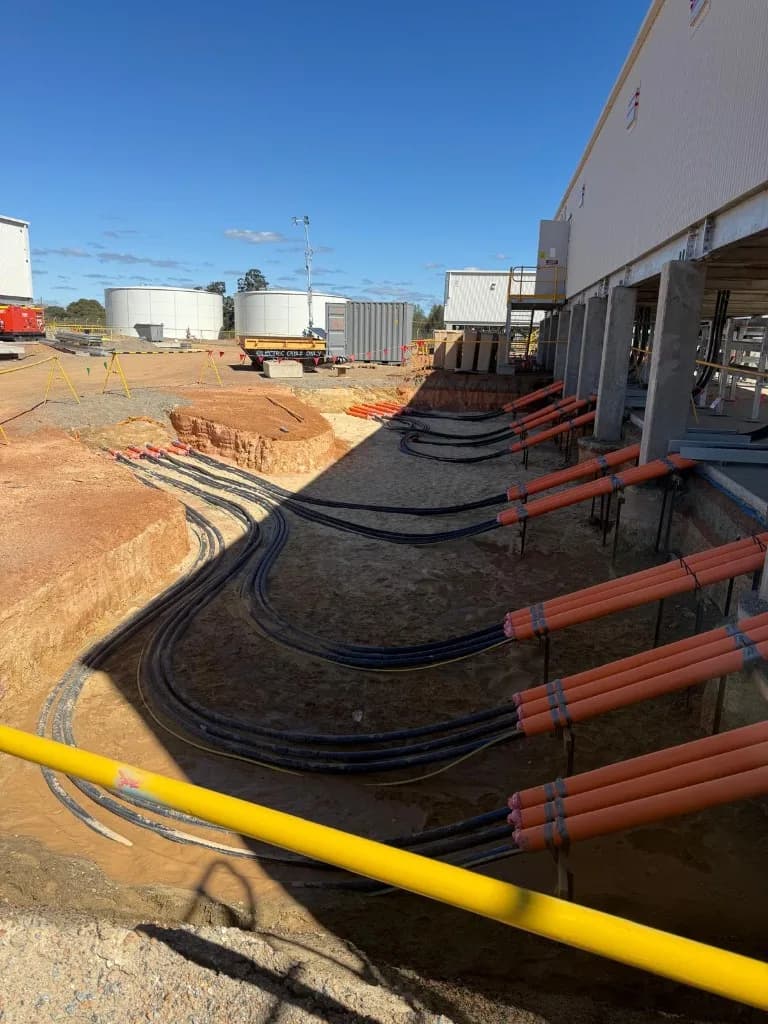
Utility trenching for water services, sewer services, power corridors, and communications corridors. Service corridors are set before pavements so later digs do not destroy finished running surfaces.

Structural civil works

Structural concrete, retaining structures, foundations, plinths, and hardstands delivered against inspection test plans. Pavements and industrial infrastructure follow once formation and drainage are proven.

Industrial, public, and renewable enabling

Industrial infrastructure, public infrastructure, and renewable enabling works share live-neighbour constraints. Civil Infrastructure coordinates those packages; Renewable Energy and Roads take solar, BESS, grid, and corridor road scopes when they sit on the same site.

How Civil Infrastructure works

Clients, stages, packages, constraints, records, and handover.

Practical delivery method for NSW industrial, public, and renewable-enabling civil packages—including Illawarra sites run from Yallah.

Which clients the division supports

Developers, industrial operators, EPC contractors, councils, government agencies, and utility stakeholders brief Civil Infrastructure when one package owner must hold earthworks, drainage, utilities, and structures together. Renewable developers use this division for enabling works; Energy and Roads take solar, BESS, grid, and corridor road scopes when those sit on the same site.

Which project stages NEXTGEN can manage

Constraint review, constructability, technical packaging, field delivery, quality records, and construction-ready handover. The division can enter at tender or on a live site when formation, drainage, or utilities are already delaying following trades.

Which civil packages can be coordinated together

Bulk earthworks, detailed excavation, site grading, and site preparation with stormwater drainage and culverts. Utility trenching for water, sewer, power, and communications corridors with later hardstands and pavements. Structural concrete, retaining structures, foundations, and plinths with industrial infrastructure, public infrastructure, or renewable enabling works.

What information is needed for an inquiry

Current drawings, survey and geotechnical notes, access constraints, drainage intent, known services, design vehicles, programme dates, and a written split between confirmed scope and assumptions. Incomplete briefs are usable if the unknowns are named.

How site constraints are reviewed

Levels, moisture, live neighbours, public interfaces, known and suspected services, discharge points, design vehicles, and authority conditions are reviewed before plant starts. Illawarra and South Coast sites often add coastal weather, industrial haul, and tight access to that list.

How workfronts are coordinated

Earthworks and site preparation open the platform. Drainage and utility trenching follow before pavements. Structures, retaining, foundations, plinths, and hardstands land on proven formation. Temporary access is kept off finished running surfaces so industrial or public neighbours stay operable.

How authorities and services are managed

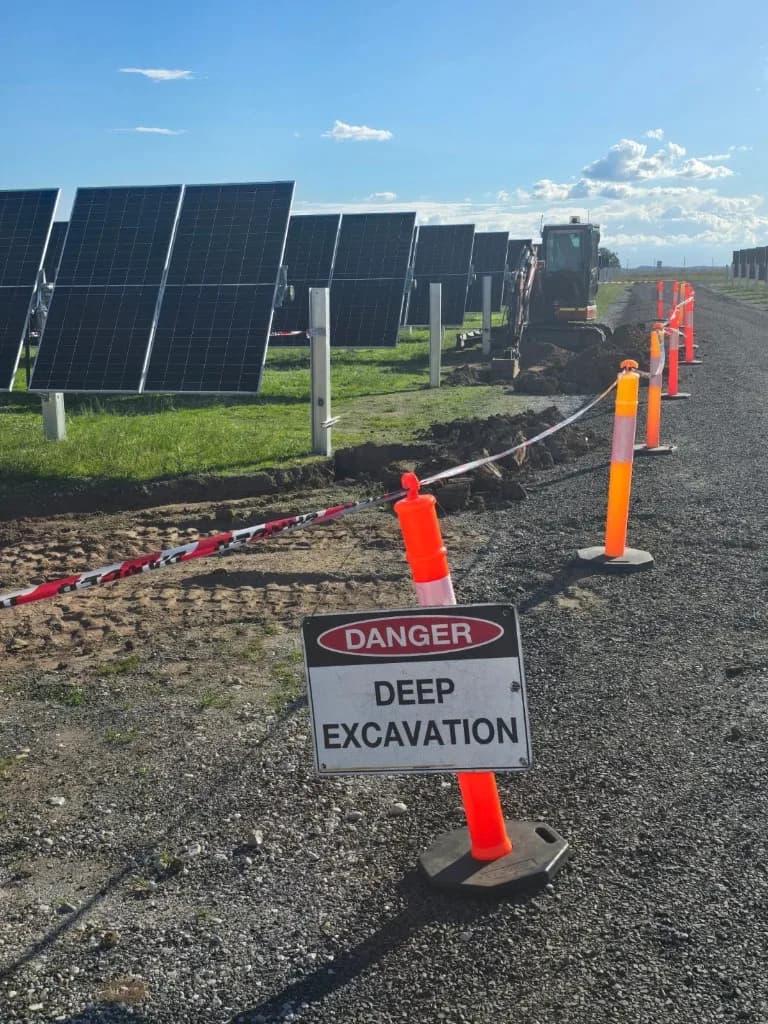
Dial-before-you-dig, service location, trench safety, and authority hold points sit on the same programme as compaction and invert checks. Public infrastructure and live industrial neighbours need possessions, reinstatement, and stakeholder notices before excavation, not after a strike.

What quality records are provided

Inspection test plans, hold-point sign-off, compaction and level proof, drainage invert records, and as-built mark-ups. Records are written for the next trade, the asset owner, and authority closeout—not only internal filing.

How projects are handed over

Handover is a construction-ready site with ITP evidence, as-builts, and outstanding defects named. Following builders, pavement crews, or renewable installers should not reopen soft formation or unfinished trenches to start their package.

NSW and Illawarra relevance

Civil Infrastructure delivers across NSW from Yallah. Illawarra, Port Kembla, Wollongong, Shellharbour, and Shoalhaven packages share live-industrial neighbours, coastal weather, and authority interfaces. Location articles below cover those constraints; this page owns the statewide civil contractor brief.

Related divisions

Renewable Energy takes solar, BESS, and grid civil. Roads takes access, pavements, and rehabilitation. Contact routes a Civil Infrastructure inquiry when drawings are ready.

Assurance

Controls that travel with every civil infrastructure package.

Hold points, inspection test plans, and authority closeout travel with earthworks, drainage, utility trenching, and structures. See the delivery FAQ for enterprise controls.

  • Constructability reviews for authority and stakeholder approvals
  • Inspection test plans, quality records, and staged handover packs
  • Safety planning for industrial, live-facility, public, and renewable interfaces
  • Earthworks, drainage, utility trenching, structural civil, and pavement capability
  • Illawarra and South Coast delivery from Yallah, with NSW regional reach
How engagement works

From first conversation to controlled delivery.

A practical path for owners and EPC teams briefing civil infrastructure work with NEXTGEN.

01

Site constraint and authority review

Map survey, geotechnical conditions, services, access, live neighbours, drainage discharge, and authority obligations before plant commits the workfront.

02

Package and workfront coordination

Sequence earthworks, drainage, utility trenching, structures, and pavements against shared hold points so later digs do not undermine finished work.

03

Field delivery, records, and handover

Execute with ITPs, progress reporting, and a construction-ready handover pack the next trade or asset owner can trust.

Project inquiry

Start a Civil Infrastructure inquiry

Send drawings, location, programme dates, known services, and the split between confirmed scope and assumptions. Route earthworks, drainage, utility trenching, structural civil, industrial, public, or renewable enabling packages to the Civil delivery team.

Routed to the civil infrastructure delivery team
Include scope, location, programme, and known interfaces

Already have drawings ready? Open the full contact page or call the team listed there.

FAQ

Direct answers about Civil Infrastructure.

Short, answer-first responses on scope, coordination, records, and how to start an inquiry for this business unit.

What does NEXTGEN Civil Infrastructure deliver?

Bulk earthworks, detailed excavation, site grading, site preparation, and site development, then stormwater drainage, culverts, utility trenching, water and sewer services, power and communications corridors, structural concrete, retaining structures, foundations, plinths, hardstands, pavements, and service corridors. Industrial infrastructure, public infrastructure, and renewable enabling works use the same staging story.

What is included in a civil site-development package?

A civil site-development package typically sequences platforms and access, stormwater and culverts, utility and service corridors, then hardstands or pavements and structural interfaces so following trades inherit one programme. It is not a stack of disconnected dig, drain, and trench quotes. See the industrial site development package for a representative multi-stage shape.

Can NEXTGEN coordinate earthworks, roads, drainage, and utilities?

Yes. Civil Infrastructure coordinates earthworks, drainage, and utility trenching on the same workfront; Roads takes corridor pavements and access when those sit on the critical path; Renewable Energy takes solar or BESS civil when those packages share the site. Start with the unit that owns the primary path, or Contact for multi-scope briefs.

Which clients does the Civil Infrastructure division support?

Developers, industrial operators, EPC contractors, councils, government agencies, utility stakeholders, and project managers who need a civil package owner—not a stack of disconnected earthworks, drainage, and trench quotes. Renewable developers brief this division when enabling earthworks sit on the critical path before Energy or Roads packages start.

Which project stages can NEXTGEN manage?

Constraint and authority review, technical packaging, field delivery, quality records, and construction-ready handover. Civil Infrastructure can enter at tender, constructability, or live-site recovery when formation, drainage, or utilities are already on the critical path.

Does NEXTGEN deliver bulk earthworks, detailed excavation, and site grading?

Yes. Bulk earthworks move and prove formation. Detailed excavation works around structures, services, and tight tolerances. Site grading and site preparation leave moisture, compaction, and construction-ready pads before drainage or structures start. Depth on formation-only briefs lives on the earthworks contractor NSW guide; this page owns the full civil package.

Does NEXTGEN deliver stormwater drainage, culverts, and utility trenching?

Yes. Stormwater drainage, culverts, water services, sewer services, power corridors, and communications corridors are sequenced as utility trenching and service corridors—before pavements—so later digs do not destroy finished running surfaces. See the utility trenching, stormwater drainage, live-services, and industrial yard drainage guides for package depth.

Does NEXTGEN deliver structural concrete, retaining, foundations, and hardstands?

Yes. Structural concrete, retaining structures, foundations, plinths, hardstands, and industrial pavements follow proven formation and drainage. Public infrastructure and industrial infrastructure use the same ITP holds.

Does NEXTGEN deliver civil works across Illawarra and South Coast NSW?

Yes. Delivery is based at Yallah and covers Illawarra, Port Kembla, Wollongong, Shellharbour, Shoalhaven, and wider South Coast packages, plus NSW regional and Greater Sydney sites. See the Illawarra, Wollongong, Yallah–Shellharbour, Port Kembla, Shoalhaven–Nowra, South Coast, Greater Sydney, Aerotropolis, Badgerys Creek, and Penrith location guides for local access, weather, and neighbour constraints—without treating every suburb as a separate contractor claim.

How are site constraints reviewed before plant starts?

Survey, geotechnical notes, known services, access, live neighbours, drainage discharge, design vehicles, authority conditions, and programme dates are mapped before plant commits the workfront. Unknowns are listed as assumptions, not hidden inside a lump-sum dig rate.

What information is needed for a Civil Infrastructure inquiry?

Current drawings, survey and geotechnical notes, access constraints, drainage intent, known services, design vehicles, programme dates, and a clear split between confirmed scope and assumptions still under investigation. Use the inquiry form on this page or the contact page when drawings are ready.

What quality records are provided at handover?

Inspection test plans, hold-point records, compaction and level proof, as-built mark-ups, and a staged handover pack the next trade or asset owner can file. Handover is construction-ready closure—not a photo album after plant leaves. See the civil works inspection test plan guide for what belongs in an ITP.


Next step

Ready to brief civil infrastructure work?