

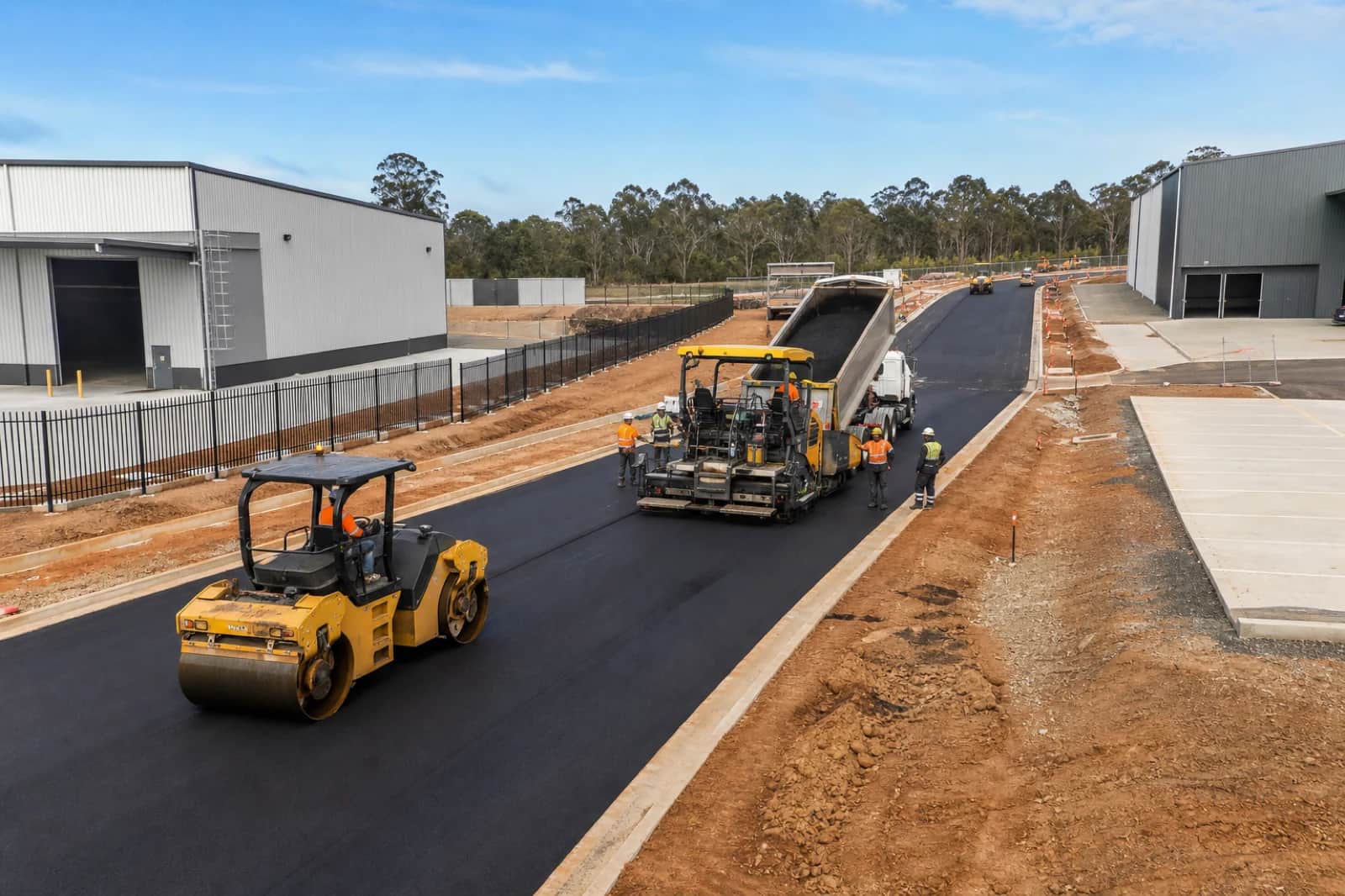
What industrial pavement works NSW must solve on live estates
Treat industrial pavement works NSW as a live-asset package: internal roads, turning bays, loading aprons, and yard pavements that must carry B-doubles and forklifts while neighbouring lots stay open. A pavement contractor NSW quote that ignores tenant traffic, gate queues, and drain ownership will fail after the first wet week—not at practical completion.
NEXTGEN stages these corridors through its roads and pavement division so heavy-vehicle geometry, drainage, and asphalt works NSW share one supervisor set—not three subcontract islands arguing about who owns the soft shoulder at the dock.
Heavy-vehicle geometry before any layer thickness is locked
Estate pavements fail first at turns, not on the straight. Confirm design vehicles for B-doubles, low loaders, and yard plant before a pavement contractor NSW team sets kerb lines. Sweep paths that clip pit lids, dock thresholds, or unfinished shoulders destroy edges faster than axle-load tables predict.
Name axle assumptions and daily truck cycles in the brief. Light commercial pavement on a warehouse spine road looks neat until loaded trailers rut the same wheel path every morning. Proof-rolling after rain is cheaper than arguing thickness after tenants move in.
Separate construction haul from finished industrial pavement where loads differ. Using a sealed apron as a tipper turning circle during earthworks is a common reason industrial pavement works NSW need mid-programme dig-outs.
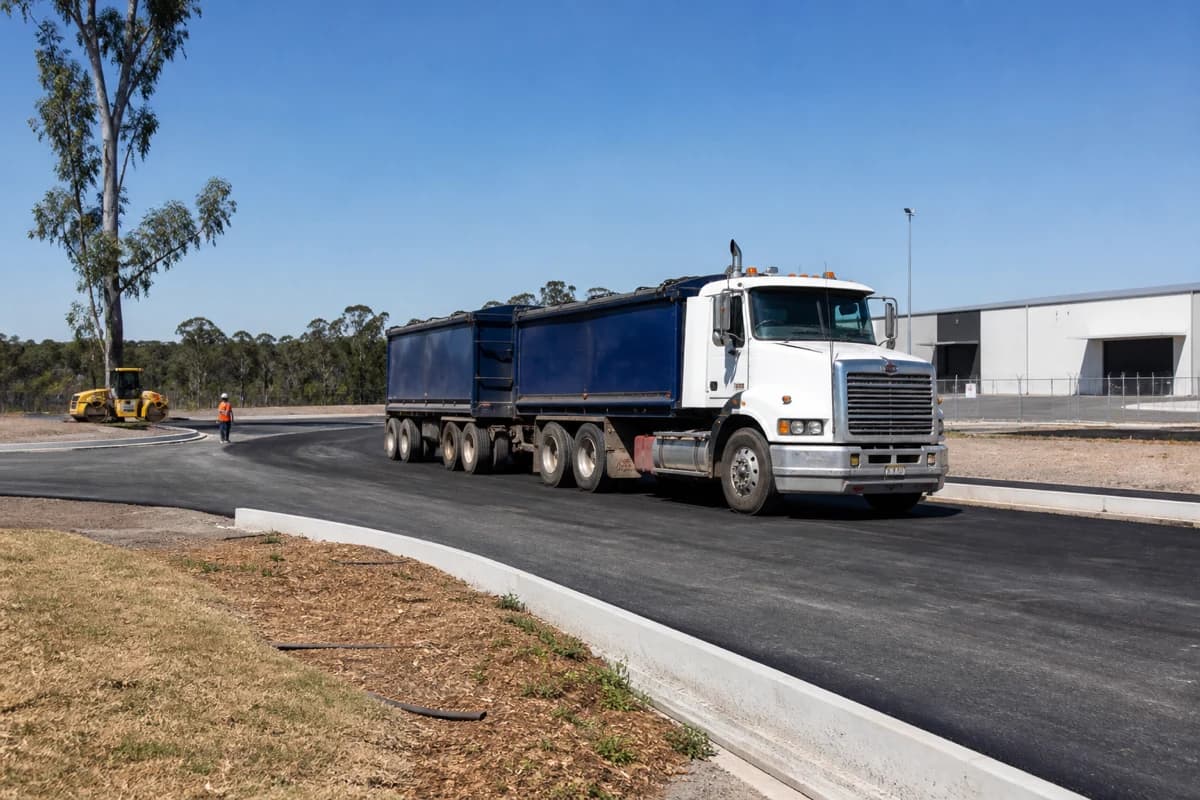
Access road construction NSW from the public gate to the lot
Access road construction NSW into an estate is the first pavement the public and tenants judge. Formation width, crown, and gate marshalling decide whether trucks queue on the public verge or enter cleanly. Soft entry pavements also track mud onto council roads and trigger complaints before internal yards are finished.
Treat the gate-to-lot corridor as one accountable sequence with internal industrial pavement works NSW. Different contractors owning the entry road and the yard apron usually leave a level mismatch at the fence—and a pond after the first storm.
Formation-first corridor rules are covered in access road construction NSW: formation, pavements and drainage. Where the estate is still being earthworked, lock civil extents with industrial site development contractor NSW scope before pavement layers close options.
Why a road drainage contractor belongs on the estate critical path
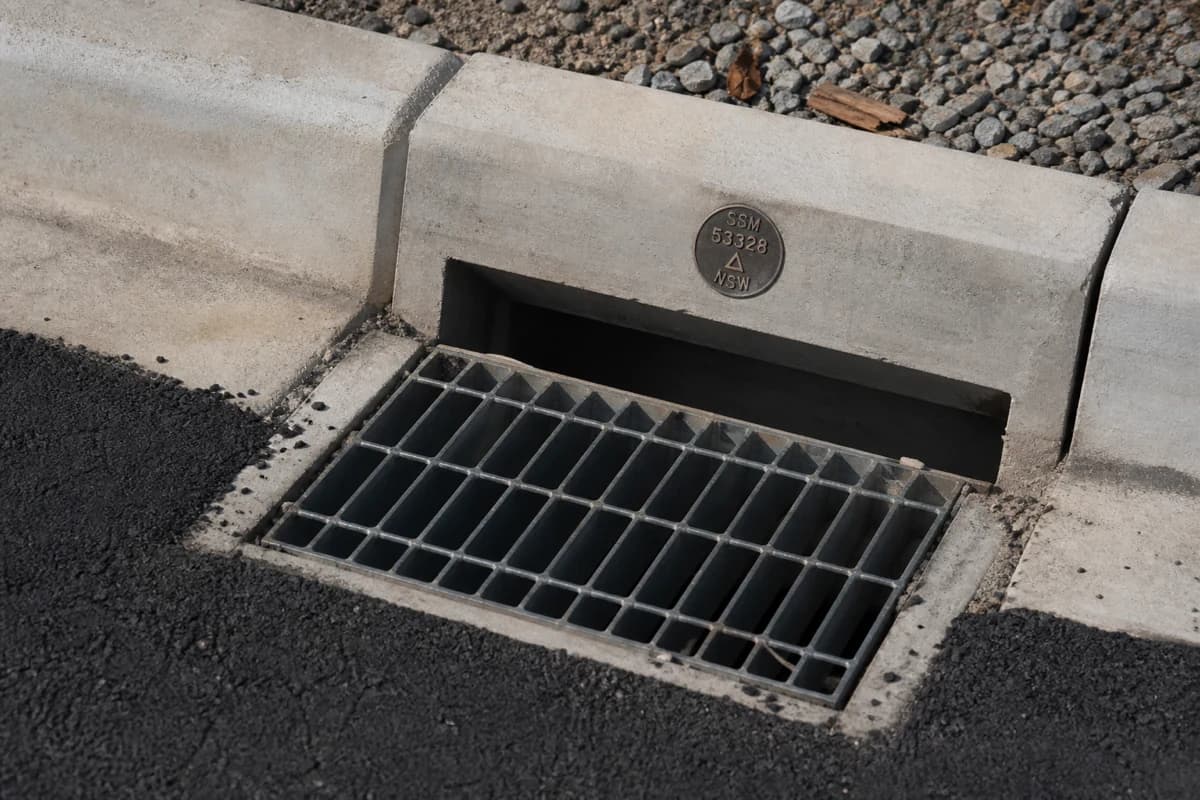
A road drainage contractor should set pits, kerb inlets, table drains, and outlets relative to finished pavement levels before asphalt works NSW close the box. Water trapped at dock aprons and lot edges softens subgrade that QA already signed off.
Industrial estates concentrate runoff from large roofs and hardstands. Overland paths, pit capacity, and temporary diversions during staging need the same survey control as the pavement surface—not a cleanup after tenants occupy.
Where lot stormwater meets the estate road, keep one water-path story with NEXTGEN's civil infrastructure team and the confirmation habits in what to confirm with a stormwater drainage contractor NSW.
Staging asphalt works NSW while the estate stays open
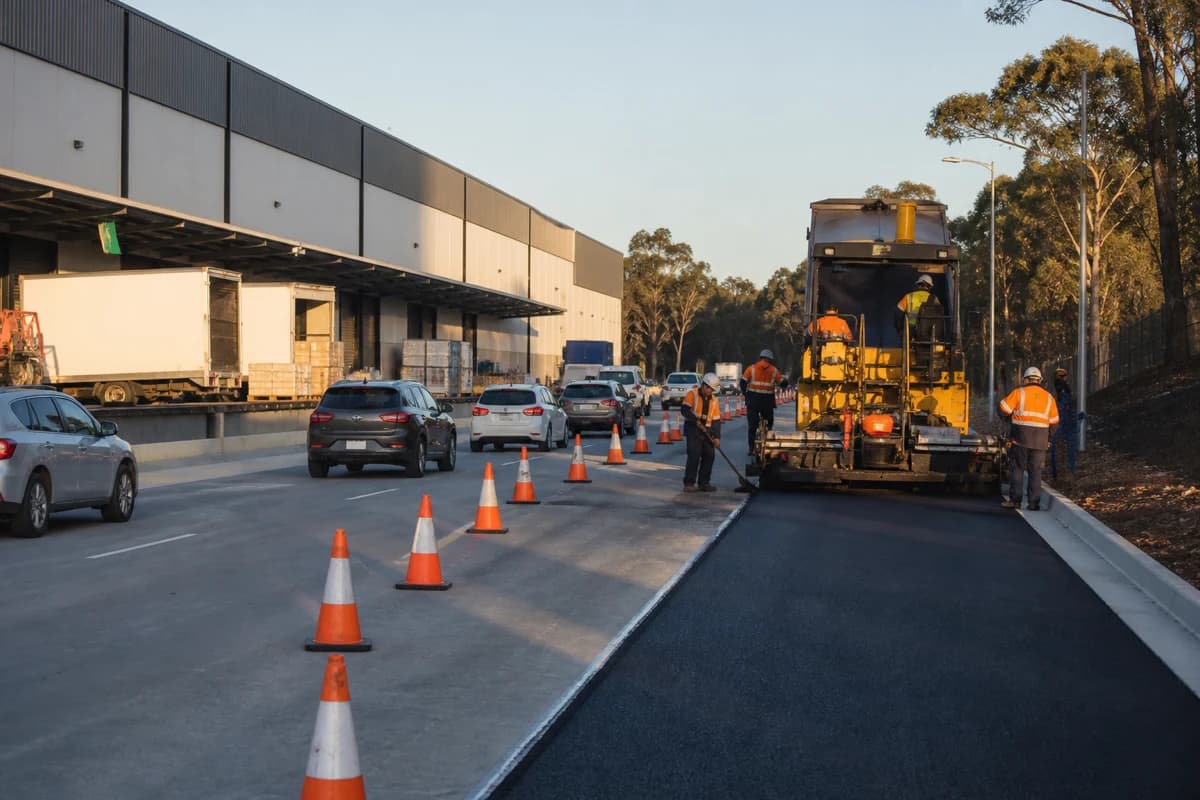
Asphalt works NSW on occupied estates succeed when traffic staging is written into the method—not invented on the morning the paver arrives. Plan lane closures, night or off-peak windows, and temporary running surfaces that can take residual heavy vehicles without destroying unfinished edges.
Joints, tie-ins at existing lots, and temperature holds matter more on industrial spines than on quiet access tracks. Cold joints at dock entries become the first crack under repeated trailer landing gear and forklift turns.
Layer proof and joint discipline sit in pavement construction contractor NSW: subgrade, layers and quality checks. Use that method, then add estate-specific staging so a pavement contractor NSW crew is not paving through live loading docks.
Estate pavement checklist before the paver is booked
Clear these gates while tenders are still comparable:
- Design vehicles, turning templates, and axle cycles are named for spine roads, turning bays, and dock aprons.
- Access road construction NSW from the public gate shares levels and drainage with internal industrial pavement works NSW.
- A road drainage contractor owns pit, kerb, and outlet levels relative to finished pavement—not as a post-seal fix.
- Asphalt works NSW staging, joints, and temporary running surfaces are written against tenant and construction traffic.
- Utilities under future pavement are closed or protected so trenches are not cut through new seal.
Proof, interfaces, and how to brief NEXTGEN
Ask for redacted ITP samples, proof-roll records after wet weather, and a staging drawing that shows where heavy vehicles run during each lift. Brochure layer descriptions without site evidence are incomplete for industrial pavement works NSW.
Where services still cross the pavement box, sequence trenches with planning utilities before pavements. Compare multi-interface delivery shapes in NEXTGEN's project showcase and delivery expectations in the project FAQ.
When drawings, tenant constraints, and programme windows are ready, contact NEXTGEN to review industrial pavement works NSW against realistic heavy-vehicle, drainage, and staging holds.