

What environmental controls civil construction should lock in first
Environmental controls for civil construction hold when four things are decided before the ground is opened: where sediment is stopped, how dust is kept down, how clean water and dirty water are separated, and how waste leaves the site. Each one needs a named owner, a location on the drawings, and a reason to inspect it—after rain, after a wind change, and after the workfront moves.
A plan that stays in the site office does not control a stripped pad. The controls that work are the ones a supervisor can point to: a fence on the low side, a water cart on the haul road, a basin that is actually receiving runoff, and waste streams that are not mixed.
Project delivery controls make that visible during the works. Inspection notes, photos after rain, and a short record of who repaired a failed fence belong with the daily record, not in a folder assembled at practical completion. NEXTGEN builds erosion, dust, discharge, and spoil into staging on civil infrastructure packages, so the next trade inherits a pad that is still inside its environmental limits.
Where should sediment controls sit before the first strip?
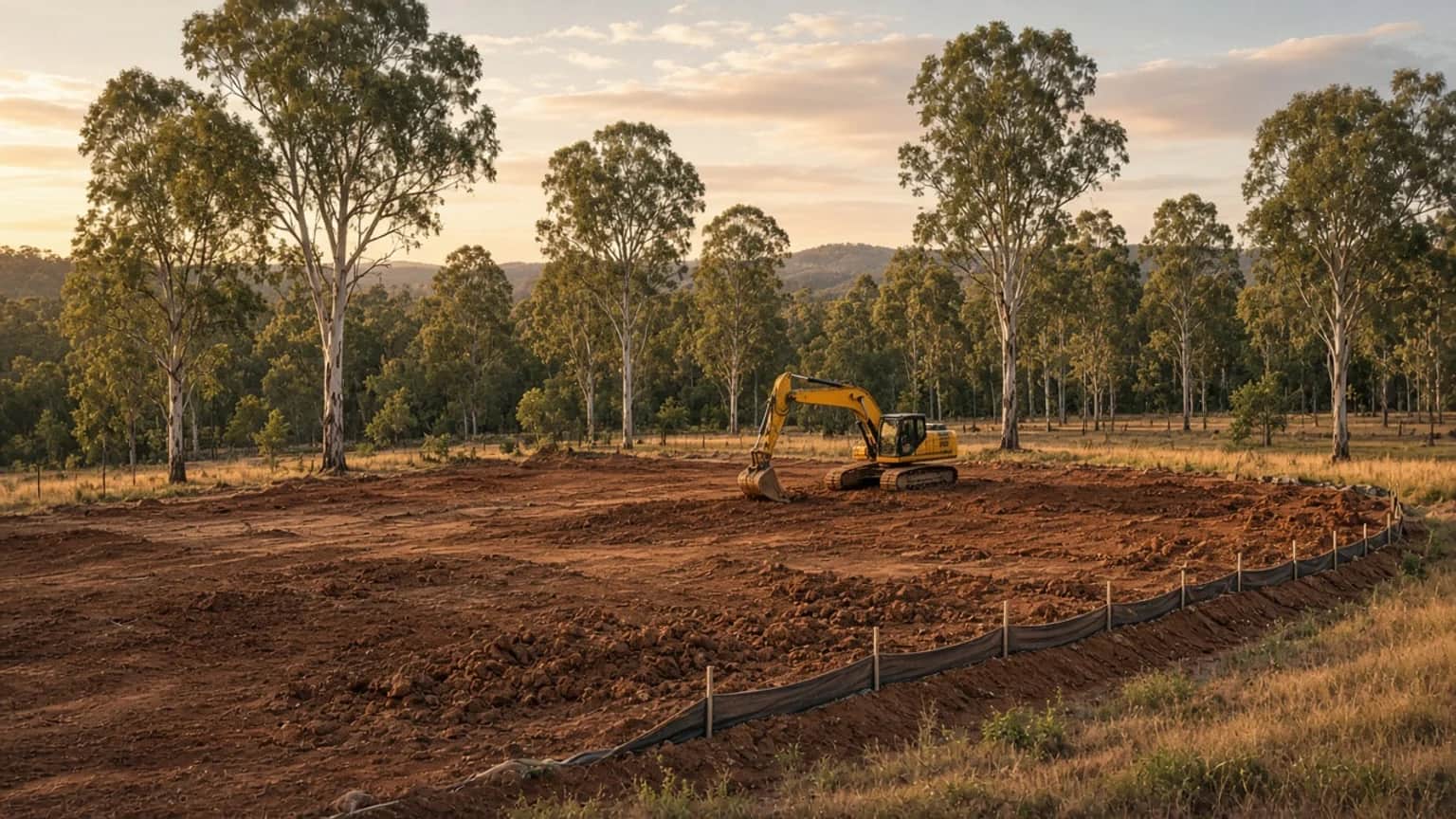
Sediment leaves a site in water. The useful question is not whether a fence will be installed sometime, but whether it is on the downslope edge before topsoil is stripped, and whether the catchment above it can actually reach it. A fence behind a stockpile, or a fence the haul road has already flattened, is not a control.
On a larger open area, a fence alone is the wrong tool. Diversion drains, check dams, and a sediment basin sized to the area that is open belong in the erosion and sediment control plan. Many NSW consents require that plan, often aligned with the soils and construction guidance known as the Blue Book. Use the approved plan for this site, not the fence layout from the last job.
Inspect after every rainfall that produces runoff, and after any plant movement that can knock a fence down. Repair it before the next shift starts, and write down the repair. Permanent pits and pipes are a different scope, covered in the stormwater drainage contractor NSW guide, and they do not replace temporary controls while the pad is still bare.
Dust control has to move with the haul road
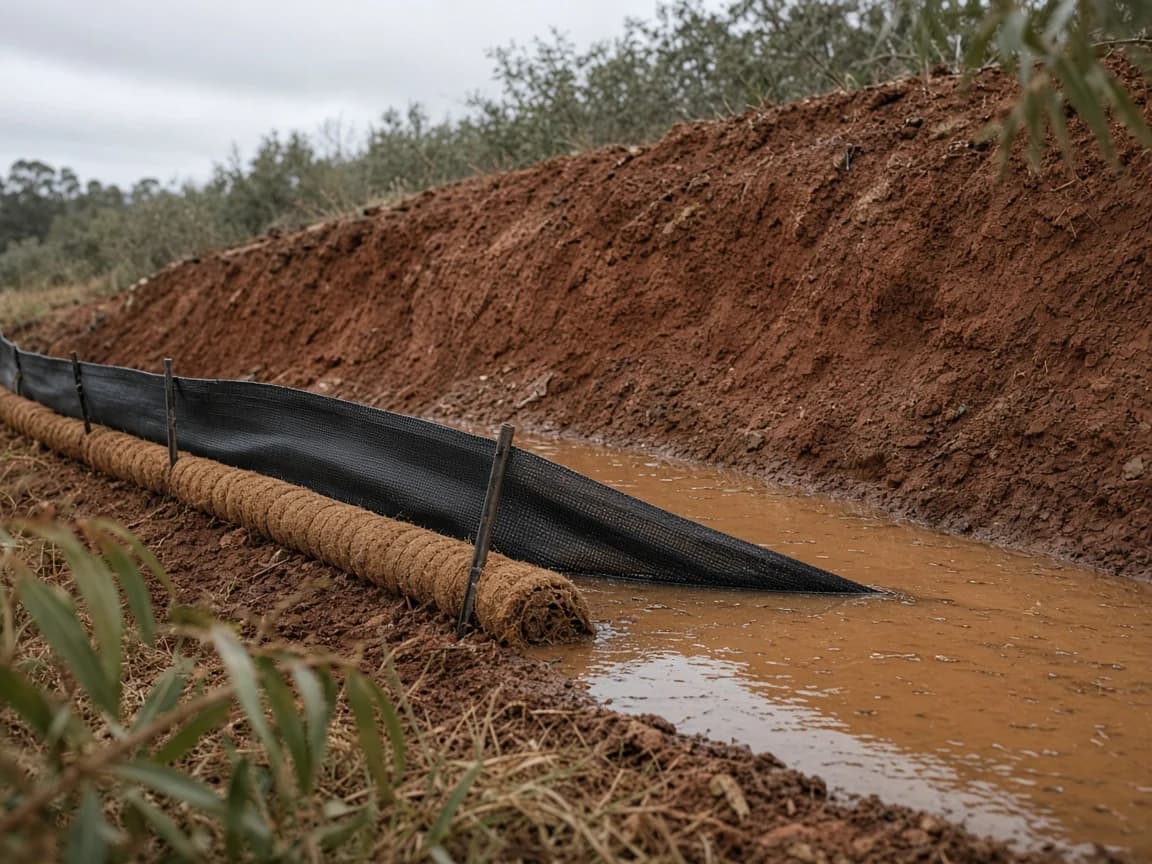
Dust is a neighbour problem and a works problem. It coats a fresh seal, fills drainage pits, and draws complaints from the next estate long before a sediment fence fails. Water-cart passes, lower haul speeds, and covered loads are the usual controls. They only work if someone owns the cart for the hours the road is actually being used.
Cover or stabilise stockpiles that will sit, and keep the cart off areas that must stay dry for compaction testing. A soaked subgrade is not a successful dust day. When the surface is fine and the site is exposed, put the wind forecast in the pre-start.
Mud tracked onto a council road is both dust and sediment. A stabilised site exit is part of the control. If it fails, stop the haul and fix it before the next load leaves.
How do you keep clean water out of dirty water?
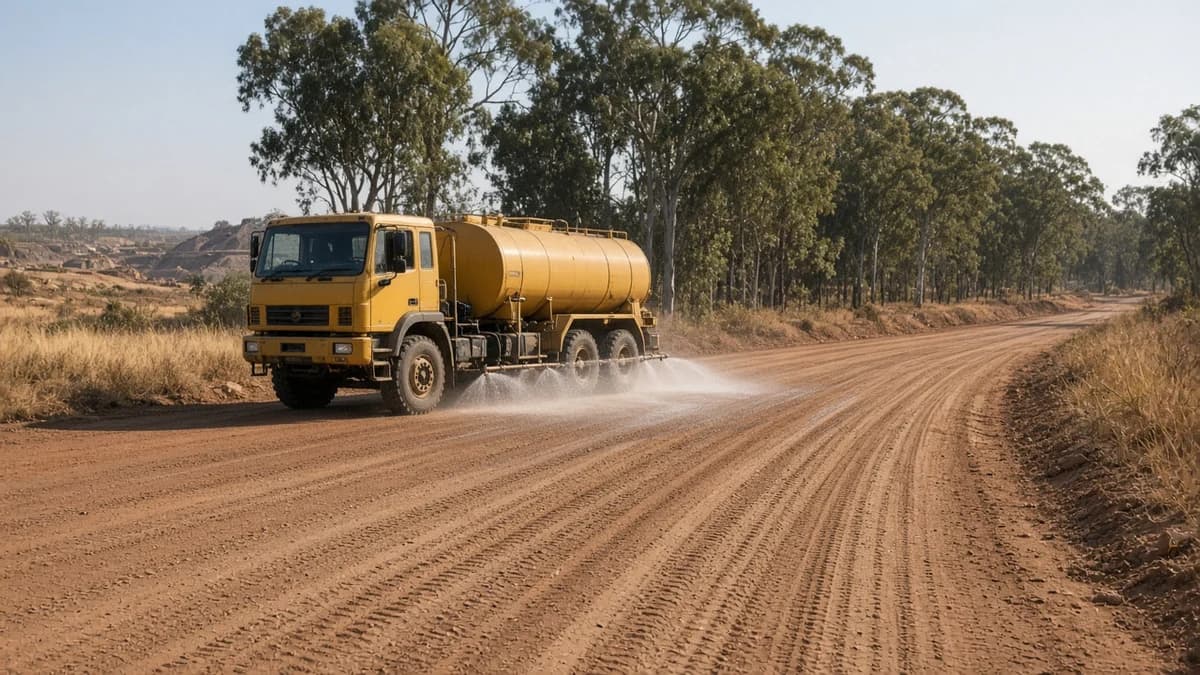
The cheapest environmental failure is mixing clean upstream water with dirty site runoff, then trying to treat the combined flow. Where the landform allows it, divert clean water around the works. Send dirty water to the control that was designed for it—a fence, a basin, or the approved discharge point.
Pumping an excavation into a neighbour's drain, or emptying a basin because it looks full, needs the same discipline as the earthworks. Know the approved discharge point and who is allowed to pump. Do not invent a water-quality number on site. If the basin is too small for the area open, reduce the open area before you lower the standard.
Take temporary controls off only when exposed ground is stabilised and the permanent system is taking the flow. Removing a basin on demobilisation day, while batters are still bare, sends the next storm straight off the site.
Spoil, concrete, and general waste need different exits
Waste controls fail when everything lands in one skip or one stockpile. Separate spoil that can be reused on site from material that must leave, and keep concrete, timber, steel, and general waste apart when the waste contractor or the principal requires it. Unexpected material—odour, staining, or fragments that could be hazardous—stops that workfront until it is identified. Do not keep digging through it.
Track where spoil goes. A tidy pad with an undocumented stockpile on the wrong side of the boundary is not controlled. Name the reuse location, the lawful receiver if material leaves site, and who signs the docket.
Spoil held for reuse is still a catchment. If it sits above a finished drain, it becomes the next source of dirty water.
Civil contractor checklist before the first machine strips the pad
Formation, compaction, and handover of the pad itself sit in the site preparation checklist NSW guide. Environmental controls have to stay live through that work. Before mobilisation, work through this civil contractor checklist with the principal and, where one is appointed, the environmental adviser:
- An approved erosion and sediment control plan marked on the current drawings, including fence lines, basins, clean-water diversions, and a stabilised site exit.
- Dust controls named for haul roads, stockpiles, and any public-road interface, including who runs the water cart and on which shifts.
- Dirty-water and clean-water paths that do not cross, plus the approved point and the rules for any dewatering or basin pump-out.
- Waste streams kept separate: reusable spoil, material leaving site, concrete, timber, and general waste, with receivers named.
- Inspection triggers after rain, after strong wind, and after the workfront moves, with a named person who can stop work to repair a control.
- A stop rule for unexpected contamination: isolate the area and notify before excavation continues.
- A staging note for how controls move when a new catchment is opened, so last month's fence is not left guarding finished ground.
How civil tender requirements should test these controls
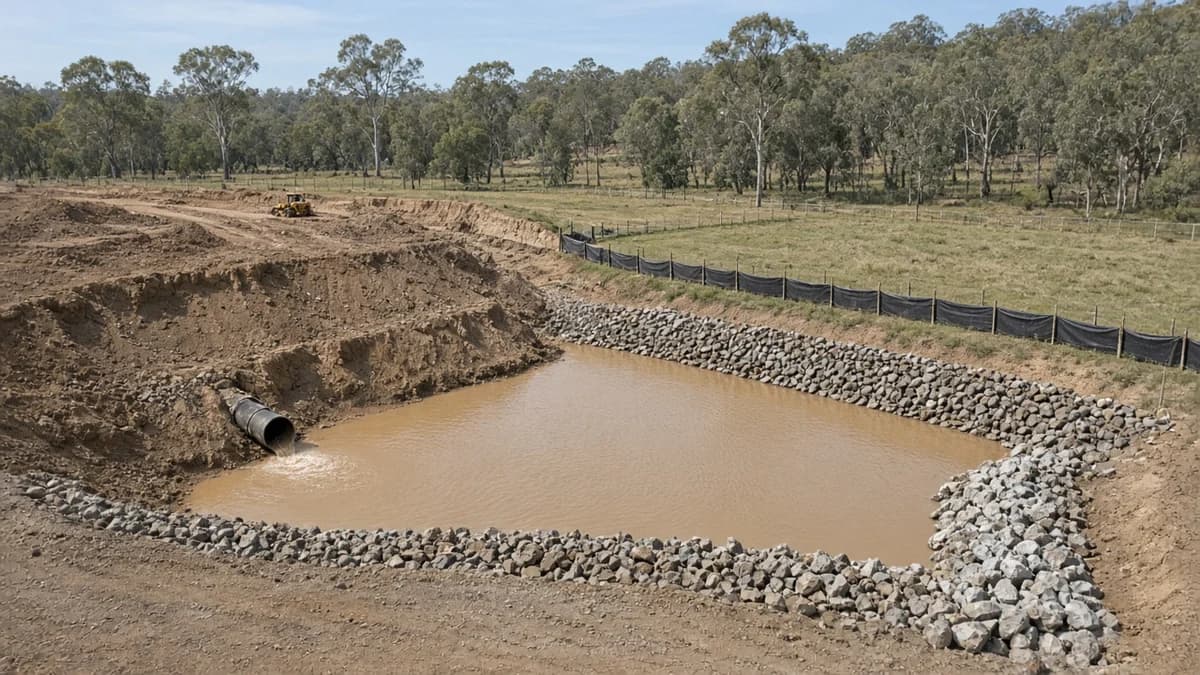
Civil tender requirements should ask tenderers to mark sediment fences, basins, haul-road dust controls, and waste areas on your drawings, not to attach a generic environmental policy. Ask who inspects after rain, what happens when a basin reaches its operating level, and which waste streams leave site. A method that cannot name those four items will not run them.
Score that response with price and programme. In a civil procurement NSW process, a redacted inspection record or a staging sketch from a comparable job is a fair test. Project delivery controls continue after award: the same four items should appear in pre-starts and in records the client can see during the works.
How NEXTGEN frames environmental management—ISO-aligned, and built into staging rather than treated as a brochure claim—is set out on the about NEXTGEN page. Records, hold points, and what clients can ask for during delivery are covered in the project FAQ.
Send your project details with the approved erosion and sediment plan, haul routes, waste expectations, and any neighbour or consent constraints.