
What to confirm before appointing a stormwater drainage contractor NSW
Ask a stormwater drainage contractor NSW team to restate catchments, design surface levels, temporary diversion plans, and who owns pavement or pad interfaces after pipework is buried. Diameter tables alone do not prove delivery control.
The practical answer is to treat pits, pipes, culverts, and outlets as one critical-path package sequenced with earthworks—not a late tidy-up after formation looks “finished.” Ponding against new hardstand is usually a sequencing failure, not a surprise storm.
Owners who start with NEXTGEN’s civil infrastructure drainage capability can test those answers early—before earthworks close options for pits, culverts, and overland flow.
Catchments, temporary diversions, and environmental controls
Stormwater drainage NSW packages fail when the finished network is clear on drawings but temporary flow during earthworks is left improvisational. Confirm where water goes while trenches are open, and how sediment controls stay with each workfront.
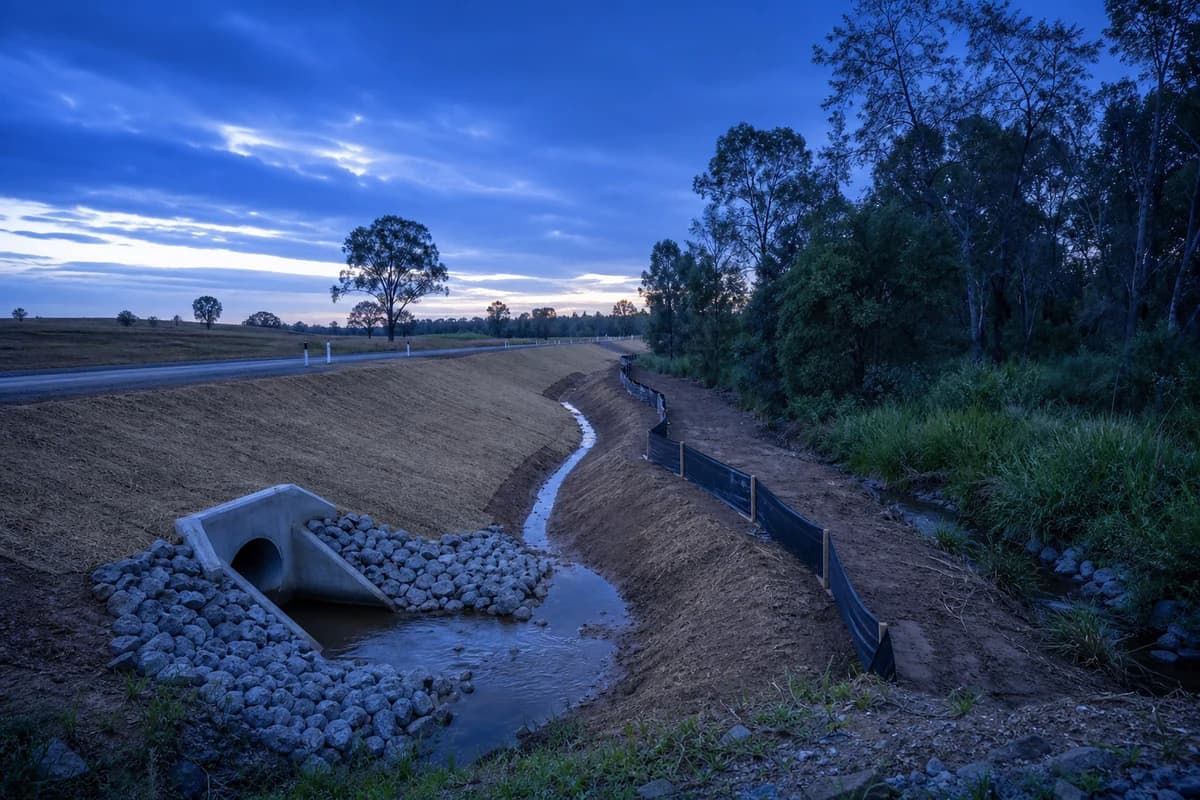
Name the receiving point for each outlet—council asset, natural watercourse, or on-site basin—and who verifies levels on site. Mismatched outlet levels create ponding against pavements that looked complete at handover.
Environmental controls are not optional add-ons on NSW industrial and precinct sites. Sediment fences, dirty-water pathways, and spill response need to move with the trench—especially when overland flow industrial sites sit beside live operations or public roads.
- Temporary diversions named for each earthworks stage—not only the final network.
- Sediment and erosion controls relocated when the workfront moves.
- Outlet ownership and invert checks written before backfill.
- Design revision control so pit lids and grate types do not drift after a wet week.
Construction sequencing with earthworks and pavement edges
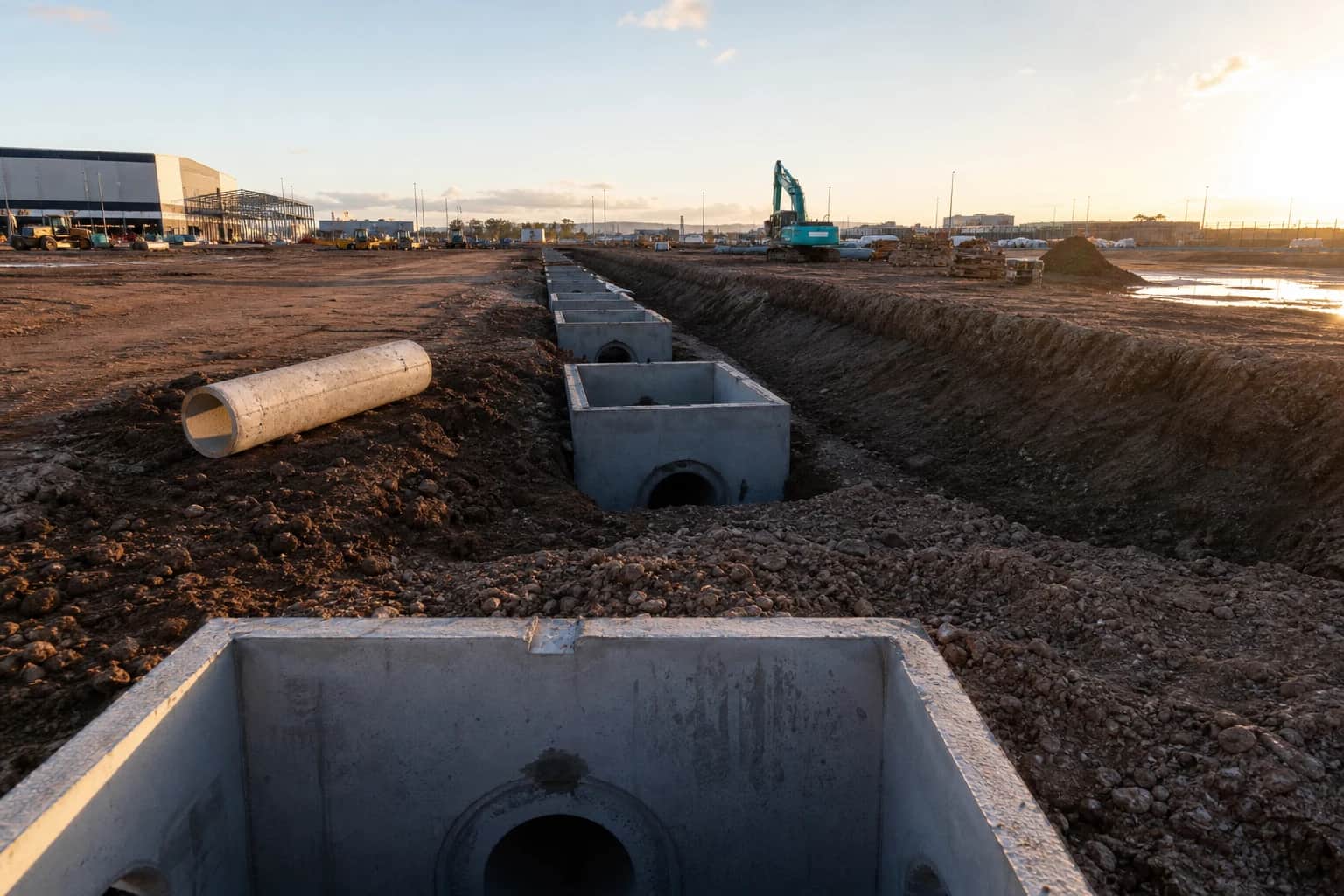
Sequence stormwater pipe installation NSW works so trenches and pits land before pavement layers or hardstand edges close the corridor. Cutting finished drains to place late utilities—or leaving soft backfill under future pavement—reopens the surface for months.
Industrial stormwater pits NSW need survey control tied to finished pavement levels. A pit set high relative to the seal traps water at the edge; a pit set low without a defined shoulder transition pumps under truck traffic.
Align corridor edges with pavement construction contractor NSW and interface lessons in asphalt works and drainage interfaces when sealed spines are in the same programme.
Utility clearances, culvert interfaces, and live-service holds
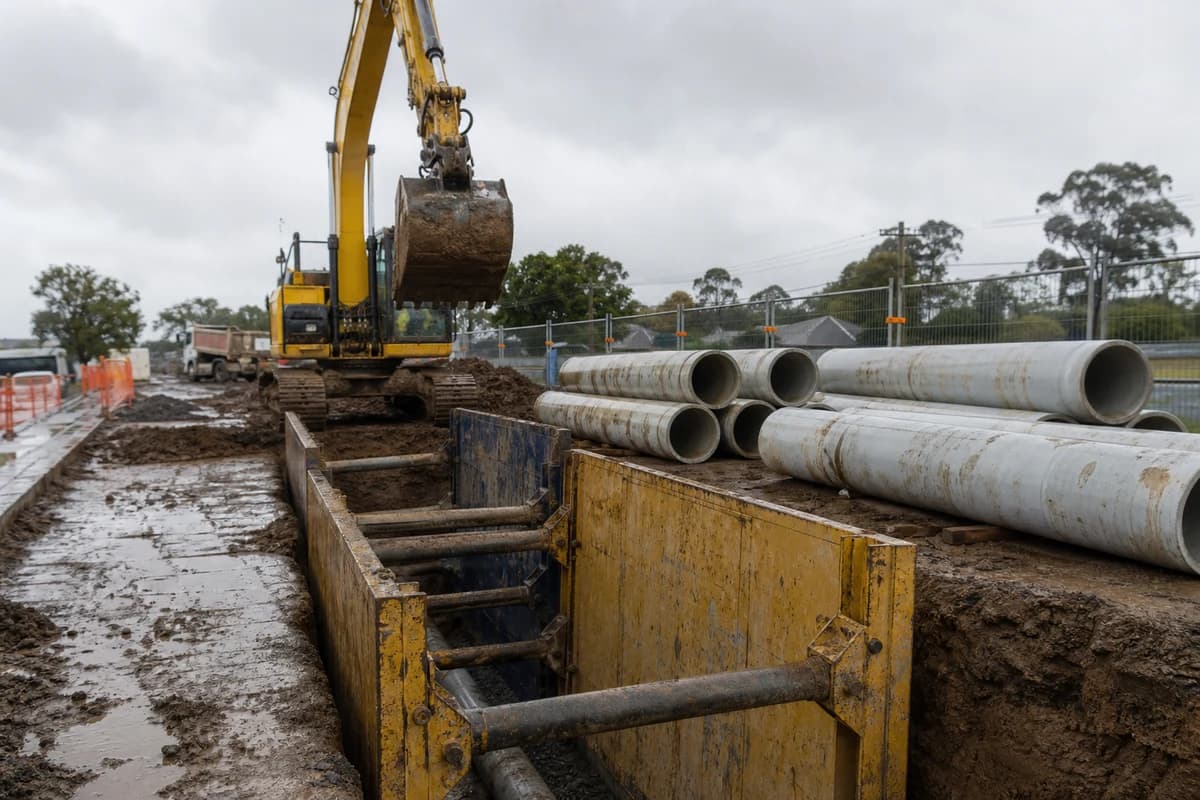
Utility clearances matter when stormwater shares verges with water, sewer, power, or communications. Confirm horizontal and vertical separations, bedding rules at crossings, and how discoveries of undocumented services escalate.
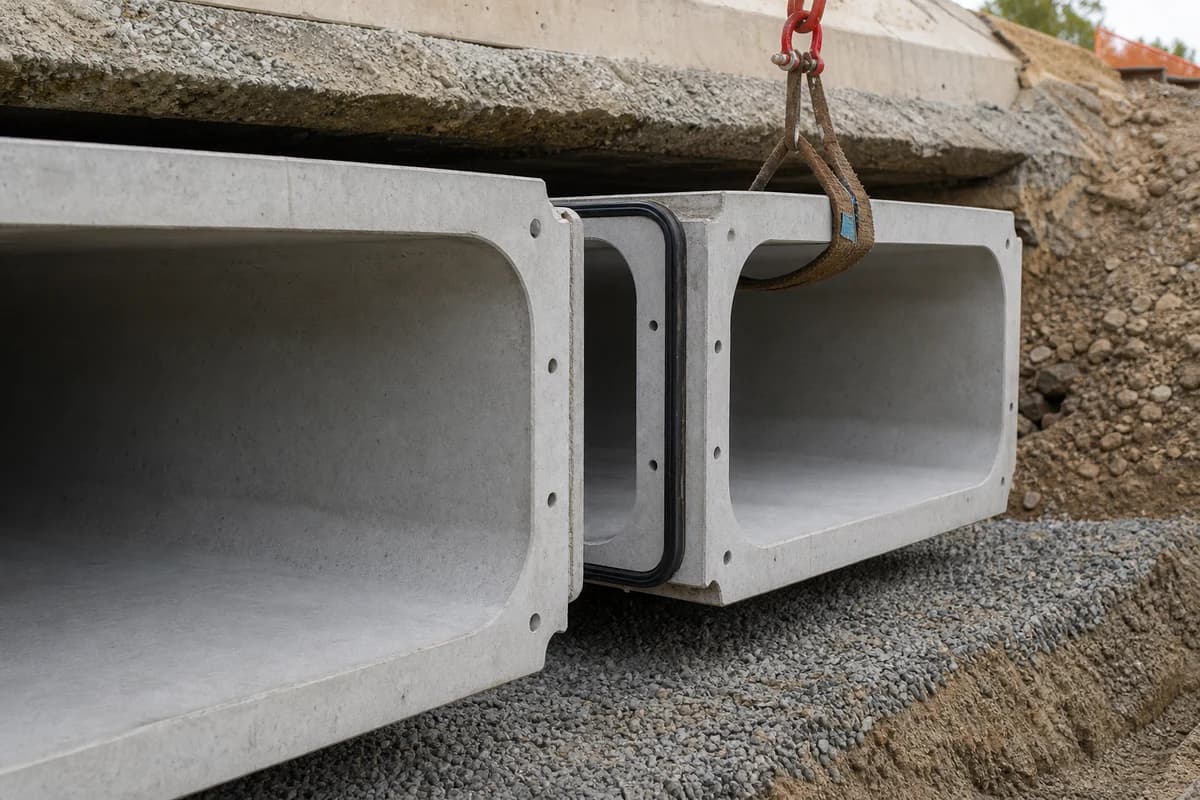
Culvert installation NSW is more than placing barrels. Confirm line and level, jointing, bedding, wingwalls or headwalls, and scour protection relative to upstream and downstream drains—plus temporary traffic cover depths before plant crosses.
Corridor dig method sits in utility trenching contractor NSW. Culvert detail lives in culvert installation NSW. Live industrial corridors should also review live services civil works NSW. Yard-scale drainage patterns sit in industrial yard drainage NSW.
Inspection hold points and compaction testing before backfill
Do not approve backfill on verbal assurance. Hold points should freeze the trench until invert, bedding, jointing, and clearances are proven—and compaction testing at crossings should match the pavement or hardstand specification above.
- Invert and alignment hold before surround and backfill.
- Bedding and joint inspection recorded with photos against chainage.
- Utility clearance confirmation before shared backfill closes the box.
- Compaction tests at road and pad crossings—soft spots here fail first under trucks.
- Outlet and scour protection complete enough that temporary diversions can hand over.
Procurement questions and lessons from drainage delivery
Ask tenderers to answer these in writing against your drawings. Brochure language about “full drainage capability” is not a method.
Lesson from delivery: orphan interfaces at kerbs, headwalls, and lot entries cause more post-handover call-backs than pipe diameter disputes. A civil drainage contractor that brings an interface register into tender has usually paid for that lesson once already.
- Where does water go while trenches are open, and who owns temporary diversions?
- How are industrial stormwater pits NSW levels tied to finished pavement or hardstand edges?
- Which hold points and compaction tests close crossings before pavement layers start?
- What stormwater handover records NSW packages can you show from a comparable site?
- How do authority or council outlet interfaces get verified on site—not only on a long section?
Stormwater handover records and briefing NEXTGEN
Stormwater handover records NSW owners need should include as-built locations, invert levels, photographic evidence of bedding and joints, testing where specified, and an outstanding-works list tied to pits and outlets.
Weak records force owners to rediscover the network when landscaping, pavement upgrades, or authority audits arrive. Strong records make defect and maintenance decisions faster.
Browse related delivery evidence in the public utilities renewal program (representative scope). When drainage sits beside sealed access, bring roads division interfaces into the same inquiry. Then contact NEXTGEN with catchment plans, long sections, geotech notes, live-service information, and programme drivers.