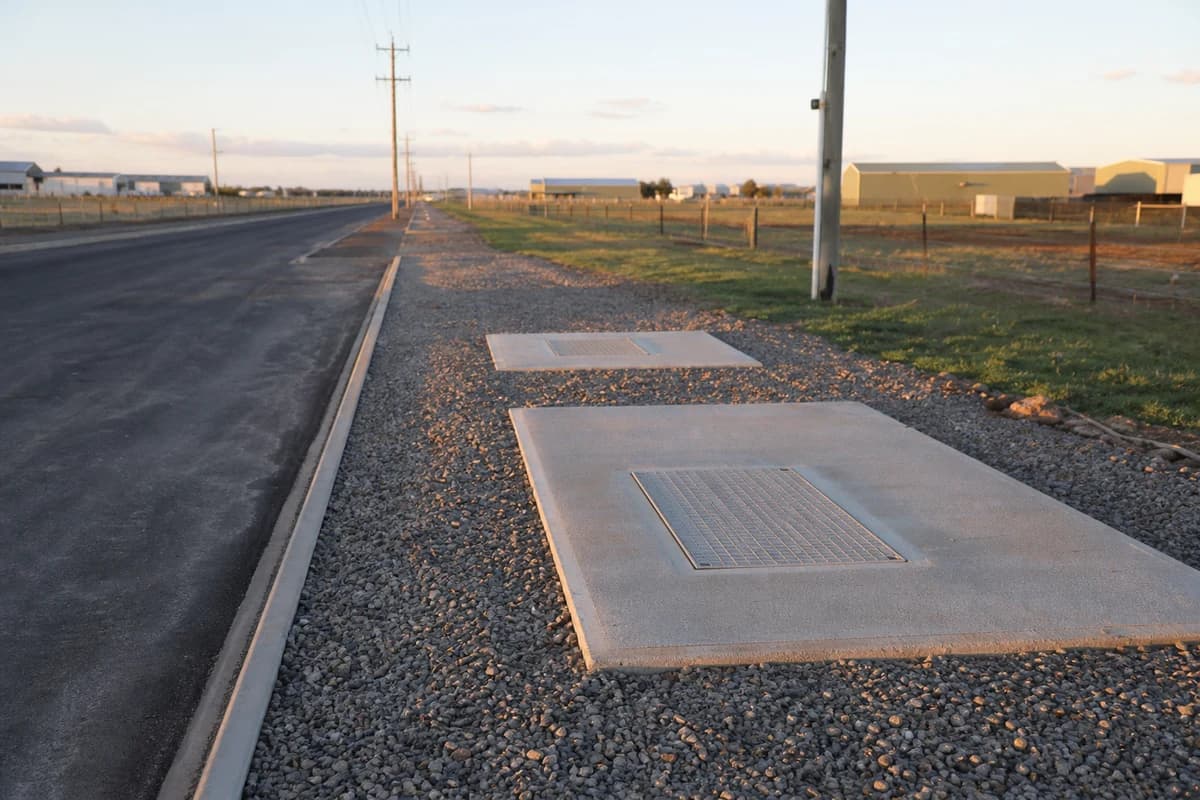

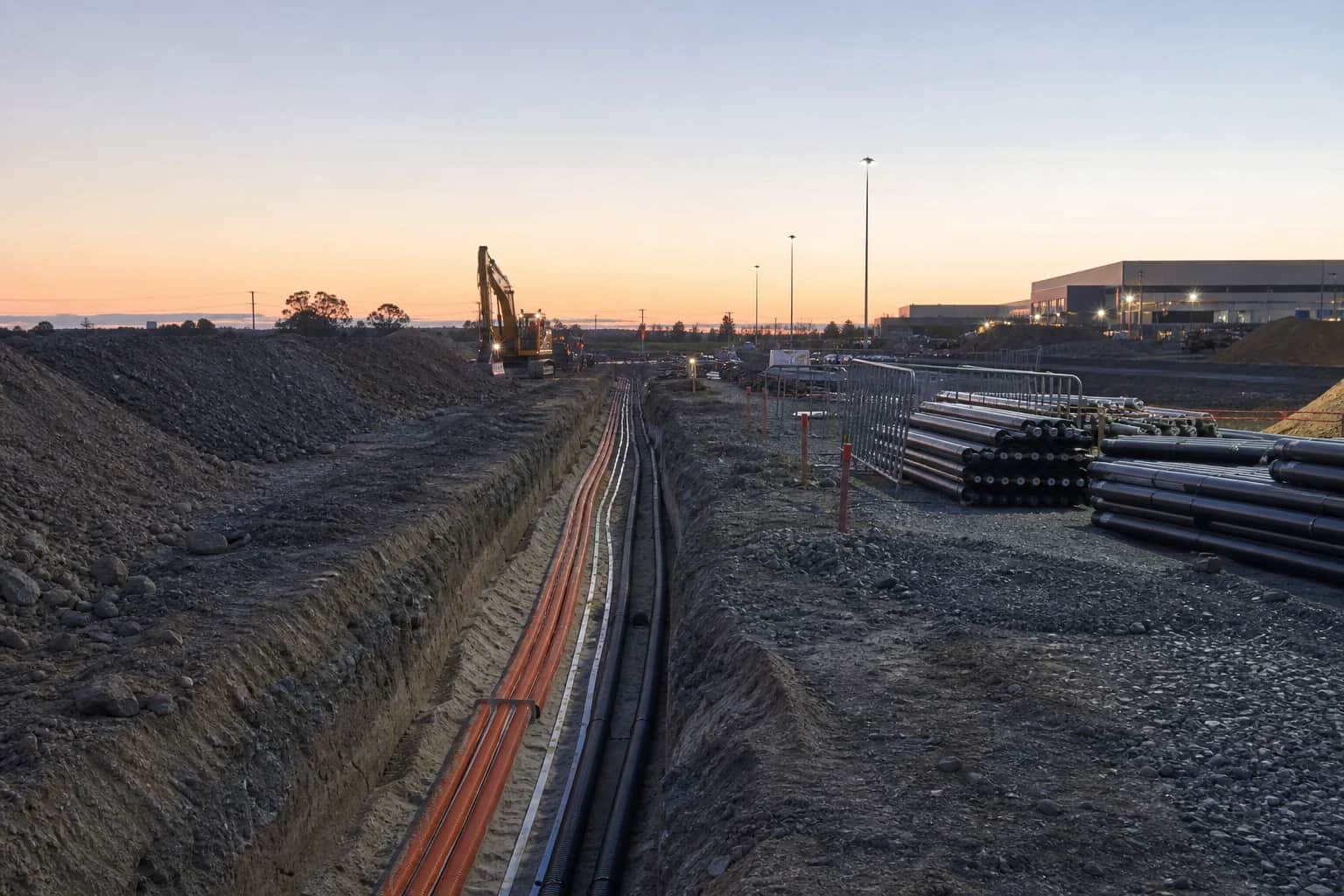
What should a utility trenching contractor NSW own?
Appoint a utility trenching contractor NSW to dig, bedding, lay or protect services, backfill, and reinstate—across water, sewer, power, and communications—under one survey-controlled corridor plan. Separate quotes per trade without shared offsets create clashes at every road and pad crossing.
Utility trenching NSW fails when services are treated as late tidy-ups after earthworks or pavement. Soft backfill and incomplete clearances reopen the finished surface for months.
NEXTGEN coordinates these corridors through its civil infrastructure division so a civil drainage contractor, trench crews, and road reinstatement share one critical path. Named solar cable-corridor evidence sits on Blind Creek Solar Farm.
Step 1 — Map shared corridors before the first dig
Lock horizontal and vertical separations for water, sewer, power, and communications before plant opens the box. Conflicting “approx routes” on separate drawings are the fastest way to redesign trenches mid-shift.
Name known unknowns and dial-before-you-dig confirmations, then mark-out on site with survey control. Live industrial or subdivision corridors punish guessed alignments quickly.
When trenches cross access roads or culverts, align geometry with culvert installation NSW for roads and access so cover depths and barrel protection stay compatible.
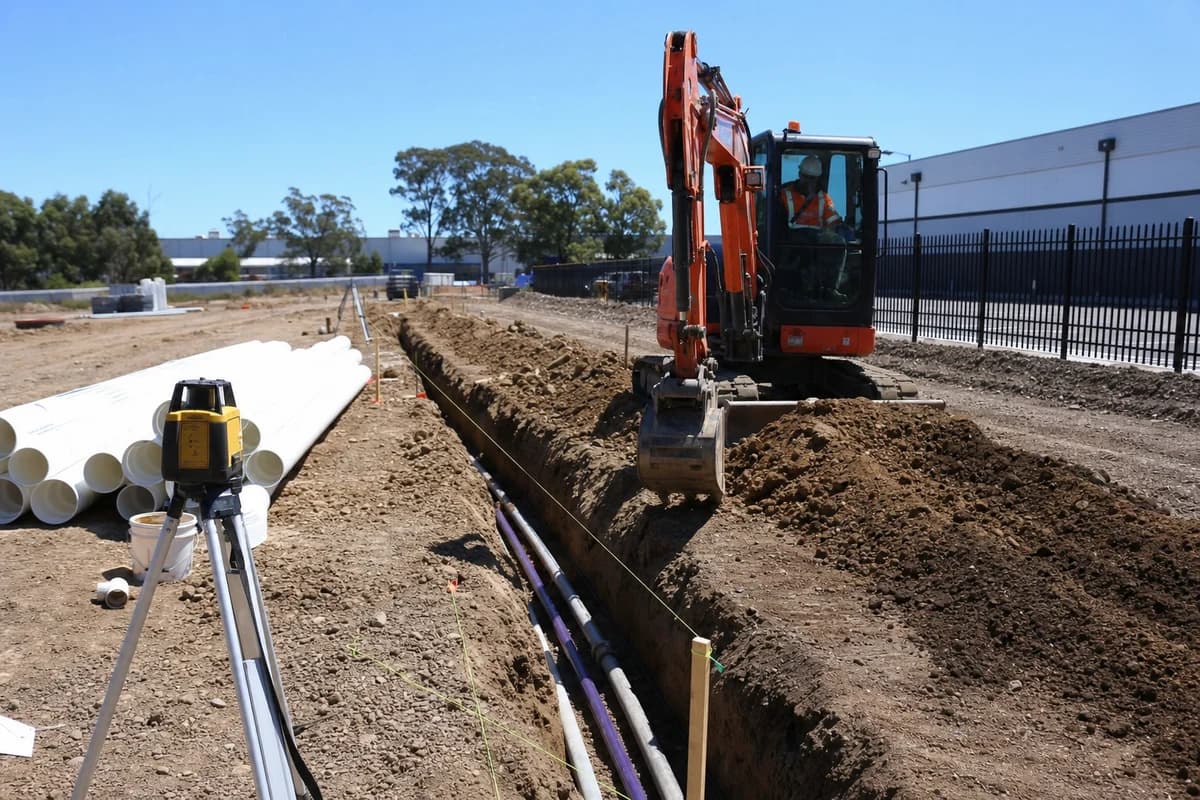
Step 2 — Dig, bed, and protect each service class correctly
Water and sewer need bedding, jointing, testing, and protection depths that match authority or design specifications. Power and communications need duct banks, warning tape, and clearances that keep later pavement digs from cutting live circuits.
Do not mix bedding standards across trades in one trench without a written method. Contaminated or poorly compacted bedding is a common reason utility trenching NSW packages reopen after handover.
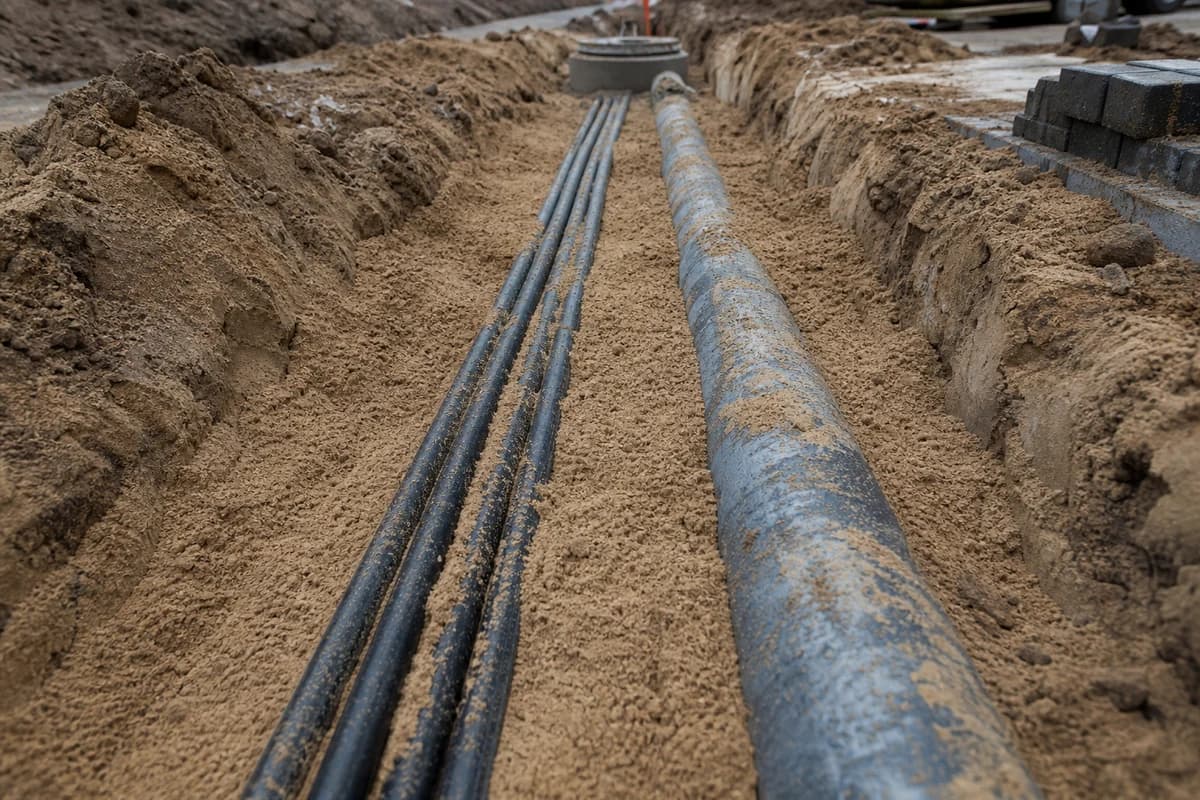
Step 3 — Sequence stormwater drainage NSW and trench crossings
Stormwater drainage NSW pipes, pits, and overland paths often share the same verge or embankment as utilities. Sequence so drainage structures are not cut by later power or communications digs—and so utility trenches do not soft-spot pavement boxes at pit approaches.
A civil drainage contractor should own invert and bedding holds where stormwater and utilities cross. Orphan interfaces at those points are where finished roads and pads fail first.
Owner confirmation themes for catchments and pits sit in what to confirm with a stormwater drainage contractor NSW; fold those gates into the trenching programme before sealing.
Interface checklist before you approve backfill
Use this gate while the trench is open:
Horizontal and vertical clearances match the coordinated services drawing.
Bedding and surround materials match each service specification—not a single generic sand assumption.
Stormwater drainage NSW pits and culvert installation NSW structures nearby are protected or complete enough that backfill will not undermine them.
Warning tape, tracer wire, and as-built mark-ups are ready before the trench disappears.
Reinstatement to pad or road formation is named—including who owns asphalt or hardstand cut-and-replace.
Corridor reinstatement after digs also appears in pavement construction contractor NSW when trenches cross haul or permanent access routes, and in NEXTGEN roads delivery when sealed shoulders are in scope.
What to attach when you inquire for utility trenching NSW
Send services drawings with revision dates, known conflicts, road or pad crossing details, testing expectations, and who owns authority liaison. Incomplete briefs produce optimistic dig rates that shift when congested corridors appear on site.
Route that pack through NEXTGEN’s contact pathway, review engagement themes in the delivery FAQ, and browse delivery shapes in the project showcase when you want water, sewer, power, and communications priced as one corridor.