

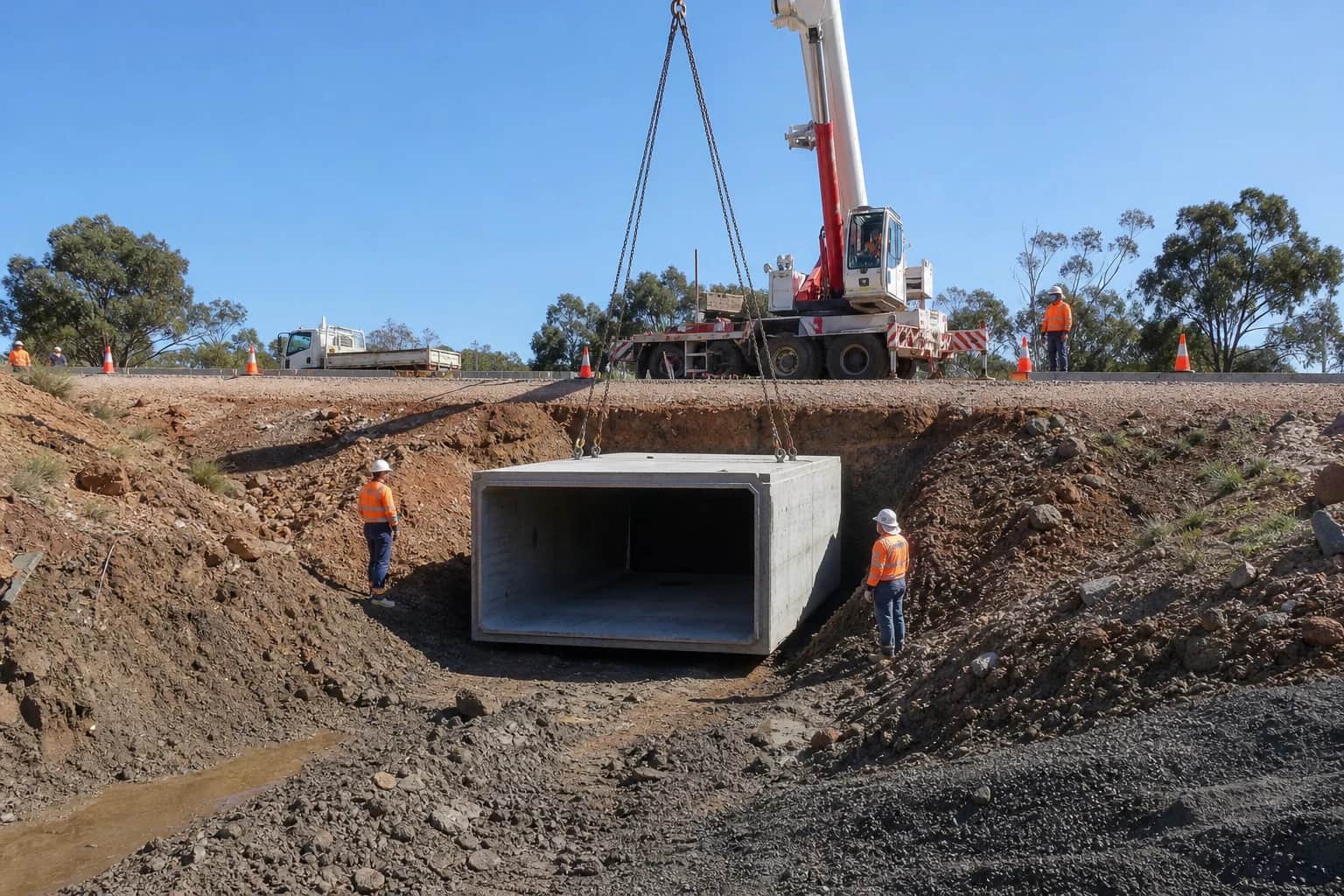
Why culvert installation NSW fails when treated as a pipe-only task
Treat culvert installation NSW as a road–drainage structure: excavation, bedding, barrel or box units, jointing, backfill to cover depth, headwalls or wingwalls, and scour protection. Skipping end structures or temporary traffic cover is how access roads wash out during construction.
Stormwater drainage NSW catchments decide culvert size and outlet energy. Owners who only compare barrel quotes without headwall and dissipater scope discover the missing cost after the first heavy rain.
NEXTGEN stages these packages through civil infrastructure drainage capability and roads and access delivery so culvert holds align with formation and pavement.
Step 1 — Lock stormwater drainage NSW flows and road geometry
Confirm upstream and downstream levels, design flow assumptions, and how the access road crown sheds water into the culvert. Misaligned roads and culverts create ponding that softens pavement edges the QA program already signed.
Name temporary diversion paths while the embankment is open. Construction traffic that crosses unfinished cover is a leading early failure mode on haul routes.
Broader catchment confirmation questions sit in what owners should confirm with a stormwater drainage contractor; use them before the civil drainage contractor mobilises plant.
Step 2 — Install barrels with bedding, jointing, and cover depth
A civil drainage contractor should prove line and level, joint seals, bedding material, and compaction around the barrels before raising cover. Underrated cover under haul trucks crushes joints even when the concrete looks sound.
Document which plant may cross, at what cover, and who authorises exceptions. Verbal “it’ll be fine” crossings are how culvert installation NSW becomes a rebuild mid-programme.
Step 3 — Build headwalls, wingwalls, and scour protection
Headwalls and wingwalls turn a buried barrel into a maintainable structure. Confirm formwork, reinforcement, concrete curing, and how the structure ties to the embankment slope before backfill hides defects.
Scour protection and energy dissipaters belong in the same package when outlet velocities threaten the toe or downstream channel. Leaving riprap as an optional “if needed” usually means an urgent call after the first storm.
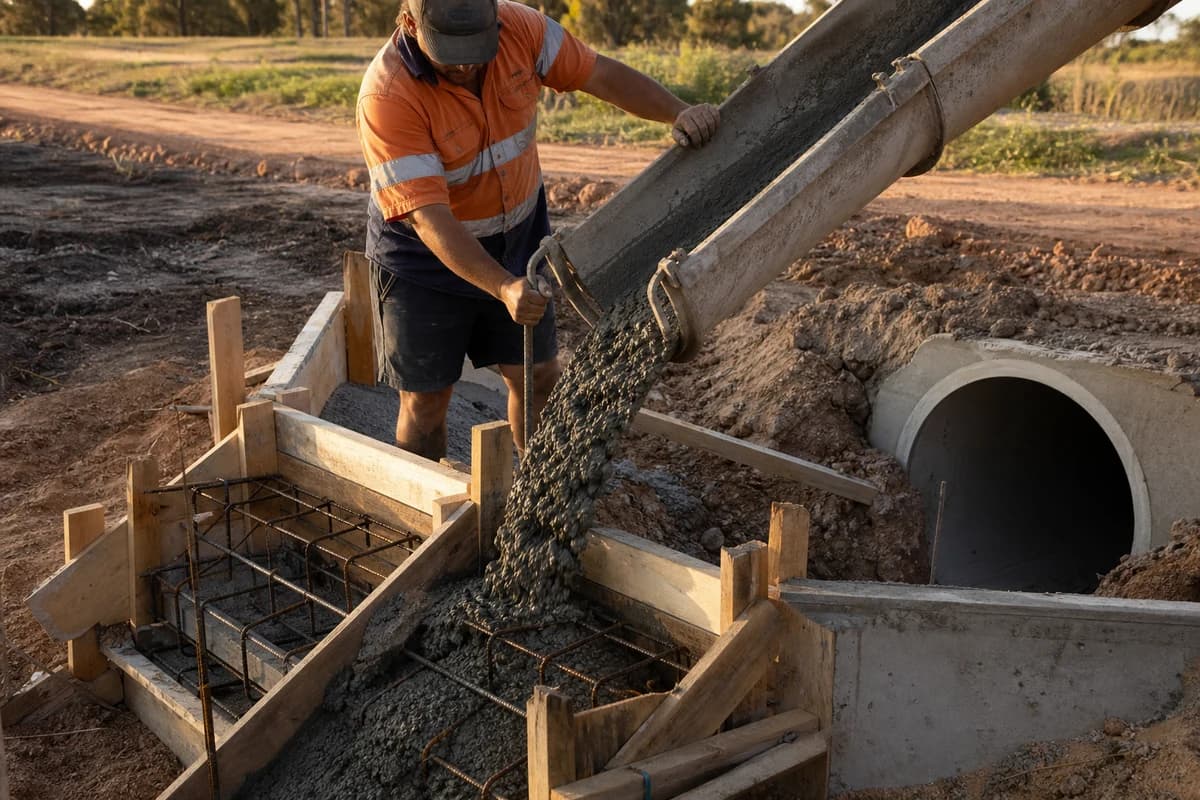
Step 4 — Coordinate utility trenching NSW at the crossing
Utility trenching NSW often shares the same embankment as culverts—communications, power, or water may cross above, beside, or after drainage. Sequence trenches so later services do not cut finished headwalls or soften backfill.
Require mark-ups for clearances, trench bedding at crossings, and reinstatement to road formation levels. Orphan utility digs are a common reason pavement boxes fail at culvert locations.
When the corridor is still being formed, align with haul road construction NSW and roads capability so haul loads and cover depths stay compatible.
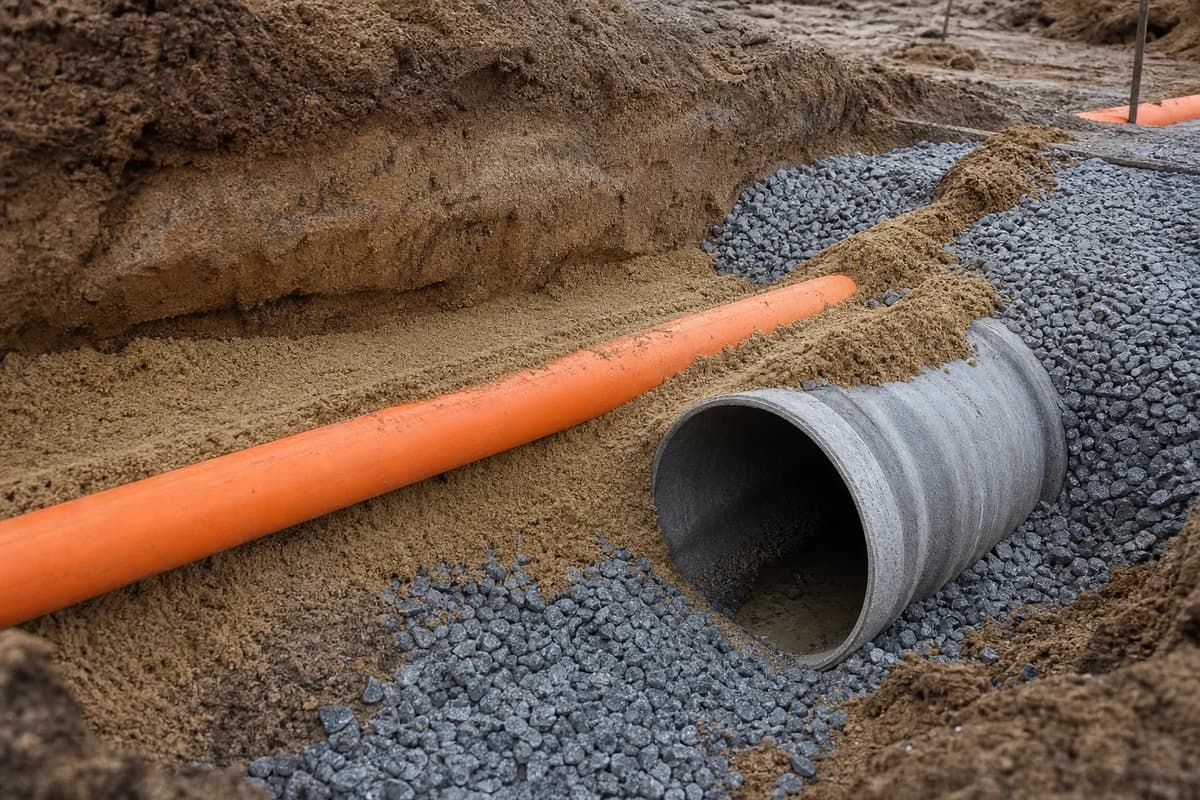
Quality and handover checklist before opening the road
Line, level, and joint records for each culvert unit are closed.
Cover depth and traffic restrictions matched the construction method used.
Headwalls, wingwalls, and scour protection are complete and photographed.
As-built inverts, locations, and outstanding works are ready for the civil drainage contractor handover pack.
Pavement edge quality themes in pavement construction contractor NSW: subgrade, layers and quality checks apply once the embankment is ready for sealing around the culvert.
Review ITP and assurance expectations in NEXTGEN’s delivery FAQ before practical completion claims.
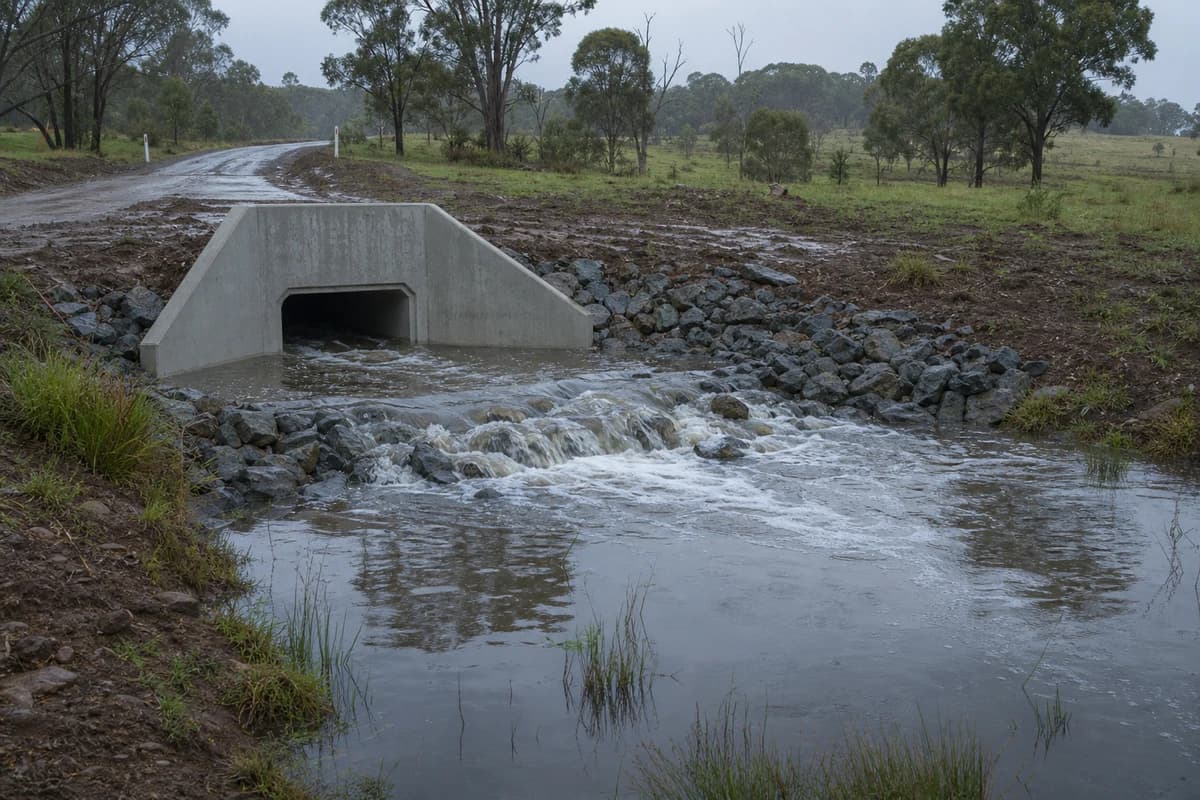
Brief NEXTGEN on culverts for roads and access routes
Share long sections, geotech notes, design flows, traffic loads, and utility plans when you contact NEXTGEN. A clear brief lets culvert installation NSW be reviewed with roads interfaces as one package.
Browse comparable corridor delivery in the project showcase when evaluating multi-structure drainage under access routes.