

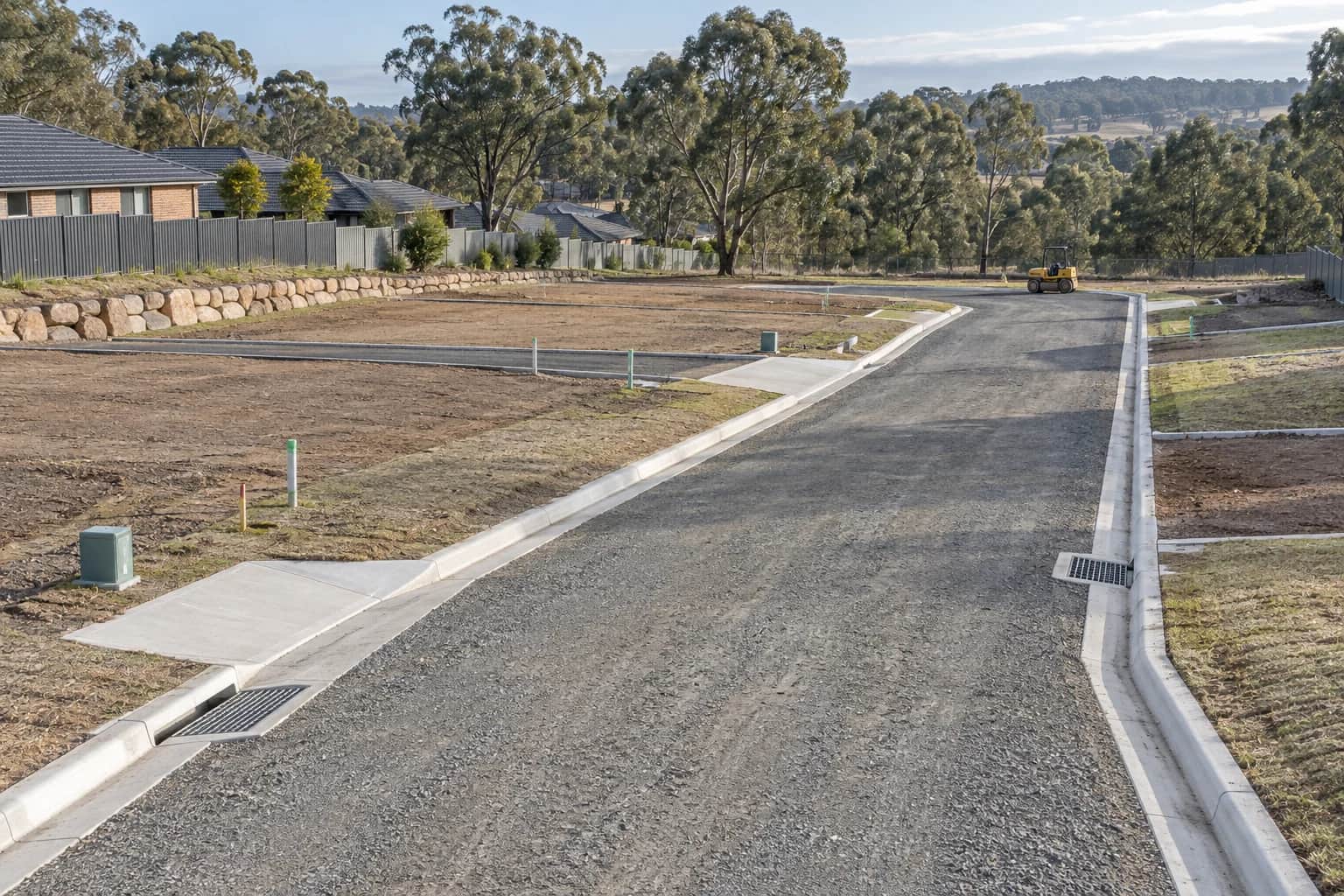
Subdivision utilities drainage NSW: what must handover prove?
A subdivision civil handover should show what has been built, how it was checked, and who takes responsibility for each asset. A finished street can conceal incomplete service connections, missing trench records, or drainage that depends on another stage. Treat physical completion, network readiness, and formal acceptance as separate statuses in the handover register.
Begin with a package boundary drawing and a list of required evidence for each network. Confirm the receiving parties before construction starts so inspections and records are captured while the work remains visible. NEXTGEN's civil infrastructure scope overview provides the starting point for discussing drainage, service corridors, reinstatement, and their delivery interfaces.
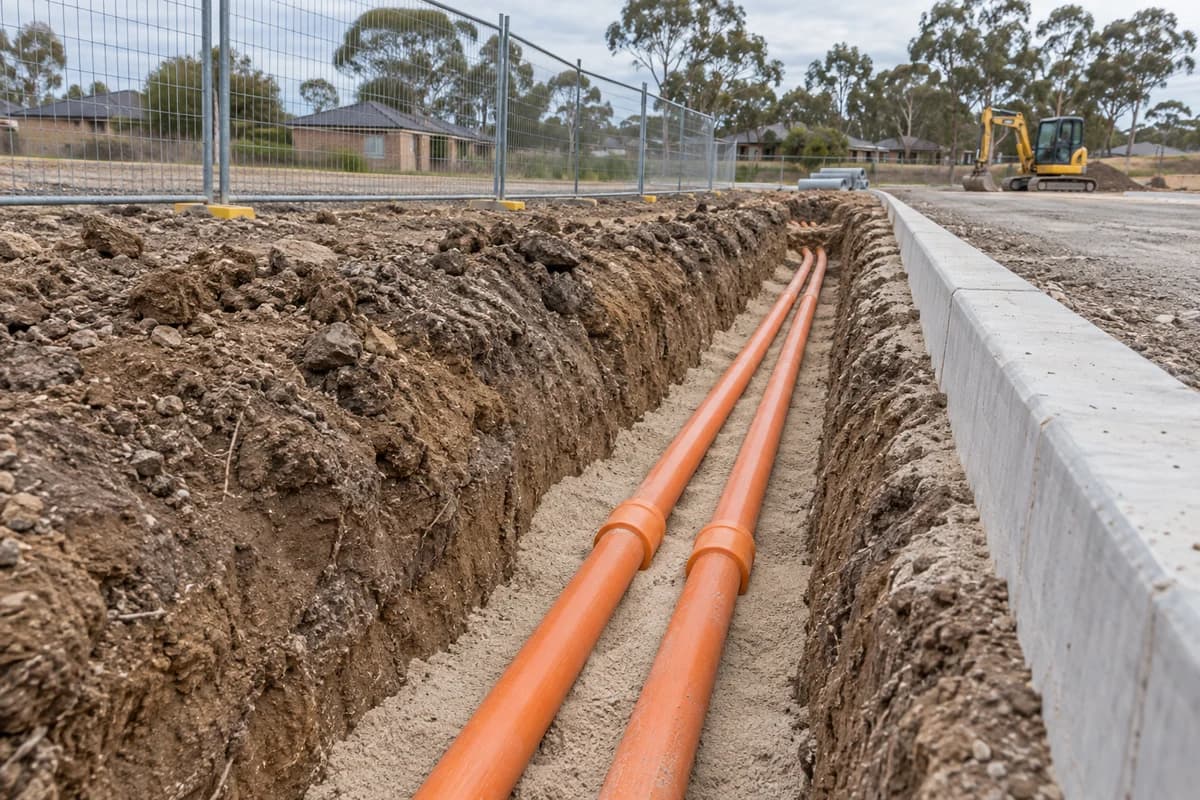
2. Capture buried-service evidence before closing the trench
Plan evidence capture with the utility trenching NSW sequence, rather than leaving it until the final walkover. Agree the inspections, survey, photographs, and test records required before each section is concealed. The approved design and relevant asset requirements should determine bedding, cover, separation, and protection details.
At a shared corridor or crossing, record both the installed asset and its relationship to surrounding services. If a clash changes an alignment or level, obtain the required design decision and update the record before backfill. A photograph without an asset reference or location is difficult to reconcile with the finished subdivision.
Link each released trench section to the corresponding inspection and testing evidence. Where records are missing, document the gap and agree a verification method with the receiving party. Do not replace a required inspection with a general statement that the contractor has always used the same method.
3. Trace subdivision drainage beyond the last installed pipe
Check the complete drainage route: lot interfaces, pits, pipes, crossings, the receiving point, and any temporary arrangement still in use. The stormwater drainage NSW handover review should reconcile constructed levels with the design and identify downstream dependencies. Installing the final pipe within a stage does not confirm that its outlet is ready.
Where a subdivision package includes culvert installation NSW works, inspect the crossing as a complete asset rather than only a barrel. Confirm the agreed records for inlet and outlet levels, surrounding formation, structural components, and erosion protection. Identify who maintains the crossing if later construction traffic continues to use it.
Keep temporary sediment controls on the responsibility register until their removal or transfer is agreed. A permanent drainage asset may still need protection from earthworks in neighbouring lots. Record cleaning, inspection, and maintenance ownership during that overlap instead of treating civil demobilisation as the end of all drainage obligations.
4. Check finished levels across kerbs, lids, and lot entrances
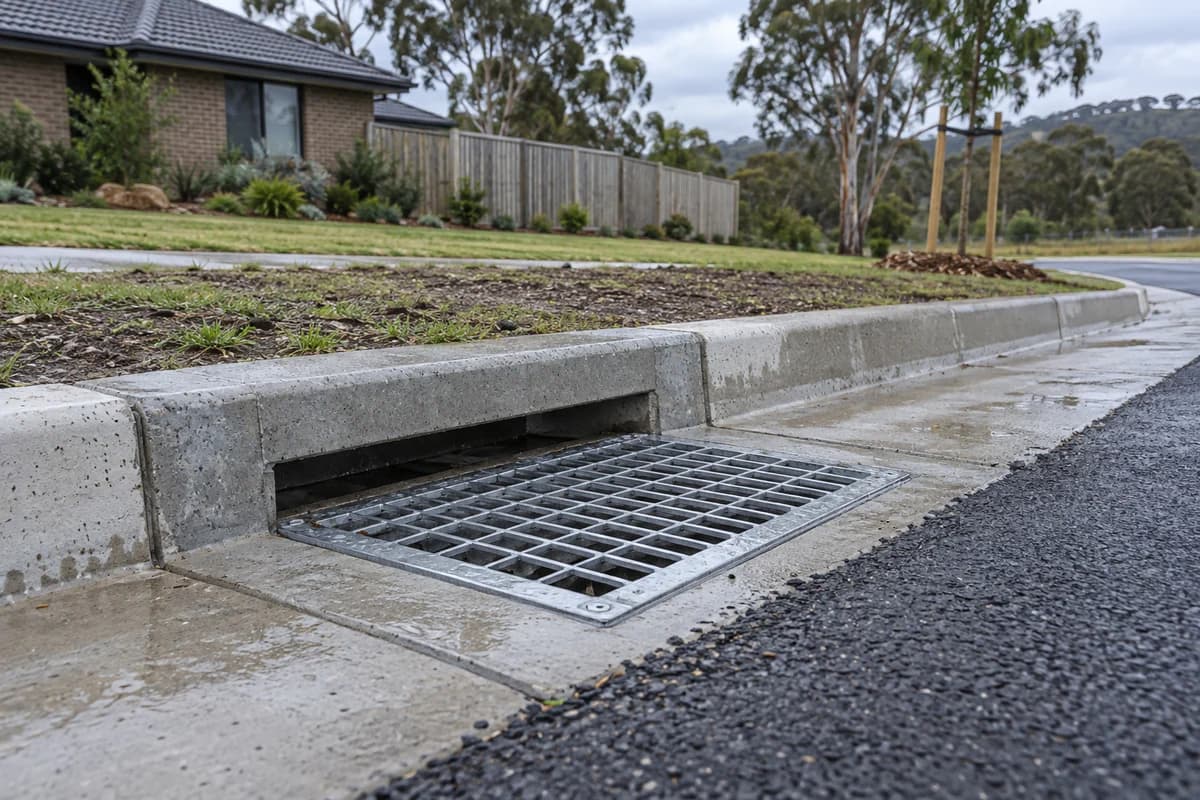
Review utility and drainage interfaces after final surface levels are established. Compare pit lids, grates, kerb inlets, footpaths, driveways, and lot boundaries against the issued design. A component can be correct in isolation yet conflict with the pavement or verge completed around it.
Look for blocked inlets, inaccessible service covers, disturbed reinstatement, and changes that interrupt the intended surface drainage route. Ask the designer to resolve discrepancies before treating them as cosmetic defects. Define the inspection scope with the receiving party so the walkover checks the same asset boundaries as the drawings.
Allow for later utility connections that cut through finished surfaces and name the reinstatement owner. The service corridor sequencing guide explains the broader relationship between underground works and pavement completion; for a subdivision, extend that check to each affected lot entrance and shared verge.
5. Reconcile the asset register with the handover records
Use a register that connects each asset identifier to its location, drawing revision, inspection records, applicable test results, and acceptance status. Check that work-as-executed or work-as-constructed information reflects the installed arrangement. Record approved changes and unresolved departures explicitly so the receiving team can trace them.
Obtain the current submission requirements from the relevant asset owner. For example, Sydney Water's provider forms include inspection and test plans, field test reports, and work-as-constructed reporting. These are examples of owner-specific documentation, not a universal handover pack for every NSW subdivision or network.
Ask the civil drainage contractor to identify which records are complete, which await another party, and which require a return visit. Photographs help explain a record but do not replace the specified tests or acceptance process. File the evidence as construction progresses so the final submission reconciles existing records instead of reconstructing them.

6. Close defects without losing responsibility between stages
Give each outstanding item an asset reference, responsible party, agreed action, and verification requirement. Distinguish a missing record from a physical defect or an unavailable connection; each needs a different close-out action. If an item prevents acceptance, make that dependency visible in the release plan.
Agree how completed assets will be protected while adjoining lots or later stages remain under construction. Record who checks damage, maintains temporary controls, and confirms repairs. A partial handover should state the accepted boundary and remaining obligations clearly enough for a new supervisor to understand them.
Brief NEXTGEN on the subdivision interfaces still to resolve
Send the coordinated drawings, asset ownership schedule, construction stage, known connection dependencies, and required handover records. Review the NEXTGEN delivery and inquiry FAQs for the general process and the published project evidence and scope examples for the stated status and scope of available references.
Use the project inquiry form to describe whether the priority is a new civil package, an unresolved interface, or preparation for handover. Ask NEXTGEN to confirm scope fit, delivery responsibilities, and availability against the actual project requirements. That gives the team a clear basis for discussing the next construction or acceptance step.