

What should a Campbelltown civil contractor brief establish first?
Start with the deliverable stage, its access, and the infrastructure it depends on. A civil package can have complete drawings for its own footprint yet still depend on an adjoining road, a downstream drainage connection, or a service corridor delivered by someone else. Name those dependencies before requesting a construction sequence or tender return.
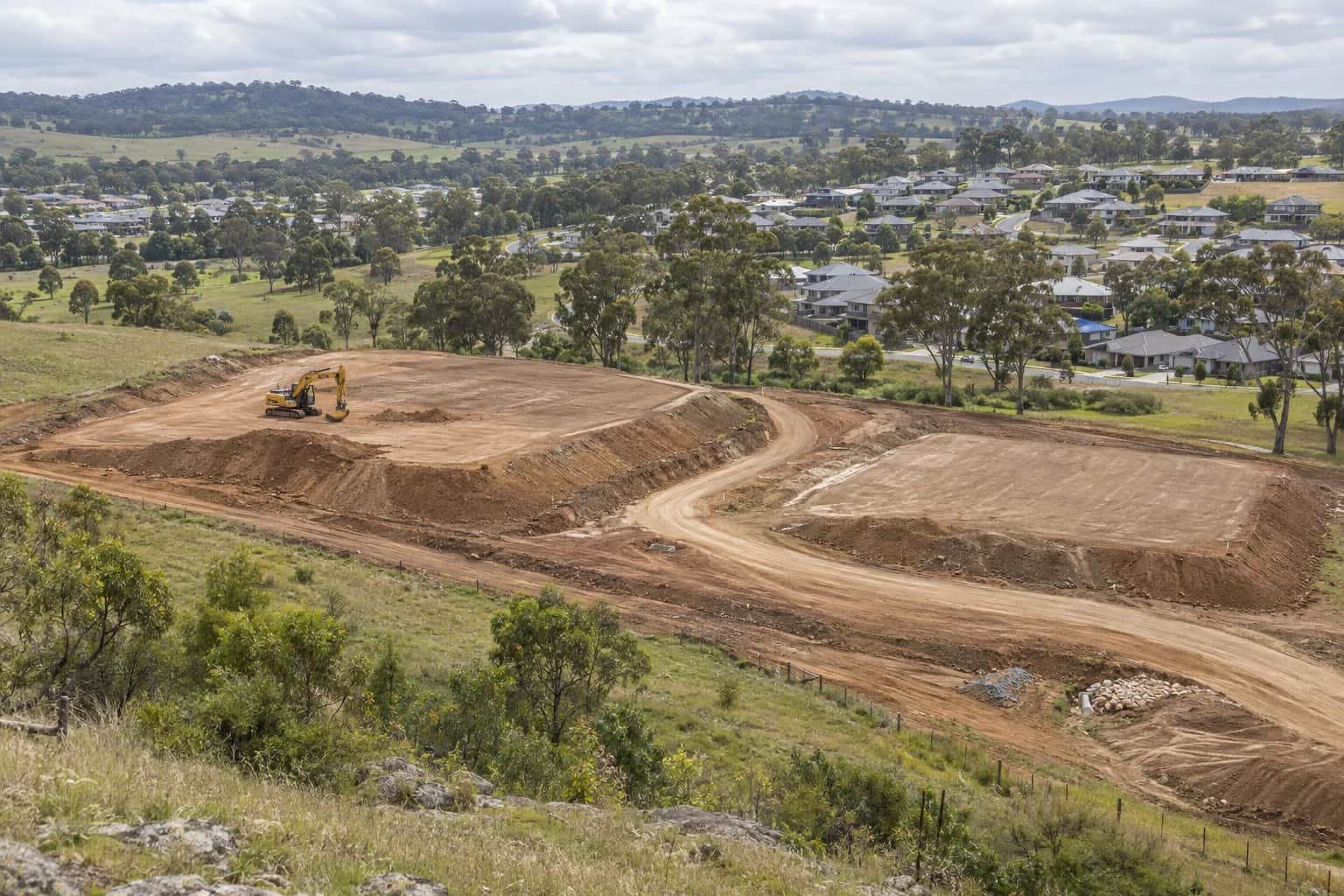
For Campbelltown and Macarthur projects, distinguish work beside occupied properties from work on an expanding urban edge. The same earthworks quantities can require very different access arrangements and handover dates. Use NEXTGEN's civil infrastructure scope overview to frame the package, then supply the location-specific information below.
Campbelltown's existing frontages need a different starting point
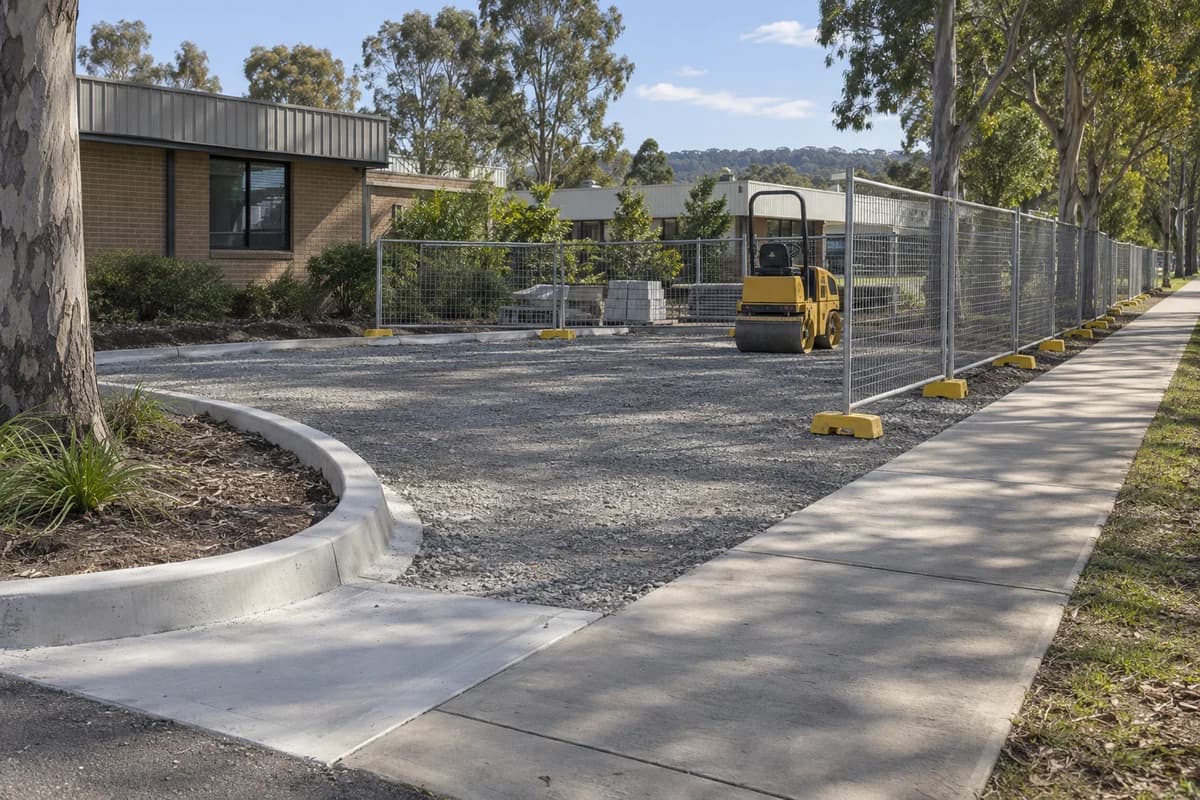
At an established Campbelltown property, begin at the boundary: entrances, footpaths, adjoining levels, existing drainage, and the services that must remain available. A seemingly small access reconstruction can affect deliveries and pedestrian movement beyond the contractor's immediate work area. Record the existing condition before deciding where plant and stockpiles can go.
Walk the proposed construction route with the site operator and designer. Check where delivery vehicles can wait, how an occupied building remains accessible, and whether temporary works consume space reserved for permanent services. An empty area on a survey is not automatically available for laydown throughout the program.
Separate the roadworks Campbelltown package into its temporary entrance, permanent pavement, and boundary tie-in. Specify who maintains the temporary surface and who accepts the final connection. If the same entrance must serve every stage, allow a defined reconstruction window before the finished asset is handed over.
Macarthur growth land: draw the boundary around each stage
The NSW Government's Greater Macarthur Growth Area overview distinguishes the Glenfield to Macarthur urban renewal precincts from land release precincts south of Campbelltown. That is useful regional context; the construction brief still needs the actual parcel, issued design, and project-specific release conditions.
On a staged site, mark what is available now, what another package must complete first, and what remains outside the construction boundary. Include access across neighbouring stages, temporary drainage paths, and the space needed to maintain controls. Do not treat a future connection shown on a masterplan as an available construction asset.
A practical drawing overlay can show three boundaries: the area the contractor may enter, the area it must finish, and the adjoining works on which completion depends. Give each dependency an owner and an agreed readiness check. This makes a tender assumption visible before it turns into an idle workfront.
Confirm the Macarthur drainage outlet before opening more ground
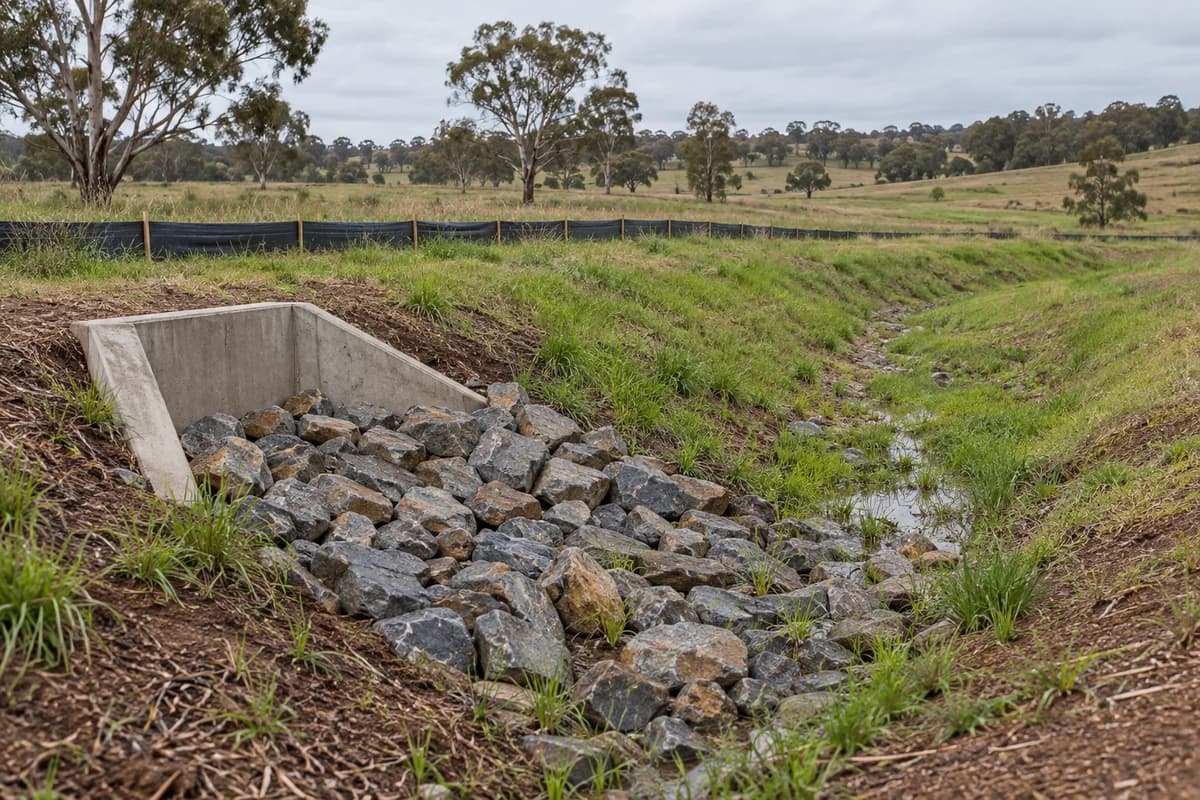
Resolve the drainage route before deciding how much ground to expose. Identify the receiving point, relevant design levels, temporary controls, and responsibility for keeping the route functional during construction. Where the permanent system is delivered later, the interim arrangement needs its own design and acceptance process.
The drainage contractor Campbelltown procurement brief should distinguish permanent pits and pipes from temporary diversions, sediment controls, and maintenance. Ask who inspects controls after rain and who maintains them when one stage is handed over but adjoining earthworks continue. A completed pipe run does not by itself demonstrate a functioning drainage system.
Use the staging drawing to trace runoff through each construction phase, including the period when temporary haul roads cross future drainage lines. Check interfaces with the civil designer rather than assuming a generic detail suits the site. Keep downstream readiness as a release condition for the affected stage.
Release Campbelltown earthworks by proven areas, not bulk totals
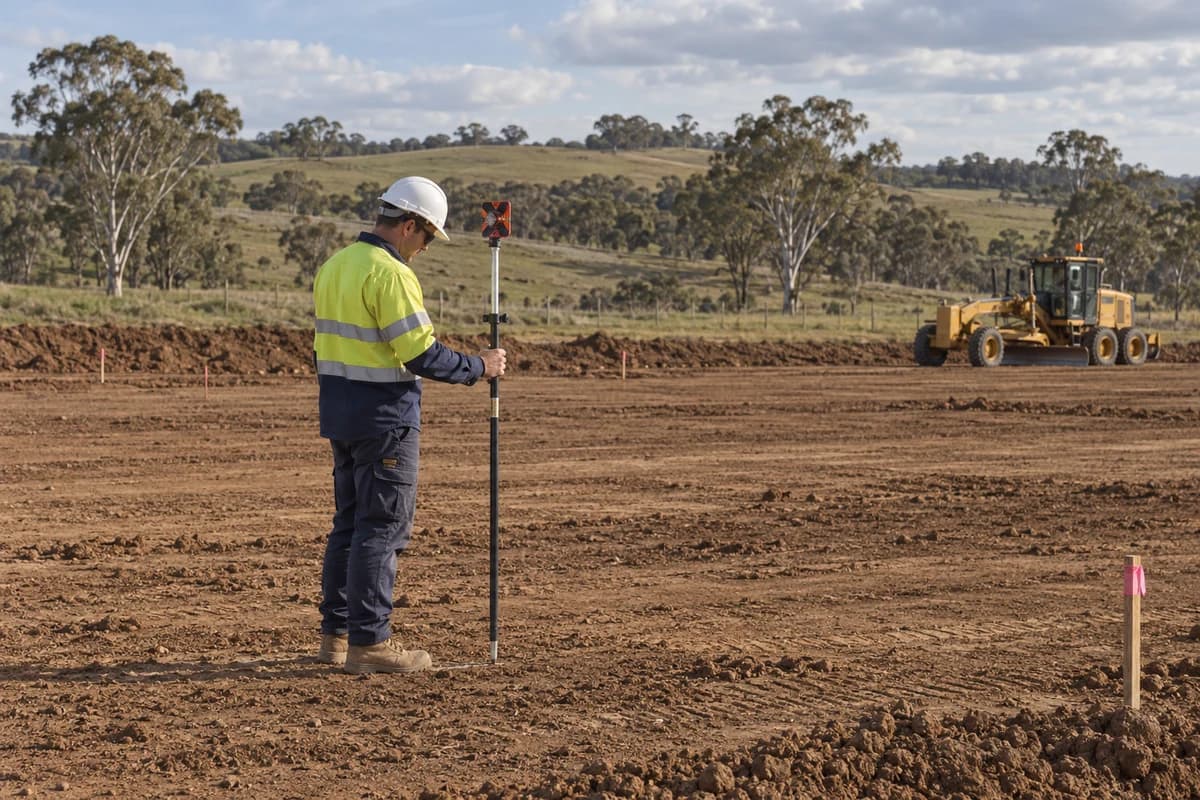
Define the earthworks Campbelltown package by the formation each following trade needs. Current survey, geotechnical information, design levels, and material suitability determine the method; a suburb name cannot establish ground conditions. Identify where unsuitable material, unexpected services, or changed levels would require a design decision.
Agree inspection and testing requirements before fill placement begins. Tie records to identifiable areas and levels so the receiving team can understand what has been checked. Record temporary traffic over finished formation and the inspection or repair needed before that surface is released again.
For staged Macarthur development, a smaller accepted area may be more useful than a large unfinished cut-and-fill operation. Set an achievable release boundary with drainage working, access maintained, and defects recorded. Avoid promising following trades access solely because the bulk excavation quantity is nearly complete.
Use a Macarthur stage-readiness checklist before tender
Make each tenderer work from the same definition of readiness. Record unknowns as questions with named decision owners, rather than hiding them inside a general allowance. This short checklist helps distinguish a priced scope from a dependency that still needs resolution.
- Parcel and stage: address, current survey, work limits, access rights, and the exact handover area.
- Ground: available investigations, design levels, material assumptions, and the process for changed conditions.
- Water: receiving point, temporary drainage design, maintenance owner, and downstream readiness.
- Access: construction vehicles, occupied-property interfaces, laydown, and final entrance reconstruction.
- Services: known records, verification responsibilities, corridor ownership, and connection dependencies.
- Release: inspection records, test results, as-built information, outstanding items, and the accepting party.
Compare the package, then send a scoped Campbelltown inquiry
Compare contractor responses against those boundaries and dependencies, not only a total price. The infrastructure contractor Campbelltown selection process should establish who owns each interface and what evidence is available for comparable work. Review NEXTGEN's published project evidence and scope examples with attention to each page's stated status and scope.
Use the civil project staging guide for the broader workfront sequence, and the delivery and inquiry FAQs for NEXTGEN's general process. For this location, keep the inquiry anchored to the actual Campbelltown or Macarthur parcel and the first stage requiring delivery.
Send the drawings, stage boundaries, intended dates, known service information, and open dependency list through the NEXTGEN project inquiry form. Ask the team to confirm scope fit, mobilisation, and availability for that package. Early agreement on what can be released gives the designer, civil team, and following trades a common basis for planning.