

What a Penrith civil contractor should lock for logistics sites
Appointing a Penrith civil contractor for industrial and logistics land starts with a shared staging plan—not a suburb-name capability claim. The practical answer is one brief that names earthworks Penrith formation intent, lot drainage to a legal outlet, and heavy-vehicle roadworks before the warehouse or plant package closes the ground.
Penrith and St Marys sit on the western M4–Great Western Highway logistics belt: established industrial estates, freight yards, and growth lots that still sit on Cumberland Plain clay. Soft pads, unfinished stormwater, and car-scaled entries become the next trade’s problem after award.
NEXTGEN delivers those packages through Civil Infrastructure when formation and utilities own the critical path, and through Roads when estate pavements or public-corridor ties sit on the programme. Broader Western Sydney tender prep belongs on the Greater Sydney civil infrastructure guide; this page stays on Penrith and St Marys industrial and logistics lots.
How Penrith and St Marys logistics lots differ on the ground
Penrith industrial parcels often sit closer to the Nepean corridor, flood-affected low ground, and approaches that mix arterial freight with local estate traffic. St Marys and surrounding industrial pockets lean into established warehouse fabric—Mamre Road–adjacent logistics, older hardstands, and live neighbours who already turn B-doubles every shift.
Treat the two names as different neighbour and access stories, not interchangeable marketing labels. A greenfield Penrith pad beside open grassland needs different temporary drainage and mud-tracking controls than a St Marys infill lot that shares a gate with an operating freight yard.
Do not assume NEXTGEN holds a Penrith City Council, Sydney Water, or TfNSW panel appointment. The contractor’s job is to deliver scoped earthworks, drainage, and roadworks against the drawings and conditions you supply.
Which freight corridors set the Penrith and St Marys access brief?
Mobilisation from NEXTGEN’s Yallah base is a real Western Sydney cost. Name laydown, overnight parking, and whether plant floats for each workfront or stages from a Western Sydney compound before earthworks Penrith cut-fill is priced.
Public approaches—M4, Great Western Highway, The Northern Road, Mamre Road, and Mulgoa Road—already carry construction and freight traffic. Lots that only have a soft shoulder onto an estate road will need temporary entries, sight-distance works, and a cleanliness plan before bulk digs start.
Keep construction haul off finished warehouse aprons wherever possible. Precinct-scale enabling patterns for airport-adjacent land sit in the Western Sydney Aerotropolis civil works guide; Penrith and St Marys briefs should still name the specific arterial the lot meets and who owns the first metres inside the boundary.
Logistics-site checklist before you issue the tender
Use this gate before you issue or evaluate an infrastructure contractor Penrith return. It sits mid-article so earthworks, drainage, and roadworks sections below can deepen the interfaces that usually break industrial programmes—not a generic NSW civil form.
- Parcel: Penrith, St Marys, or named industrial estate—with current survey, flood notes, and drawings.
- Earthworks: cut-fill intent, clay moisture holds, pad proof for the warehouse or plant package, and spoil or import destinations.
- Drainage: lot pits and pipes versus basins, council or Sydney Water ties, and temporary sediment outlets during construction.
- Roadworks: design vehicles (including B-double or crane where relevant), temporary versus permanent gate, and which arterial the access meets.
- Utilities: water, sewer, power, communications, and known live services sequenced before pavement.
- Neighbours and haul: operating warehouses, freight yards, mud-tracking controls, and laydown that does not chew the finished pad.
Why earthworks Penrith packages fail without pad proof
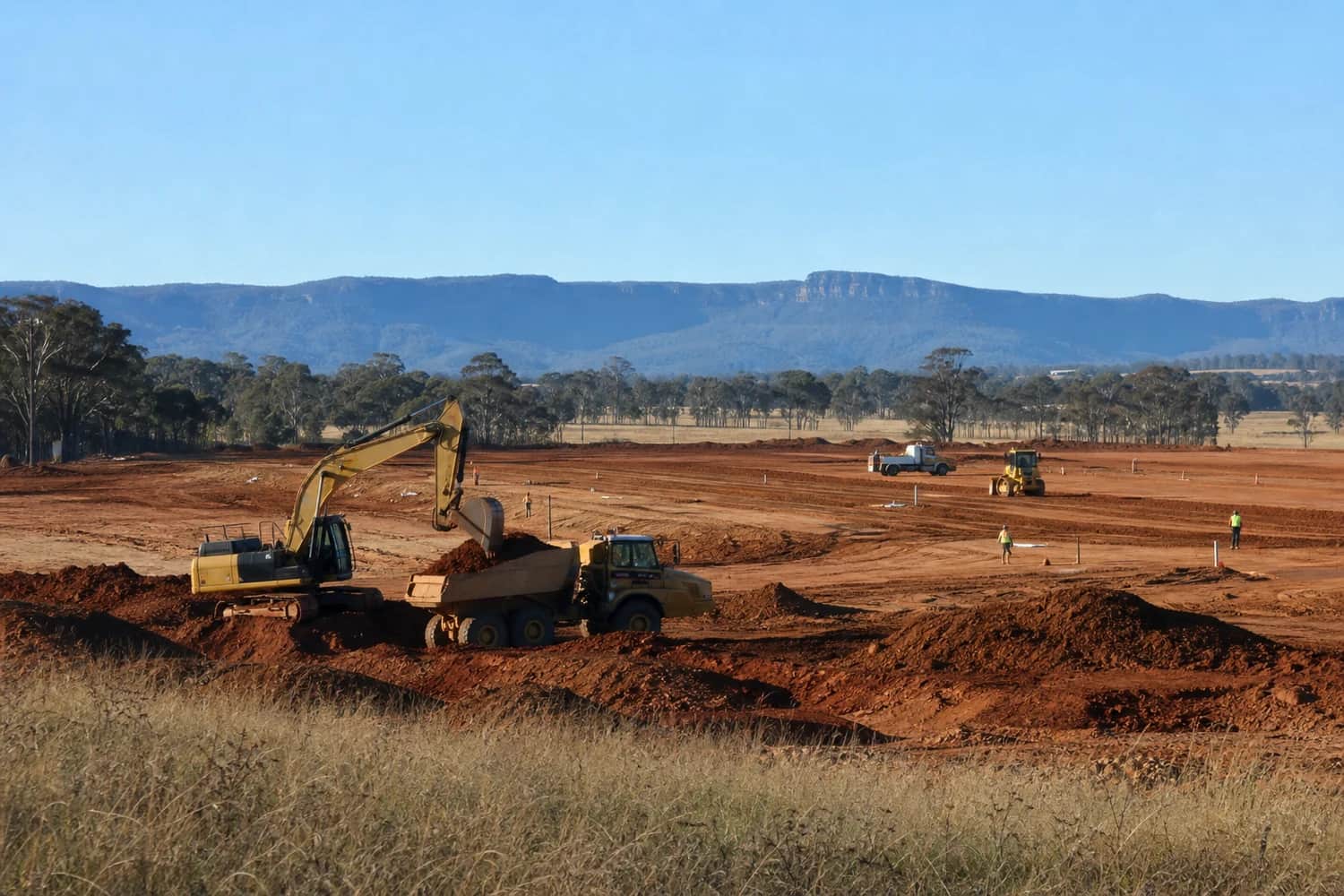
Earthworks Penrith scopes sit on shrink-swell clays that hold moisture after summer storms and winter saturation. Failures start when cut-fill is priced as a dry-weather bulk dig with no moisture holds, no named haul route, and no proof-roll criteria for the logistics pad the next trade will inherit.
Name design levels, import or spoil destinations, and whether temporary haul can leave the lot without destroying a finished formation. Soft spots reopen where overland flow was assumed to sheet into a neighbour or a future basin that is not yet built.
Method depth for bulk digs and formation proof sits in earthworks contractor NSW guidance; here the hold is local—Penrith and St Marys clay, freight-era haul, and a written recovery after wet weather before the warehouse package arrives.
When should a drainage contractor Penrith own temporary outlets?
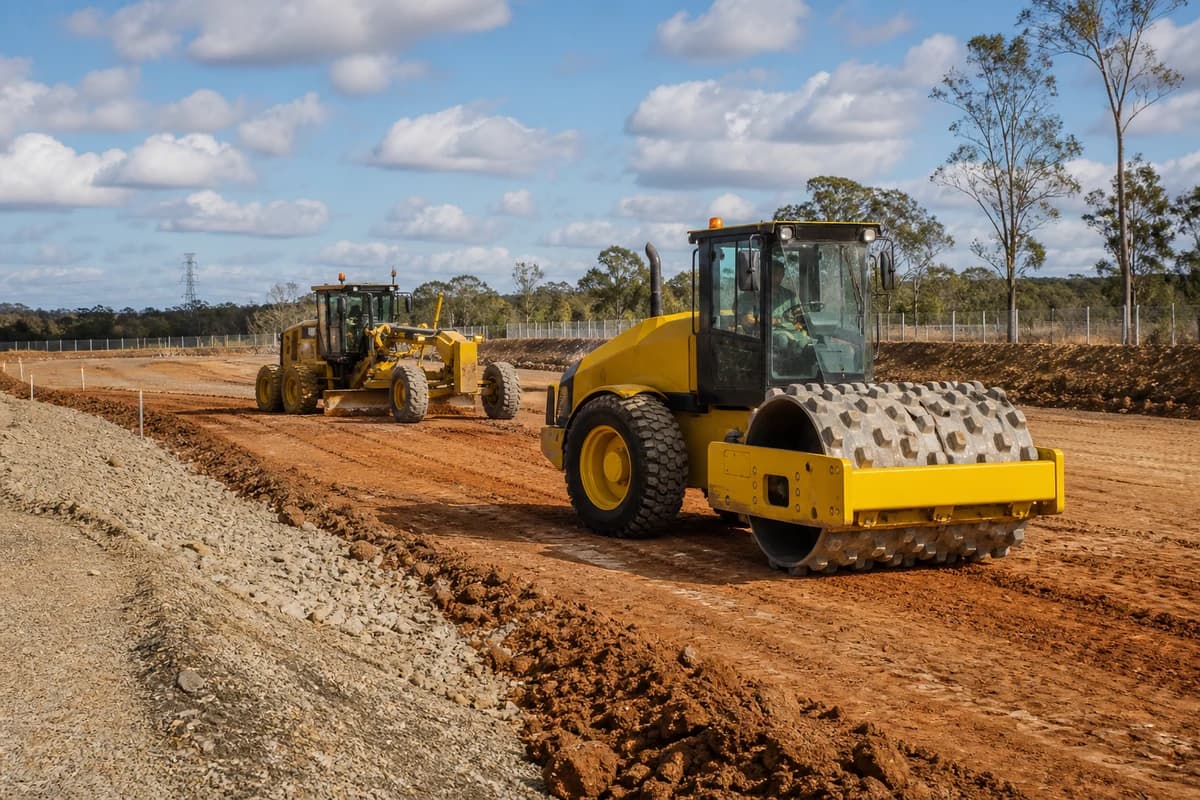
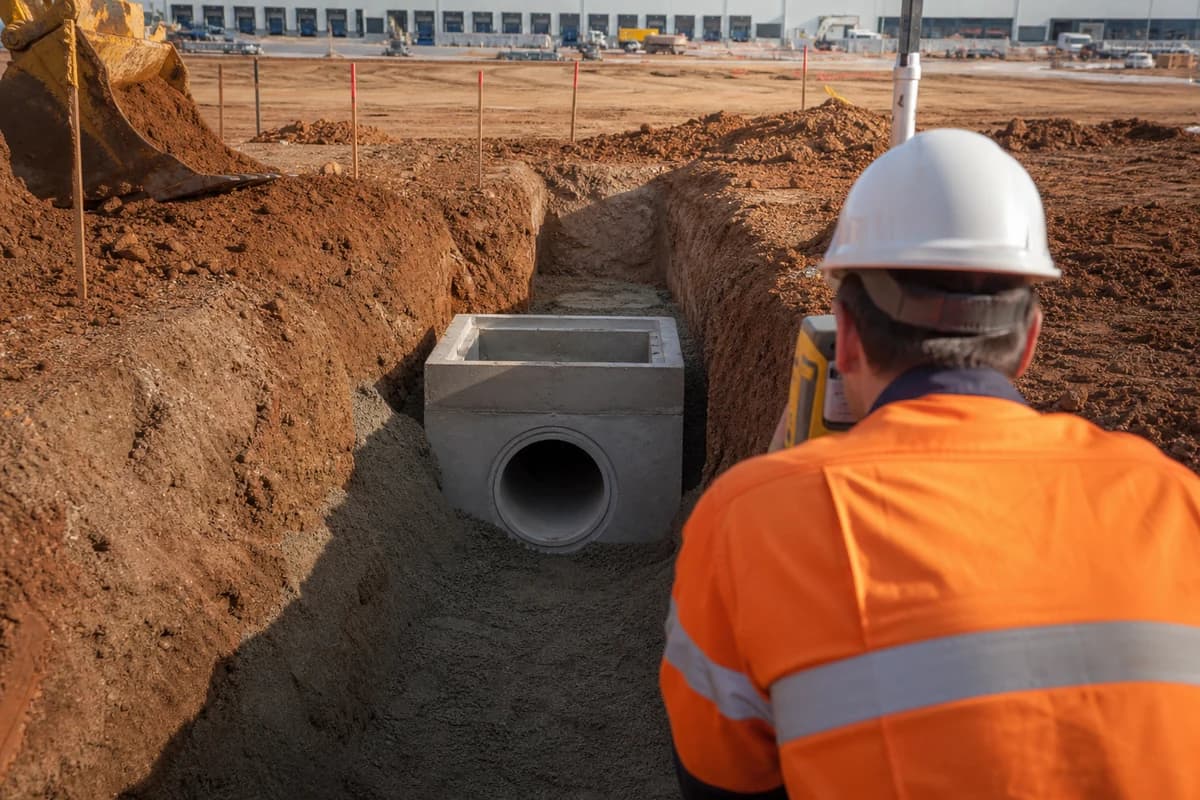
A drainage contractor Penrith developers appoint should own pits, pipes, temporary diversions, and legal discharge—not only a pipe schedule. Industrial lots often finish regrading before basin outlets or Sydney Water trunk ties are available, so temporary sediment controls must be named in the brief.
Overland flow paths change after cut-fill on large warehouse platforms. If the temporary path crosses a future heavy-vehicle pavement or a neighbour’s hardstand, sequence earthworks and drainage together so the finished pad is not left holding water.
Keep drains ahead of pavements wherever the corridor crosses a future running surface. Statewide pit and pipe method sits in stormwater drainage contractor NSW guidance; this section only localises those holds to Penrith and St Marys logistics staging.
Roadworks Penrith: gate geometry for freight design vehicles
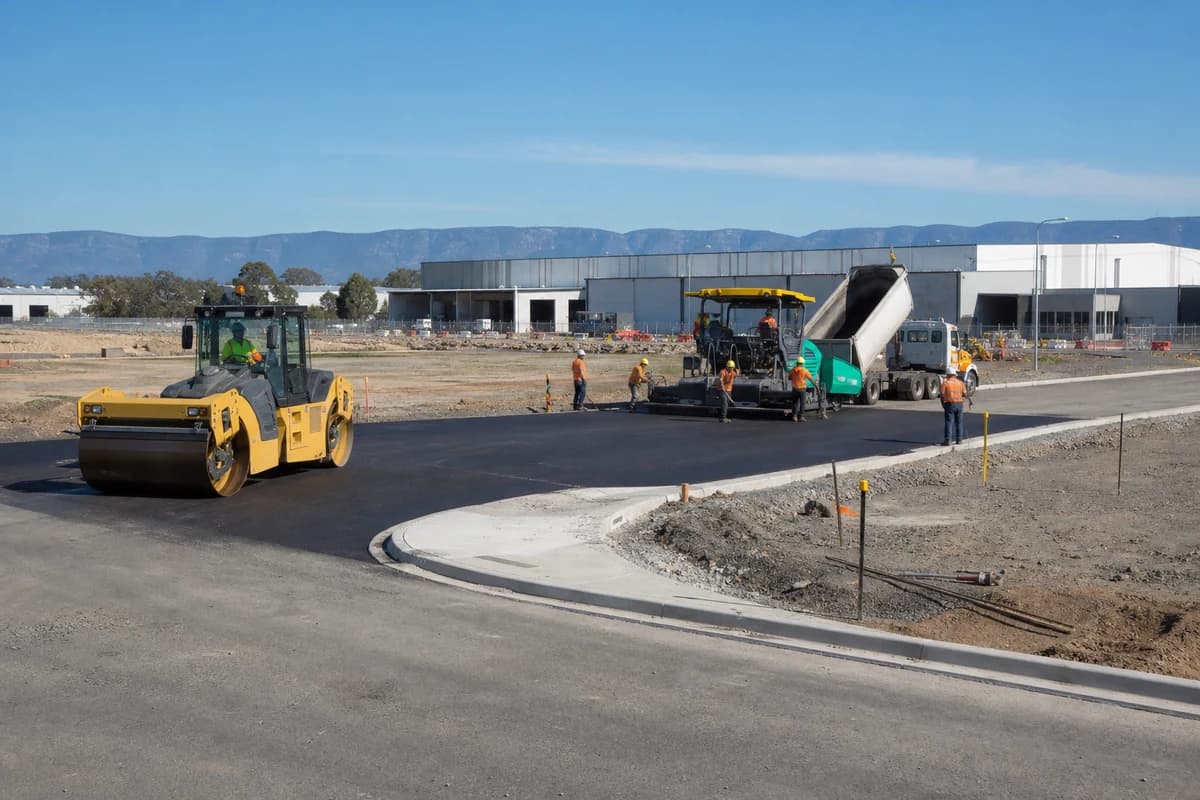
Roadworks Penrith packages fail when the site entry, temporary haul, and permanent warehouse apron are treated as one story. Estate roads sized for cars will not survive B-double, rigid, or mobile-crane cycles once the logistics tenant opens.
Confirm design vehicles, kerb returns, sight distance, and who owns the first metres inside the boundary. Temporary construction access that shares a future running surface needs a written reconstruction trigger—not an informal tidy-up after the first freight shift.
When the running surface owns the critical path, route the package through Roads. Formation and lot utilities stay with Civil Infrastructure so roadworks and enabling works do not fight for the same corridor. Review a representative industrial shape in the industrial site development package.
How do you brief an infrastructure contractor Penrith inquiry?
An infrastructure contractor Penrith appointment should still look like a scoped NSW civil job: drawings, geotech, design vehicles, flood and drainage outlet intent, and a written split between confirmed scope and assumptions. Compare delivery questions on the FAQ and commercial enabling patterns on the commercial civil works NSW guide before you close the brief.
Send parcel name, drawings, drainage outlet intent, design vehicles, and programme dates through Contact. NEXTGEN is based at Yallah and delivers Greater Sydney industrial sites through Civil Infrastructure or Roads—without claiming a Penrith City Council, Sydney Water, or TfNSW panel appointment unless your documents say so.