

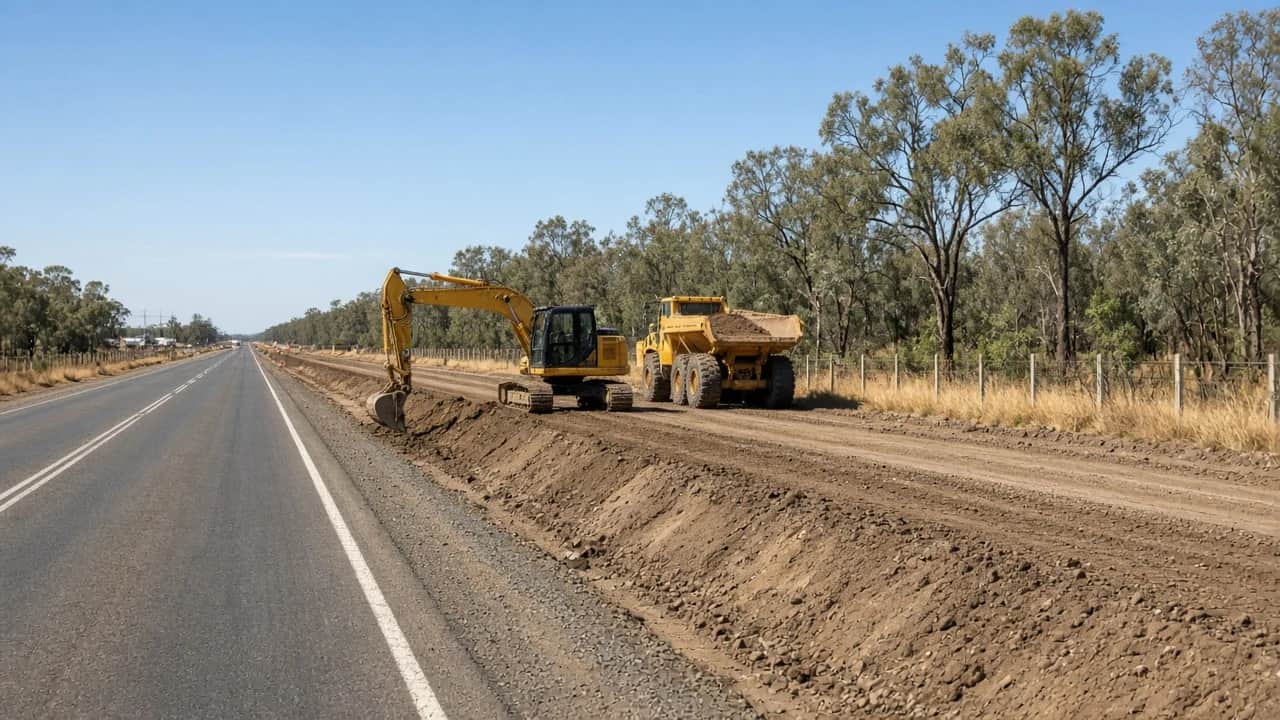
What to confirm before a road widening contractor NSW cuts the shoulder
Road widening for project access fails when owners treat the extra metres as "cut, fill, and asphalt" without proving what already sits beside the sealed edge. The practical answer is to appoint a road widening contractor NSW scope that confirms verge ownership, existing pavement condition, buried services, drainage shifts, and live-traffic staging before plant opens the formation—not after the first soft joint under tippers.
NEXTGEN stages these upgrades through its Roads roadworks package when the running surface, verge earthworks, and a road drainage contractor sequence share one critical path. This guide is a pre-construction confirmation playbook for widening an existing corridor for project access—not a blank-slate access road build, and not a full rehabilitation dig-out of a failed pavement.
Step 1 — Prove the existing corridor before you add width
Widening inherits the pavement you keep. Proof-roll and inspect the existing sealed or unbound edge after wet weather. Soft shoulders, alligator cracking at the verge, and contaminated base under the outer wheel path tell you a simple overlay on new formation will not marry cleanly to what remains.
Confirm legal and practical corridor width: title boundary, road reserve, easements, gates, and fence setbacks. A design that assumes metres of clear verge you do not control stalls plant after mobilisation.
When the kept pavement is already failing, escalate to road rehabilitation contractor NSW guidance rather than sealing a widened strip against a rotten edge. New width against soft history becomes the next dig-out under construction traffic.
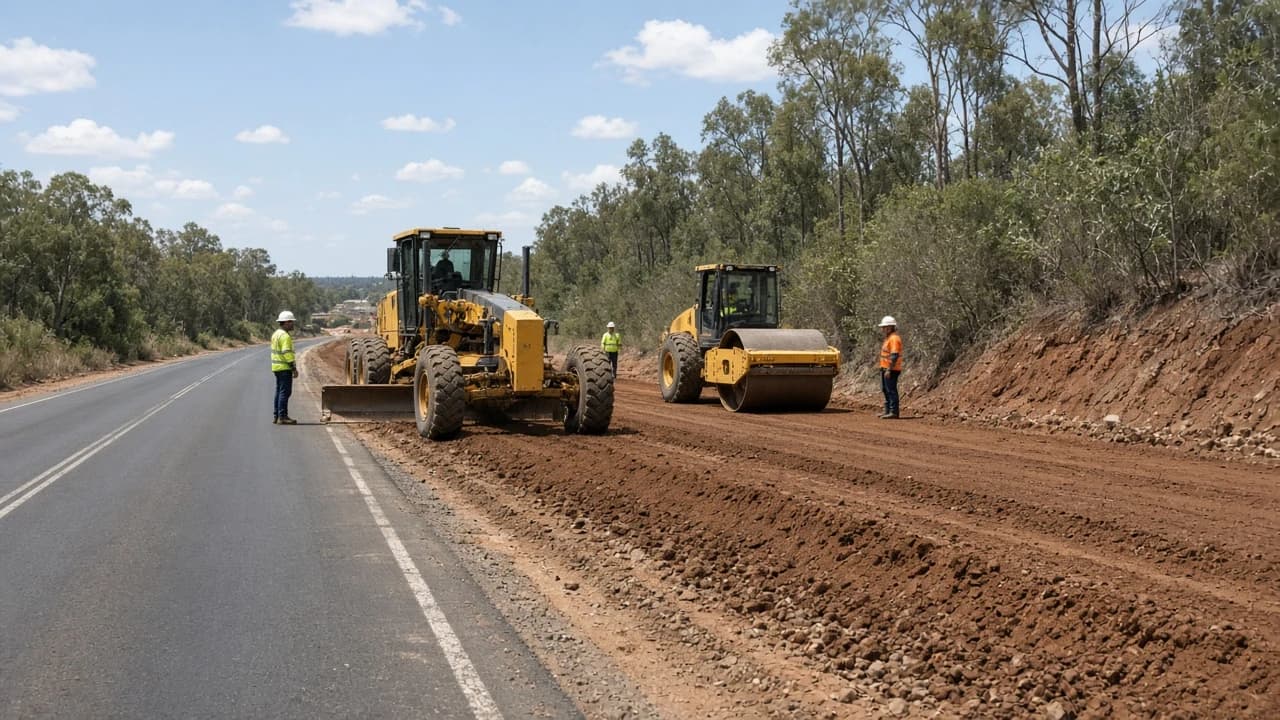
Step 2 — Close services, utilities, and verge constraints early
Most NSW access corridors hide telecoms, water, power, or private services in the verge you are about to excavate. Confirm Dial Before You Dig returns, known private services, and who owns each asset before a road widening contractor NSW excavates the shoulder.
Document temporary diversions, protection slabs, and reinstatement standards for any trench that crosses the future pavement box. Reopening a fresh seal for a missed service is the fastest way to destroy the widening joint.
Where lot drains, trenches, or estate services cross the corridor, keep civil sequencing visible with NEXTGEN's civil infrastructure team so road widening and site packages share one underground story. Live-service disciplines are covered in civil works near live services when isolation and protection rules sit on the critical path.
Step 3 — Lock traffic staging so one route stays trafficable
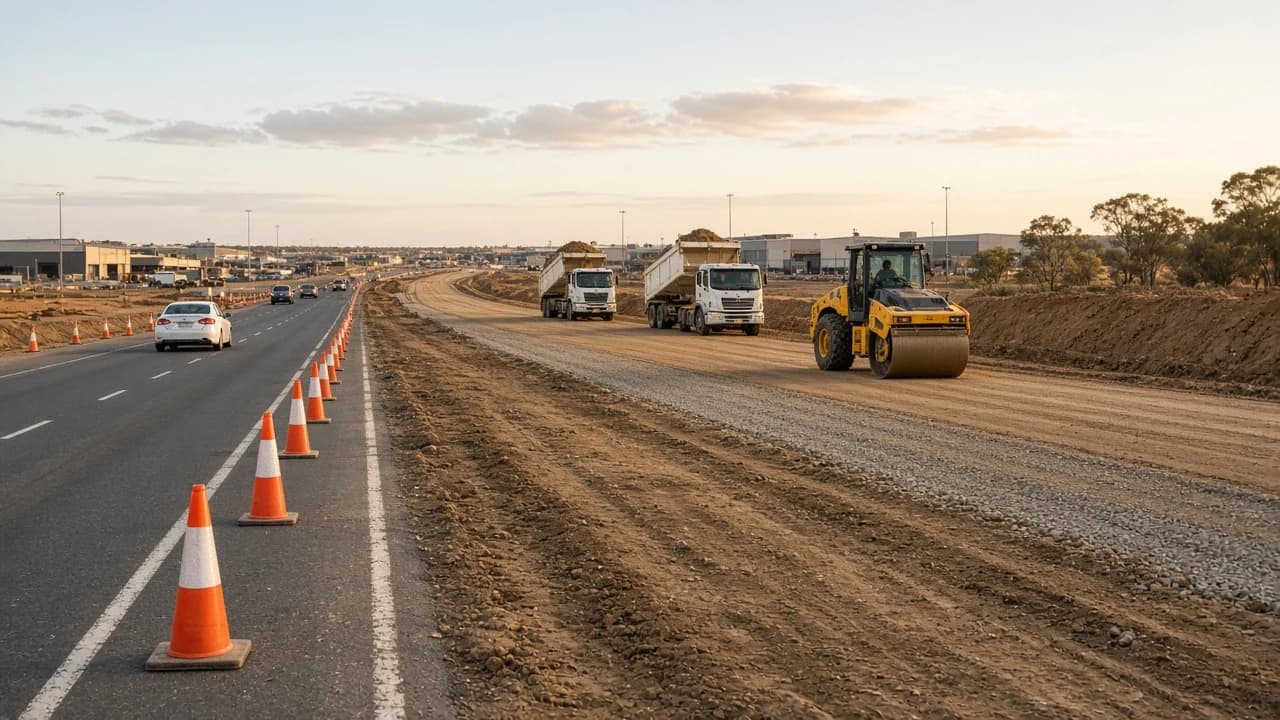
Project access widening usually happens while the site still needs trucks. Agree which lane or shoulder remains open, where passing and marshalling occur, and how tippers enter without tracking mud onto the kept seal.
Write temporary running-surface rules for the open side: thickness, maintenance, and when construction plant may use finished pavement. Using a half-finished widening as a tipper turning circle destroys edges before asphalt works NSW close the joint.
Programme windows and workfront logic belong with civil project staging NSW. Compare corridor outcomes in NEXTGEN's project showcase when owners need a sense of how staged road packages look under live traffic.
Step 4 — Put a road drainage contractor ahead of the pavement box
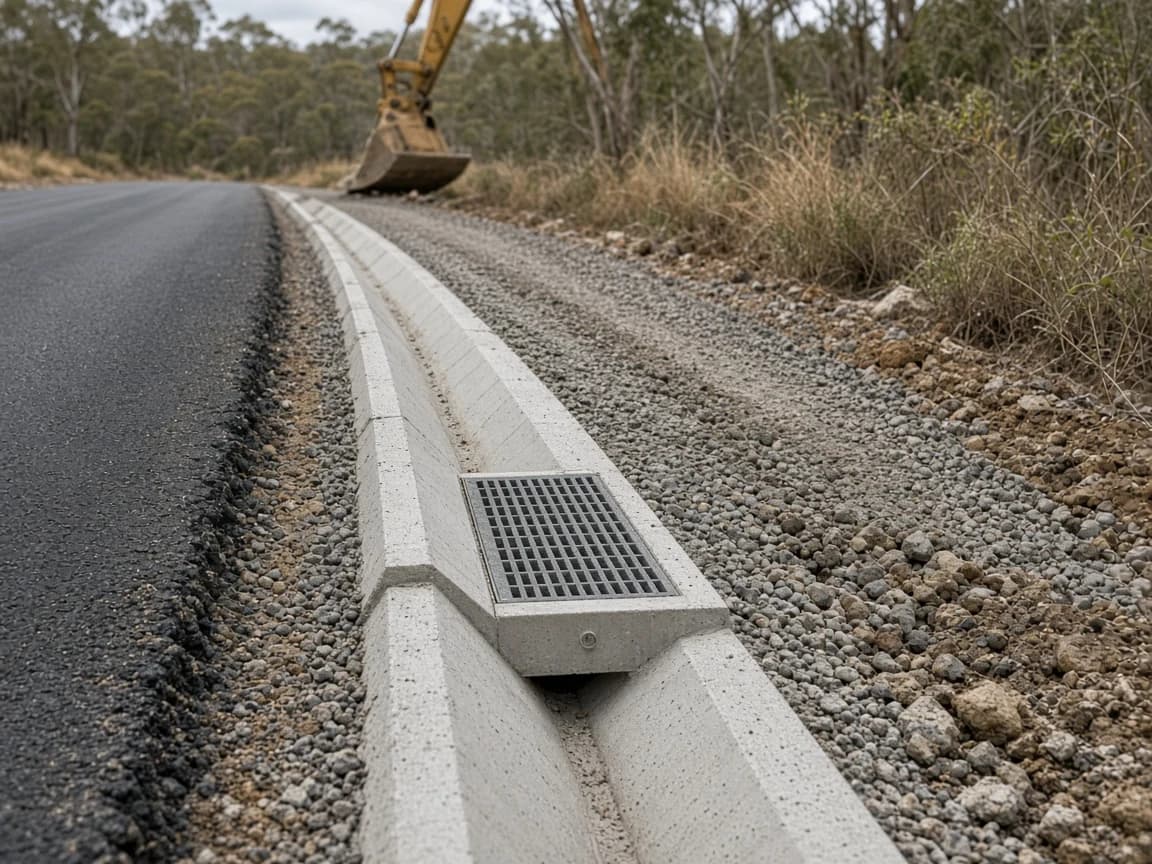
Widening changes where water sheds. Table drains, culvert extensions, kerb inlets, and outlet protection must move with the new edge levels—not as a cleanup after seal. Water trapped against a fresh joint softens subgrade under both the new strip and the kept pavement.
Require a mark-up that shows temporary diversions during cut, when drains are live, and who owns shoulder reinstatement after pipe or pit works. Orphan interfaces at headwalls and fence crossings are where widened edges unravel first.
Edge failures between seal and drains are dissected in asphalt works and drainage interface failures. Blank-slate formation and drainage hold points for new corridors sit in access road construction NSW: formation, pavements and drainage—use that sequence when you are building width as a true formation package, then return here for widening-specific confirmations against an existing edge.
Step 5 — Match pavement layers and asphalt works NSW to the kept edge
A pavement contractor NSW method for widening must state how new unbound layers meet the existing pavement box: dig-out depth at the joint, material specs, compaction criteria, and fail actions if the kept edge pumps under proof-roll.
Asphalt works NSW should close only after formation moisture, drainage levels, and utilities under the new width are proven. Cold joints at the original shoulder become the first crack under repeated haul cycles if the joint is sealed over soft or contaminated base.
Layer proof discipline sits in pavement construction contractor NSW: subgrade, layers and quality checks. Use that method after the widening confirmations above are locked—so quality is proving the right joint, not a generic new road.
Pre-construction checklist for road widening on project access
Clear these gates while tender returns are still comparable and before plant arrives:
- Corridor ownership, reserve width, gates, and fence setbacks are confirmed for the extra metres of formation.
- Existing pavement and shoulder condition after wet weather is recorded—with rehabilitation triggered where the kept edge cannot carry construction traffic.
- Services and utilities in the verge are identified, protected, or diverted with written reinstatement standards.
- A road drainage contractor owns table drains, culvert extensions, pits, and outlets relative to the new edge levels.
- Live-traffic staging keeps one trafficable route; temporary running surfaces and tipper rules are written.
- A pavement contractor NSW method and asphalt works NSW timing cover joint dig-out, layer proof, and fail criteria at the kept edge.
How to brief NEXTGEN on a road widening contractor NSW package
Send existing pavement notes or photos after wet weather, survey of the kept edge, Dial Before You Dig / service mark-ups, drainage concept levels for the widened verge, design vehicles for construction and permanent access, and whether the corridor must stay open during works. A width and asphalt thickness without those inputs is not a comparable brief.
Delivery expectations for multi-trade packages are summarised in the project FAQ. When drawings, service status, and programme windows are ready, contact NEXTGEN to review road widening for project access against access road construction NSW interfaces, pavement match, drainage holds, and asphalt works NSW sequencing.