

Why site development civil works NSW need one critical path
Treat site development civil works NSW as a single sequenced package—not a pile of separate quotes for clearing, dig, drains, and “make good.” Construction-ready handover fails when those trades never share levels, hold points, or access rules.
NEXTGEN delivers that sequence through its civil infrastructure division so clearing, formation, utilities, and records close under one accountable staging plan.
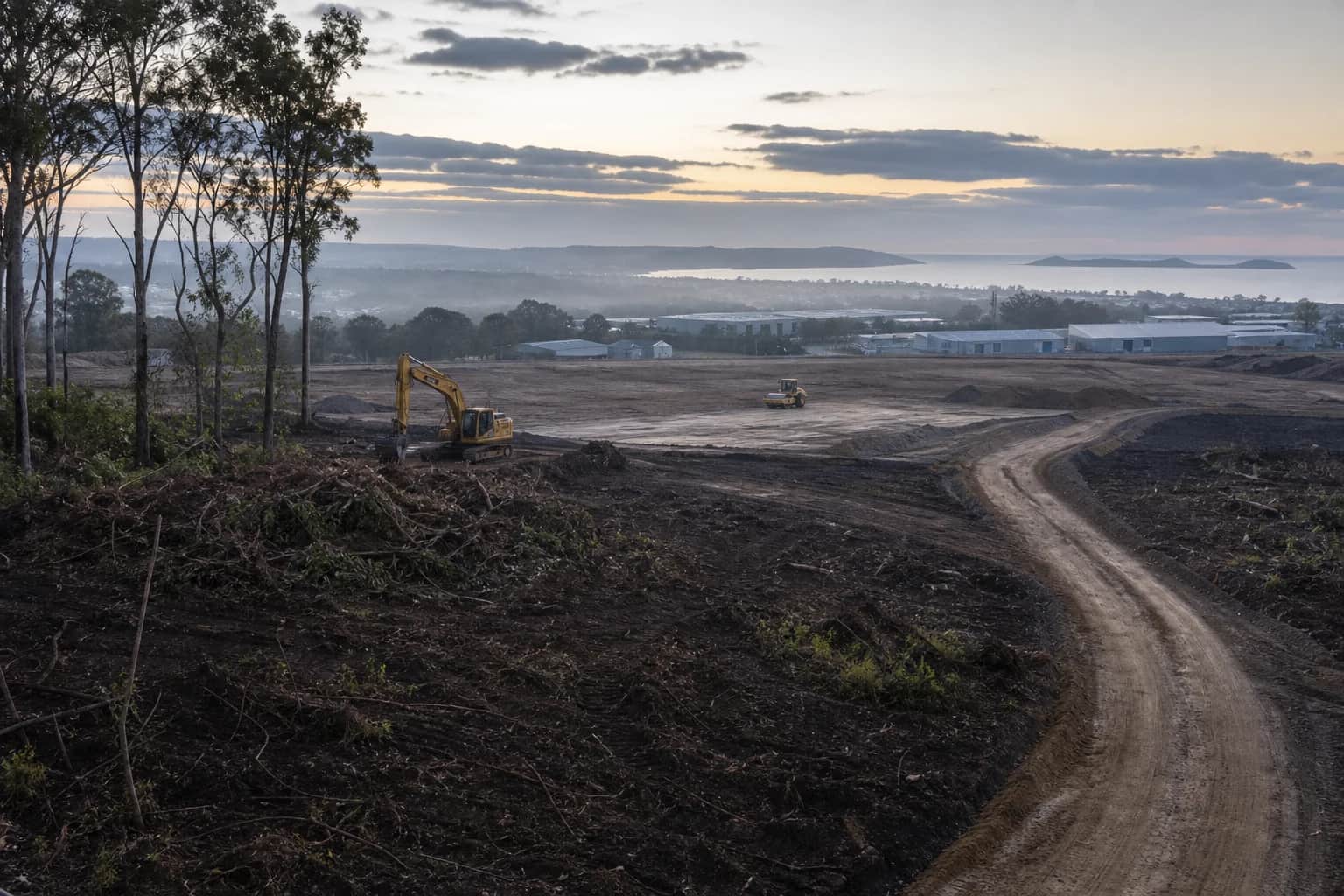
Clearing and strip: start clean without sterilising the pad
Clearing removes vegetation, unsuitable topsoil, and surface debris so the design formation can begin. Agree mulch and spoil destinations, tree-protection zones, and how stripped material is stockpiled without blocking the future haul gate.
Rushing strip without survey control pushes soft pockets and root mats into the first fill lifts. A clean start is measured in surveyed strip limits—not how fast the excavator clears the fence line.
Earthworks contractor NSW scope inside the development sequence
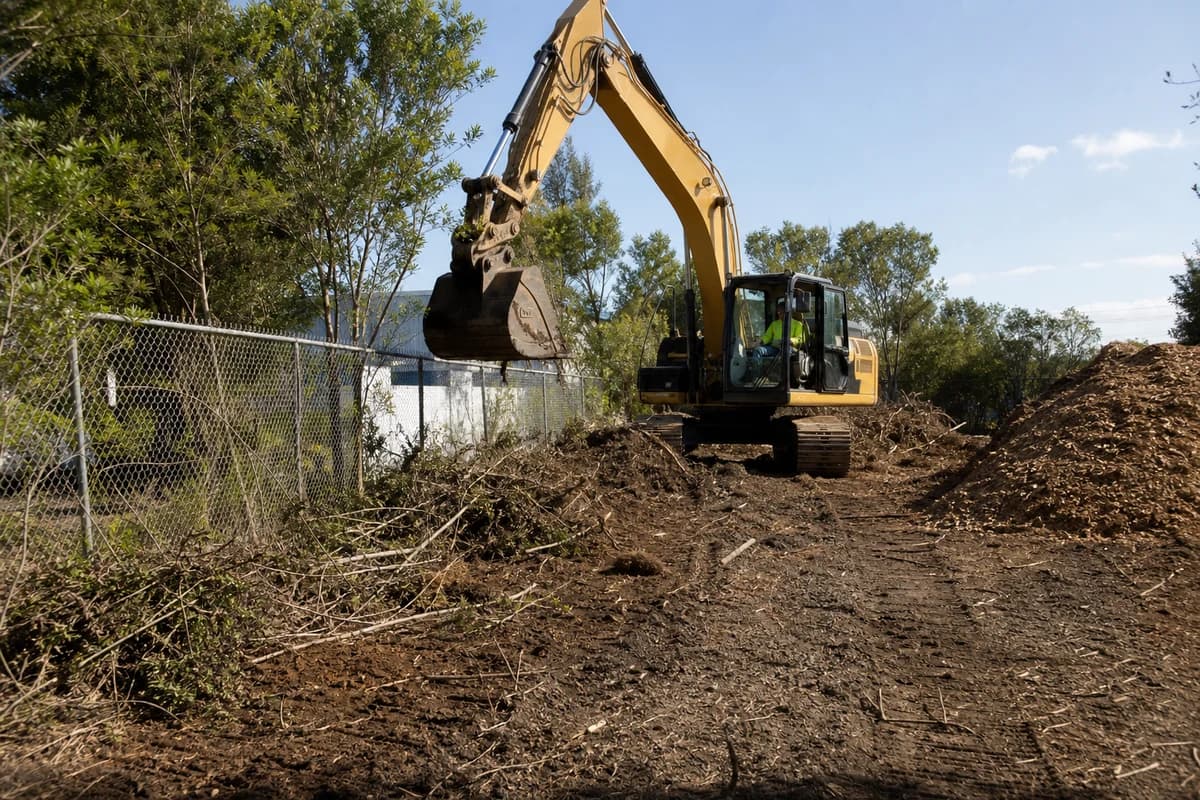
An earthworks contractor NSW package inside site development covers cut-fill balance, temporary haul, compaction criteria, and detailed digs around structures or known services. It is not the whole development story—it is the formation engine that everything else must protect.
Name weather holds, soft-spot treatment, and which benches must stay trafficable for drainage crews. Formation that looks finished from the gate but ponds overnight is not ready for the next trade.
For bulk versus detailed language, use earthworks contractor NSW: bulk, detailed and site preparation, then fold those holds into the wider clearing-to-handover programme rather than treating dig as a standalone win.
What is the difference between earthworks and site development?
Earthworks moves and proves formation. Site development civil works NSW wraps that dig inside clearing, drainage and utilities sequencing, temporary access, and civil handover documentation so the site is construction-ready—not only graded.
If your brief is formation-only, an earthworks contractor NSW appointment can be enough. If builders, pavement crews, or renewable installers must start without reopening soft spots or unfinished trenches, appoint the wider site development package.
Keep formation detail on the earthworks contractor NSW guide; use this page when the critical path includes more than dig and compact.
Civil site preparation NSW: proving the platform before builders arrive
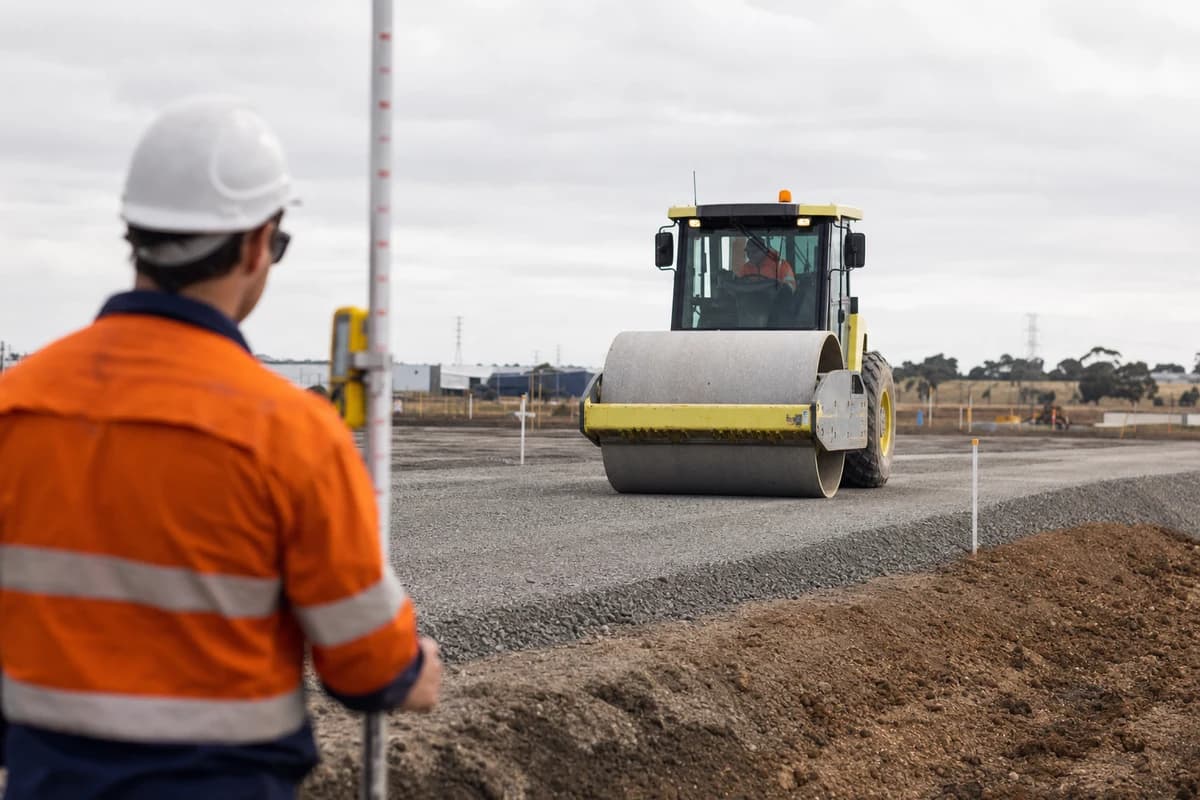
Civil site preparation NSW is the readiness layer: final trim, proven compaction, temporary access that will not destroy the pad, and a surface builders or pavement crews can start on without first fixing soft patches.
Declare the pad ready only when density, moisture, and finish criteria are recorded. Pretty levels without proof create idle plant for following contractors and arguments about who owns rework.
Owners scoring contractors beyond method statements can also use how to choose a civil contractor in NSW when site preparation proof sits beside safety and delivery evidence, then confirm structural packages—foundations, retaining, and hardstands—are sequenced with the wider programme in structural civil works NSW explained.
Drainage and utilities NSW before you call the site ready
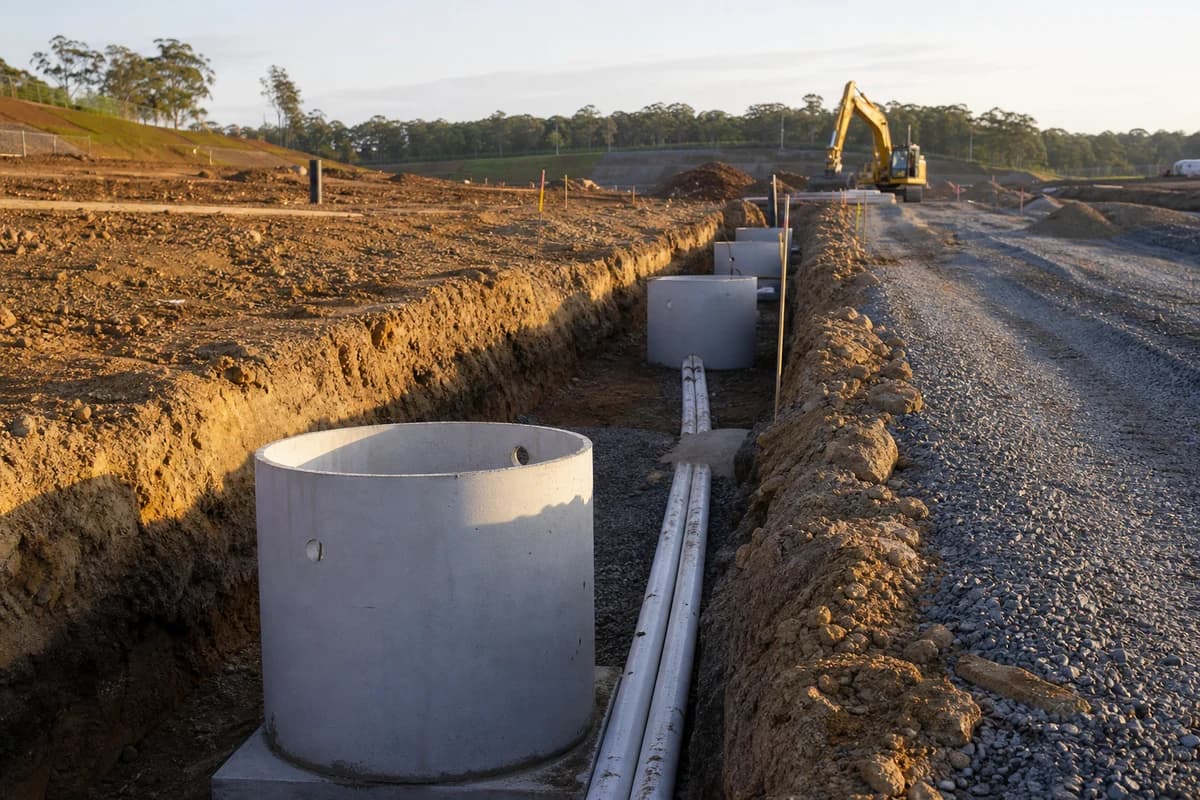
Drainage and utilities NSW works decide whether the finished platform stays dry and whether trenches sterilise future slabs or pavement. Sequence pits, pipes, conduits, and crossings against earthworks—do not leave them as a late tidy-up after the pad looks complete.
Agree bedding, backfill, and reinstatement ownership at every crossing of temporary access. Soft trenches through finished formation erase weeks of production and reopen sediment risk at the gate.
Owner confirmation themes for catchments and trenches are in what to confirm with a stormwater drainage contractor NSW; apply those gates before you approve construction-ready status.
Civil handover documentation that following trades can use
Civil handover documentation should include as-built levels, compaction and testing records, photographs of key hold points, outstanding works, and known utilities remaining open. Without that pack, builders rediscover soft spots and deferred outlets on day one.
Hand the records with a short outstanding-works list tied to the drawings—not a folder dump. Construction-ready means the next trade can plan, not guess.
Browse delivery shapes in the project showcase, then send drawings and programme drivers through NEXTGEN’s contact pathway when you want a clearing-to-handover package priced as one sequence.