

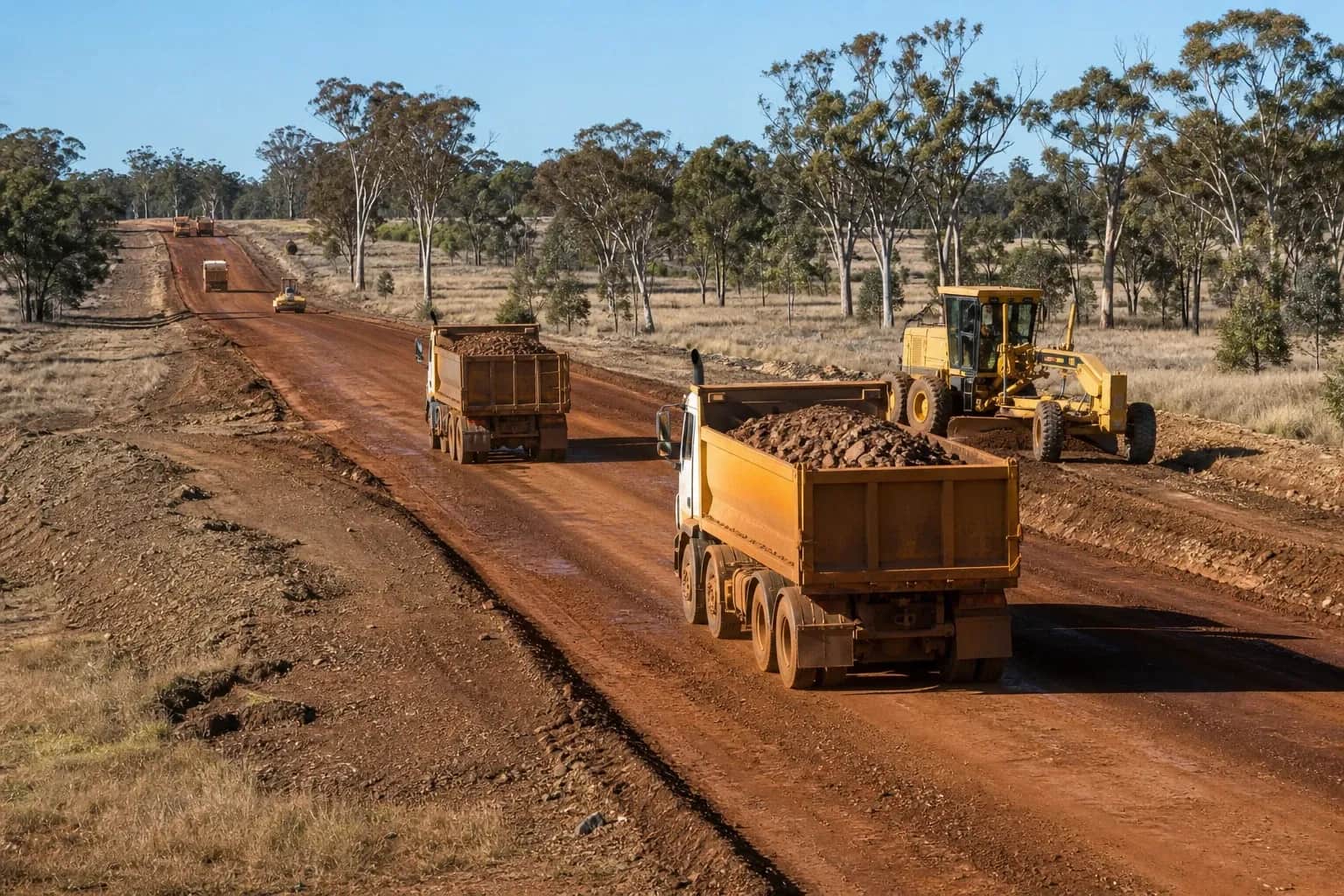
What haul road construction NSW must solve that light tracks do not
Haul road construction NSW is about keeping loaded tippers, scrapers, and plant movements trafficable for the life of the earthworks programme—not building a finished estate road on day one. Soft formation, missing drains, or zero maintenance budget turn a cheap track into the critical-path delay.
Treat the haul corridor as a temporary civil asset with written design assumptions: axle loads, daily truck cycles, design life in months, dust and mud controls, and how the route will be retired, upgraded, or handed into permanent access.
NEXTGEN stages these corridors through its roads and access division so haul geometry, drainage, and later pavement interfaces share one supervision and maintenance plan.
Step 1 — Lock design traffic before you set formation width
Name the heaviest vehicle, typical payload, and peak daily movements before survey sets the alignment. Width, curve radii, passing bays, and sight distance fail when the method assumes light utes and the site runs B-doubles or rigid tippers.
Separate haul routes from pedestrian and light-vehicle paths where conflict is high. Marshalling space at gates and stockpiles reduces queueing on soft shoulders that then need constant reshape.
Document whether the corridor is haul-only for the programme, or whether it must later become access road construction NSW for permanent use. Mixing both roles without a staged surface plan is a common mid-project failure.
Step 2 — Build formation and unbound layers that can be maintained
Haul roads usually live as unbound gravel or crushed rock on improved formation. Crown, crossfall, and material selection matter as much as thickness—flat spots pond water and turn into ruts within days of wet weather.
A pavement contractor NSW team may still own material specs, compaction criteria, and proof methods even when asphalt is deferred. “Tip and roll” without moisture control is not a civil design—it is a maintenance sink.
When the corridor must later carry sealed layers, align interim holds with pavement construction contractor NSW: subgrade, layers and quality checks so haul traffic does not contaminate the pavement box before asphalt works NSW start.
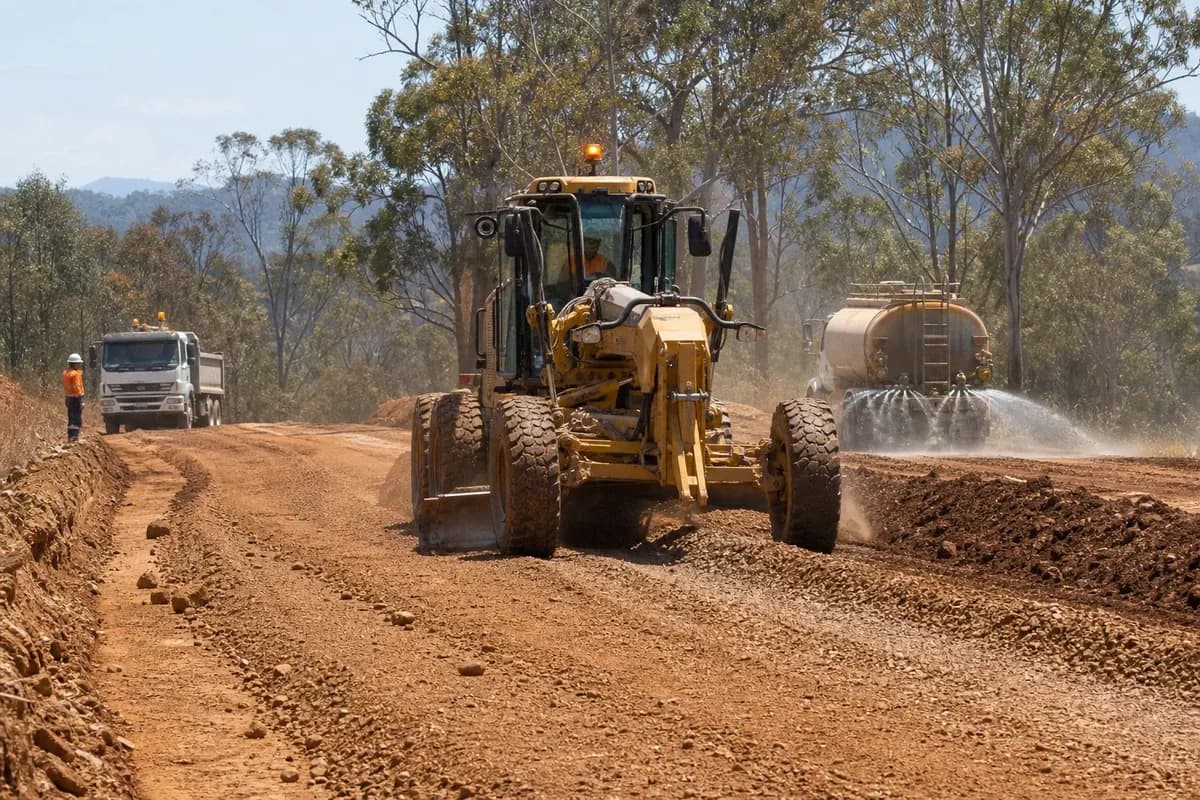
Step 3 — Put a road drainage contractor on the critical path early
A road drainage contractor should set table drains, culverts, and outlets relative to haul formation levels before the first wet week. Water sitting in the wheel path softens the subgrade faster than most programmes can dig out.
Plan temporary diversions during earthworks peaks and name who cleans drains after storms. Blocked side drains force trucks onto soft shoulders and multiply maintenance plant hours overnight.
Where lot stormwater meets the haul corridor, keep sequencing visible with NEXTGEN’s civil infrastructure team so road drainage and site drains tell one water path story.
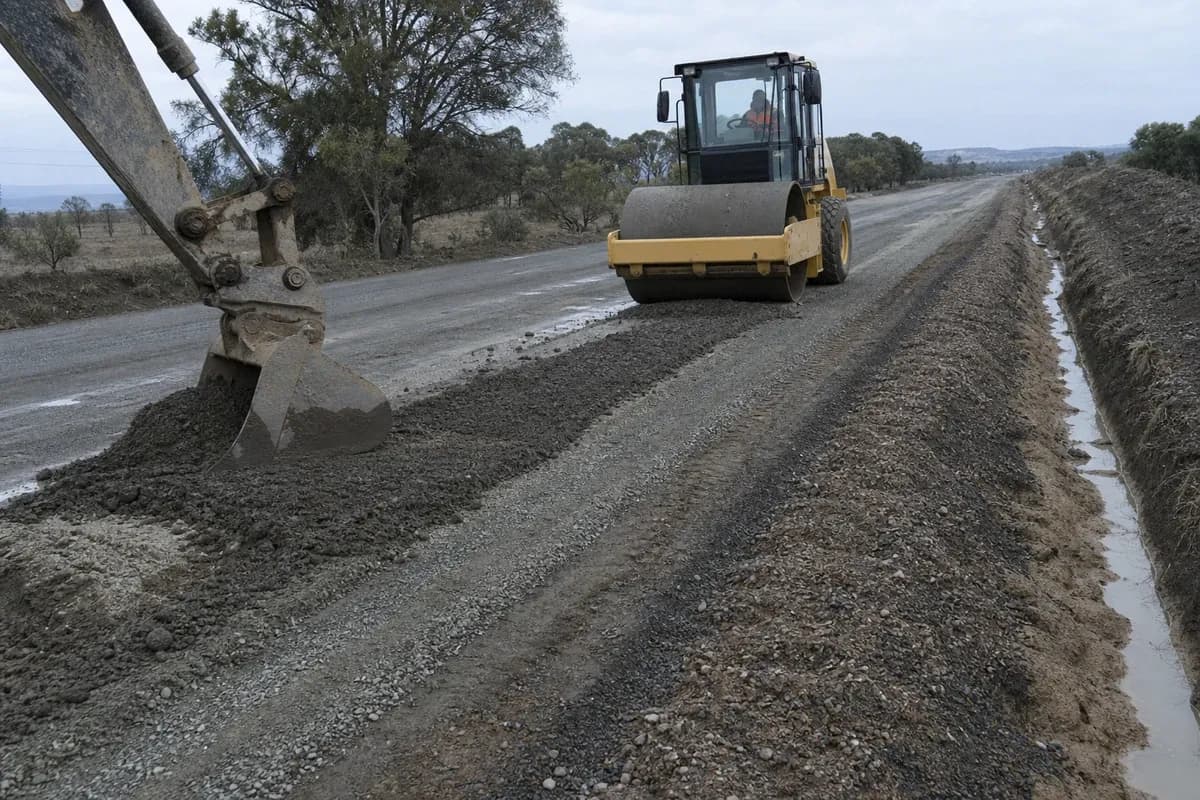
Step 4 — Write the maintenance cycle into the civil method
Haul roads fail when maintenance is treated as optional. Define reshape frequency, watering or dust suppression, spot dig-out criteria, and wet-weather closures before production targets are set.
Assign plant and labour for corridor upkeep in the programme—not as leftover hours after earthworks. Tipper downtime waiting for a grader costs more than planned maintenance shifts.
Record chainages that repeatedly fail. Repeated soft spots usually mean drainage or formation redesign—not another thin gravel top-up.
When haul roads become access roads or need asphalt works NSW
If the corridor must survive after earthworks as permanent access, plan the upgrade early: prove or rebuild formation, restore drainage, then engage a pavement contractor NSW sequence for unbound or sealed layers. Converting a destroyed haul track into access road construction NSW without dig-out is resurfacing theatre.
Formation-first permanent corridor rules are covered in access road construction NSW. Where the surface already pumps or edges have collapsed, road rehabilitation when resurfacing is not enough is the clearer path before asphalt works NSW.
Compare multi-interface corridor delivery in NEXTGEN’s project showcase when you decide whether haul, access, and pavement scopes should sit under one accountable plan.
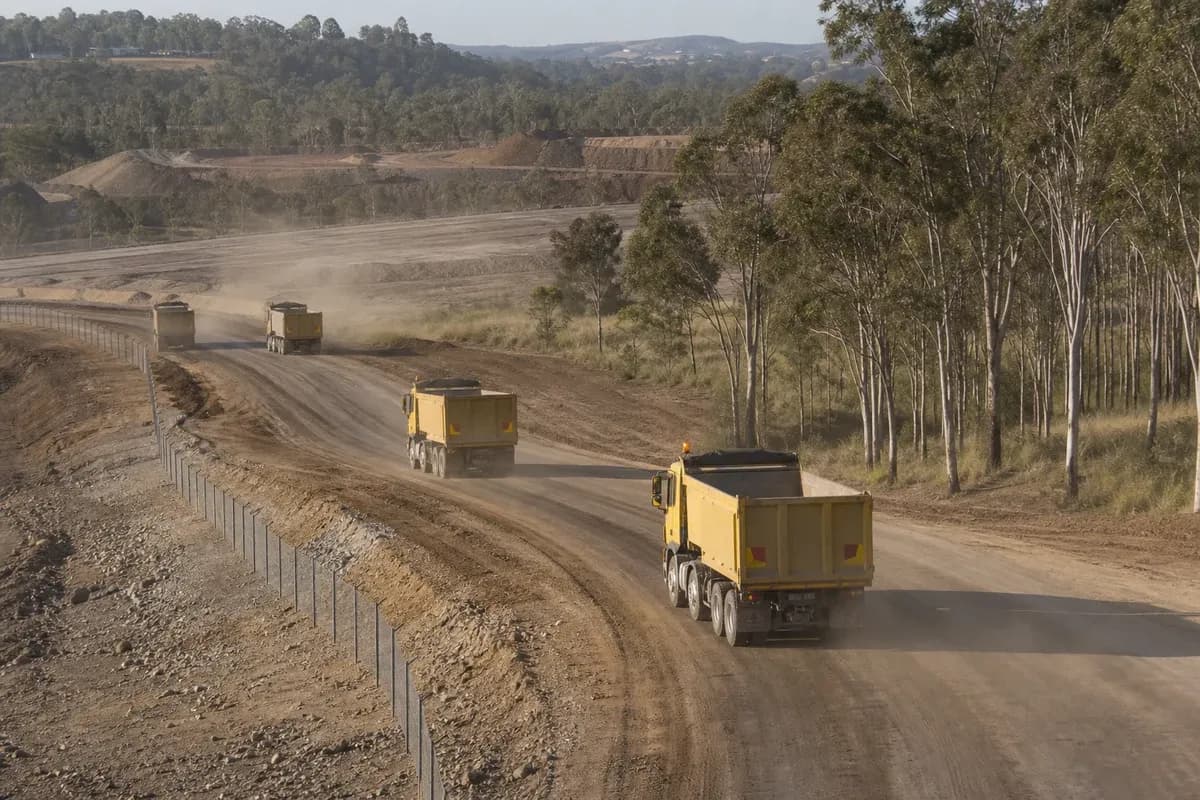
Quality and interface checklist before tippers commit
Use this gate before haul road construction NSW is declared ready:
Design vehicles, daily cycles, and temporary versus permanent roles are written—not assumed.
Formation crown, material specs, and compaction holds match the maintenance method.
Road drainage contractor outlets and table drains are open and maintainable.
Reshape, watering, wet-weather closure, and dig-out criteria have owners and plant assigned.
Owners comparing assurance language can also use NEXTGEN’s delivery FAQ before locking the corridor method.
Brief NEXTGEN on a construction haul road package
Share alignment sketches, design traffic, programme duration, stockpile locations, public-road interfaces, and drainage intent when you contact NEXTGEN. A clear brief lets haul formation, maintenance, and any later pavement upgrade be reviewed as one corridor—not a soft track that becomes an emergency rebuild.