

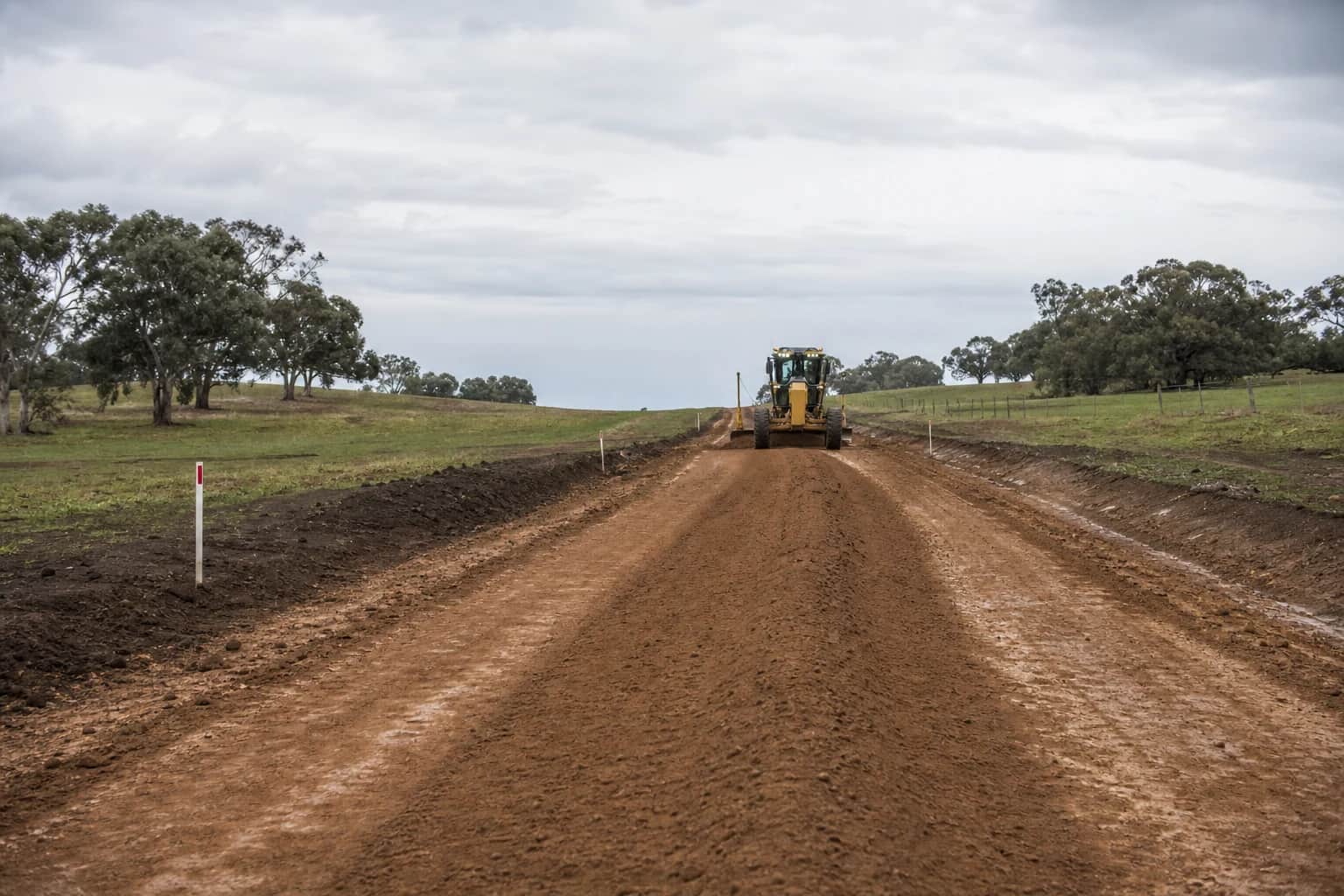
Why access road construction NSW needs a formation-first sequence
Most access road construction NSW programmes lose time after pavement starts—not before. Soft formation, incomplete table drains, or ambiguous layer specs force a pavement contractor NSW team to stop, reshape, or rebuild after traffic has already damaged the corridor.
Treat the road as a construction asset first and an operational route second. Formation width, crown, turning, and drainage at low points must be proven before sealed or unbound layers lock moisture into a weak subgrade.
NEXTGEN delivers these corridors through its roads and access division, coordinating civil interfaces so earthworks and pavement crews are not working to different assumptions on the same alignment.
Step 1 — Lock formation geometry and construction traffic loads
Confirm design speed is not the only driver. Construction vehicles, imported fill trucks, and later O&M traffic often exceed the lighter loads assumed for a finished access track. Width, curve radii, and passing bays should match the heaviest temporary plant.
Set survey control for centreline, edge levels, and crown early. Formation without reliable level control creates thin spots that fail under the first week of haul traffic—even when the surface looks neat.
Document where temporary tracks end and permanent access begins. Mixing both roles on one unfinished surface is a common reason access road construction NSW packages need mid-project repairs.
Step 2 — Appoint drainage hold points before pavement layers
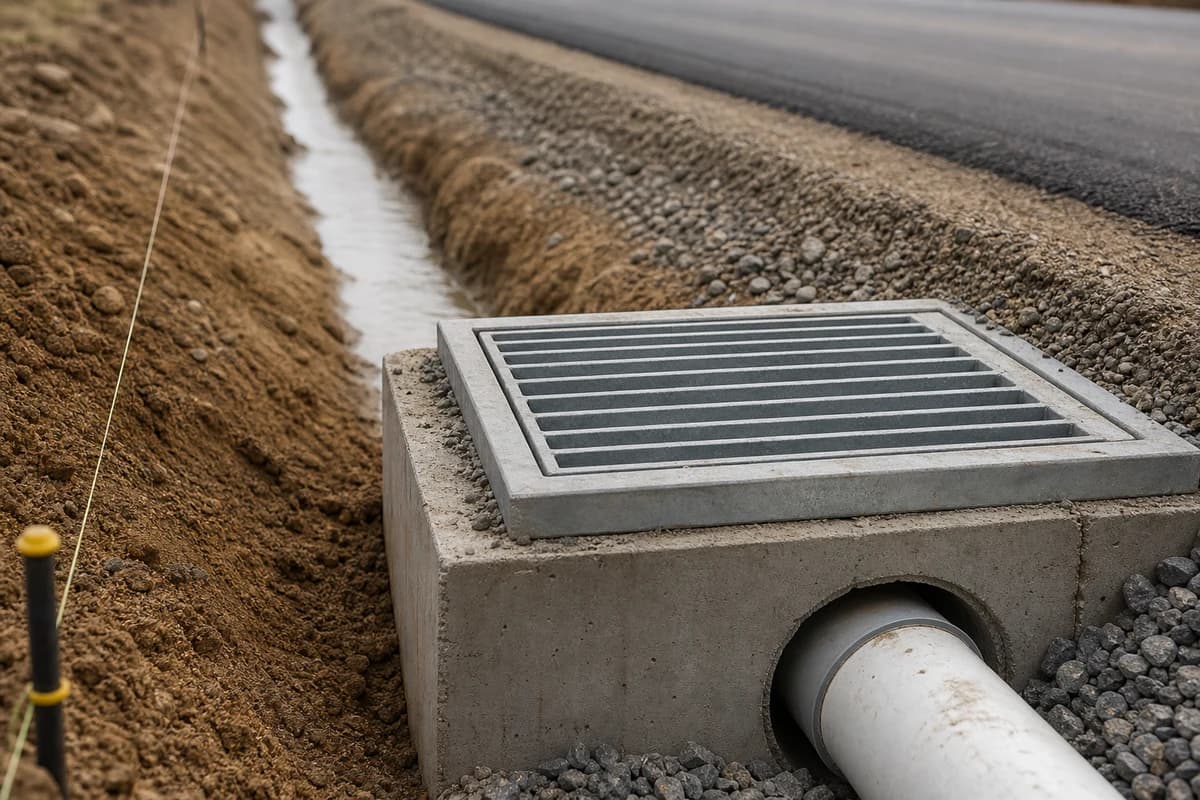
A road drainage contractor should own pits, culverts, table drains, and outlet protection relative to formation levels—not as a cleanup after sealing. Water that sits in the pavement box softens subgrades faster than most programmes recover.
Require a mark-up that shows when drains are open, when temporary diversions are allowed, and who reinstates shoulders after pipe installation. Orphan interfaces at kerbs, headwalls, and fence crossings are where pavement edges unravel.
Where the corridor ties into broader site drains or utility trenches, keep civil sequencing visible with NEXTGEN’s civil infrastructure team so road and site packages share one water path story.
Step 3 — Build pavement layers the contractor can prove
A pavement contractor NSW owners appoint should state material specs, compaction criteria, and proof methods for each unbound or bound layer. “Compacted gravel” without moisture, density, and thickness checks is not a quality plan.
Match layer design to subgrade strength after wet weather—not only to a dry tender assumption. Many NSW sites need micro adjustments to thickness or material once formation moisture is measured on the alignment.
Review comparable corridor delivery through NEXTGEN’s project showcase when you evaluate whether the method covers heavy construction traffic as well as final use.
Step 4 — Plan asphalt works NSW around moisture and interface edges
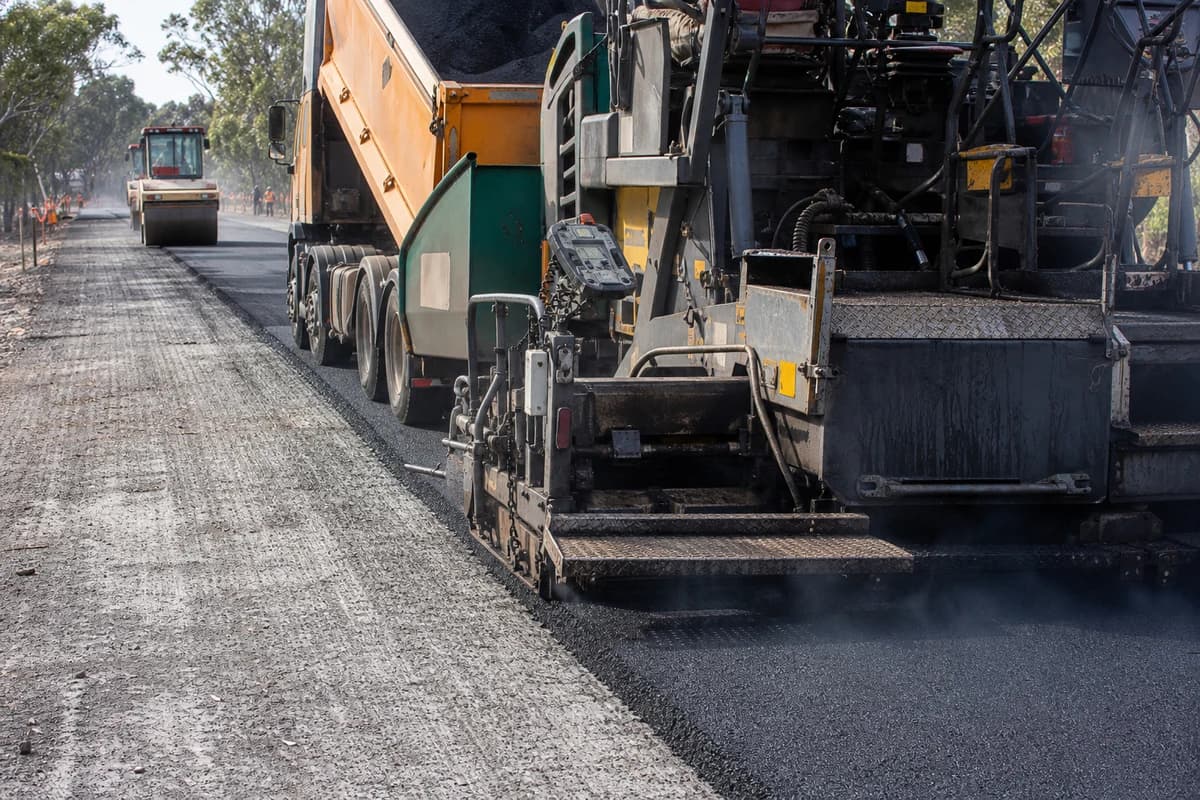
Asphalt works NSW on access roads fail at edges and joints when shoulders, drains, or temporary crossings are still unfinished. Freeze the pavement edge detail with the drainage and fence package before the paver arrives.
Confirm weather windows, temperature limits, and traffic control if the road touches a public interface. Access roads often sit partly on private land and partly at a public road intersection—each zone needs a different traffic-aware method.
Where a sealed layer is deferred, define an interim trafficable surface and who maintains it. Leaving formation open to haul trucks without a written interim plan usually becomes an unowned defect conversation.
If the corridor already shows rutting or edge failure, when road rehabilitation is needed beyond resurfacing helps owners decide whether formation must be rebuilt before new pavement layers.
When should an access road use asphalt?
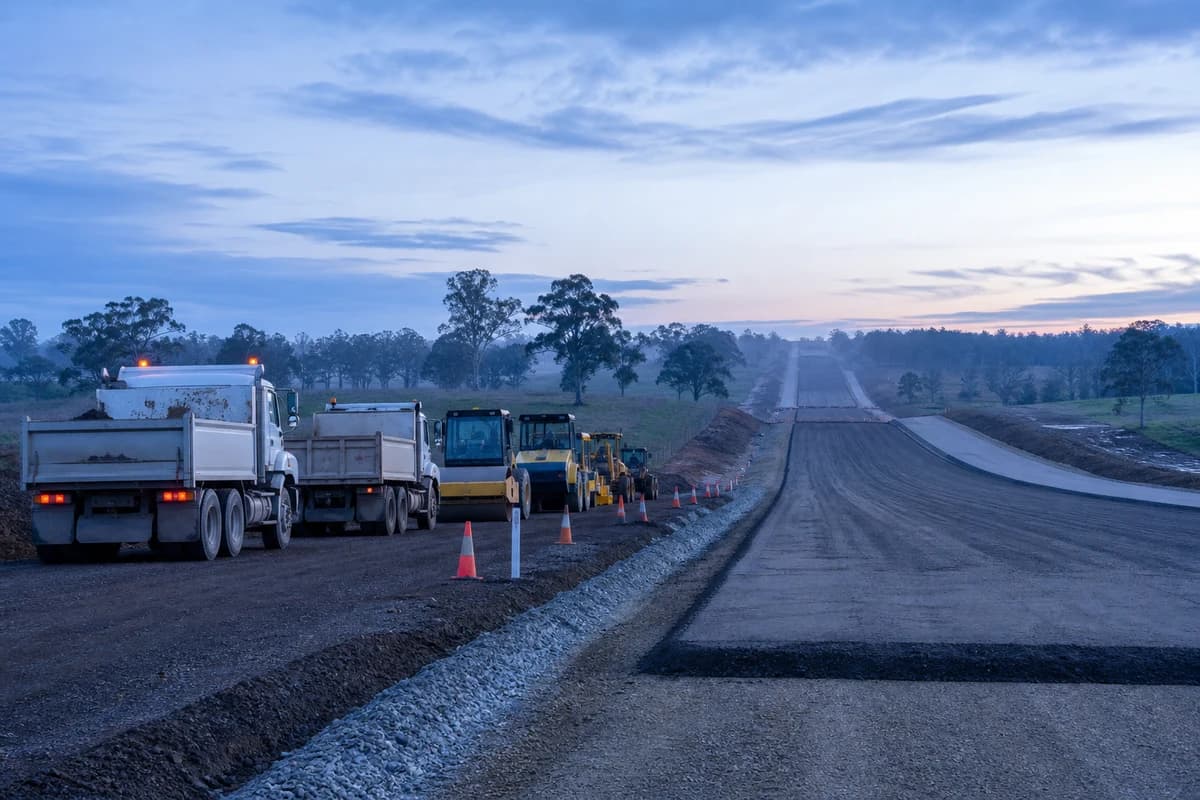
Use asphalt on an access road when traffic is frequent or permanent, dust or mud control matters for neighbours or O&M, wet-weather reliability is critical, or the route will carry public or client vehicles rather than short-term construction plant alone. Unbound gravel or stabilised formation can be enough for temporary haul during construction if loads, maintenance ownership, and dust are named in the brief.
Asphalt does not fix weak formation or blocked drainage. If the base pumps after rain, seal the decision only after formation and outlet holds are closed—or you will mill a new surface that fails the same way.
Layer proof and pavement QC themes sit in pavement construction contractor NSW guidance; use that when the access road is permanent industrial pavement rather than a temporary track.
Quality and interface checklist before you close the package
Use this short gate before practical completion claims:
Formation surveys, compaction records, and drainage as-builts are available for the same chainage as the pavement layers.
Road drainage contractor outlets discharge to an agreed path without ponding against the pavement edge.
Any asphalt works NSW joints, tie-ins, and shoulder seals match the mark-up used by the pavement crew—not a verbal variation.
Owners comparing general civil appointment criteria can also read what project owners should look for in a NSW civil contractor, then overlay road-specific drainage and layer proof questions.
If the corridor serves a renewable site, align haul and O&M needs with the access notes in solar farm civil works NSW: earthworks, access and drainage, and review live array-access context on Blind Creek Solar Farm.
Brief NEXTGEN on an NSW access road package
Share alignment drawings, geotech notes, design traffic, public road interfaces, and drainage intent when you contact NEXTGEN. A clear brief lets formation, pavement, and drainage hold points be reviewed as one access road construction NSW scope.
For engagement and assurance expectations before mobilisation, use NEXTGEN’s delivery FAQ and bring the same questions into kick-off with your pavement and drainage leads.