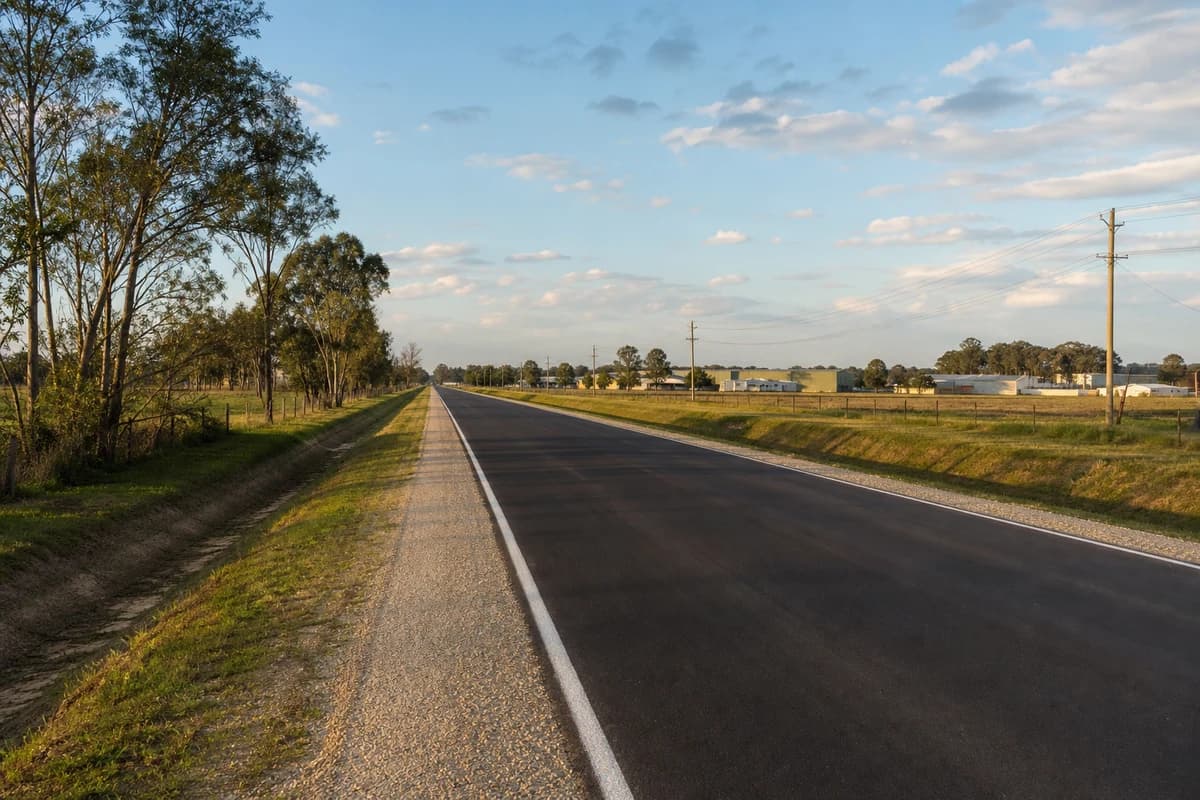

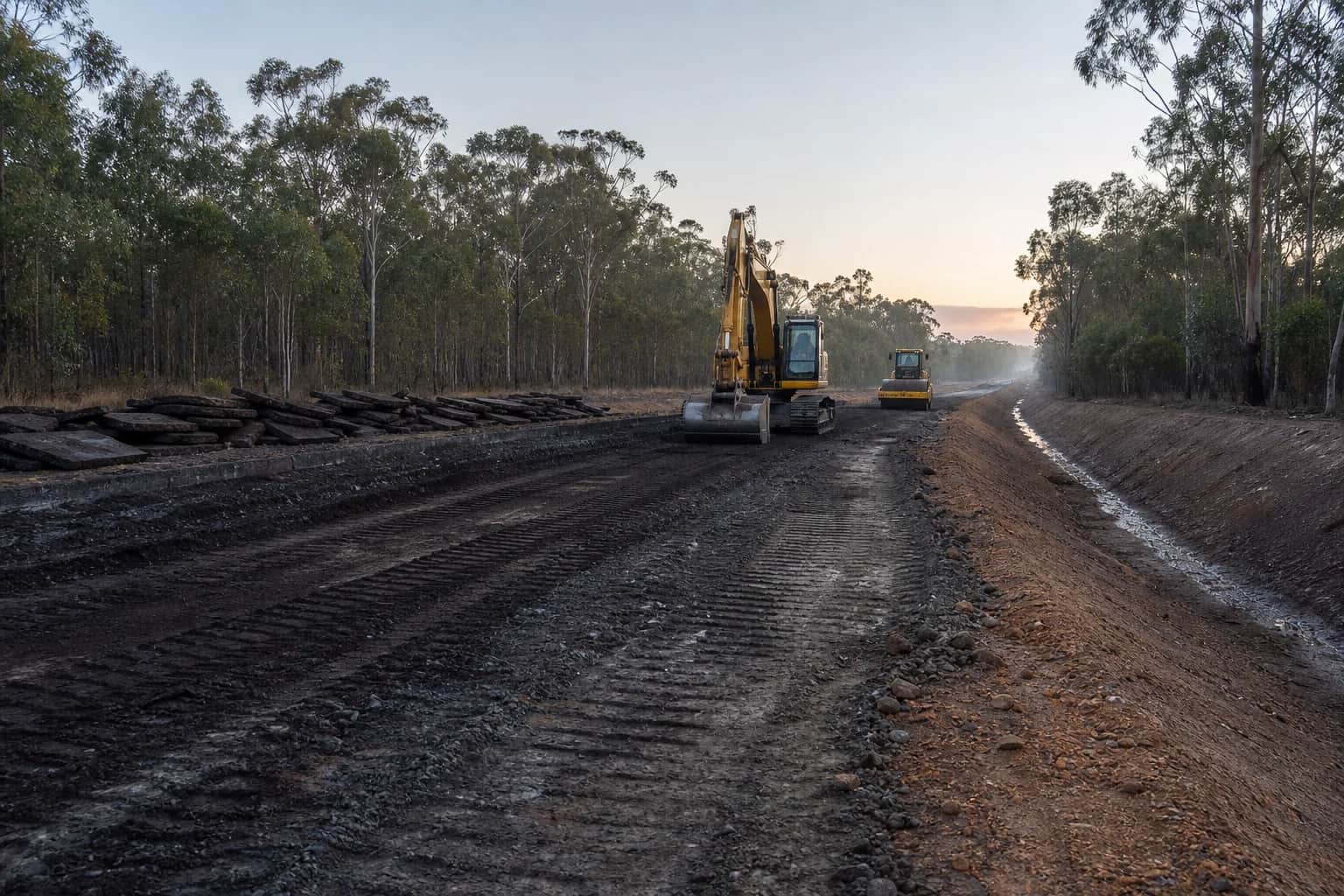
When is resurfacing not enough on NSW roads?
Resurfacing is enough only when the structure beneath can still carry design traffic after rain. Appoint a road rehabilitation contractor NSW when rutting returns quickly, patches pump fines, edges collapse, or water sits in the pavement box—signals that asphalt works NSW on a soft base will fail again.
Thin overlays hide distress for a season and accelerate cost when moisture stays trapped. Treat rehabilitation as formation, drainage, and layer reconstruction—not a cosmetic mill-and-fill.
NEXTGEN delivers these diagnoses and rebuilds through its roads and pavement division so drainage, dig-out, and pavement crews share one corridor method.
Step 1 — Diagnose base, shoulders, and water before you pave
Walk and proof-roll the corridor after wet weather. Soft spots, alligator cracking over weak subgrade, and shoulder loss tell you a pavement contractor NSW overlay will not reset life-cycle performance.
Map where water enters: blocked table drains, failed culverts, flat crowns, or sealed shoulders trapping runoff. A road drainage contractor should sit in the diagnosis before the paver quote is final.
If the route is still a haul or site access corridor, compare formation expectations in access road construction NSW: formation, pavements and drainage—rehabilitation often restarts the same holds new access roads need.
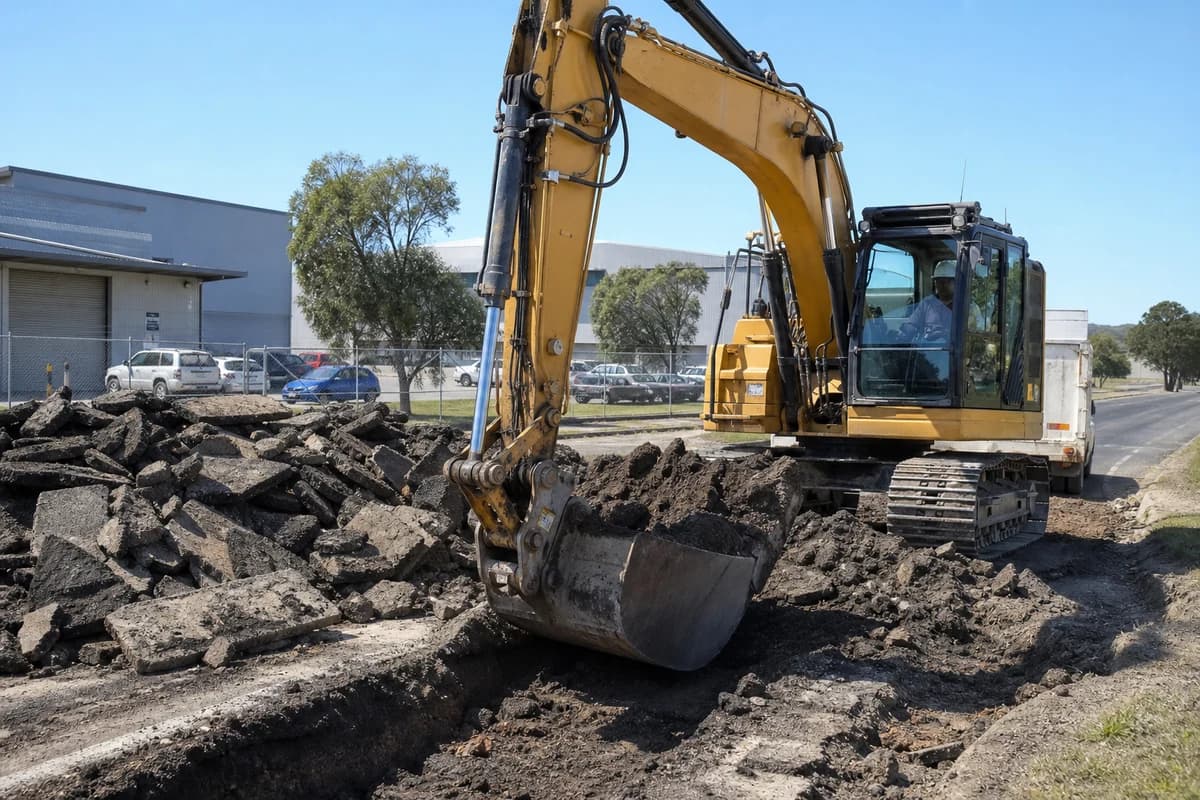
Step 2 — Dig out, improve formation, and rebuild pavement layers
Rehabilitation digs to a depth that removes contaminated or wet material, then rebuilds unbound or bound layers to thickness and compaction the design traffic requires. Spot patching without depth control becomes a patchwork that ruts between joints.
A pavement contractor NSW team should state material specs, moisture conditioning, and fail criteria for each lift. Soft patches left between dig-outs reappear as soon as trucks return.
Layer proof language for new builds in pavement construction contractor NSW: subgrade, layers and quality checks applies equally when you rehabilitate an existing corridor.
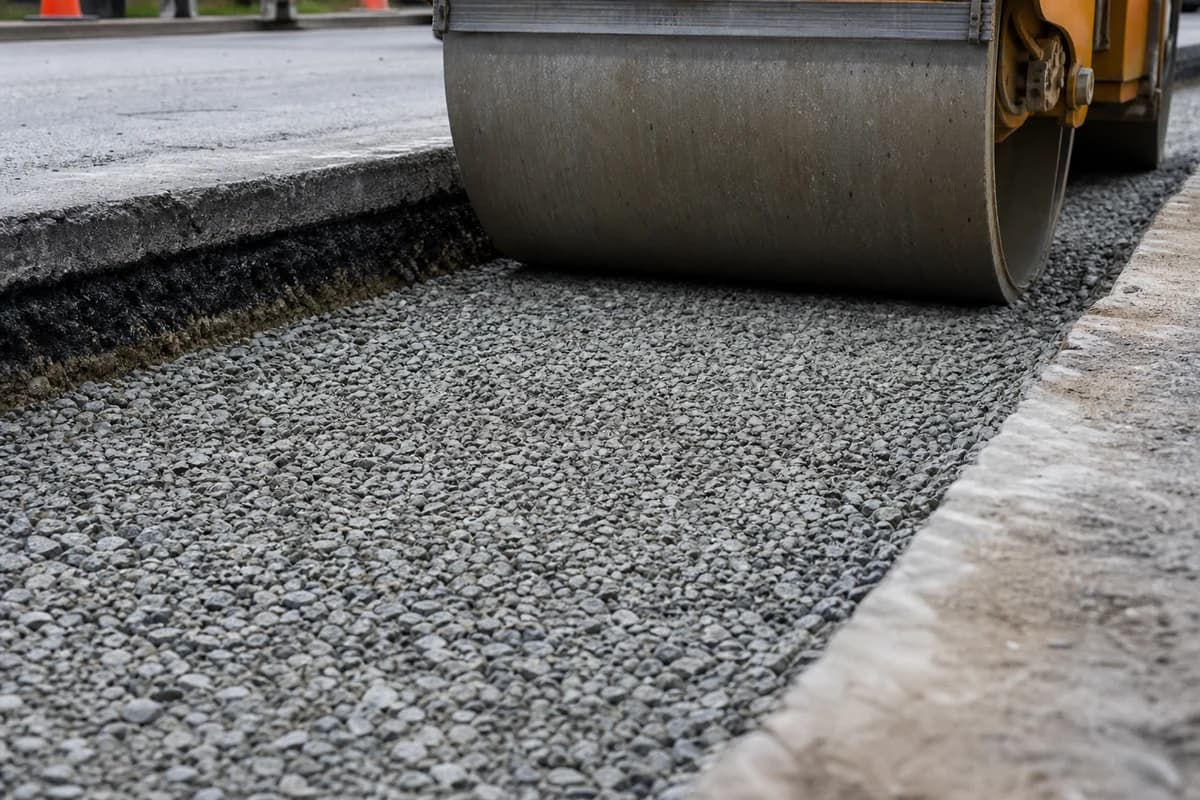
Step 3 — Fix road drainage before asphalt works NSW close the box
A road drainage contractor must restore table drains, pits, culverts, and outlets so water leaves the pavement structure. Sealing over ponding edges rebuilds the same failure mode inside months.
Reinstate shoulders and verge grades after pipe or pit works so heavy vehicles do not drop off into soft ground. Edge support is part of rehabilitation, not a landscaping afterthought.
Where site stormwater meets the road corridor, keep sequencing visible with NEXTGEN’s civil infrastructure team so road drainage and lot drains tell one water path story.
Decision checklist: overlay versus full rehabilitation
Use this gate before you approve asphalt works NSW alone:
Proof-roll after rain shows no pumping fines or soft deflection under loaded plant.
Cracking is surface-bound, not reflecting deep base failure across long chainages.
Edges and shoulders are stable, and drainage outlets are clear to design invert.
Traffic and axle assumptions still match the residual pavement strength.
If any gate fails, brief a road rehabilitation contractor NSW dig-out—not another mill-and-fill.
Owners comparing appointment evidence more broadly can also use how to choose a civil contractor in NSW alongside these corridor checks.
When does a pavement require rehabilitation instead of resurfacing?
Choose rehabilitation when wet-weather proof-rolls show pumping or soft deflection, when cracks reflect deep base failure across long chainages, when edges and shoulders have collapsed, or when drainage no longer protects the pavement box. Resurfacing is enough only when the base stays sound, distress is limited to the wearing surface, and outlets still work.
Another overlay on a failed structure usually returns the same rutting faster—and costs more than a planned dig-out once traffic and weather delays are counted.
What to send when you inquire for road rehabilitation NSW
Attach chainage photos after wet weather, known traffic loads, drainage plans if held, previous overlay history, and whether the road must stay open during works. Incomplete briefs produce optimistic resurfacing prices that shift when dig depth appears on site.
Send that pack through NEXTGEN’s contact pathway and, if helpful, review corridor delivery shapes in the project showcase before you lock resurfacing versus rehabilitation.