

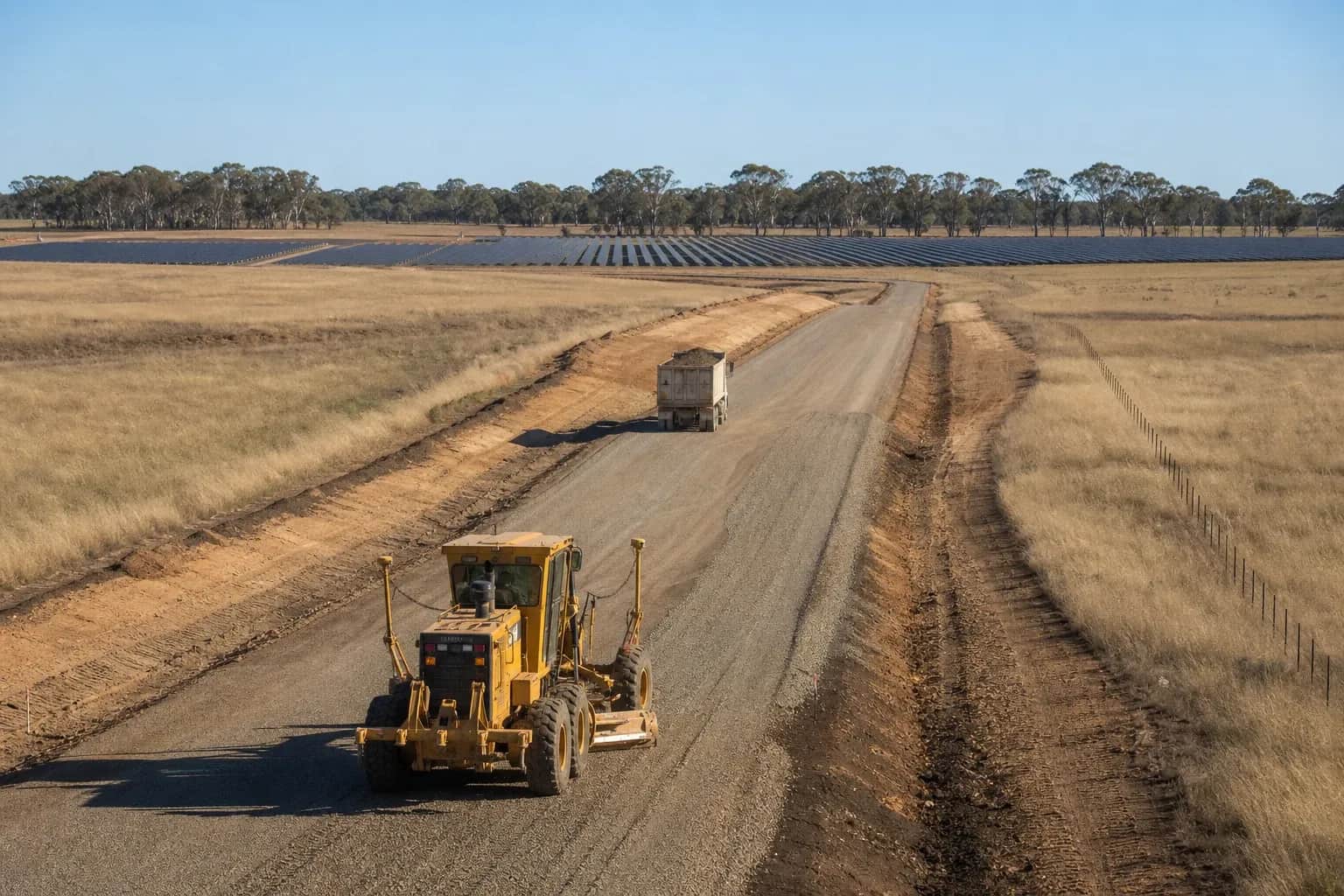
Why renewable energy access roads NSW need two design jobs
Treat renewable energy access roads NSW as two connected assets on one alignment: a construction haul route that survives tippers, cranes, and module delivery, and an O&M route that remains safe after energisation. Packages that build only for day-one plant usually fail when the same surface must carry later maintenance traffic on softened shoulders.
Safe renewable access roads start with geometry, drainage, and traffic separation—not with a late gravel top-up after earthworks demobilise. Width, turning, passing bays, and low-point drainage should be locked against the heaviest temporary vehicle before formation closes.
NEXTGEN stages these corridors through its renewable energy civil division so access, pads, and drains share one survey-controlled sequence with the wider enabling package.
Construction haul: geometry that matches real plant
Construction traffic on renewable sites is heavier and more frequent than finished O&M use. Confirm design vehicles for imported fill, tracker or container deliveries, and crane set-downs. Curve radii, gate widths, and marshalling space off the public road decide whether trucks queue safely or destroy neighbouring verges.
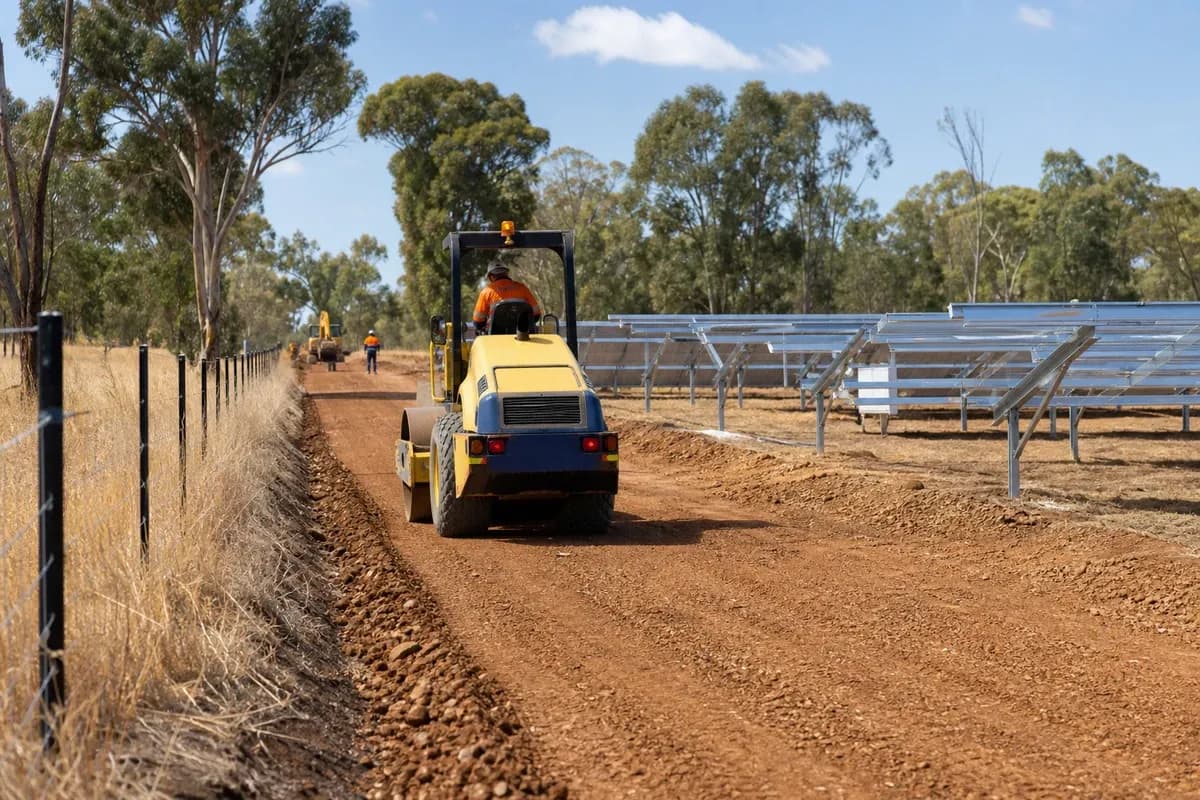
Separate temporary haul tracks from permanent renewable access roads when loads differ. Many solar farm civil works NSW programmes lose weeks when haul traffic destroys the corridor crews need for module delivery later.
For formation-first corridor sequencing that applies beyond renewables, use access road construction NSW, then upgrade vehicle assumptions to renewable haul and lift cycles. Live array-access mobilisation context is on Blind Creek Solar Farm.
Drainage and low points that keep corridors trafficable
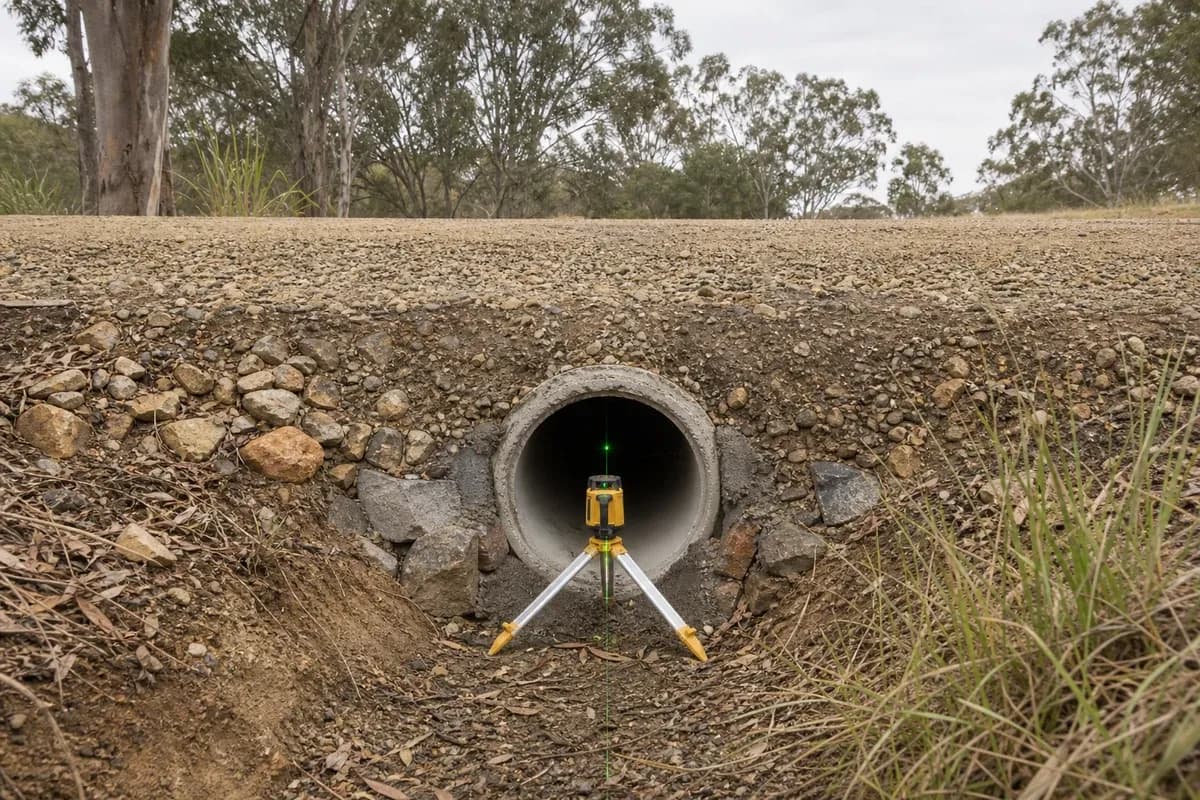
Access fails first at low points. Table drains, culverts, and shoulder protection must be staged with formation so water does not cut channels through freshly compacted gravel after the first inland storm.
Agree temporary diversions while earthworks are open, then when permanent crossings become the only path. Incomplete transitions leave renewable access roads soft exactly where emergency and O&M vehicles need reliability.
Name who maintains sediment controls at public-road ties and who reinstates pavement after pipe crossings. Orphan drainage at fence lines is a leading cause of mid-project access rebuilds on NSW renewable sites.
O&M routes after energisation: lighter traffic, higher reliability
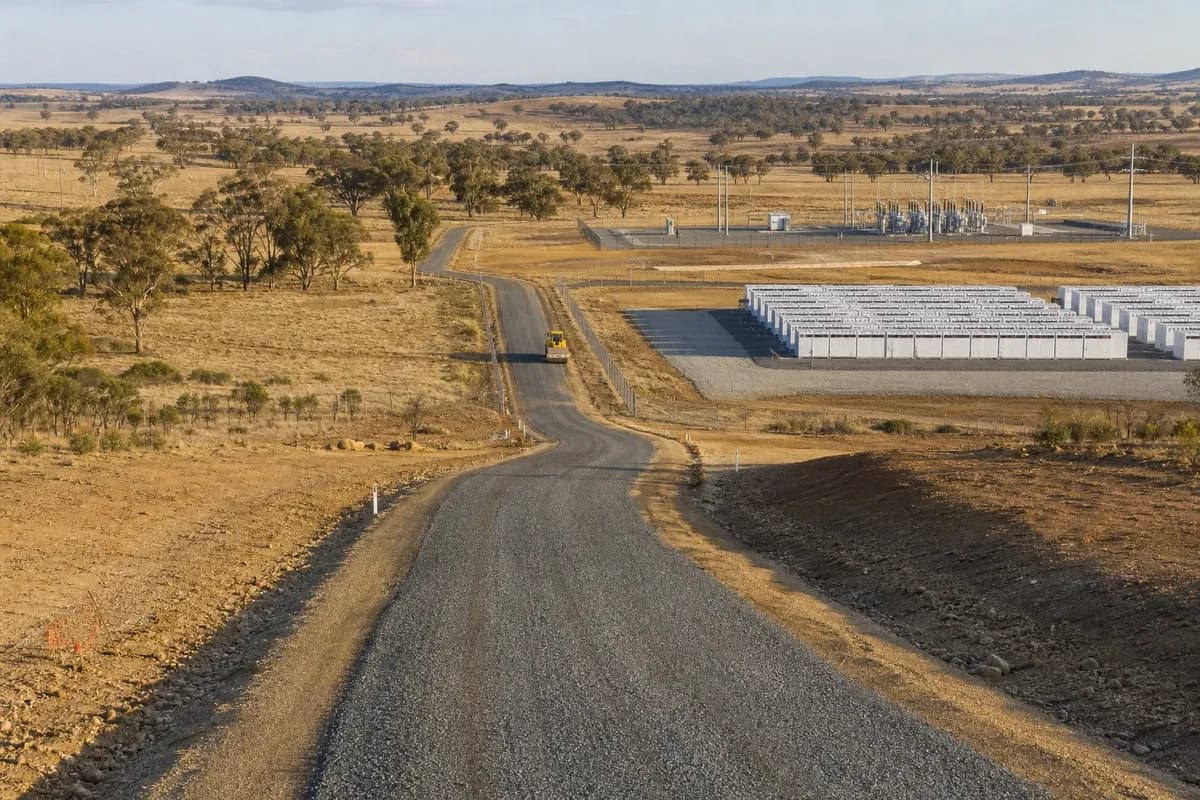
O&M routes carry fewer vehicles but cannot tolerate unpredictable soft spots. After energisation, access must support inspection, vegetation management, and emergency response without reinventing the haul plan.
Define which segments stay unbound gravel, which need sealed or stabilised surfaces, and where passing bays remain for two-way traffic. Lighting, signage, and gate protocols belong in the same brief when sites run night call-outs.
Keep construction damage off finished O&M surfaces. Temporary tracks should be retired or rehabilitated under a written hold so permanent renewable access roads are not left as the unpaid repair item after practical completion.
How access meets solar, BESS, and grid connection packages
Solar farm civil works NSW need row and corridor access that does not sterilise cable routes or tracker set-out. Battery storage civil works need heavier approaches to hardstands and fire access that differ from array tracks. Grid connection civil works need transformer and crane access into the compound—not only a light farm gate.
Publish one interface drawing that shows temporary haul, permanent O&M routes, BESS yard entries, and the substation gate. Ambiguity at those junctions creates the longest clarification cycles between civil and EPC teams.
Align pad and node assumptions with battery storage site preparation NSW, substation civil works NSW, and grid connection civil works NSW so access geometry is priced with the same heavy-vehicle story.
Safety and staging checks before plant commits the corridor
Use these checks while renewable energy access roads NSW are still open to redesign:
Do design vehicles, turning, and passing bays match construction haul and later O&M—or only a light farm track assumption?
Are temporary and permanent surfaces named, with drainage holds before each pavement layer?
Are public-road cleanliness, gate marshalling, and wet-weather triggers written into the method?
Do solar, BESS, and grid packages share one access interface register before civil demobilisation?
Owners comparing corridor delivery evidence can also review NEXTGEN’s project showcase and assurance themes in the delivery FAQ.
Briefing NEXTGEN on renewable access road scope
Where sealed public-road ties or pavement build-ups sit on the same critical path, coordinate with NEXTGEN’s roads and access capability so renewable corridors and estate edges share one staging plan.
Share layout drawings, design vehicle notes, geotech, drainage intent, and programme drivers when you contact NEXTGEN. A clear brief lets construction haul and O&M routes be reviewed as one renewable energy access roads NSW package—not sequential guesses after earthworks leave.