

What a pavement construction contractor NSW should prove on day one
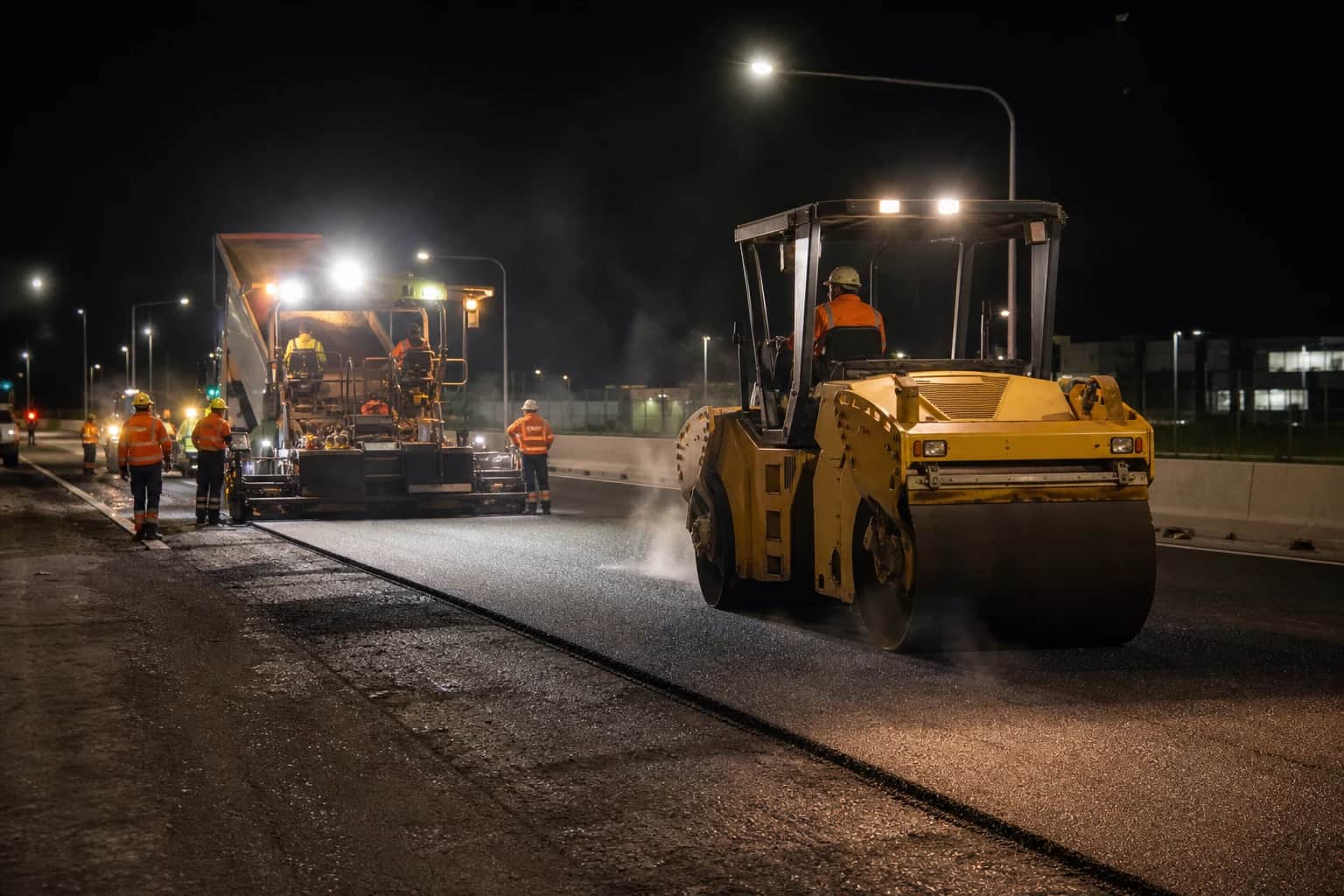
Ask a pavement construction contractor NSW tenderer to show how subgrade is accepted, how each layer is proven with compaction and layer proof NSW records, and which tests close asphalt before traffic returns. Plant lists without hold points are not a method.
Pavement packages also fail at edges when drainage is left out of sequencing, and they fail mid-corridor when traffic staging forces loaded trucks onto unfinished lifts. Treat drains, shoulders, layers, and temporary traffic as one corridor plan.
NEXTGEN delivers these scopes through its roads and pavement division so subgrade, layers, and drainage share one set of supervisors and records. Civil pad interfaces stay visible with the civil infrastructure team.
Subgrade acceptance before any pavement layer starts
A pavement contractor NSW owners appoint should reject soft, wet, or over-excavated subgrade before placing base. Proof-rolling, moisture conditioning, and improvement methods need written fail criteria tied to your design traffic.
Industrial and heavy-vehicle routes demand higher scrutiny than light access tracks. Confirm axle assumptions early so layer thicknesses are not argued after the first soft spot appears under a loaded truck.
When the corridor is still a construction haul route, align subgrade holds with access road construction NSW and heavy-construction traffic rules in haul road construction NSW.
Compaction testing and layer proof that survive industrial pavement testing NSW
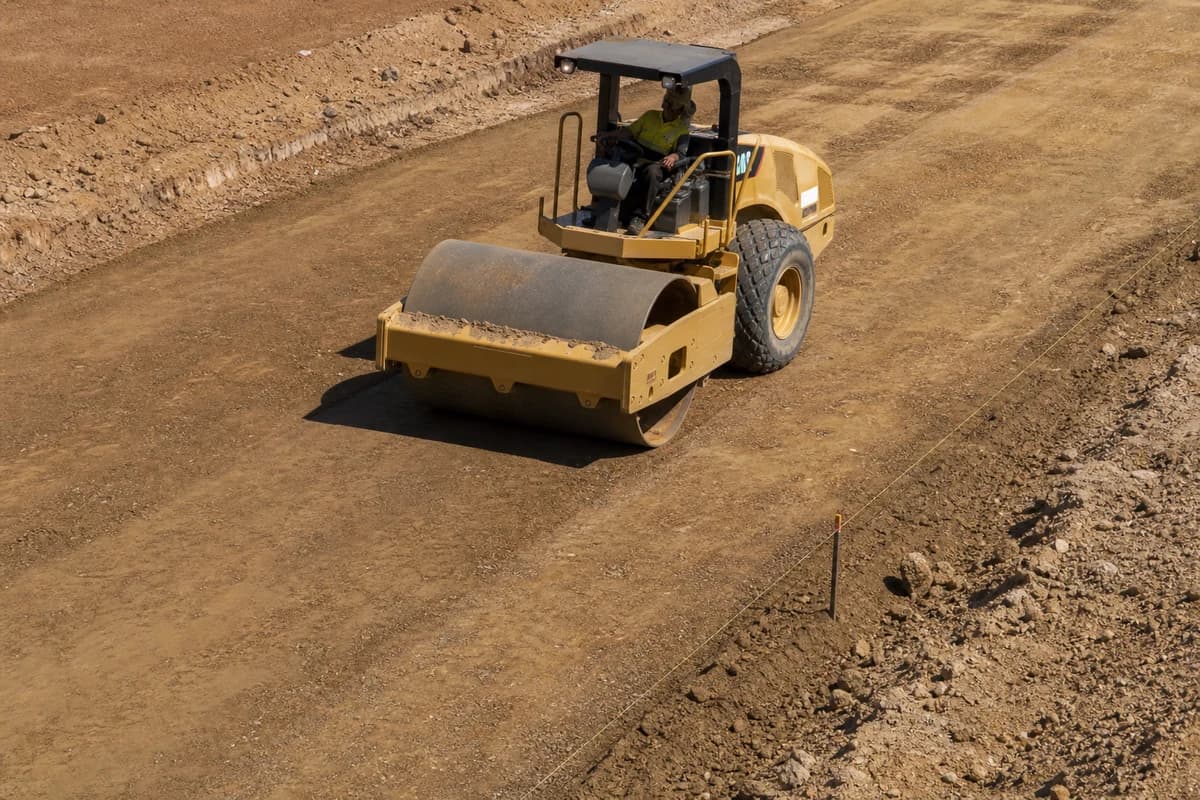
Each unbound or bound layer needs material specs, placed thickness targets, compaction method, and how non-conforming spots are cut out and replaced. “Compacted gravel” without measurements is not pavement quality verification NSW.
Require survey or stringline control so crowns and crossfalls match drainage intent. Flat spots that pond water destroy pavement edges long before the asphalt surface looks worn.
Industrial pavement testing NSW expectations should name lot sizes, test frequency, and who signs pavement hold point records before the next lift. End-of-shift averages that ignore soft edges are how ruts appear after handover.
- Subgrade proof-roll or CBR-related acceptance signed before the first pavement course.
- Layer thickness and compaction tests matched to lot and chainage on the drawing.
- Moisture conditioning criteria written for wet Illawarra and Greater Sydney workfronts.
- Cut-out and replace rules for failed lots—not “extra passes until it looks right.”
Traffic staging while the pavement box is open
Traffic staging is a pavement quality issue, not only a TMP paperwork task. Premature openings under heavy vehicles create ruts that look like a design problem and are often a process failure.
Freeze tie-ins to public roads, industrial gates, and temporary crossings before the paver arrives. Plan how construction traffic bypasses open lifts, and who owns temporary gravel diversions that will not contaminate finished layers.
Where sealed layers meet industrial yards or estate spines, keep package shapes visible in the industrial estate pavement program (representative) and method depth in industrial pavement works NSW.
Drainage interfaces and environmental controls at the edge
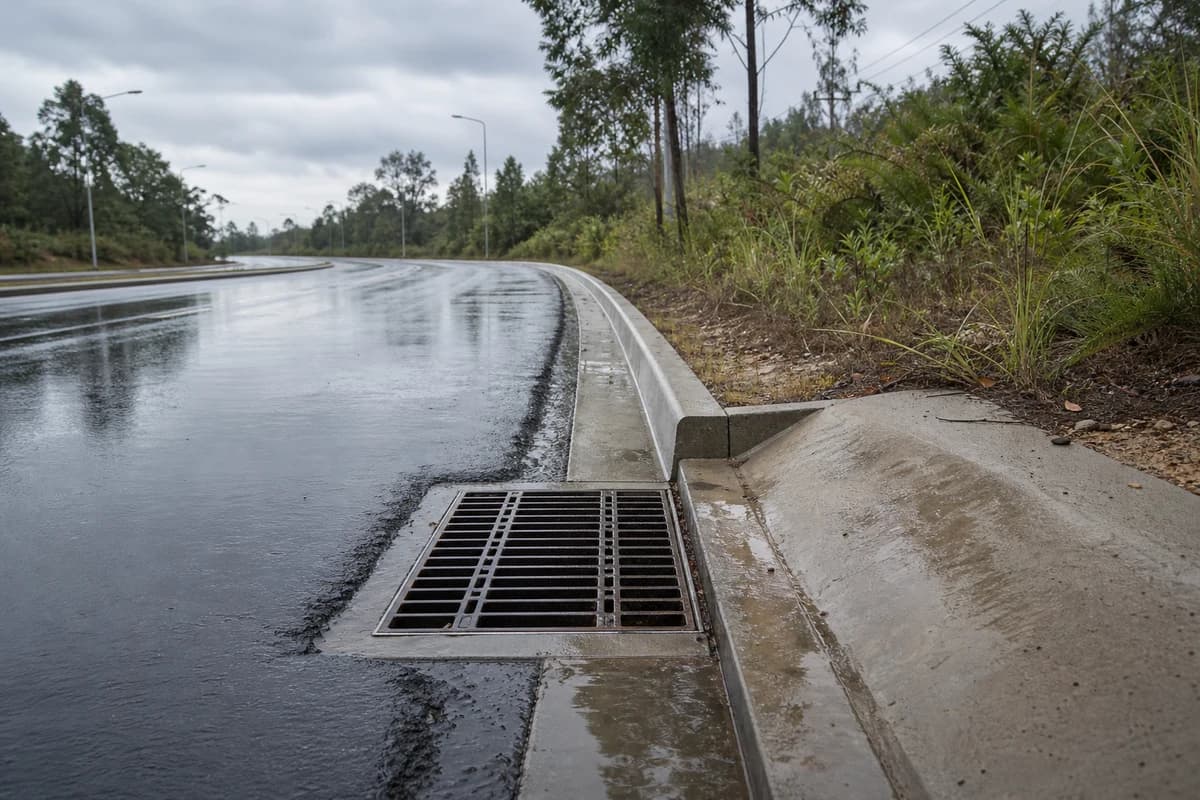
A road drainage contractor should own pits, table drains, and outlets relative to finished pavement levels—not as a post-seal fix. Water trapped at the edge softens layers the QA program already signed off.
Confirm temporary diversions during layer works and final discharge paths. Environmental controls—sediment at open boxes, dirty-water pathways, and dust on haul bypasses—should move with the paving shift, not stay at last week’s workfront.
Drainage confirmation themes in stormwater drainage contractor NSW translate directly to road corridors. Edge-failure patterns are covered in asphalt works and drainage interfaces. Where formation is already distressed, road rehabilitation NSW guidance explains when resurfacing alone will not recover the subgrade.
Inspection hold points, asphalt checks, and procurement questions
Use this civil QA gate while work is live—not only at practical completion—and ask tenderers to answer the procurement questions in writing.
- Subgrade hold signed before base starts.
- Compaction and thickness holds closed by lot before the next lift.
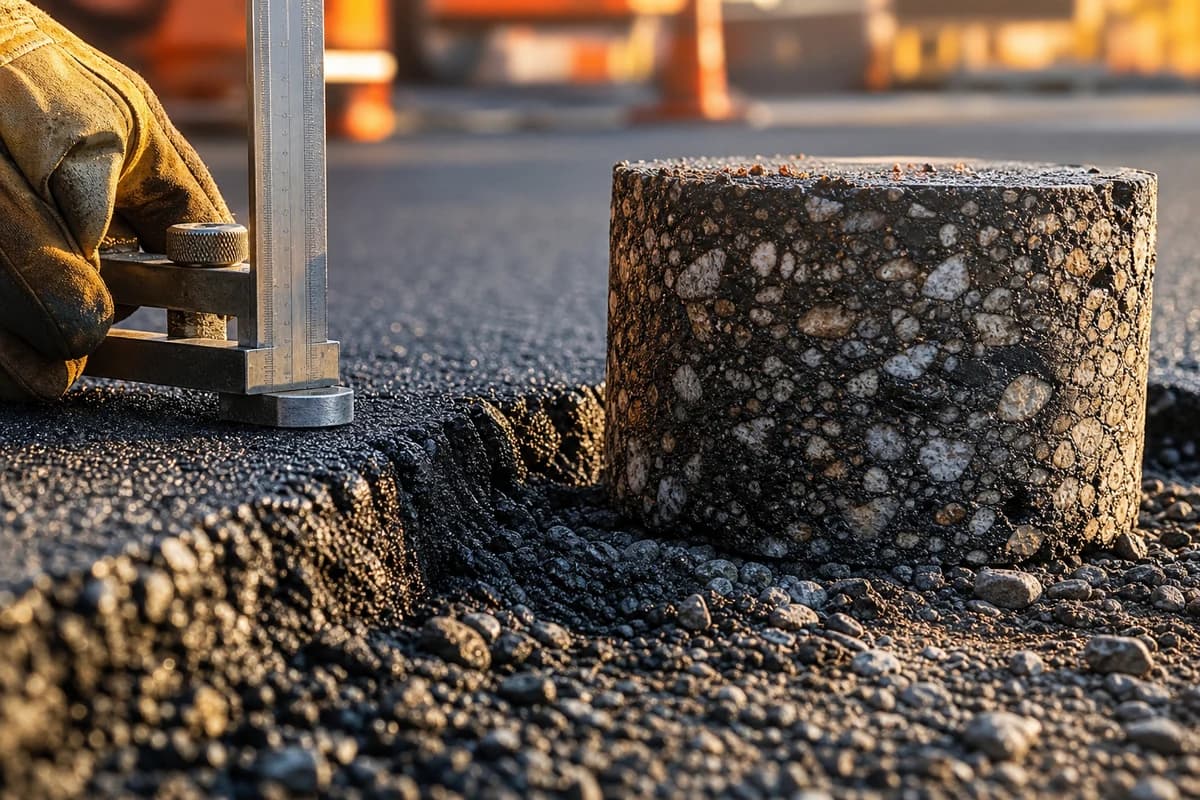
- Asphalt temperature, joint, and density records retained against the paving shift.
- Drainage outlets and shoulders complete enough that pavement edges are not trapping water.
- Traffic staging plan that keeps design loads off unfinished lifts.
- Sample pavement hold point records from a comparable NSW industrial or public road package.
Lessons from delivery and briefing NEXTGEN
Lesson from delivery: most early pavement failures are edge and traffic problems wearing a materials costume. Soft shoulders, ponding outlets, and construction trucks on green asphalt undo good layer design faster than a marginal mix design.
Share design traffic, pavement drawings, geotech notes, and drainage intent when you contact NEXTGEN. Owners scoring contractors more broadly can also use how to choose a civil contractor in NSW and assurance themes in the delivery FAQ.