

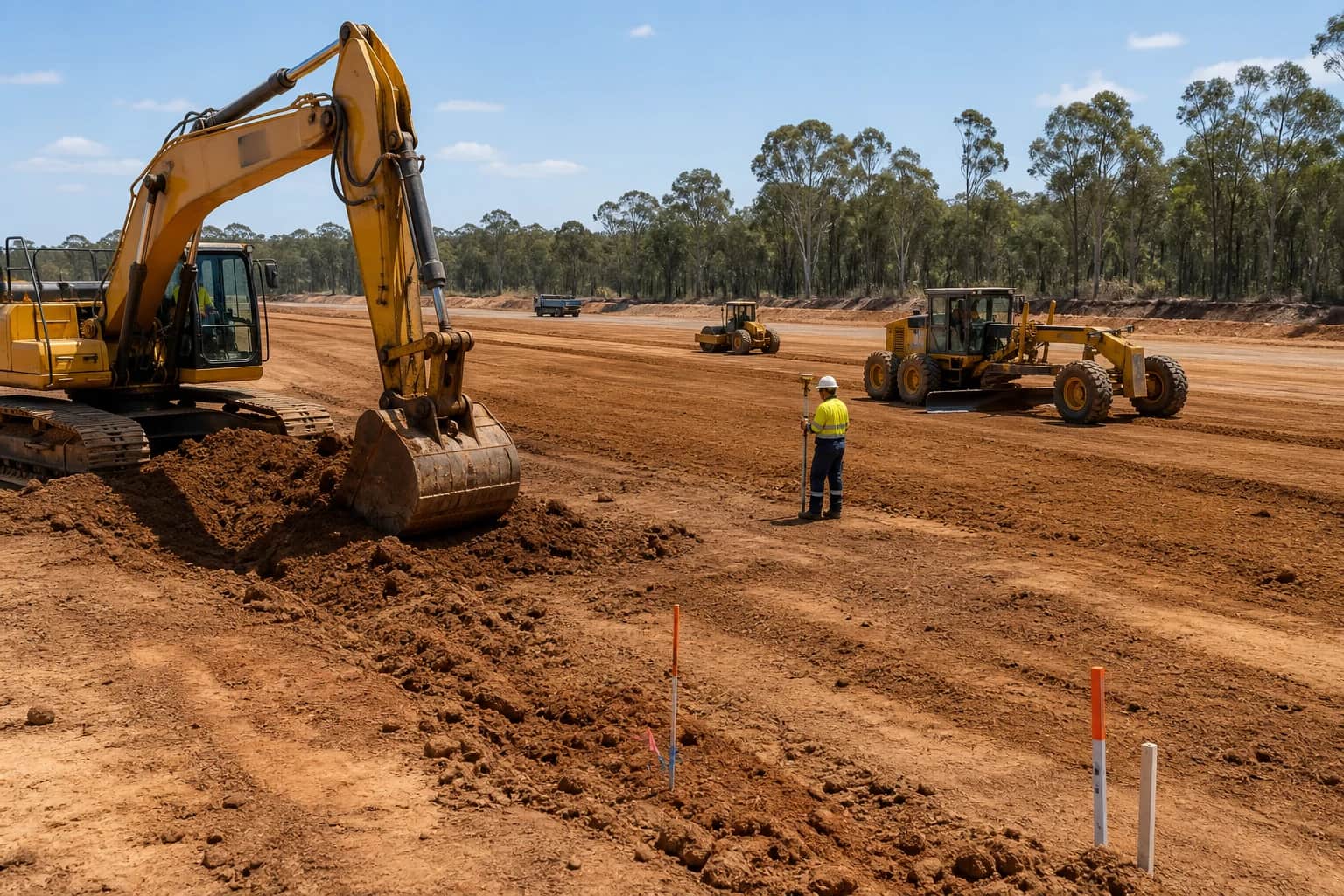
What developers should lock before a Greater Sydney civil tender
Appointing a civil infrastructure contractor Greater Sydney project owners can hold accountable starts before the tender closes. The practical answer is a brief that names formation intent, drainage discharge, design vehicles, known services, and which packages sit with roads or following builders—not a capability brochure alone.
Western Sydney growth corridors, industrial estates, and precinct sites change weekly. Soft pads, unfinished stormwater, and access roads sized for cars instead of construction traffic become the next trade’s problem after award. Preparing those interfaces early keeps tender returns comparable.
Use NEXTGEN’s Civil Infrastructure pathway for NSW earthworks, drainage, and site development packages, and route the inquiry through Contact once drawings and constraints are named. Statewide contractor selection questions sit on what project owners should look for in a NSW civil contractor; this guide stays on Greater Sydney tender preparation.
Earthworks Greater Sydney packages fail when haul and weather are assumed
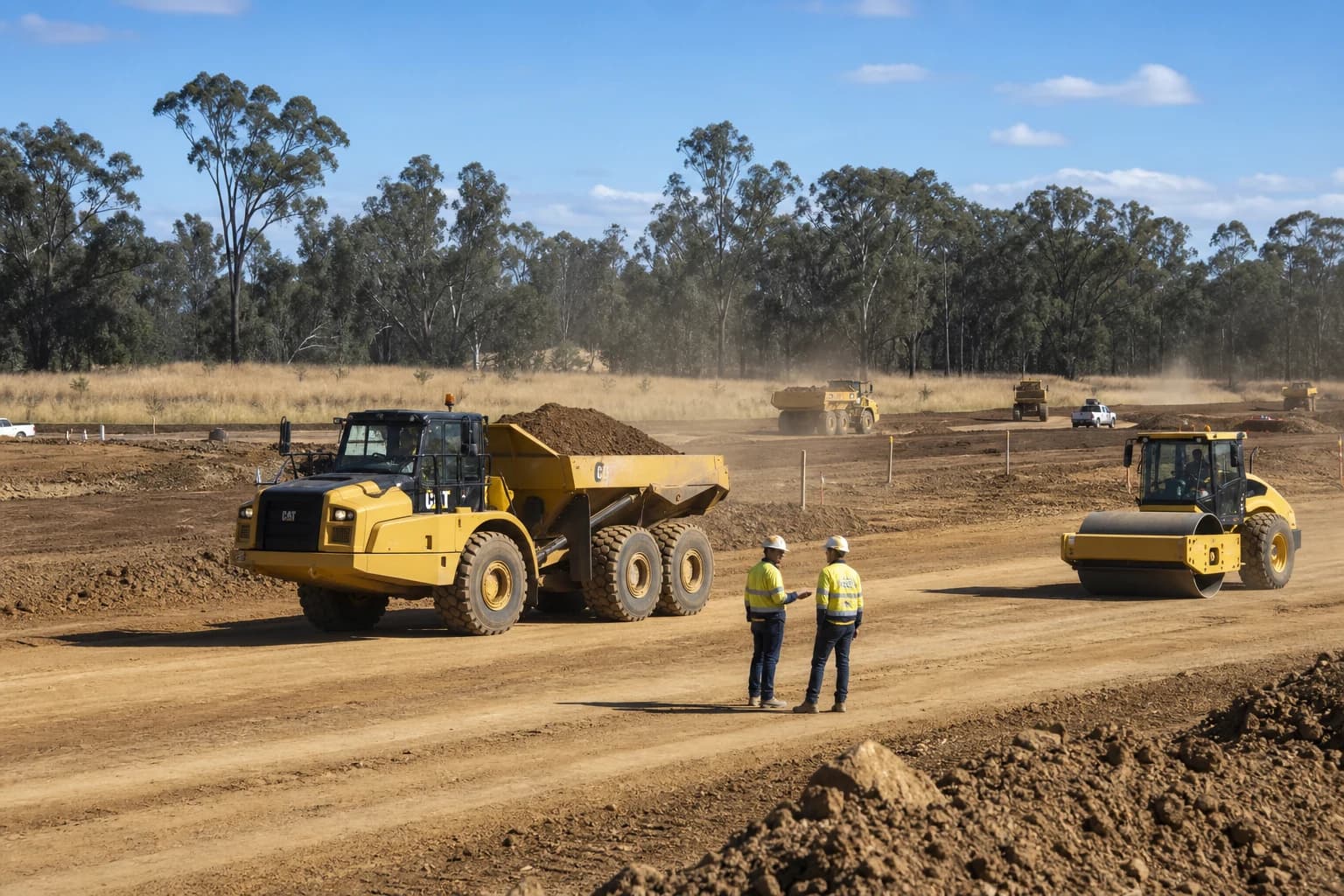
Earthworks Greater Sydney scopes often sit on large cut-fill platforms beside live industrial neighbours or staged precinct access. Failures start when temporary haul routes, spoil destinations, and moisture holds are left as “contractor to allow” without survey or geotechnical notes attached to the tender.
Ask for cut-fill intent, pad tolerances for the next trade, and how formation will be proven after wet weather. Western Sydney summer storms and winter saturation both reopen soft spots if compaction criteria are vague.
Detailed excavation around known or suspected services needs the same clarity as bulk digs. A brief that separates bulk earthworks from footing digs and service corridors lets returns price the risk instead of burying it in a lump sum.
Drainage contractor Greater Sydney interfaces decide pavement readiness
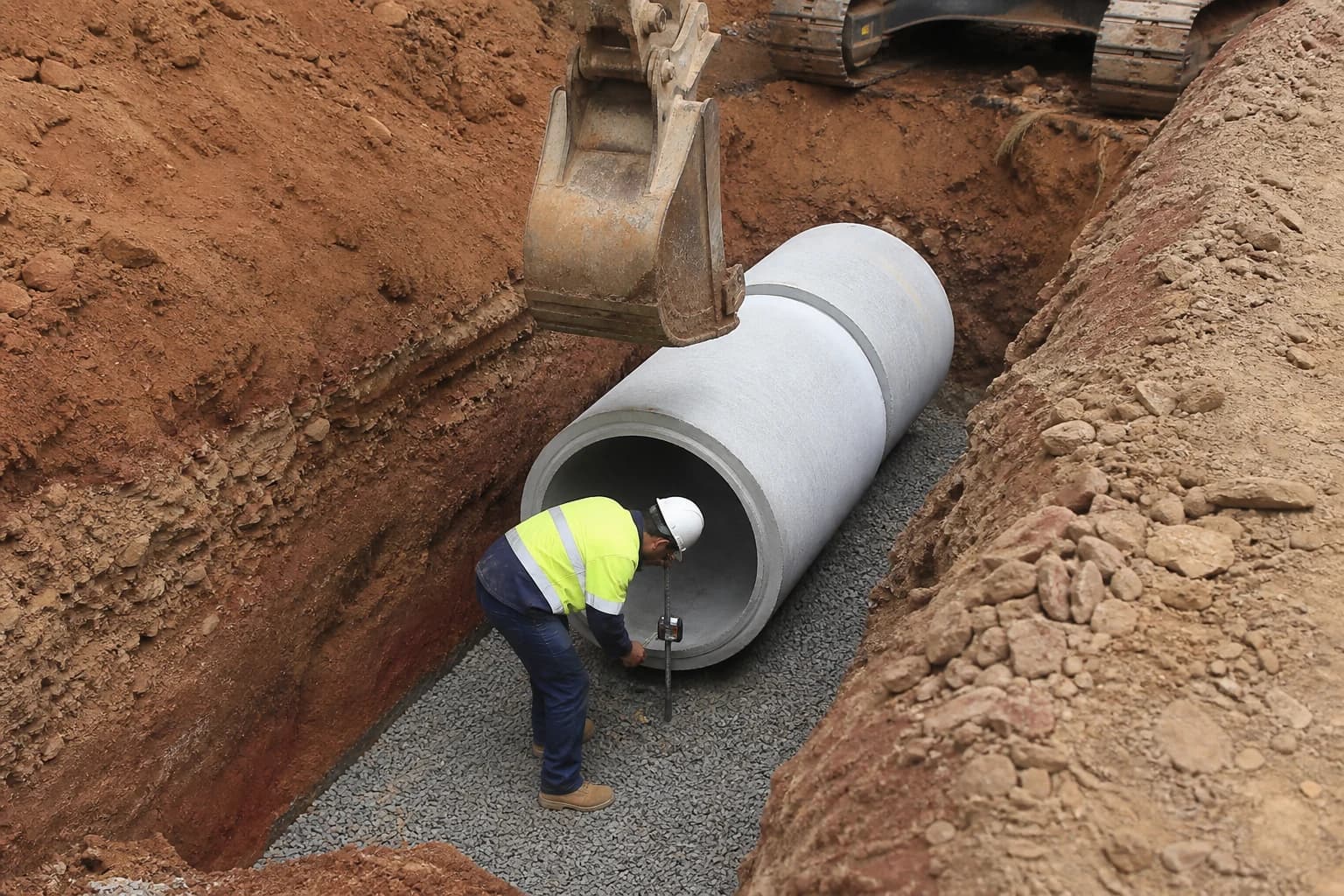
A drainage contractor Greater Sydney developers appoint should own pits, pipes, temporary diversions, and discharge points that protect later pavements and hardstands—not only a pipe schedule. Overland flow paths change after regrading on large Western Sydney lots.
Tender packs should show where stormwater ties to council assets, basin outlets, or temporary sediment controls. Incomplete drainage intent forces earthworks crews to leave soft corridors or reopen finished pads.
Where trenches cross future running surfaces, sequence utilities before pavements. Depth on corridor method sits in stormwater drainage contractor NSW guidance and utility trenching contractor NSW scope.
Roadworks Greater Sydney access must match design vehicles
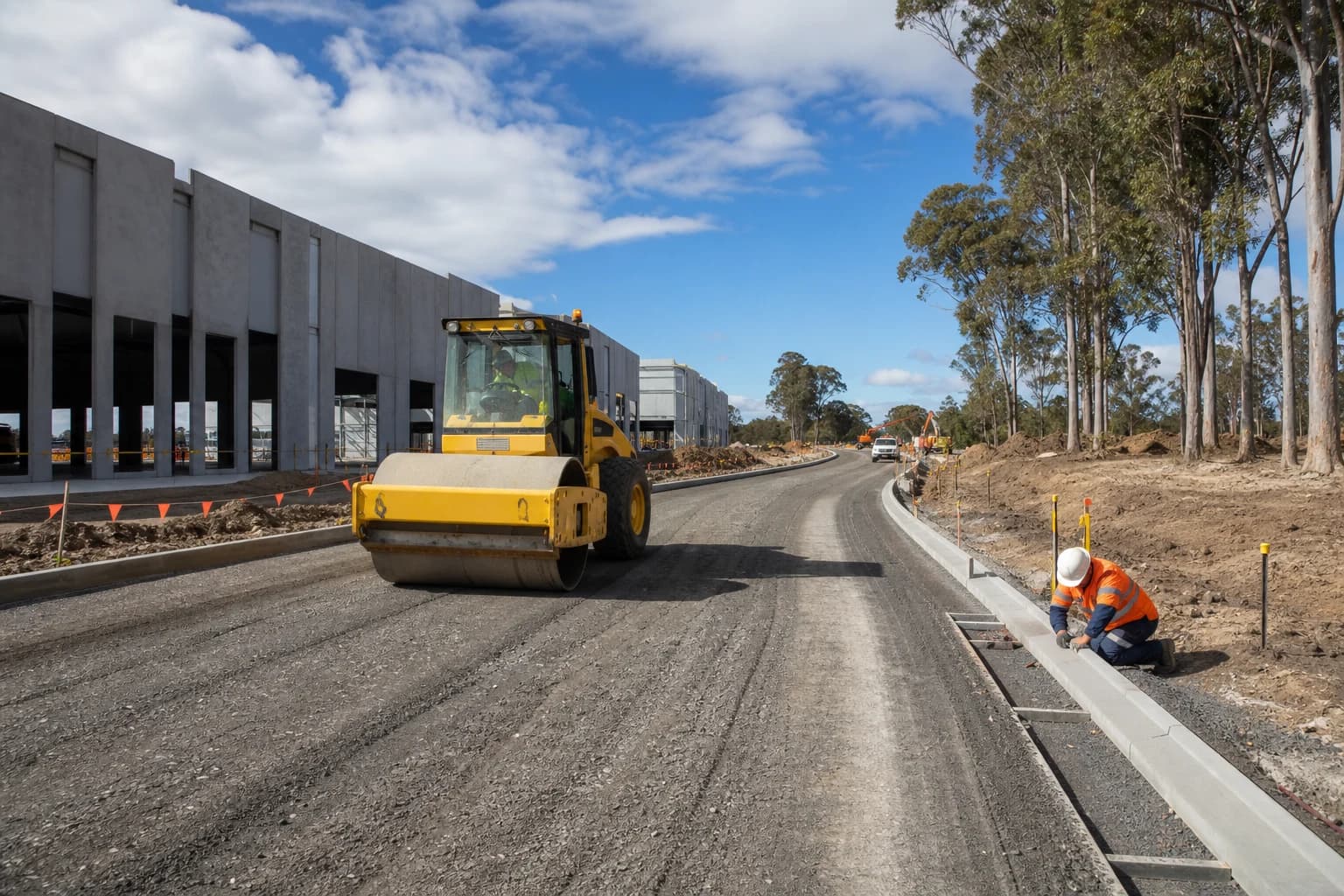
Roadworks Greater Sydney packages often fail when site entries and estate roads are drawn for cars while construction and O&M traffic need industrial geometry. Design vehicles, kerb returns, and drainage ties belong in the tender brief.
Confirm whether temporary construction access and permanent pavements share one formation story. Soft shoulders and unfinished culvert ties destroy early pavement layers under haul loads.
When corridor pavements sit beside civil earthworks, brief Roads alongside Civil Infrastructure. Access and haul method depth lives on access road construction NSW and haul road construction NSW guides.
Tender checklist for an infrastructure contractor Greater Sydney brief
Use this checklist before you issue or evaluate returns for an infrastructure contractor Greater Sydney appointment:
- Drawings status, survey, and geotechnical notes attached—or unknowns listed as assumptions.
- Earthworks: cut-fill intent, haul routes, compaction criteria, and pad proof for the next trade.
- Drainage: discharge points, temporary controls, and ties to council or basin assets.
- Roadworks: design vehicles, temporary vs permanent access, kerbs, and culvert interfaces.
- Known services, live-neighbour constraints, and programme windows named in writing.
- Clear split between Civil Infrastructure, Roads, and following building packages.
How this differs from Illawarra and South Coast location briefs
Greater Sydney tenders usually turn on precinct scale, Western Sydney growth staging, and heavy industrial traffic—not coastal escarpment access alone. Illawarra and South Coast guides cover local weather and industrial-neighbour patterns for those ribbons.
Compare regional delivery control in Illawarra civil infrastructure guidance and South Coast NSW civil contractor guidance. For airport-adjacent precinct roads, utilities, and enabling packages, use Western Sydney Aerotropolis civil works. Keep this page focused on what Greater Sydney developers should prepare before tender.
Review package shapes in the project portfolio, then send drawings and constraints through contact NEXTGEN so the brief routes to Civil Infrastructure or Roads.