


What an earthworks contractor NSW package should cover
Appoint an earthworks contractor NSW team to move material and leave a construction-ready platform—not only to open a hole. The package should define bulk earthworks, detailed excavation around structures or services, and the site preparation proof that following trades need.
Owners lose days when those three scopes blur. Bulk fleets finish early while footing digs and compaction holds remain undefined, or pads look complete without drainage and utilities NSW interfaces ready.
NEXTGEN structures these works through its civil infrastructure division so estimating, supervision, and handover speak to the same scope map from the first site walk.
Bulk earthworks: balance, haul, and weather holds
Bulk scope is cut-fill balance, temporary haul routes, stockpile strategy, and compaction criteria for large platforms. Agree where surplus goes, how moisture is managed after rain, and which benches must stay trafficable for following plant.
Ask for a method that names survey control and fail criteria for formation—not only a finish grade. Soft spots left between truck routes become long-term defects even when the site looks broadly complete from the fence line.
Compare corridor and pad delivery examples in NEXTGEN’s project showcase—and named renewable earthworks support on Blind Creek Solar Farm—when you evaluate whether the contractor has run large open earthworks under NSW weather, not only small lot digs.

Detailed excavation around structures and live services
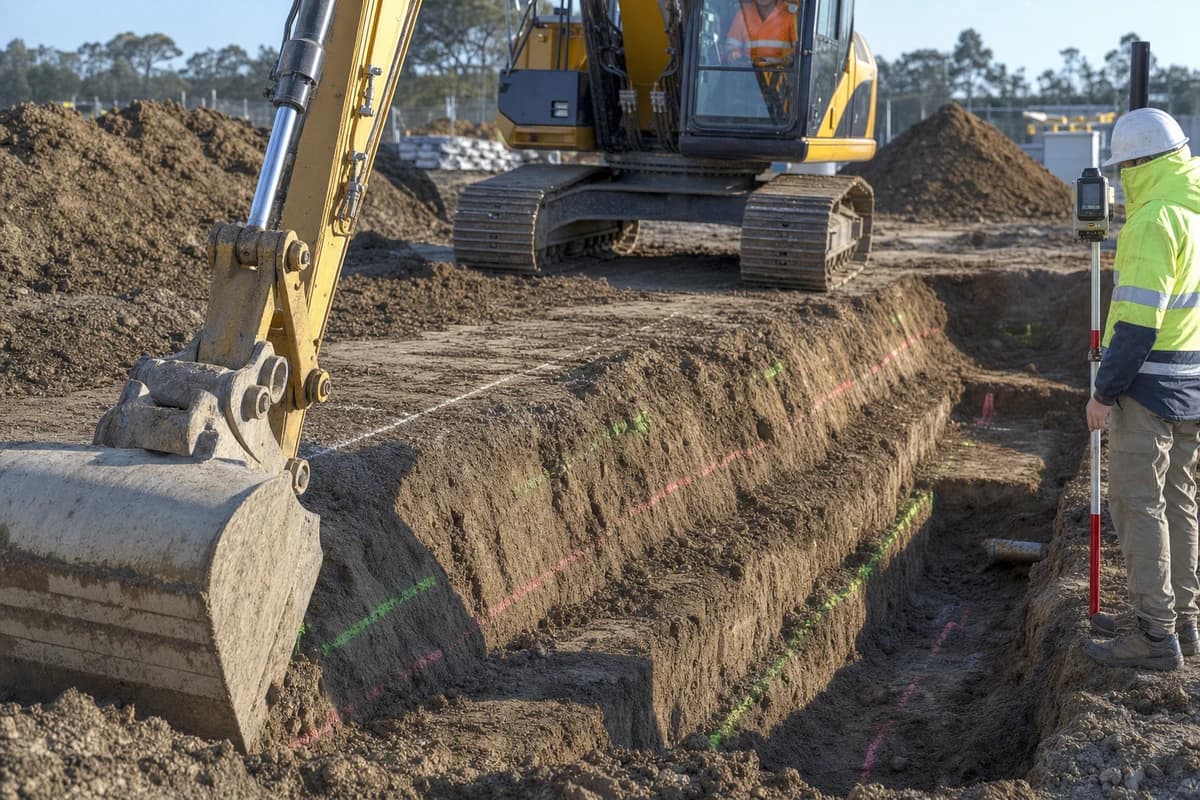
Detailed excavation covers trenches, footing digs, batter control beside existing assets, and working room for formwork or pipe crews. Tolerances are tighter than bulk platforms, and damage risk rises around unmarked services.
Require mark-up of known utilities, discovery procedures, and who stops work when conditions change. Detailed digs without those controls turn into programme noise the bulk fleet cannot recover.
Keep temporary support, spoil staging, and access for concrete or drainage crews inside the same method statement so detailed work does not undo finished formation nearby.
Civil site preparation NSW: proving the platform is ready
Civil site preparation NSW is the readiness layer after earthworks geometry is close: final trimming, compaction proof, temporary access, sediment controls, and a surface following trades can start on without rework.
Confirm moisture, density, and finish criteria before declaring a pad ready. Partial preparation—pretty levels without holds—creates idle plant for builders, pavement crews, or renewable installers.
Owners comparing appointment criteria beyond earthworks method can also use how to choose a civil contractor in NSW to score safety and delivery proof alongside site preparation checks.

What is the difference between earthworks and site development?
Earthworks is the formation engine: bulk cut-fill, detailed excavation, and proven platforms. Site development is the full critical path around that engine—clearing and strip, drainage and utilities timing, temporary access, and civil handover so following trades can start without reopening the pad.
Appointing only an earthworks contractor NSW team is enough when formation is the sole package. Appoint site development when you also need clearing sequencing, service corridors, and construction-ready closure under one accountable programme.
For the wider clearing-to-handover sequence, read site development civil works NSW; keep this page for bulk, detailed, and preparation detail inside the dig package.
Civil handover documentation for earthworks packages
Civil handover documentation should include as-built levels, compaction and testing records, photographic evidence of key hold points, and an outstanding-works list tied to pads and trenches.
Without that pack, principals rediscover what moisture criteria applied, where soft spots were rectified, and which outlets were deferred. Strong records make defect and next-trade start decisions faster.
Assurance expectations before mobilisation are summarised in NEXTGEN’s delivery FAQ—use the same themes when you review sample handover from tenderers.
Brief NEXTGEN on bulk, detailed, and site preparation scope
Share geotech notes, cut-fill intent, service plans, and programme drivers when you contact NEXTGEN. A clear brief lets bulk, detailed, and civil site preparation NSW items be priced and staged as one earthworks contractor NSW package.
When haul routes or sealed access dominate risk, bring roads interfaces into the same inquiry via NEXTGEN’s roads capability so earthworks and pavement crews share one corridor plan.