

Bulk earthworks vs detailed excavation in one decision
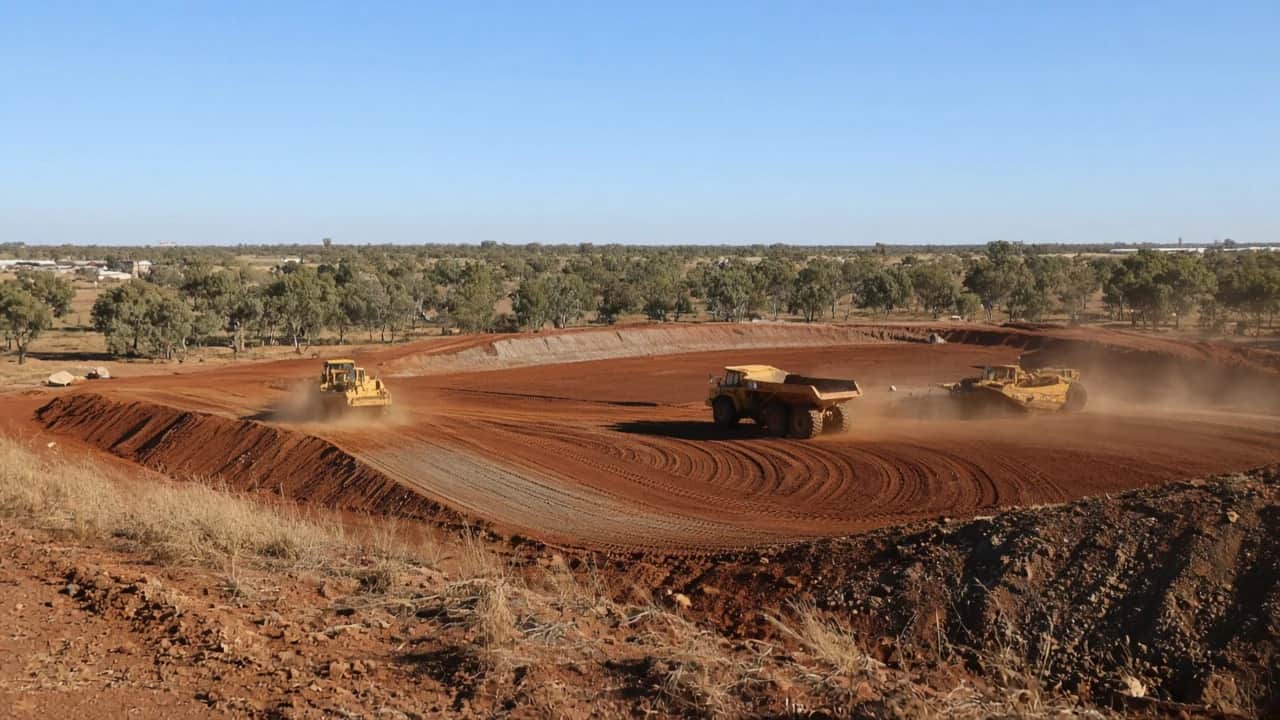
Bulk earthworks vs detailed excavation is not a plant preference—it is a scope boundary. Bulk earthworks cut, fill, haul, and compact large platforms to formation under weather and traffic rules. Detailed excavation digs to tighter levels beside footings, service trenches, batters against existing assets, and working room for the next crew.
NSW clients lose weeks when those two scopes share one lump sum with no hold points. The bulk fleet finishes early while footing digs, potholing, and compaction lots remain undefined—or detailed digs reopen a pad that looked complete from the gate.
NEXTGEN prices and stages both through its civil infrastructure division. Use this guide to brief the split; use the earthworks contractor NSW package guide when you need the full appointment map around site preparation and interfaces.
When does bulk earthworks own the critical path?
Bulk owns the programme when volume, balance, and weather decide the outcome. Cut-to-fill on an industrial pad, a renewable array bench, or a warehouse platform is bulk work: temporary haul routes, stockpile strategy, moisture windows, and survey control for formation—not millimetre footing digs.
Ask an earthworks contractor NSW team to state whether the design balances on site, which cut material is suitable as structural fill, and how unsuitable material is treated or exported. A balance that ignores bulking, shrinkage, or wet-weather losses becomes late truck movements you did not price.
Bulk is finished when formation levels, compaction lots, and trafficable benches match the drawings—not when the last scraper leaves. Soft spots between haul paths are still open risk until proof rolling and density tests close them.
Where detailed excavation carries the real risk
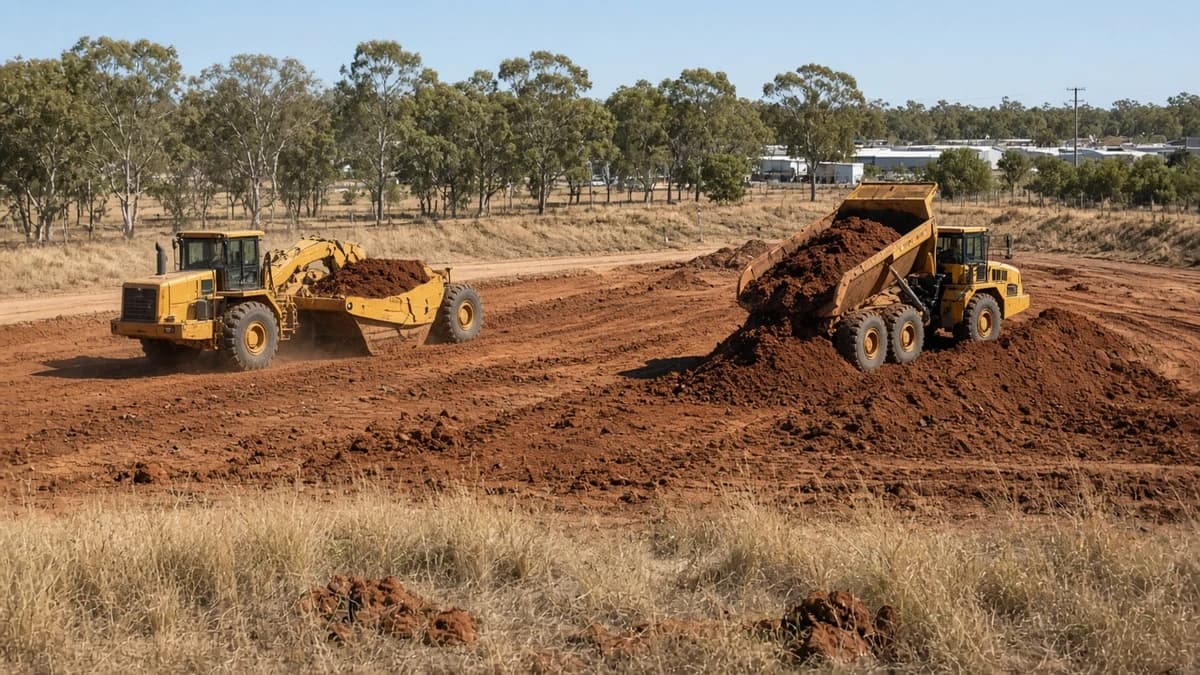
Detailed excavation carries damage and tolerance risk that bulk fleets are not set up to manage alone. Footing digs, pipe trenches, batter control beside live roads or buildings, and hand-trim around marked services need survey control, discovery procedures, and a named stop-work rule when conditions change.
Keep temporary support, spoil staging, and access for concrete or drainage crews inside the same method statement. A detailed dig that undercuts a finished formation, or that leaves spoil on a pad the builder must start on Monday, undoes the bulk win.
When trenches sit inside the same package as formation, sequence them so pavements do not sterilise unfinished corridors. The live services civil works NSW guide covers discovery and protection habits that belong in every detailed dig brief.
How should clients write the split into a tender?
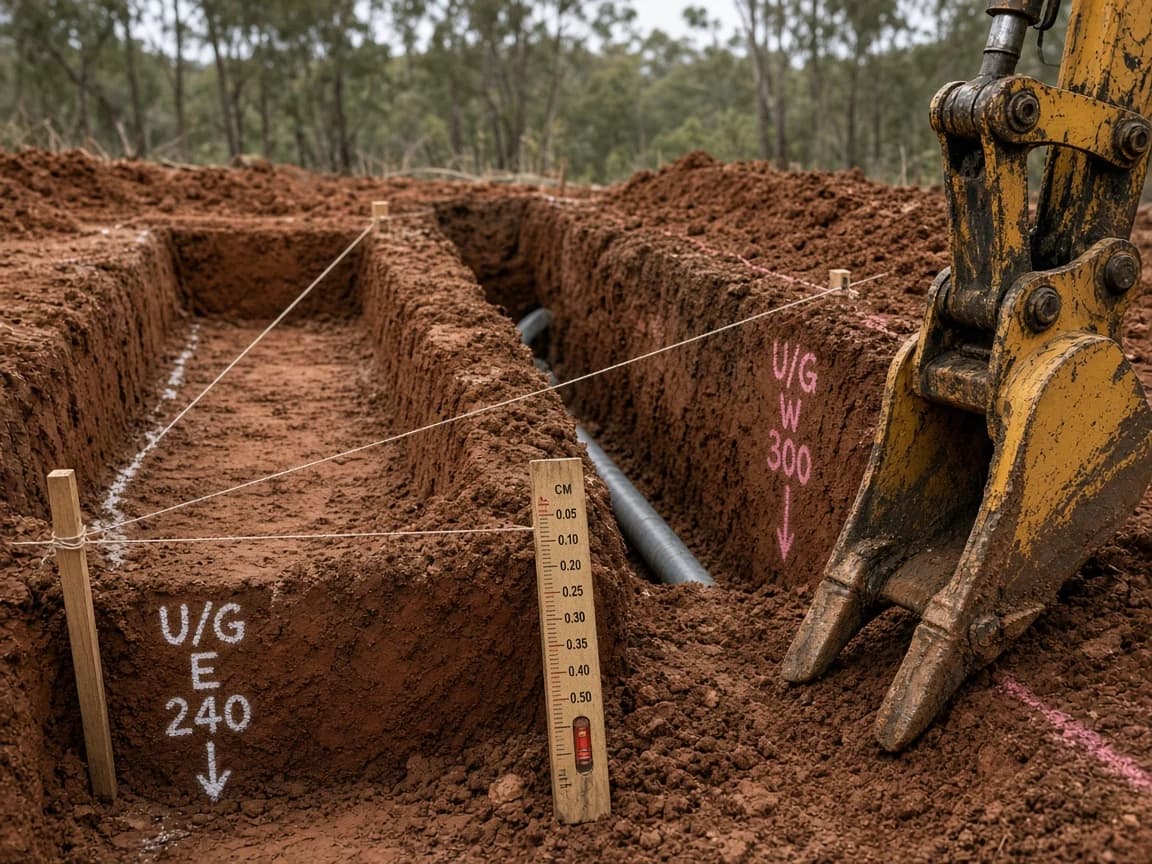
Price the risk you can describe. Separate line items—or clearly named sub-scopes—for bulk cut-fill, detailed excavation, and civil site preparation NSW readiness. If everything sits under "earthworks," tenderers will either pad contingency or fight variations when footing digs appear after award.
- Bulk: design volumes, import/export assumption, haul routes, stockpile locations, compaction standard, moisture window, and weather hold criteria.
- Detailed: footing and trench extents, tolerances, known services, potholing allowance, temporary support, and who stops work on discovery.
- Site preparation: finished surface tolerance, proof-roll and density lots, temporary access, and sediment controls that travel with the workfront.
- Interfaces: drainage outlets, utility corridors, and any public-road or neighbour constraints that change plant or staging.
Drainage and utilities NSW interfaces that change the dig
Drainage and utilities NSW work often decides whether bulk or detailed rules apply on a given chainage. A sediment basin and diversion drain installed before strip is a bulk-adjacent control. A stormwater trench cut through a proven pad for a late design change is detailed work that must reopen hold points.
Confirm discharge points, easements, and which services stay live before the first cut. Permanent pits and pipes do not replace temporary erosion controls while the pad is bare—and they should not be assumed to sit outside the earthworks critical path.
For owner-side readiness checks before the next trade mobilises, use the construction-ready site preparation checklist. For stormwater method itself, see the stormwater drainage contractor NSW guide.
Civil site preparation NSW closes the gap between dig and start
Civil site preparation NSW is the readiness layer after bulk and detailed digs: final trim, compaction proof, temporary access, and a surface following trades can start on without rework. Declaring the site ready by eye is how builders and pavement crews lose a week chasing soft patches.
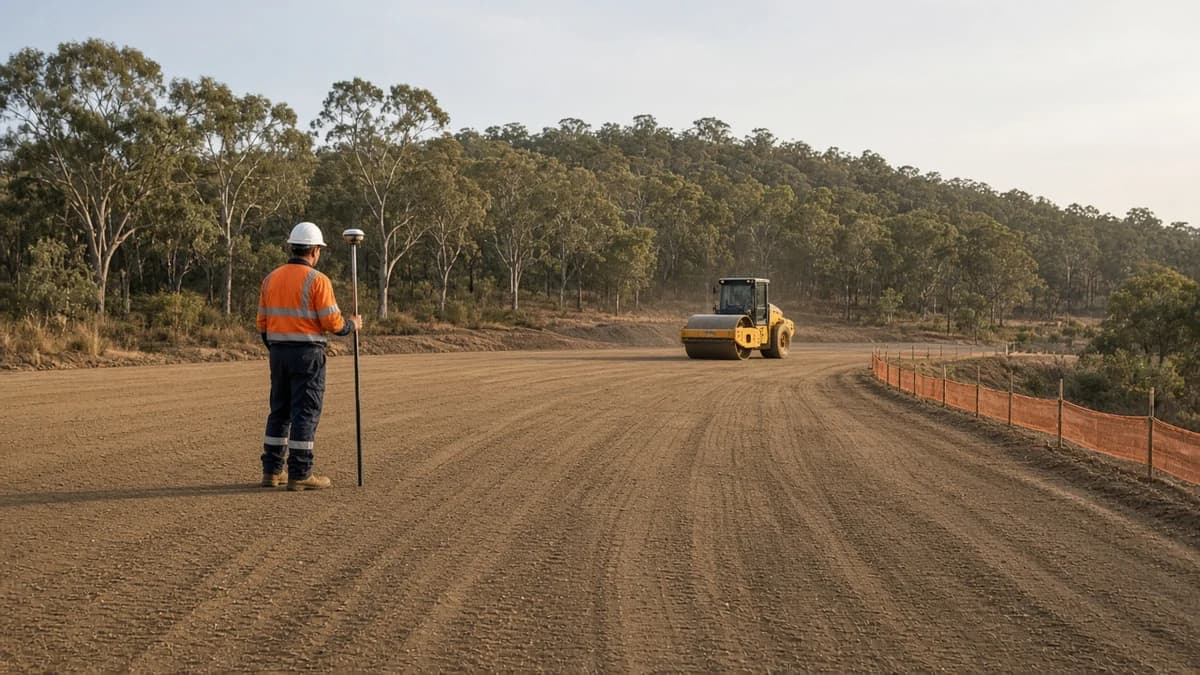
Agree layer thickness, test method, test frequency, and who signs each lot before the next layer goes down. Proof rolling should find soft spots while plant is still on site to fix them—not after the earthworks crew has demobilised.
Compare how formation and drains read as one envelope in NEXTGEN’s project showcase, then bring the same hold language into your brief.
What civil handover documentation should close the earthworks package?
Civil handover documentation turns a finished dig into something the next contractor can trust. Ask for as-built levels, compaction and moisture results mapped to location, soft-spot and fill records, photos of critical holds, and an outstanding-works register with owners and dates.
Without that pack, following trades re-prove the pad or price risk into their start. With it, disputes about "who left the soft spot" become evidence questions rather than memory contests.
Delivery habits that keep quality and environmental controls visible during the works—not only at practical completion—are covered in NEXTGEN’s FAQ on delivery expectations. When your brief separates bulk, detailed, and preparation holds, contact NEXTGEN so the package can be priced and staged as one accountable earthworks sequence.