
What a civil infrastructure contractor NSW should prove before award
Appoint a civil infrastructure contractor NSW team that can restate inclusions and exclusions, name hold points for earthworks and drainage, and show how civil handover documentation closes the package when the next trade arrives. Capability brochures without that map are not delivery control.
The practical filter is simple: can estimating, site supervision, and records follow one scope story from bulk dig through pad readiness? If those three functions disagree on utilities, temporary works, or pavement edges, expect programme friction after plant arrives.
Start with NEXTGEN’s civil infrastructure services when you want that map tested early—before tender scoring collapses into rate-only comparisons.
Common NSW site constraints that should appear in the brief
NSW industrial, commercial, and precinct sites rarely arrive as empty paddocks. Live services, adjoining tenants, council assets, contaminated pockets, soft coastal fills, and restricted gate hours all reshape how a civil infrastructure contractor NSW package should be staged.
Name access constraints, overnight work limits, spoil destinations, and who owns design ambiguities before plant is priced. Constraints left as “TBA” become variations the day the excavator opens the first trench.
Owners scoring appointment risk more broadly can cross-check selection habits in how to choose a civil contractor in NSW—then return here for package-level staging and handover depth.
- Live services and dial-before-you-dig assumptions written into the method—not left to a morning toolbox talk.
- Temporary drainage and sediment controls tied to each earthworks workfront, especially on Illawarra and Greater Sydney weather-exposed pads.
- Public road or industrial gate interfaces named where trucks, kerbs, or authority assets constrain haul routes.
- Contamination or unexpected soft ground: who decides treatment, and how fast hold points restart.
Construction sequencing: earthworks before drains before pads
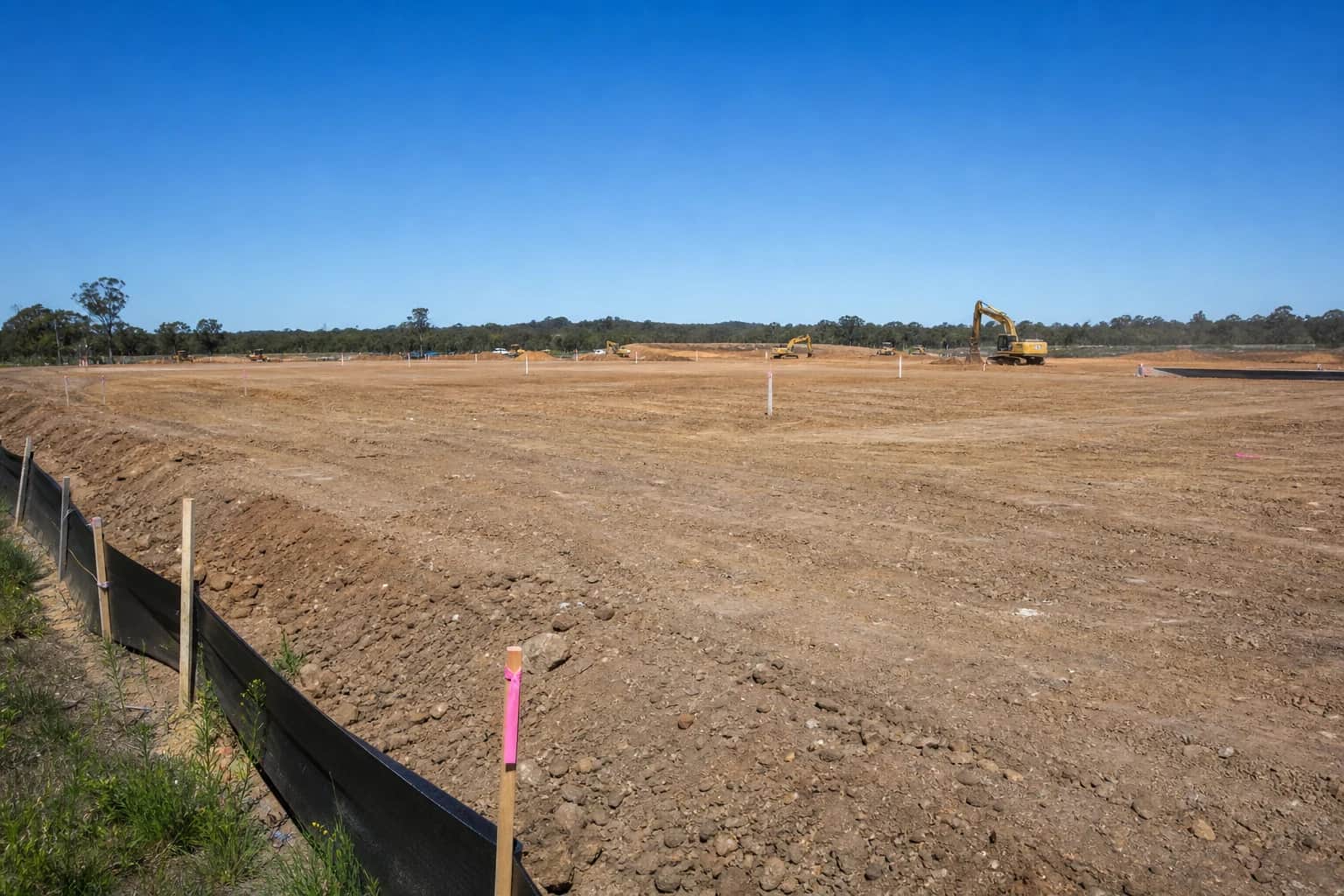
Ask the contractor to explain cut-fill intent, temporary haul routes, compaction criteria, and weather holds before scrapers commit the site. Staging protects adjoining pavements and keeps spoil away from public road conflicts.
Sequence matters more than plant horsepower. Bulk dig that leaves no room for stormwater pits, or pads finished before utility corridors, forces rework that looks like “unforeseen conditions” when it was a sequencing failure.
For bulk dig and formation method detail, compare earthworks contractor NSW scope. For clearing-to-handover packages, align with site development civil works NSW.
Inspection hold points and compaction testing that protect later trades
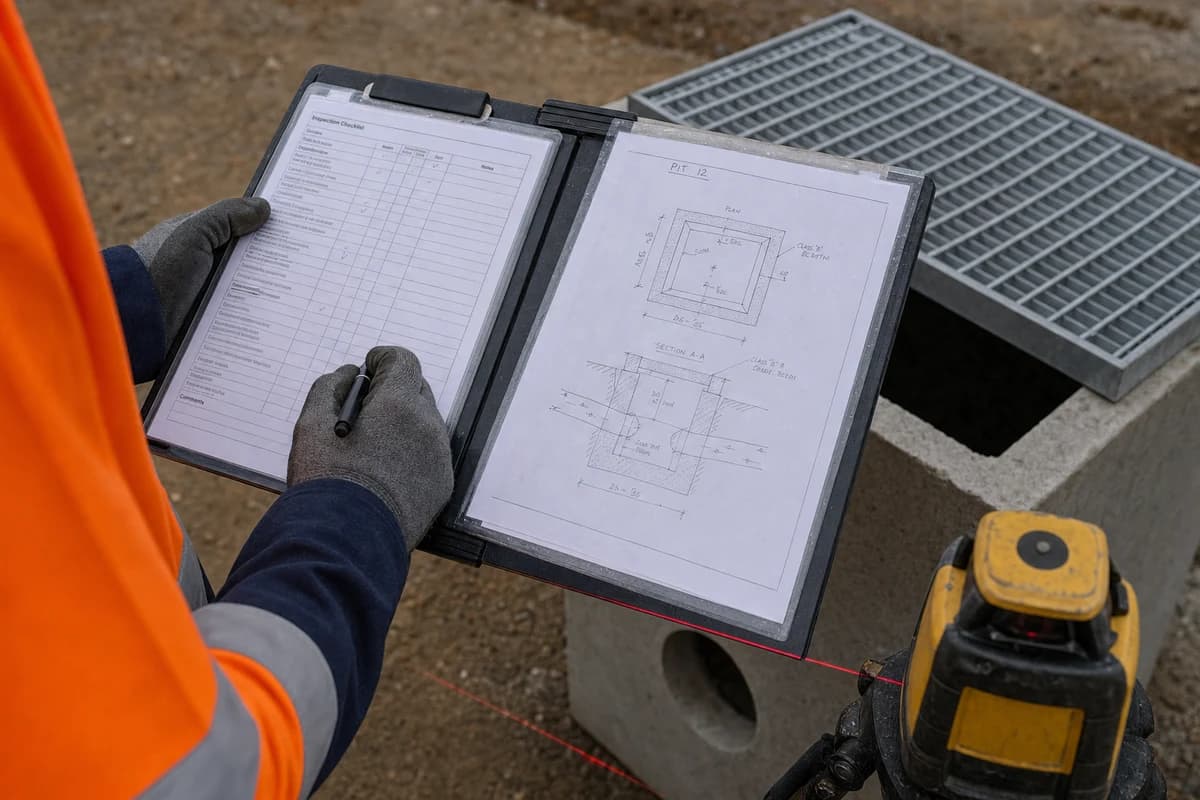
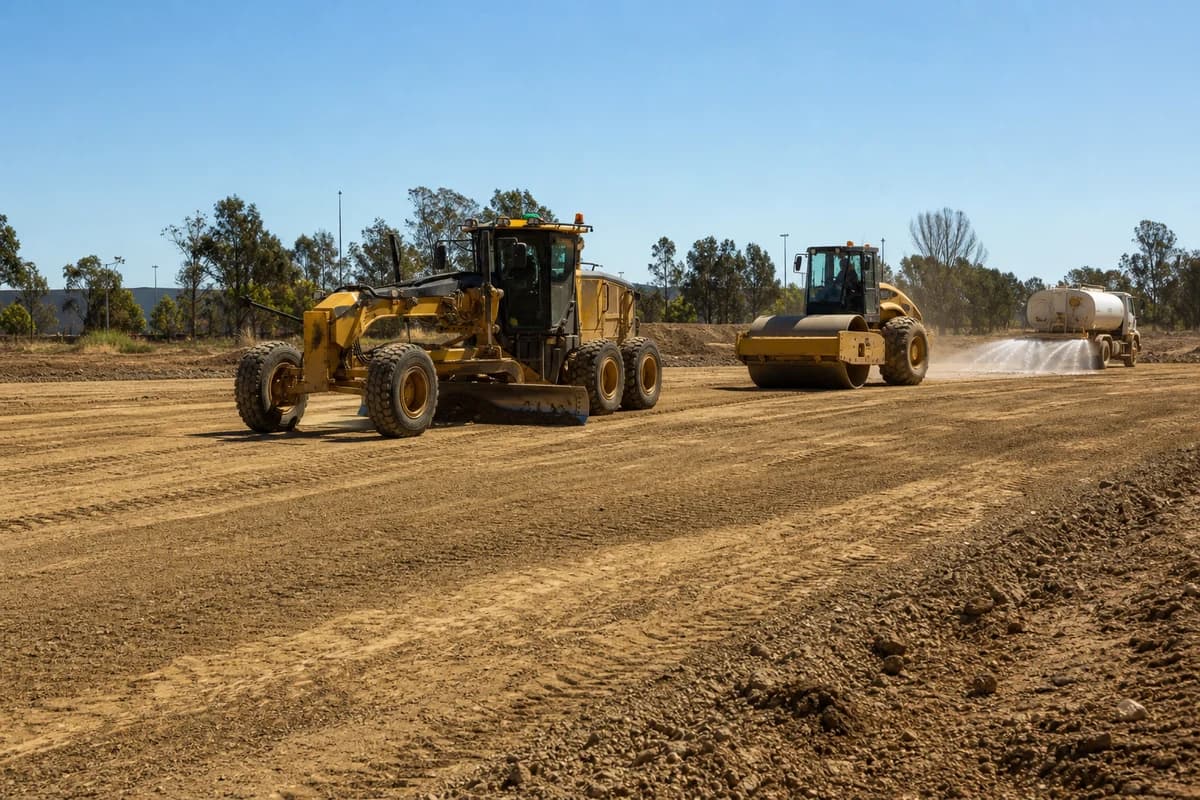
Civil delivery controls NSW owners can enforce only work when hold points are written: formation acceptance, moisture and density proof, invert checks, and utility clearance before backfill. Verbal “call us if needed” gates do not survive staff turnover.
Confirm who signs each gate, what fail criteria trigger cut-out and replace, and how quickly non-conformances close. Compaction testing without lot and chainage references is paperwork theatre—not proof the next trade can occupy the pad.
Map these gates into tender language using why civil ITPs matter at handover so inspection culture is scored before award, not invented at practical completion.
- Formation / subgrade hold before base or hardstand layers start.
- Density and moisture records by lot—not a single end-of-shift average.
- Drainage invert and pit level holds before pavement or pad edges close.
- Utility clearance and as-built mark-up before trench backfill disappears.
Drainage interfaces, utility clearances, and authority touchpoints
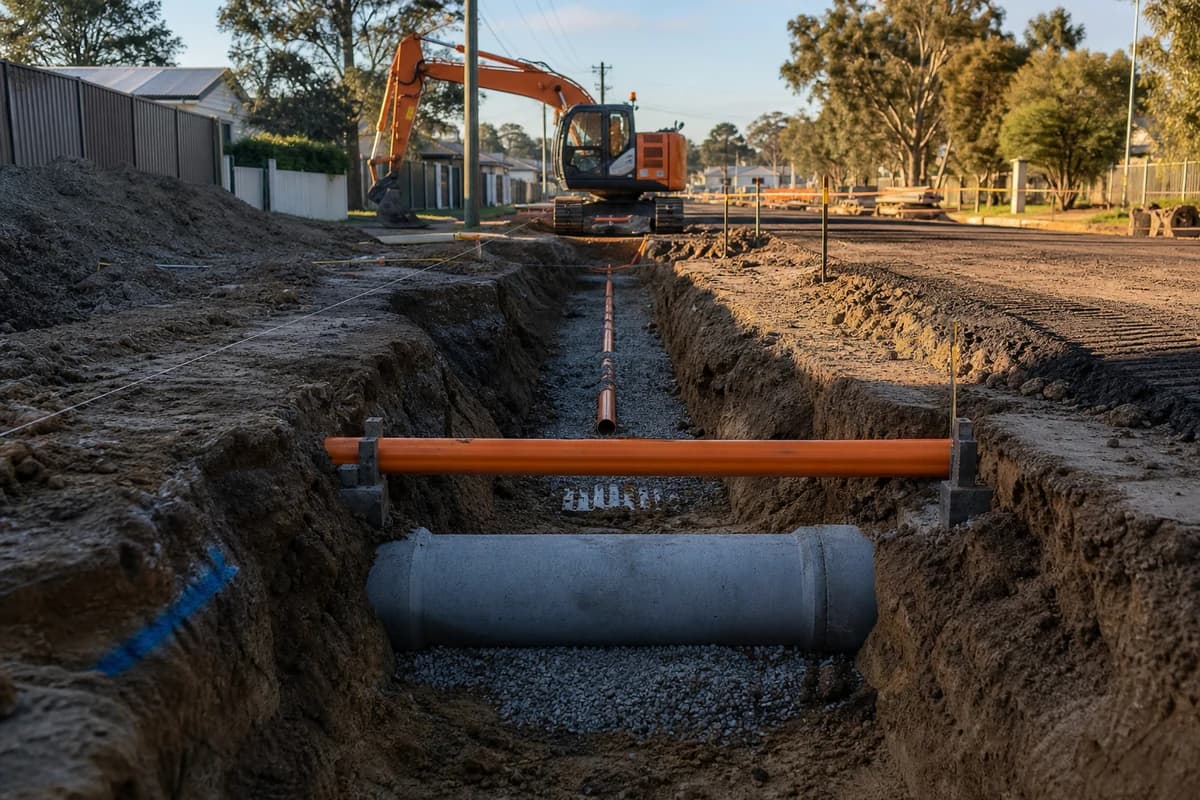
Drainage and utilities sit on the critical path even when they are a small share of the civil sum. Pits, pipes, conduits, and live-service protection decide whether pavements and pads finish without return visits.
Require a mark-up that shows trench sequencing relative to earthworks and pavement layers. Orphan interfaces at kerbs, headwalls, and crossings are a leading cause of incomplete packages across NSW industrial and council-adjacent sites.
Where corridors meet public road edges or heavy vehicle access, confirm roads scope through NEXTGEN’s roadworks capability. Drainage-specific owner checks live in stormwater drainage contractor NSW. Corridor dig detail sits in utility trenching contractor NSW.
Procurement questions that separate method from brochure
Use these questions while proposals are still comparable. They test civil contractor capability assessment NSW habits without asking for marketing claims.
- Can you restate inclusions, exclusions, and temporary works ownership against our drawings in one page?
- Which hold points freeze earthworks, drainage, and pavement readiness—and who signs them?
- What sample civil handover documentation NSW packages can you show from a comparable interface-heavy site?
- How do wet-weather holds and soft-ground treatments restart the workfront without inventing a new plan each morning?
- Who is reachable for clarification walks, and who decides when ground conditions differ from tender assumptions?
Lessons from delivery: where NSW civil packages usually slip
Most friction is predictable. Soft pads declared “ready” without density proof. Drains installed after pavement edges trap water. Utility trenches reopened through finished hardstand because corridors were never locked. Authority interfaces discovered after haul routes were already congested.
A civil infrastructure contractor NSW team that has lived those failures will bring interface registers, temporary diversion plans, and outstanding-works lists into the tender—not only after practical completion arguments start.
If your site sits in the Illawarra growth corridor, read how local delivery control reshapes the same package in our Illawarra civil contractor guide. Council-led packages should also review civil contractor guidance for NSW councils.
Civil handover documentation that closes the package
Civil handover documentation NSW owners need should prove what was built, tested, and accepted: as-builts, compaction and testing records, photographic evidence of key interfaces, closed ITPs, and a clear outstanding-works list.
Weak handover turns practical completion into a paperwork chase. Strong handover makes defects, warranties, and next-trade start decisions faster because evidence already exists.
Browse related package shapes in NEXTGEN’s industrial site development package (representative scope), then contact NEXTGEN with drawings, programme drivers, and known service constraints so civil scope can be reviewed against a realistic delivery plan.