

When local road upgrades for renewable projects are needed
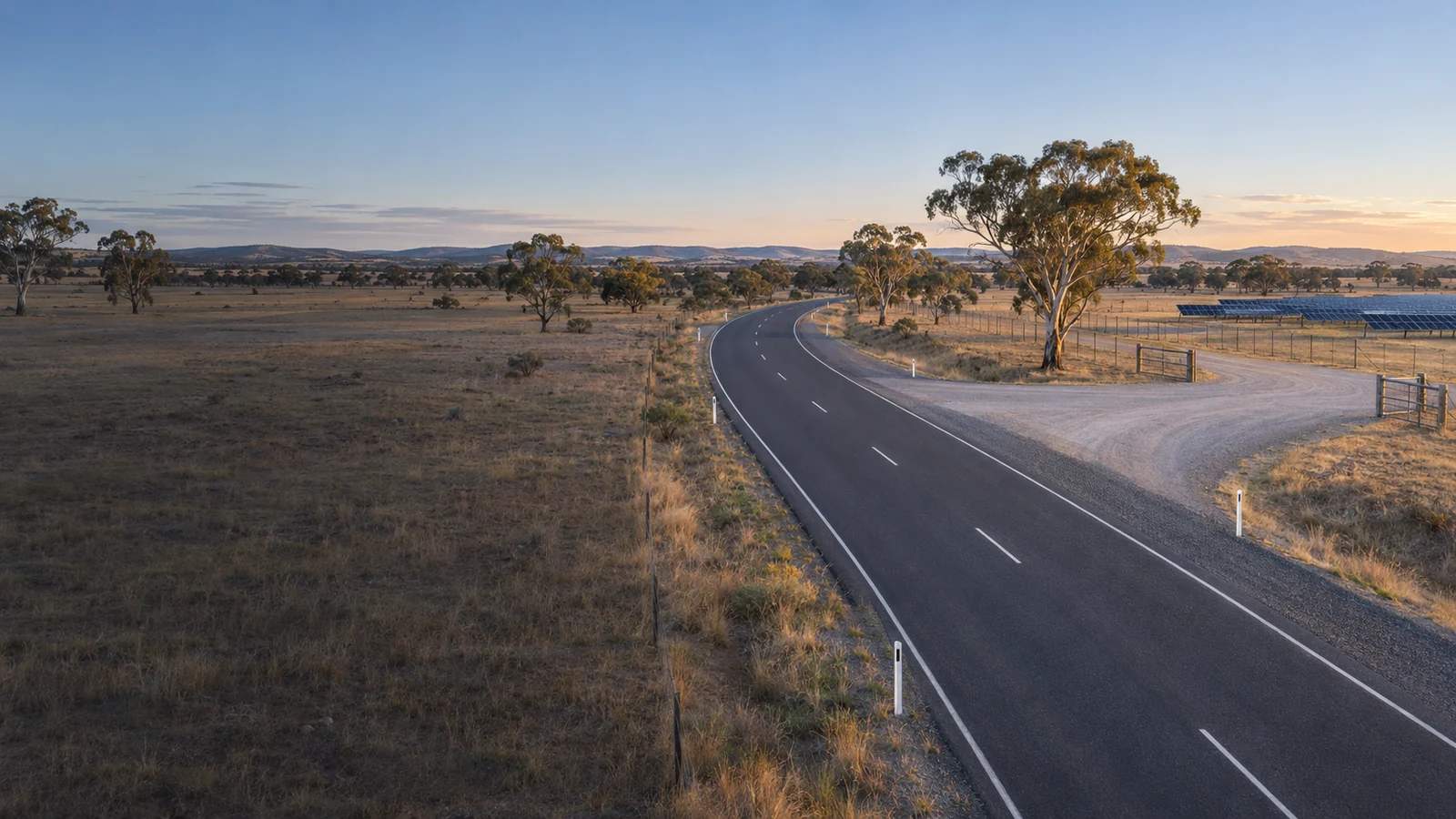
Upgrade a local road when the planned vehicle movements exceed what the existing route can safely accommodate or what the road can carry through construction. The constraint might be a tight junction, a weak pavement edge, or a culvert that needs a structural assessment. Pinpoint the affected locations and the deliveries that depend on them before setting a roadworks budget.
Start with two inputs from the logistics team. The largest vehicle and its load govern turning space, overhead clearances, and some structural checks. The volume and axle loads of repeated construction traffic help inform pavement assessment and maintenance planning. A transformer delivery and a season of aggregate trucks can put different demands on the same road.
Walk the public route with the road manager
Start at the connection to the wider road network and work towards the gate. Map the junctions, narrow bends, crests, bridges, culverts, and property accesses. Record the chainage or map location of each constraint and attach a photo. Where geometry is tight, give the designer the actual vehicle combination so the swept-path assessment captures trailer tracking, rear overhang, and turning clearance.
Identify the relevant road manager for each section, and confirm who will agree the condition baseline, review designs, and accept the finished work. The NSW planning framework provides separate guidance for wind and large-scale solar projects. Check the applicable project conditions alongside the NSW Renewable Energy Planning Framework.
Track heavy vehicle access and permission to work in the road corridor as separate items in the delivery program. For oversize or overmass moves, have the transport operator check the proposed route and applicable access conditions with the National Heavy Vehicle Regulator.
Resolve the gate and waiting area before booking trucks
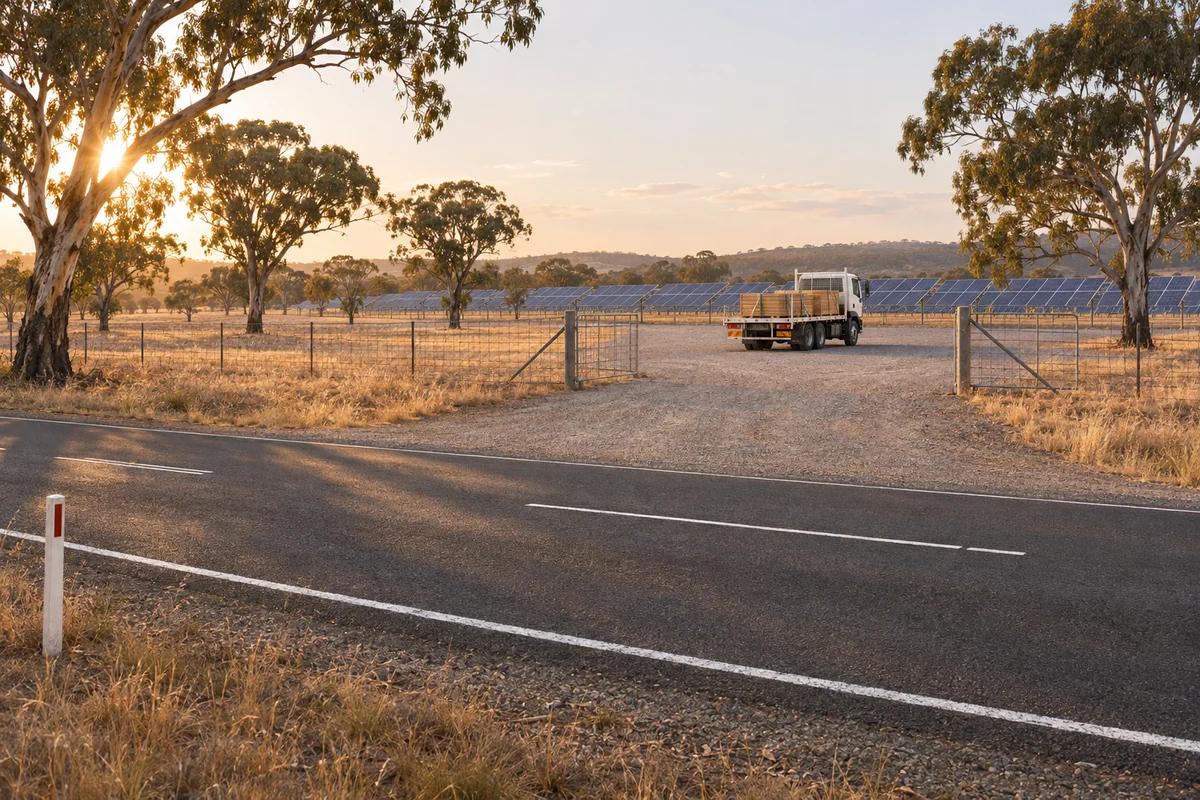
Walk through the arrival sequence with the logistics lead. Where will a vehicle wait if the gate is shut or the unloading area is occupied? Check sight distance, entry grades, turn geometry, and storage space inside the boundary. A long combination should be able to clear the public carriageway before stopping at the gate or check-in point.
When briefing access road construction in NSW, assign the public-road tie-in and the private works on the same drawing. Name who owns the gate apron, drainage crossing, survey set-out, and finished levels where the packages meet. Use the renewable energy access road guide to scope the road from the gate to the unloading and operations areas.
Decide what to retain, widen, or rebuild
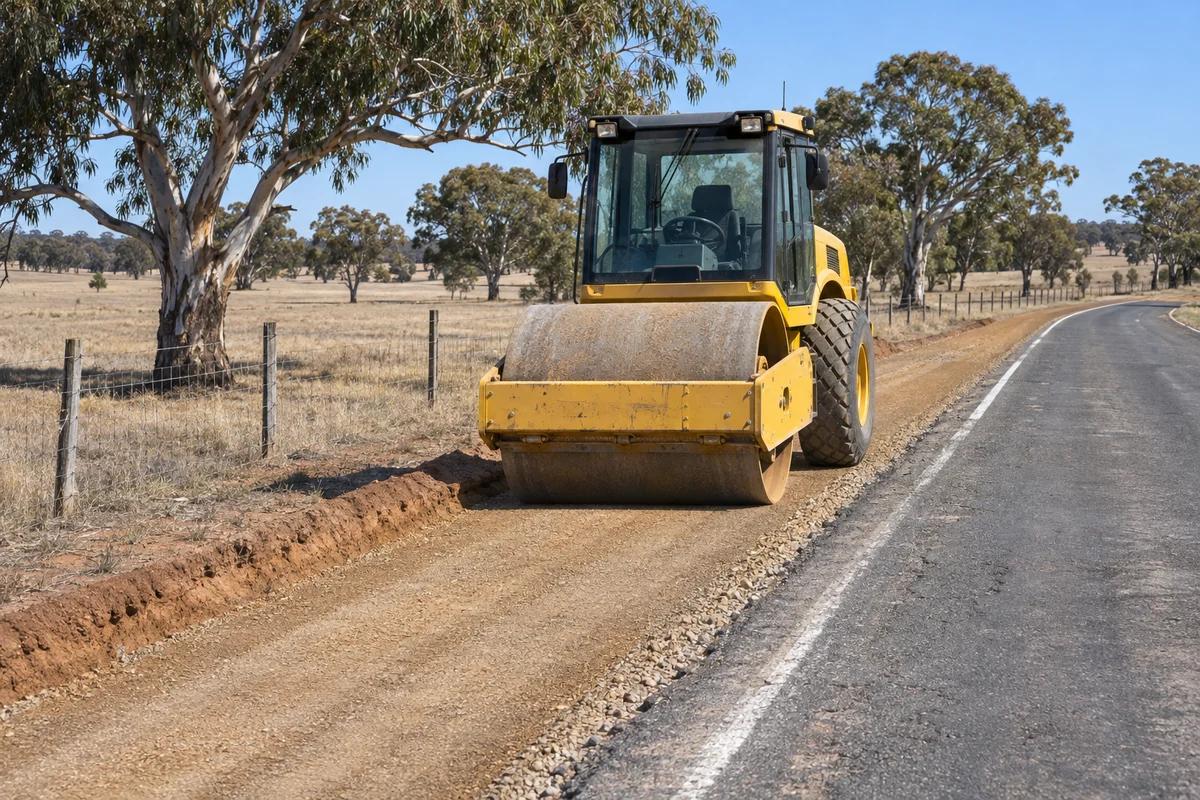
Compare the baseline survey with the design traffic and investigate distressed sections before pricing a treatment. Give a pavement contractor in NSW the existing layer information, drainage observations, proposed traffic, and road manager's specification. Use agreed investigation results to decide where the existing pavement can stay, where it needs local repairs, and where a new pavement structure is justified.
A short widening can still depend on the condition of the retained edge. Detail how the new layers tie into it, how plant will compact the joint, and how the finished shoulder will drain. Where asphalt works form part of a NSW package, set acceptance checks for the underlying layers and joint before the surfacing crew is booked. See NEXTGEN's roads and pavement capabilities for the construction scope that can sit within a staged upgrade.
Trace runoff beyond the edge of the widening
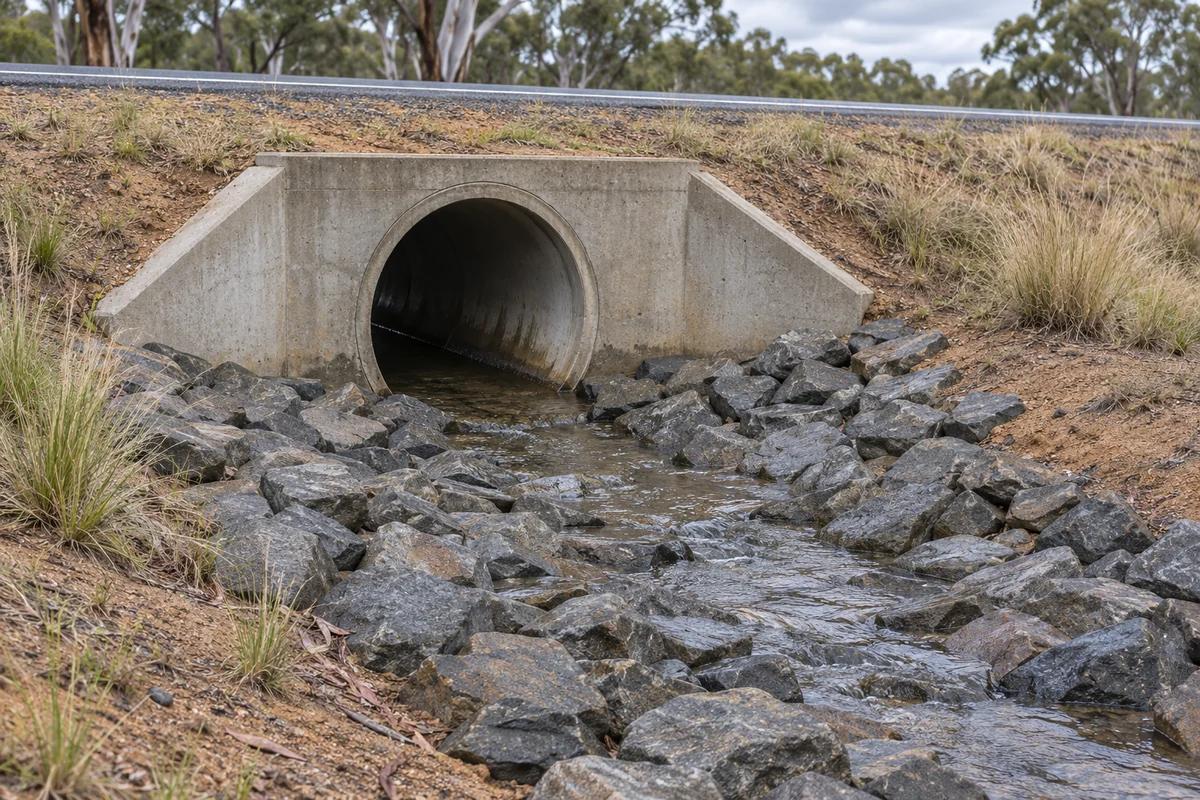
Ask the designer and road drainage contractor to follow the water from the new shoulder to the receiving drain. Widening may move a table drain, extend a culvert, or change where runoff leaves the road reserve. At each crossing, confirm the inlet and outlet levels, cover, headwall position, erosion protection, and access for maintenance.
Sequence the works so the site has a functioning drainage path at each traffic stage. Check levels and inspect concealed work before backfill or surfacing where the inspection plan calls for it. If the design relies on a downstream drain outside the works limit, confirm its condition and who will clear or repair it before runoff reaches it.
Release each road section against the delivery schedule
List the road sections that each delivery group needs and the date each section must open. Build inspection lead times and wet-weather allowances into that sequence. Agree how residents, farm traffic, emergency services, and other road users will pass during the works. Use the live-traffic staging guide to plan access arrangements and traffic switches.
Define what the team must see before releasing a section to its intended traffic. That may include pavement test results, drainage inspections, a survey of finished levels, line marking, and close-out of defects affecting use. Agree who accepts the records, who inspects the road during heavy haulage, and who responds to damage or wet-weather deterioration.
After peak construction, repeat the condition survey at the locations recorded before haulage. Compare photos and defects by location, agree any repairs with the road manager, and hand over as-built records and outstanding maintenance items.
What to send when briefing the roadworks package
To scope the works, send NEXTGEN your route and delivery details. Include the route plan, vehicle schedule, baseline condition records, concept drawings, and any known road manager requirements. Mark the gate, property accesses, and work limits so the team can identify what needs site verification before pricing.
For an example of how formation, shoulders, drainage, and gate works fit together in a tender scope, see the representative renewable access road package.