

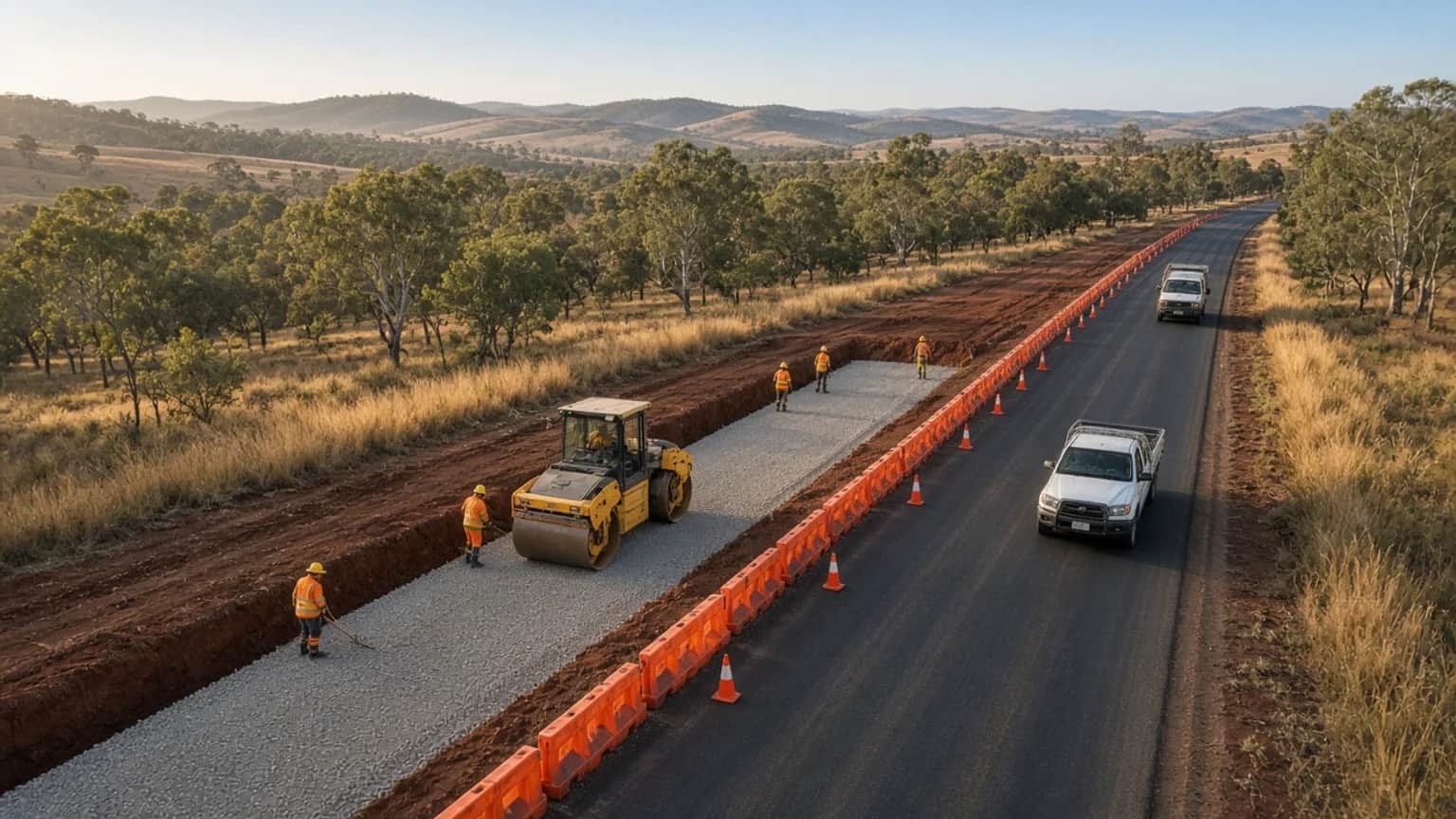
What does traffic staging roadworks NSW actually decide?
Traffic staging decides three things before any plant arrives: which part of the road stays open to the public, which part becomes the work zone, and in what order the work zone moves. Get those three answers right and the safety controls, construction sequence, and stakeholder messages follow. Get them wrong and the job is redesigned under live traffic.
Good traffic staging roadworks NSW plans are written around the permanent works, not added afterwards. Each stage should leave a road that is safe to drive overnight, drains when it rains, and gives the next crew a clean edge to work from.
NEXTGEN plans staged corridors through its Roads division, where drainage, pavement, and surfacing share one programme. This guide covers live-traffic staging on existing roads. It is not a widening checklist or a pavement design method.
Which approvals sit behind a live roadworks stage?
Temporary traffic management on NSW public roads is set by Transport for NSW's Traffic Control at Work Sites standard (TS 05492), which replaced the earlier technical manual in June 2026. Each stage normally needs its own traffic guidance scheme showing signs, devices, lane widths, and speed limits, prepared and checked by appropriately qualified people.
Works on a public road also need consent from the roads authority under Section 138 of the Roads Act 1993, usually the local council, with Transport for NSW concurrence on classified roads. Activities likely to affect traffic flow may also need a Road Occupancy Licence, which can limit work to set hours or nights.
Treat these as programme inputs, not paperwork at the end. Approval conditions often decide whether a stage runs by day, by night, or across a weekend closure. Confirm the exact requirements with the relevant roads authority for each project.
Stage planning checklist before the first cone goes out
Check these items for every stage, not just the first one. A stage that worked in week one can fail in week six when the work zone moves to a narrower section or a busier intersection.
- The open lane width, running surface, and edge drop-off are safe for the vehicles that actually use the road, including buses, freight, and farm machinery.
- Every stage has a traffic guidance scheme, speed limit, and work hours that match its approval conditions.
- Crews and plant are physically separated from live traffic where speed or exposure calls for barriers, not just cones.
- Plant entry and exit points, tipper turning, and material stockpiles sit inside the work zone, not on the open lane.
- Drainage works for the overnight road condition so water does not pond on the open lane or in an open excavation.
- Property access, bus stops, and pedestrian routes are maintained or formally diverted for the length of the stage.
- The switch to the next stage has a hold point: line marking, signs, and the new running surface are checked before traffic moves across.
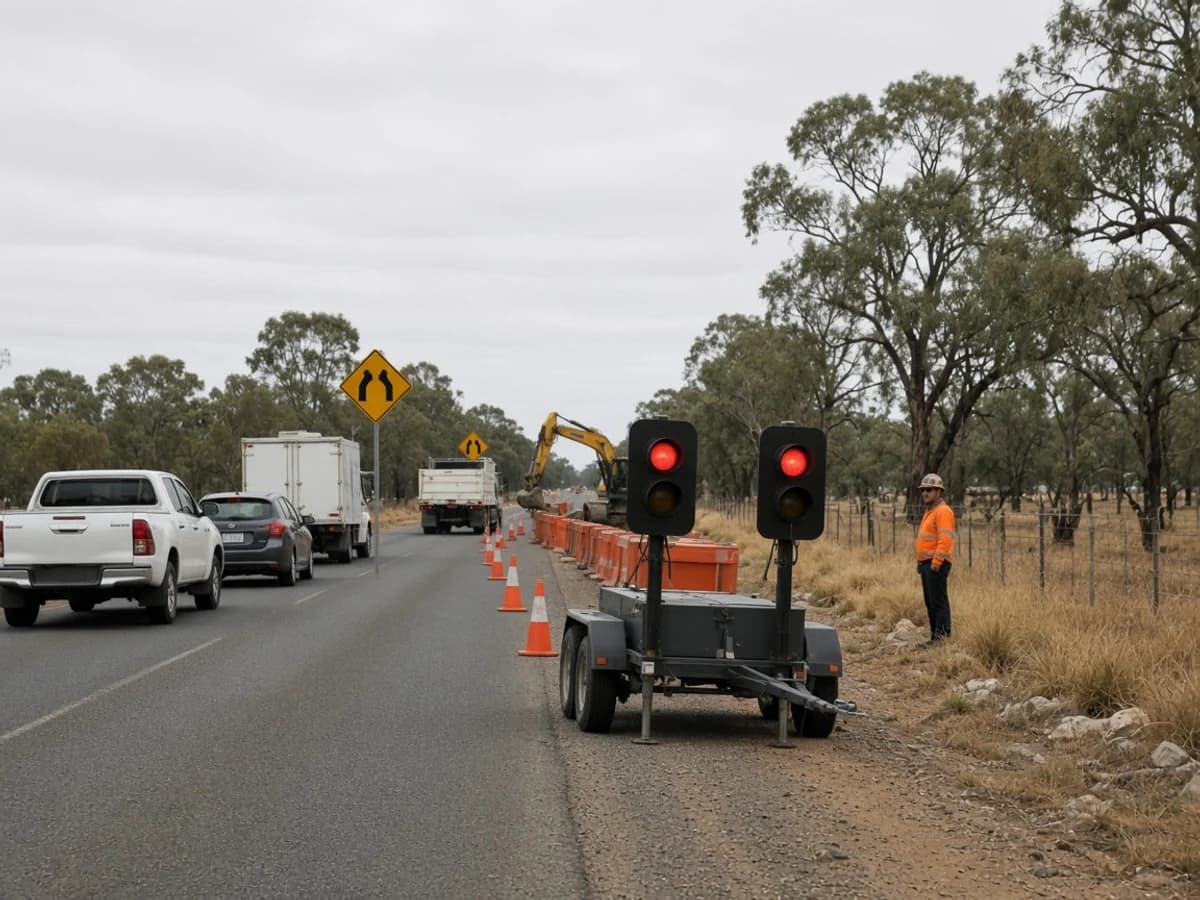
Why drainage and pavement stages come before the surface
The safest stage order usually follows the water. A road drainage contractor should install or extend pits, pipes, culverts, and table drains before the pavement box beside them is opened, so each stage drains overnight and the open lane does not take runoff from the work zone.
Pavement work then moves in lengths the crew can close in a shift or a short series of shifts. A pavement contractor NSW method should state how long a box may stay open next to live traffic, how temporary edges are protected, and what happens if wet weather stops compaction mid-stage.
Drainage and seal interfaces that fail at the edge are covered in asphalt and drainage interface risks. Where the existing pavement must be dug out rather than resurfaced, use the road rehabilitation scope guide to size each stage around the dig-out.
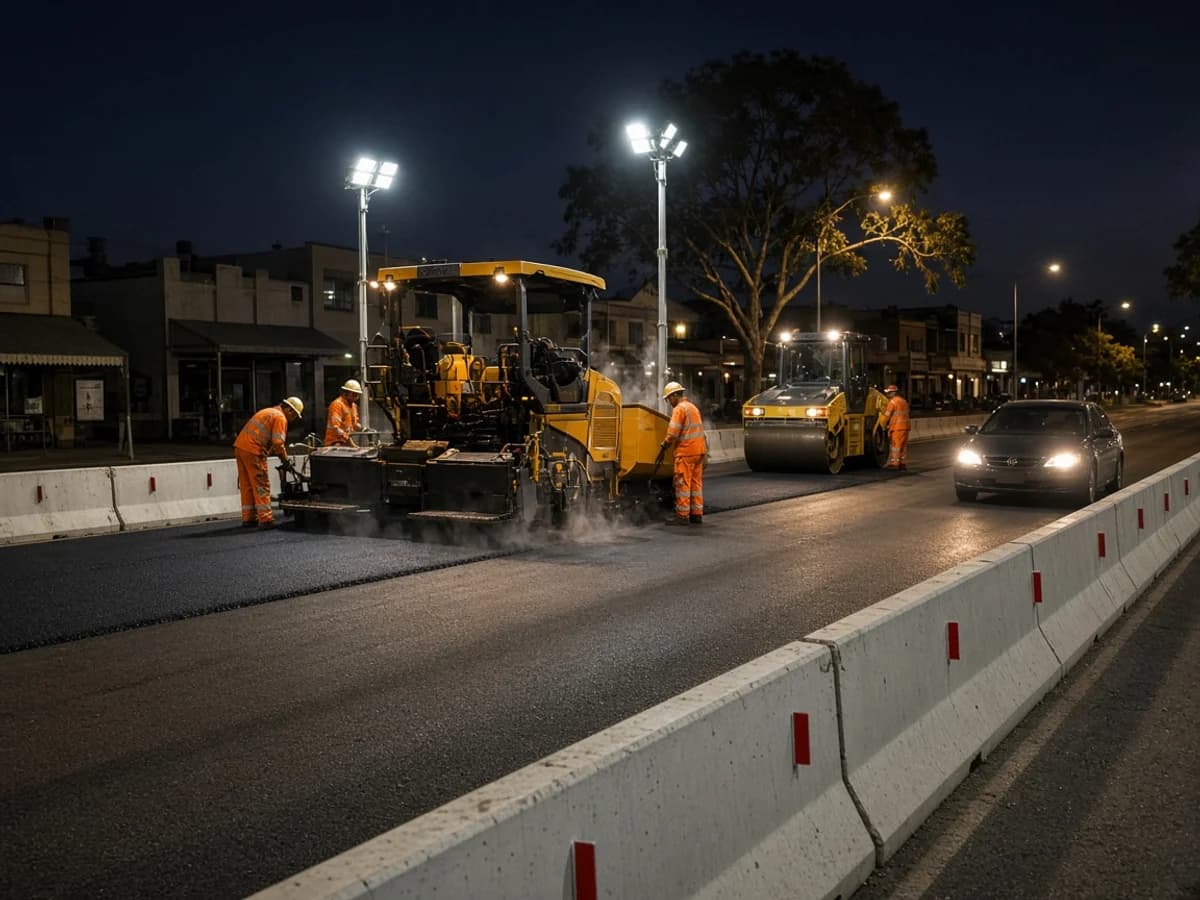
Can asphalt works NSW run under night closures?
Often, yes. Busy urban and arterial roads frequently limit surfacing to night or weekend windows, and approval conditions may set those hours. Asphalt works NSW at night need lighting towers, barriers where exposure is high, and a clear plan for reopening the lane at a set time.
Night work changes the risk picture. Visibility is lower, fatigue is higher, and residents are closer to the noise. Size each night's run to the paving, rolling, cooling, and line marking that can be finished before the lane reopens, not to the maximum the paver can lay.
Plan a fallback for every surfacing night. If the asphalt plant, weather, or a breakdown stops work, the road must still reopen on a safe, marked surface.
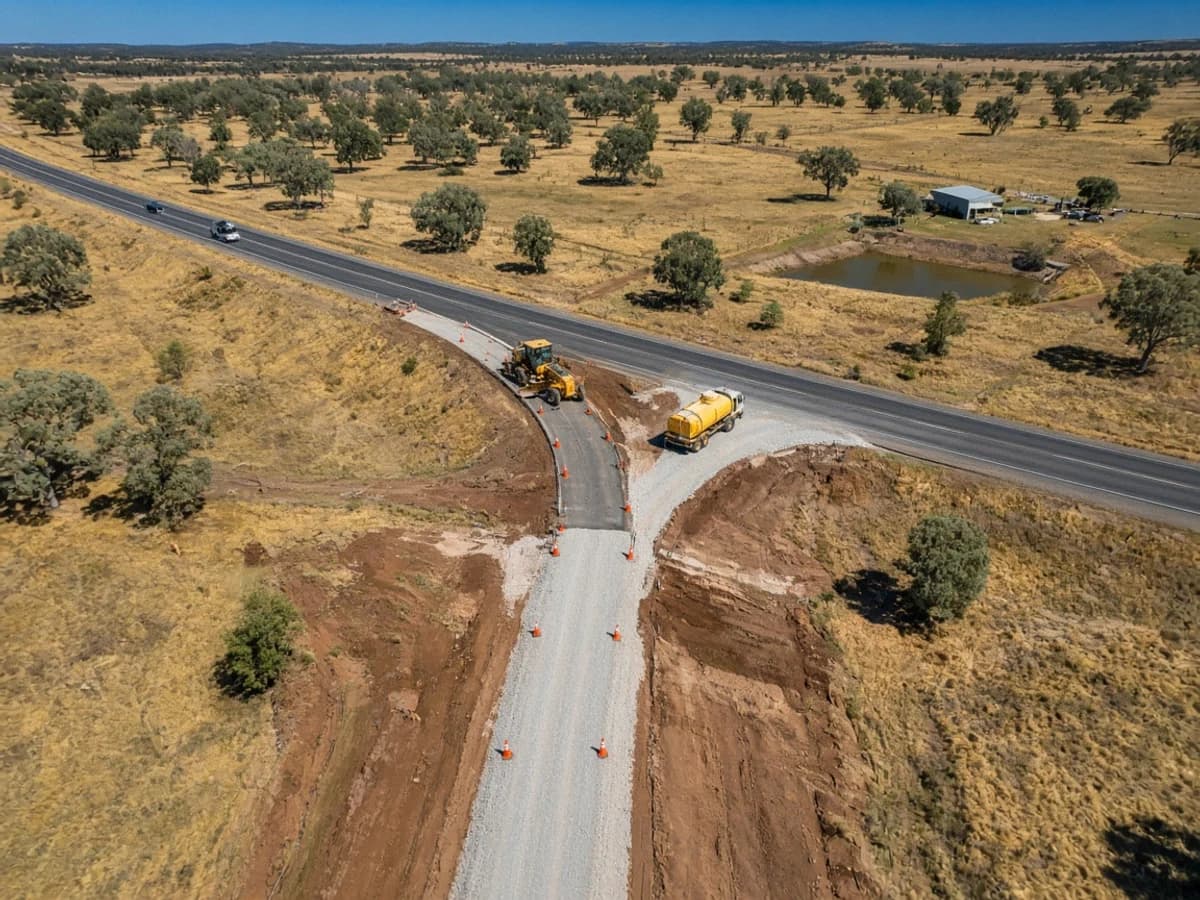
Where access road construction NSW meets a live public road
The highest-risk stage on many project access jobs is the tie-in. Access road construction NSW can run behind fences for weeks, then needs a short, tightly controlled stage to form the turning lanes, drainage, and pavement joint where it meets a highway or council road.
Plan the tie-in as its own stage with its own approvals, devices, and hours. Confirm sight distance for turning trucks, where construction vehicles will wait, and whether a temporary side track is safer than working half-width on a fast road.
Formation and drainage hold points for the new road itself sit in the access road construction guide. When the job is widening an existing corridor rather than building a new one, the road widening confirmation checklist covers the verge, services, and kept-edge risks.
Who needs to hear about each stage, and when?
Stakeholder control is part of the staging plan. Before each switch, list who is affected: residents and businesses with driveways in the work zone, bus operators, freight users, schools, emergency services, utility owners, and the roads authority.
Tell people what changes, when, for how long, and who to call. Give notice early enough that businesses can plan deliveries and residents can plan access, and follow any notification periods set in the approval conditions.
Keep a single contact point and log every complaint against the stage it relates to. Repeated complaints about the same queue, driveway, or noise source are early evidence that the stage needs to change.
What should change when a stage is not working?
A traffic guidance scheme is a plan, not a guarantee. Inspect the site at set times, including at night and in wet weather, and record queue lengths, near misses, damaged devices, and edge drop-offs.
Change the stage when the evidence says so. Longer queues may need different signal timing or work hours, a broken edge may need a temporary seal, and repeated near misses may need barriers instead of cones. Record each change and get the updated scheme checked before it is used.
These controls sit inside a wider safety system, set out in NEXTGEN's civil construction safety controls guide.
Briefing NEXTGEN on a staged roadworks package
Useful briefs include the road classification and traffic volumes if known, the approval status, required work hours, design drawings, drainage and pavement scope, property access constraints, and any dates when the road must be fully open. Photos of the existing road after rain also help.
See how staged road packages are presented in NEXTGEN's project showcase and the delivery FAQ. When drawings and approvals are in progress, contact NEXTGEN to review stage order, lane switches, and surfacing windows before the programme is locked.