

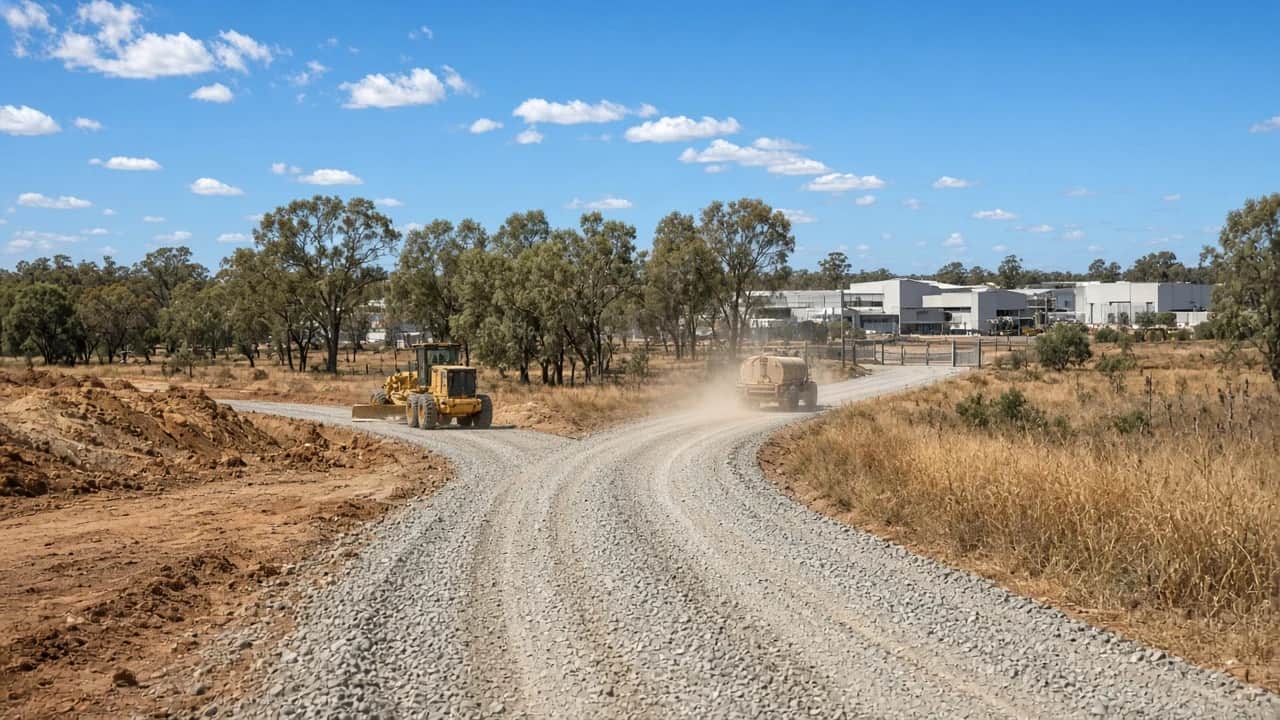
When temporary access road construction is the practical answer
Temporary access road construction solves a simple programme problem: construction traffic needs a reliable way onto the site before a permanent access road is ready—or when the permanent road should not take that traffic at all. If tippers, deliveries, and plant keep grinding a public shoulder, a neighbour driveway, or a half-finished seal, you already needed a construction-only route.
A temporary access road is not a finished estate road and it is not automatically a tipper haul corridor. It is a works-period asset with a written design life in months, a named traffic mix, a drainage plan that survives wet weeks, and an agreed end-state—remove, reinstate, or upgrade into permanent access.
NEXTGEN builds these corridors through its road construction contractor NSW team, so temporary geometry, drainage, and later permanent interfaces sit under one supervision plan. This guide is the decision and delivery playbook for construction-only routes—not permanent design-life access, and not live-traffic staging on an existing public road.
Temporary access, permanent access, and haul roads are different jobs
Owners often order "an access road" and receive three incompatible expectations. Separate the assets in the brief before survey sets the centreline.
- Temporary access road: construction-only entry and circulation for the works programme; usually unbound or lightly sealed; maintained for months; then retired, reinstated, or upgraded.
- Permanent access road: design-life corridor for operations and O&M; sealed or unbound to specification; tied to the public road with handover records.
- Haul road: high-cycle tipper and plant corridor for earthworks movements—often heavier and shorter-lived than site access, and sometimes on a different alignment.
Five triggers that justify a construction-only route
You do not need a temporary road on every site. Build one when the alternative is damage, delay, or an unsafe public interface.
- Public-road shoulders, verges, or bus routes cannot absorb daily construction turning without pavement failure or conflict with through traffic.
- The permanent access alignment is still locked behind design, services, or approvals, but mobilisation cannot wait.
- Building the permanent pavement early would trap unfinished drainage, utilities, or earthworks under a seal the programme will then cut up.
- Neighbours, schools, or freight users need construction vehicles kept off shared driveways and local streets for a defined period.
- Wet-weather risk on natural ground or farm tracks will stop deliveries long before the permanent road is ready.
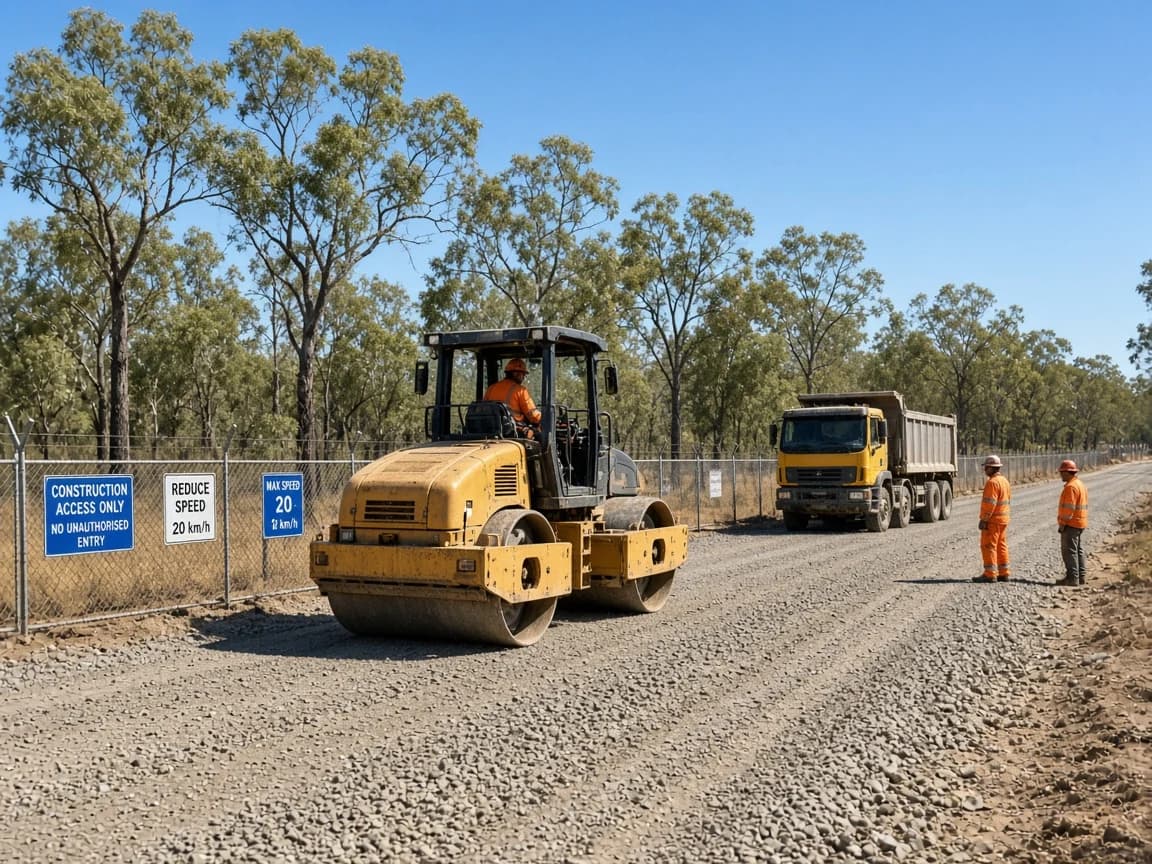
How access road construction NSW should sequence a temporary corridor
Even a temporary route still needs a formation-first sequence. Soft subgrade, missing crown, or ponding at the gate will stop the programme as surely as a missing permanent seal.
Lock width, curve radii, and passing bays to the heaviest regular vehicle—not the lightest ute. Confirm where temporary access road construction NSW packages end and where haul road construction or permanent access road construction NSW begins, especially if they share part of an alignment.
Set survey control for centreline and edge levels early. Where the temporary route sits inside a larger civil package, keep earthworks visible with NEXTGEN's civil infrastructure team so the access corridor does not fight pad levels or stockpile plans.
What a road drainage contractor must own before traffic rises
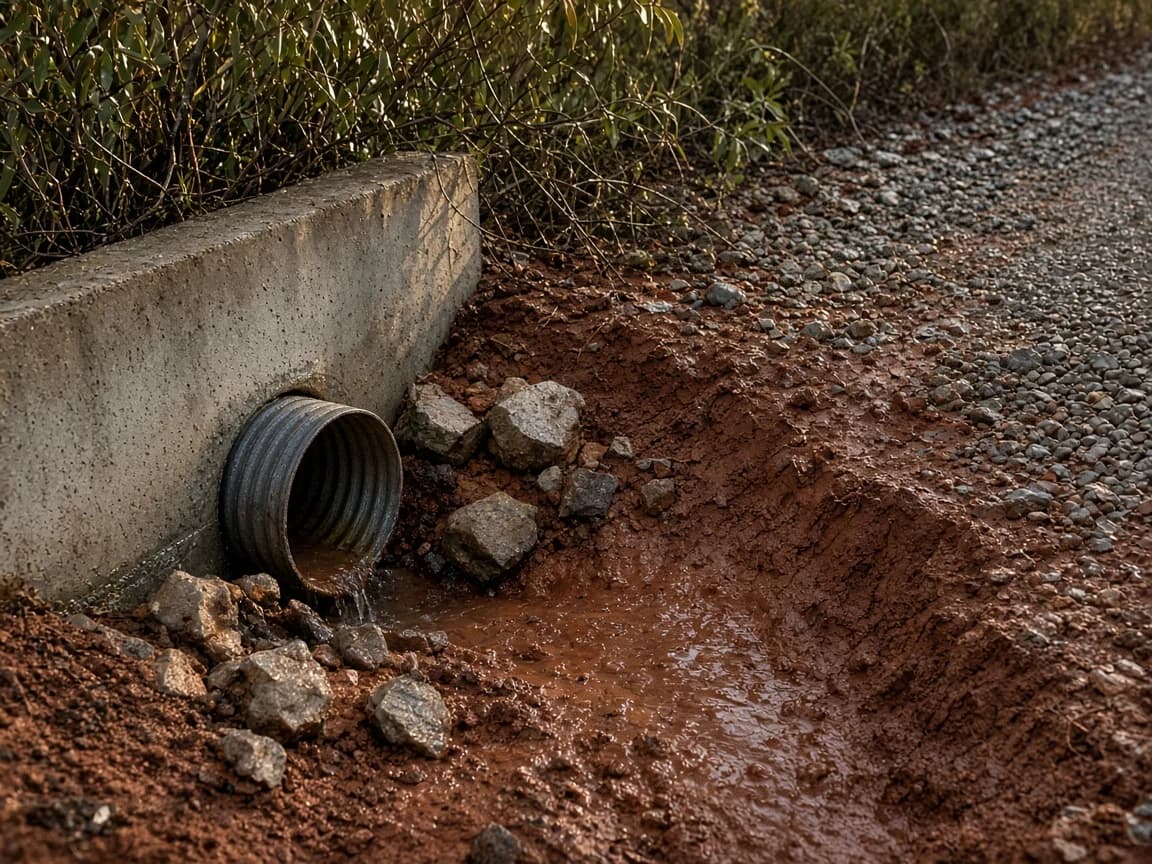
Water is the usual killer of temporary access. A road drainage contractor should own table drains, culverts at low points, outlet protection, and temporary diversions relative to formation levels—not as a cleanup after the first storm.
Agree hold points for when drains are open, where water is allowed to cross the running surface, and who reinstates shoulders after pipe work. Orphan headwalls and fence crossings are where temporary edges unravel first.
Culvert sizing and installation discipline for NSW civil corridors is covered in NEXTGEN's culvert installation guide. Keep those interfaces on the temporary access mark-up so maintenance crews are not guessing which outlet still works after a wet week.
When a pavement contractor NSW should escalate the surface
Many temporary routes stay unbound with regular grading and watering. Escalate when axle loads, cycle counts, or wet-weather downtime make unbound maintenance more expensive than a staged pavement.
A pavement contractor NSW brief for temporary access should name design traffic, months of service, dust and mud limits, and whether the layer is sacrificial or intended to become part of a later permanent pavement. Ambiguity here is how sites end up with the wrong thickness—or a seal that must be cut out for utilities.
Layer logic and hold points for NSW pavements sit in the pavement construction contractor guide. Use that depth when temporary access must carry heavy vehicles for most of the programme, not only site establishment.
Where asphalt works NSW fit on a temporary route
Asphalt on a temporary access road is a tool, not a default. Short sealed lengths at the public-road tie-in, steep grades, or dust-sensitive neighbours can justify asphalt works NSW packages while the rest of the corridor stays unbound.
If you seal early, write the cut-and-patch plan for utilities, drainage adjustments, and the final permanent pavement. A temporary asphalt ribbon that nobody owns for maintenance becomes a pothole liability at the gate.
Seal and drainage edge risks are covered in asphalt and drainage interface guidance. Keep temporary seals short, maintainable, and clearly marked as works-period surfaces.
Public-road tie-ins and keeping construction traffic off shared streets
The highest-risk metres are often where the temporary route meets a council or state road. Plan the tie-in as its own package: sight distance for turning trucks, waiting space inside the site, drainage at the gate, and whether a short sealed apron stops mud tracking onto the public road.
If the tie-in must work beside live traffic, stage it with the discipline in NEXTGEN's traffic staging roadworks NSW guide—approvals, devices, and work hours are programme inputs, not paperwork after the first near miss.
Document who may use the temporary road, at what speed, and how unauthorised entry is controlled.
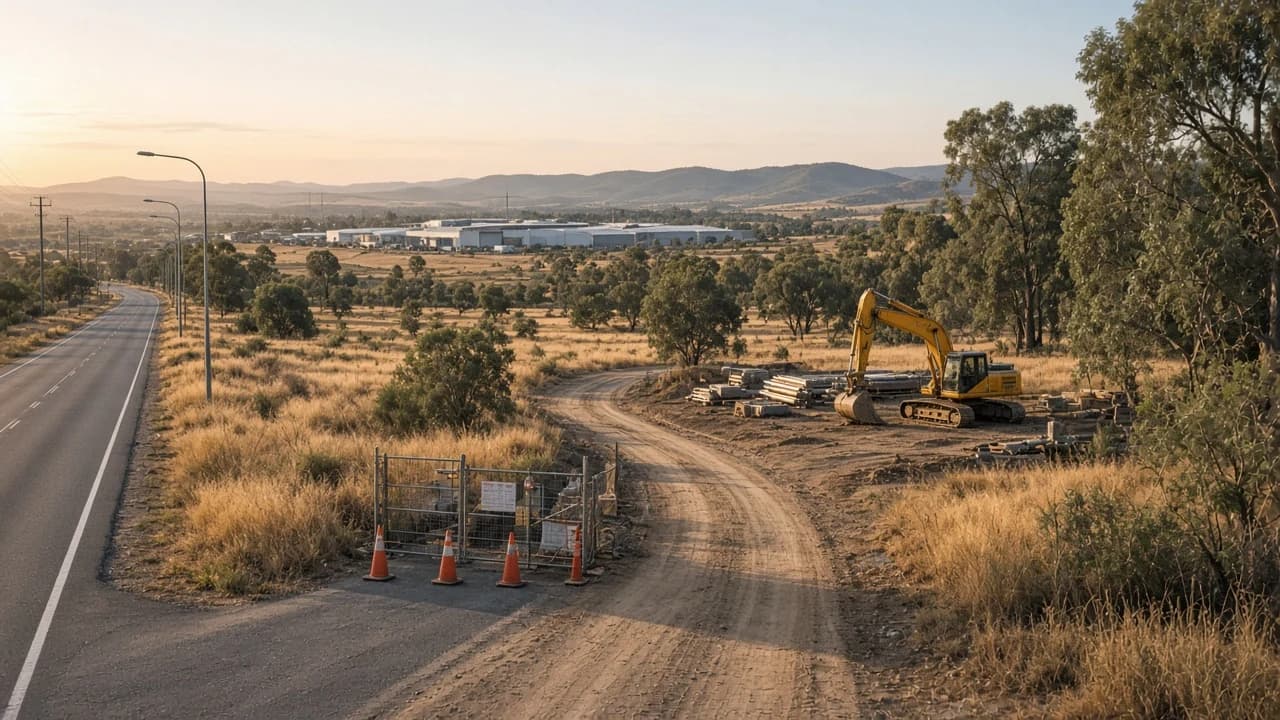
End-state checklist before you build the temporary road
Decide the finish before the first load of gravel arrives. Retirement is cheaper when it was priced and drawn from day one.
- End-state named: remove and reinstate, leave as farm track, or upgrade into permanent access on the same or adjusted alignment.
- Maintenance owner named for grading, watering, pothole repair, and drain clearing through the programme.
- Utility and drainage crossings marked so temporary pavement is not treated as untouchable later.
- Mud tracking, dust, and wet-weather closure rules written into site induction.
- Handover photos and levels recorded if any temporary layer will credit toward permanent pavement.
Briefing NEXTGEN on a temporary access package
Useful briefs include site plans, known public-road constraints, design vehicle and peak daily movements, wet-weather history if known, drainage outlets, whether permanent access will follow the same corridor, and the date construction traffic must start. Photos after rain help more than dry-day optimism.
See how road and civil packages are presented in NEXTGEN's project showcase and delivery questions on the FAQ page. When drawings are still moving, contact NEXTGEN to test whether a construction-only route, an early permanent access stage, or a short public-road staging package is the cleaner path.