

What a Parramatta civil infrastructure contractor must lock first
Appointing a Parramatta civil infrastructure contractor starts with one shared sequence—not a suburb capability claim. Lock the urban interfaces that touch neighbours, the utilities that stay live, and the street staging that keeps plant and public traffic apart before you price cut-fill or pavement.
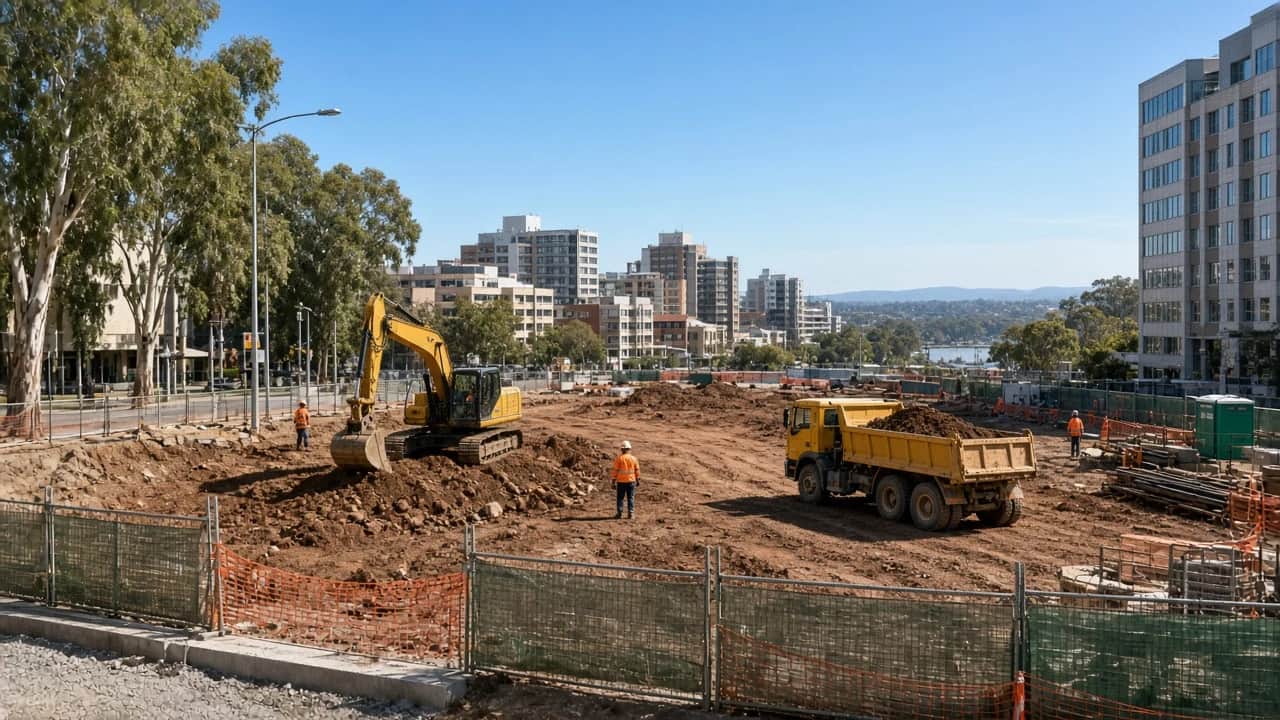
Parramatta's CBD fringe, river corridor, and commercial lots sit inside a dense fabric of kerbs, pits, building entries, and service corridors. Soft pads, open trenches without reinstatement owners, and temporary occupations that ignore bus and freight peaks become the next trade's problem after award.
NEXTGEN delivers those packages through Civil Infrastructure when formation and utilities own the critical path, and through Roads when public-corridor ties or temporary occupations sit on the programme. Broader Western Sydney tender prep belongs on the Greater Sydney civil infrastructure guide; this page stays on Parramatta urban interfaces, utilities, and staging.
How Parramatta urban interfaces differ from growth-area lots
Growth-area parcels often begin with open formation and a future collector road. Parramatta packages more often begin at an existing boundary: shopfront levels, basement ramps, shared driveways, footpaths, and stormwater that already serves adjoining owners. Treat the edge as the first design product, not an afterthought once bulk digs are priced.
River-corridor and low-lying lots add flood notes, temporary stockpile limits, and runoff routes that cannot dump mud onto public paths. Mid-rise commercial neighbours add noise, vibration, and out-of-hours windows that change how earthworks Parramatta crews stage plant and spoil.
Do not assume NEXTGEN holds a City of Parramatta, Sydney Water, or TfNSW panel appointment. The contractor's job is to deliver scoped earthworks, drainage, and roadworks against the drawings and conditions you supply.
Utilities decide the Parramatta staging calendar
Live water, sewer, power, communications, and gas corridors set when trenches can open and when pavements can close. An infrastructure contractor Parramatta brief should name each known service, who verifies it on site, and which package owns protective works, diversions, and reinstatement—not bury discovery under a general allowance.
Sequence service corridors so finished kerbs and slabs do not sterilise unfinished trenches. The live services civil works NSW guide covers discovery and protection habits that belong in every urban dig brief; Parramatta packages should still list the actual authorities and private assets on the parcel.
Agree stop-work rules when unmarked services appear. A trench that undercuts a finished formation, or that leaves spoil on a pad the builder must start on Monday, undoes the staging win.
Earthworks Parramatta on constrained commercial pads
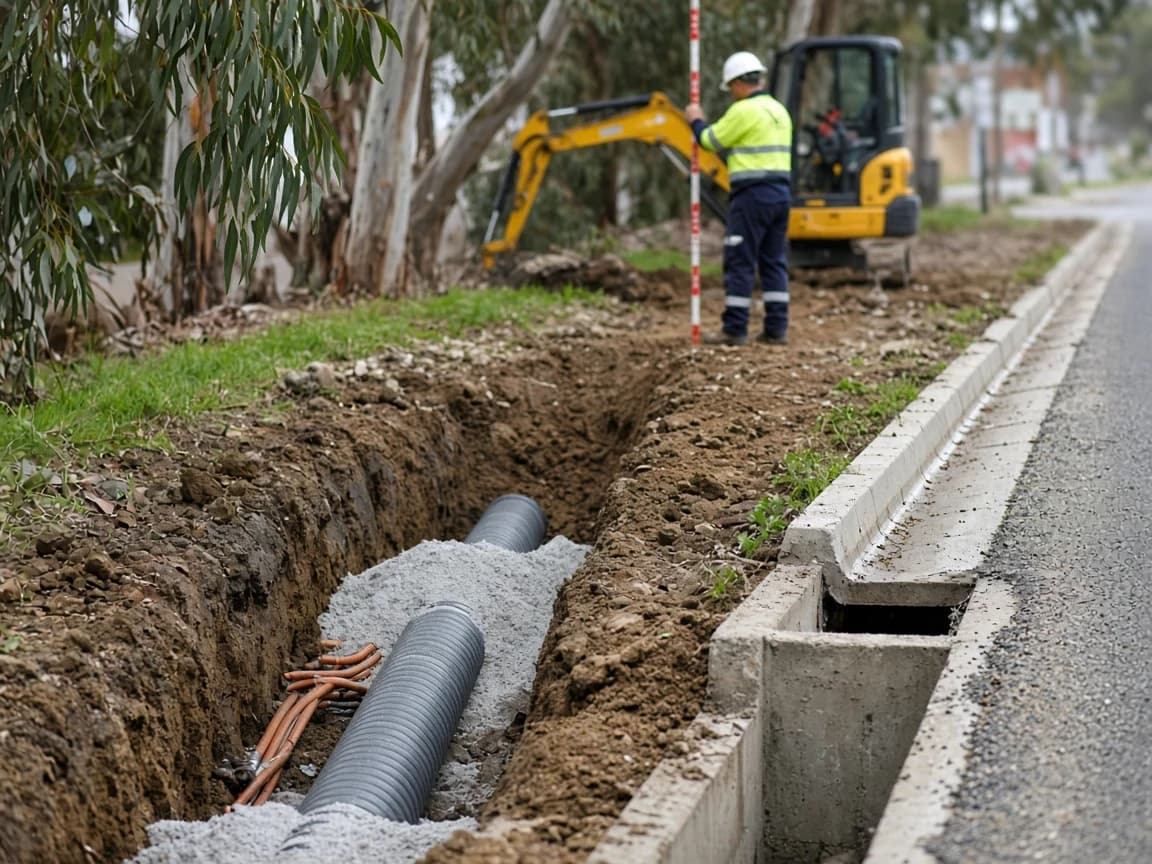
Earthworks Parramatta scopes rarely enjoy a greenfield haul circuit. Cut-fill, import, and spoil must share gates with neighbours, temporary occupations, and often a basement or podium package that needs proven levels on a fixed date.
Ask for moisture holds on clay or fill, proof-roll criteria for the pad the next trade inherits, and a named route for trucks that does not chew the finished surface. Soft spots between excavation faces remain open risk until density tests and survey close them.
When bulk formation and detailed digs sit in one package, separate hold points so footing trenches and service digs do not reopen a pad that looked complete from the street. The bulk earthworks versus detailed excavation guide explains that split for NSW clients.
Drainage contractor Parramatta: pits, outlets, and temporary controls
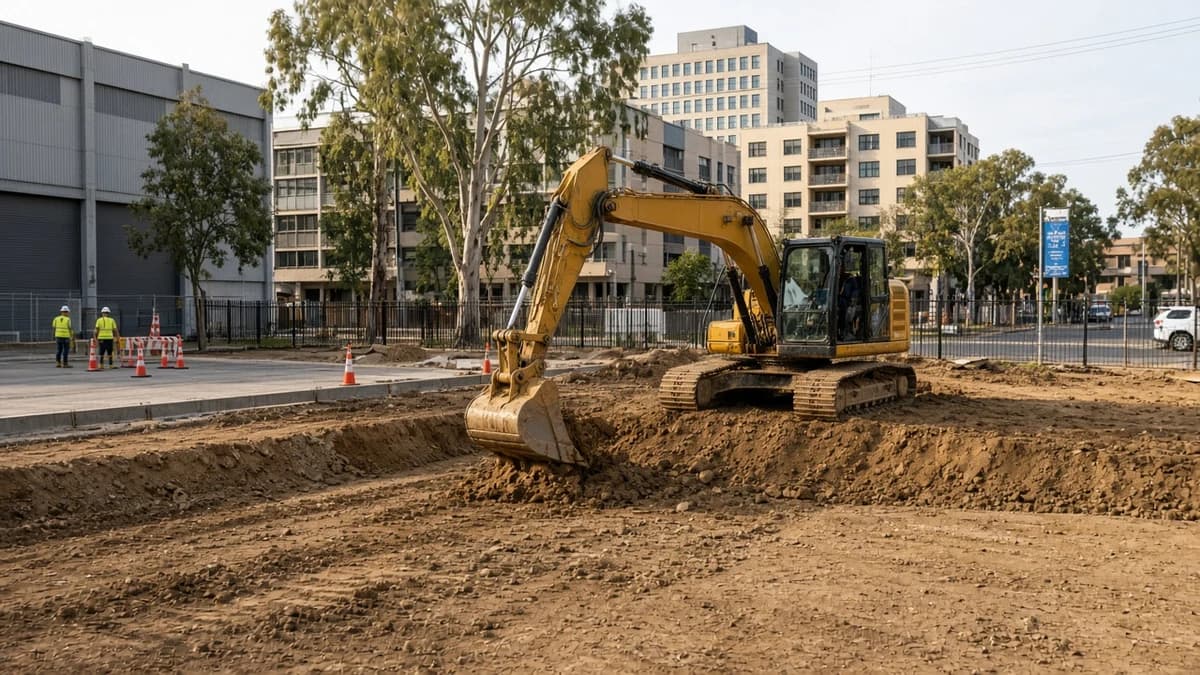
A drainage contractor Parramatta brief should separate permanent pits, pipes, and legal outlets from temporary sediment controls that protect footpaths, basement entries, and the river corridor during construction. A finished pipe run is not proof that the system works under live traffic.
Confirm who owns interim diversions when a permanent connection waits on another package or an authority approval. Name inspection after rain, mud-tracking at gates, and who maintains controls once one workfront is handed over while the next is still open.
Statewide drainage interfaces and handover checks sit in the stormwater drainage contractor NSW guide; Parramatta tenders should still attach the parcel's outlet design and any flood or consent constraints that change stockpile and compound locations.
Roadworks Parramatta: temporary occupation and kerb ties
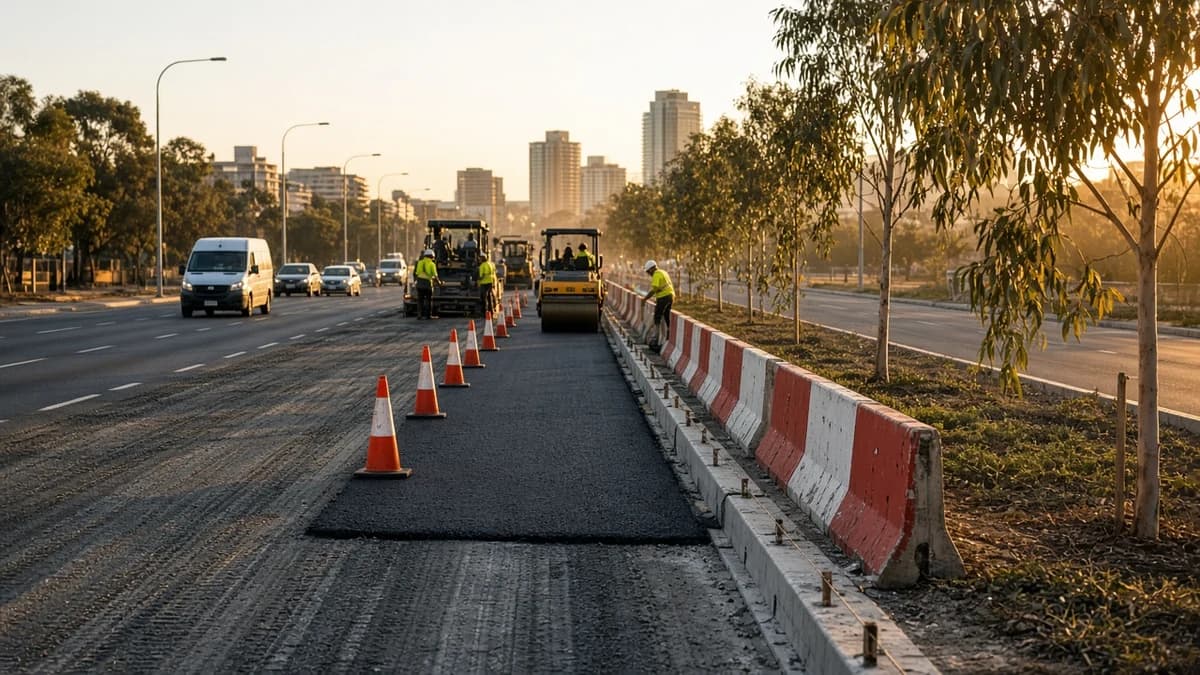
Roadworks Parramatta packages often turn on temporary occupation of public road or verge space as much as on asphalt thickness. Separate the temporary construction access from the permanent pavement and the final kerb, gutter, and footpath tie-in—and name who maintains each surface until acceptance.
Design vehicles for plant floats, concrete trucks, and crane movements need geometry that matches the arterial or local street the lot meets. Car-scaled temporary entries that collapse under construction traffic become safety and programme failures, not minor adjustments.
Frame public-corridor and pavement scope against NEXTGEN's roads and pavement division so roadworks sit beside earthworks and drainage in one inquiry rather than as an afterthought once formation is priced.
Urban staging checklist before you issue the tender
Use this gate before you issue or evaluate an infrastructure contractor Parramatta return. It sits late so the interface sections above can deepen the items that usually break CBD-fringe programmes—not a generic NSW civil form.
- Parcel: CBD fringe, river corridor, or named commercial estate—with current survey, flood notes, and drawings.
- Interfaces: neighbour levels, shared driveways, basement or podium ties, and who accepts each boundary.
- Utilities: known services, verification owner, protective works, and reinstatement before pavement closes.
- Earthworks: cut-fill intent, moisture holds, pad proof, and spoil or import routes that respect temporary occupations.
- Drainage: legal outlet, temporary controls, mud-tracking, and post-rain inspection ownership.
- Roadworks: temporary occupation hours, design vehicles, kerb and footpath tie-ins, and who maintains interim surfaces.
How to brief a Parramatta civil infrastructure inquiry
Send the parcel address, drawings, geotechnical information, known services, temporary occupation constraints, and target dates through the NEXTGEN project inquiry form. Say whether formation, utilities, drainage, or roadworks own the first critical path.
Ask NEXTGEN to confirm scope fit, the relevant division, mobilisation from the Illawarra base, and availability for the stage you need released first. Published project examples and the delivery FAQs explain how inquiries and handover expectations are handled.
A clear answer on urban interfaces, utilities, and staging gives the developer, designer, and following trades a shared basis—not a lump sum that hides live-service risk.