

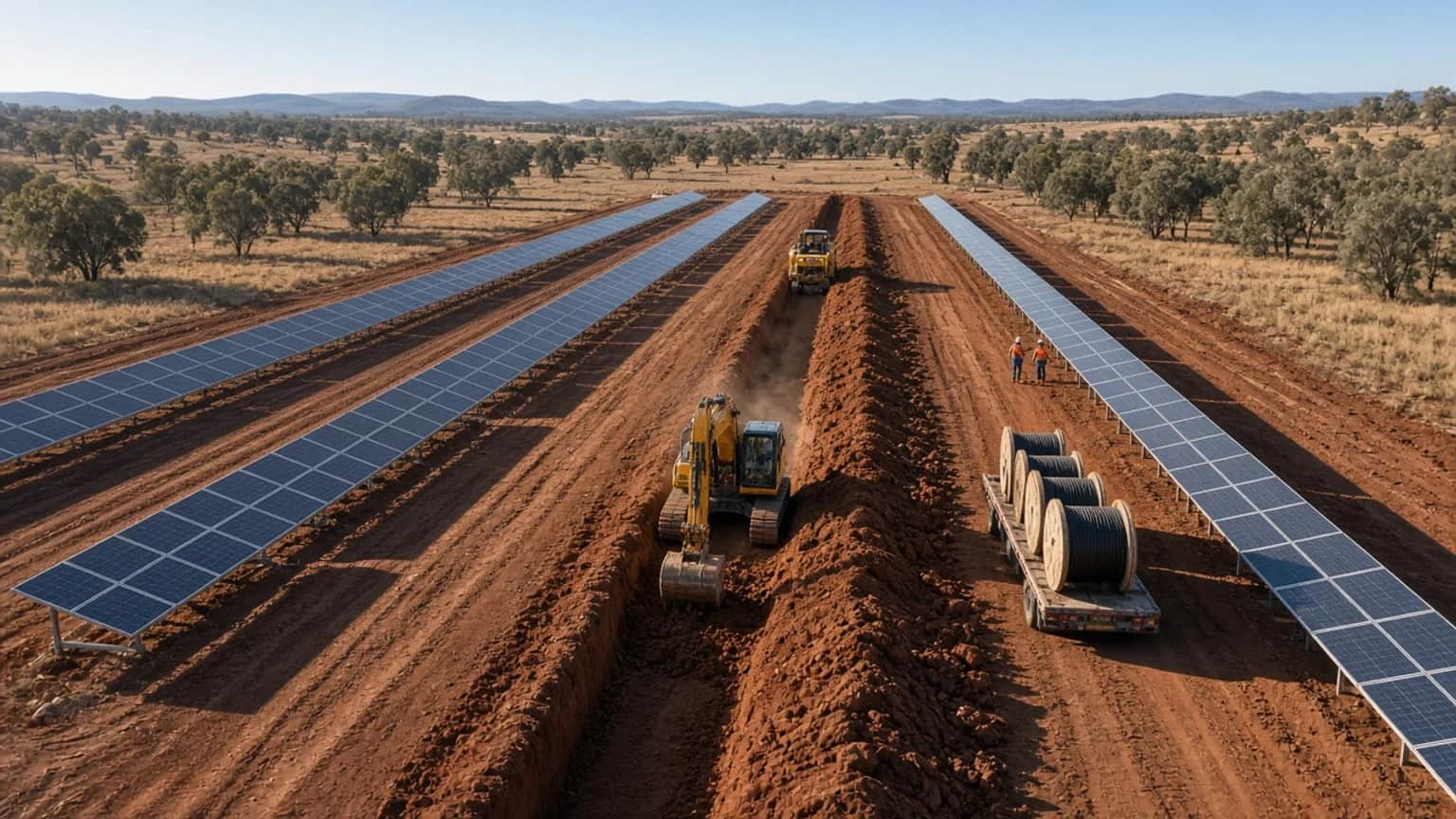
What renewable energy cable trenching NSW involves before any cable is pulled
Renewable energy cable trenching NSW is the civil package that builds the underground path for every circuit on a solar or battery site: surveyed routes, bedding and backfill, conduits at crossings and pad entries, warning tape, and records of where each cable sits. The civil contractor digs, beds, proves, and reinstates; accredited electrical crews lay or pull, joint, and test the cable—and the contract should say where that hand-off happens.
Trenching goes wrong when it is treated as a late electrical task instead of part of the civil programme. Routes cut after piling, roads, or hardstands are finished force rework at the costliest interfaces on site. NEXTGEN delivers cable corridors through its renewable energy civil division alongside earthworks, access, and pads, so trench geometry sits on the same survey control as everything else.
Which cable networks run underground on a solar or BESS site?
Most utility-scale sites carry several buried networks, each with its own depth, separation, and bedding requirements. Treating them as one generic trench invites clashes.
Exact depths, separations, and cover come from the electrical design, the connecting network operator's standards, and AS/NZS 3000 where low-voltage wiring rules apply. The civil package should price what the design specifies—not a rule of thumb carried over from the last job.
- Low-voltage and DC circuits from array blocks to inverter or power conversion stations, where the design does not run them above ground on the tracker structure.
- Medium-voltage collector circuits linking inverter stations to each other and to the site substation or switching station.
- Fibre-optic and control cabling for SCADA, security, and monitoring—often in dedicated conduits and pits.
- Earthing conductors that tie arrays, inverter pads, fences, and compounds into one earth grid.
Plan the trench route before array piling locks the corridor
Fix trench routes while the site is still open. Once piles, trackers, and inverter pads are in, every metre of trench works around them—with smaller plant, tighter exclusion zones, and more chance of damaging finished work.
Good route planning overlays the cable layout on the grading design, drainage lines, access network, and pile setout. It keeps trenches out of table drains and flow paths, limits crossings of renewable access roads to a few right-angle points, and leaves room for spoil windrows and plant.
Start with existing services. A Before You Dig Australia referral identifies asset owners with plans in the area, but on rural land it will not show private farm water lines, old fence earths, or abandoned services. Potholing at crossings is cheaper than a strike. The array-grading sequence that cable routes must fit inside is covered in solar farm civil works NSW: earthworks, access and drainage.
Direct-buried cable or conduit: where does each belong?
Long array and collector runs are often direct-buried: cable laid on a specified bedding layer, covered, marked, and backfilled. It is fast across open ground, but the cable cannot be replaced without digging it up again.
Conduits earn their cost wherever the ground above will be sealed, trafficked, or hard to reopen—under access roads, through hardstands, into inverter and BESS pads, and at the compound fence. They also let cable be pulled after heavy civil work moves on.
Take conduit size, class, and colour from the electrical design; keep bends within the cable's bending radius; install draw cords; and mandrel-test before closing the trench. Spare conduits at crossings cost far less than cutting a finished road for a future circuit.
How are long renewable cable trenches excavated?
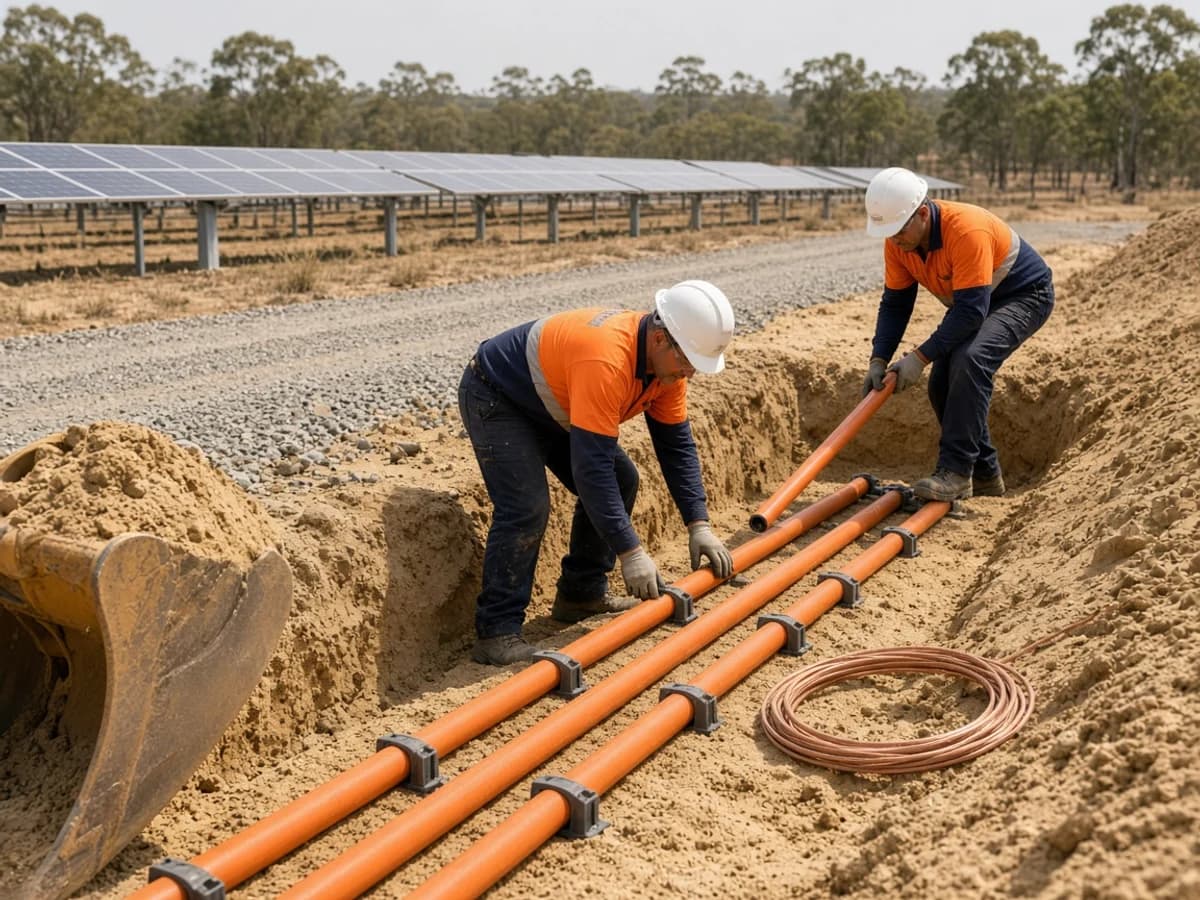
Method depends on ground, depth, and length. Tracked excavators with narrow buckets suit most corridors and handle bends, pits, and crossings. Chain trenchers and rock saws cut long, consistent runs quickly in suitable ground, while cable ploughs can install direct-buried cable in a single pass where the design and soils allow it.
Horizontal directional drilling or boring is the usual answer under watercourses, sealed public roads, or protected vegetation. Each of those crossings needs its own design and as-built record.
Trenches 1.5 metres or deeper are high-risk construction work under NSW work health and safety regulations and need collapse protection—benching, battering, or shoring—unless a geotechnical engineer advises otherwise. Shorter open lengths with prompt backfill reduce both safety and wet-weather risk.
Hold-point checklist before any cable trench is backfilled
Backfill hides every mistake. Hold the trench open long enough to prove these items, then photograph and record them before the next layer goes in.
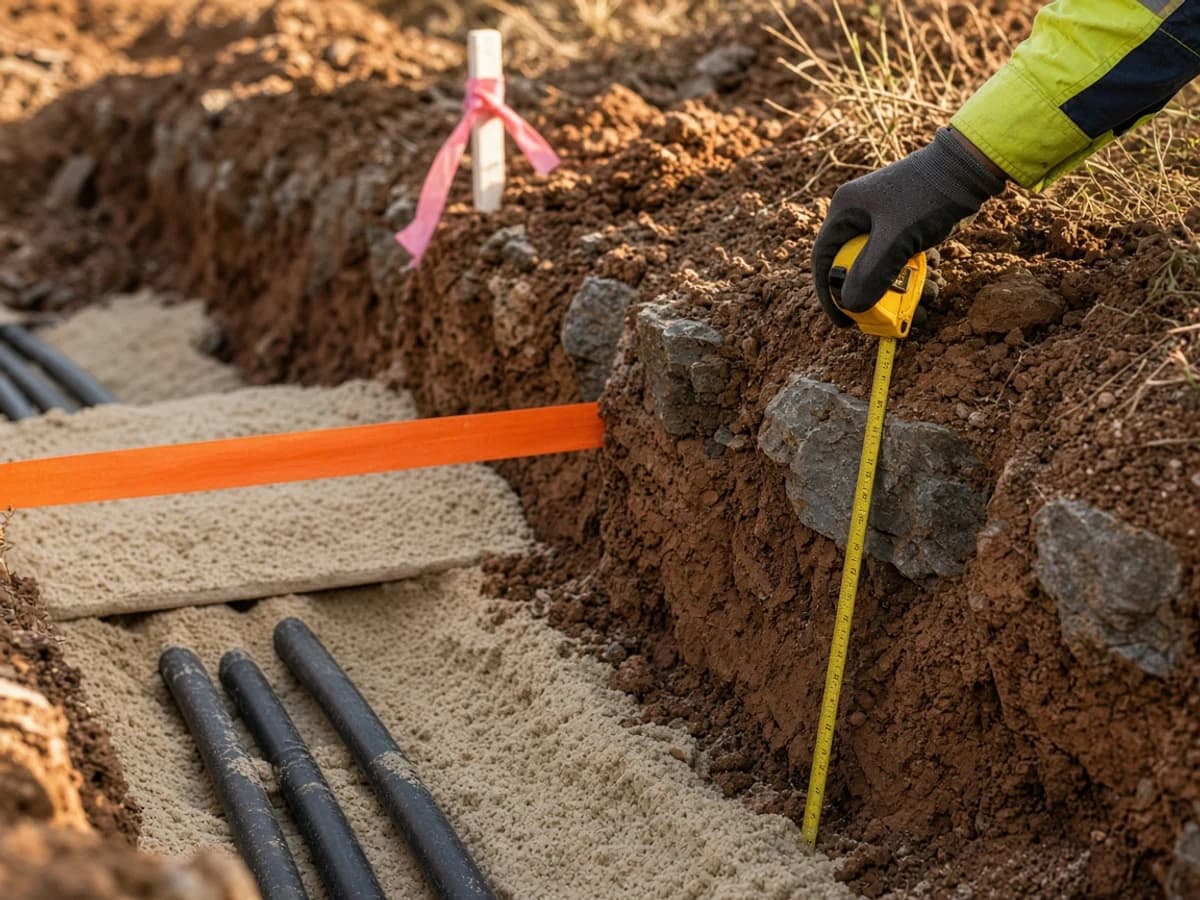
Bedding and backfill are more than fill. Cable ratings depend on how well the surrounding soil carries heat away, so where the design specifies thermal backfill or limits the use of excavated material, test what is actually placed.
- Trench line, depth, and width surveyed against the design—not estimated from the excavator bucket.
- Trench floor free of rock, roots, and standing water, with bedding placed to the specified material and thickness.
- Cable and conduit separations matching the electrical drawings for each circuit.
- Conduits mandrel-tested, with draw cords installed and secured at both ends.
- Cover material, protective covers where specified, and warning tape at the designed depth.
- Backfill placed and compacted in layers, with compaction tests wherever the trench crosses roads, pads, or hardstands.
Crossing renewable access roads, drains, and BESS yards without rework
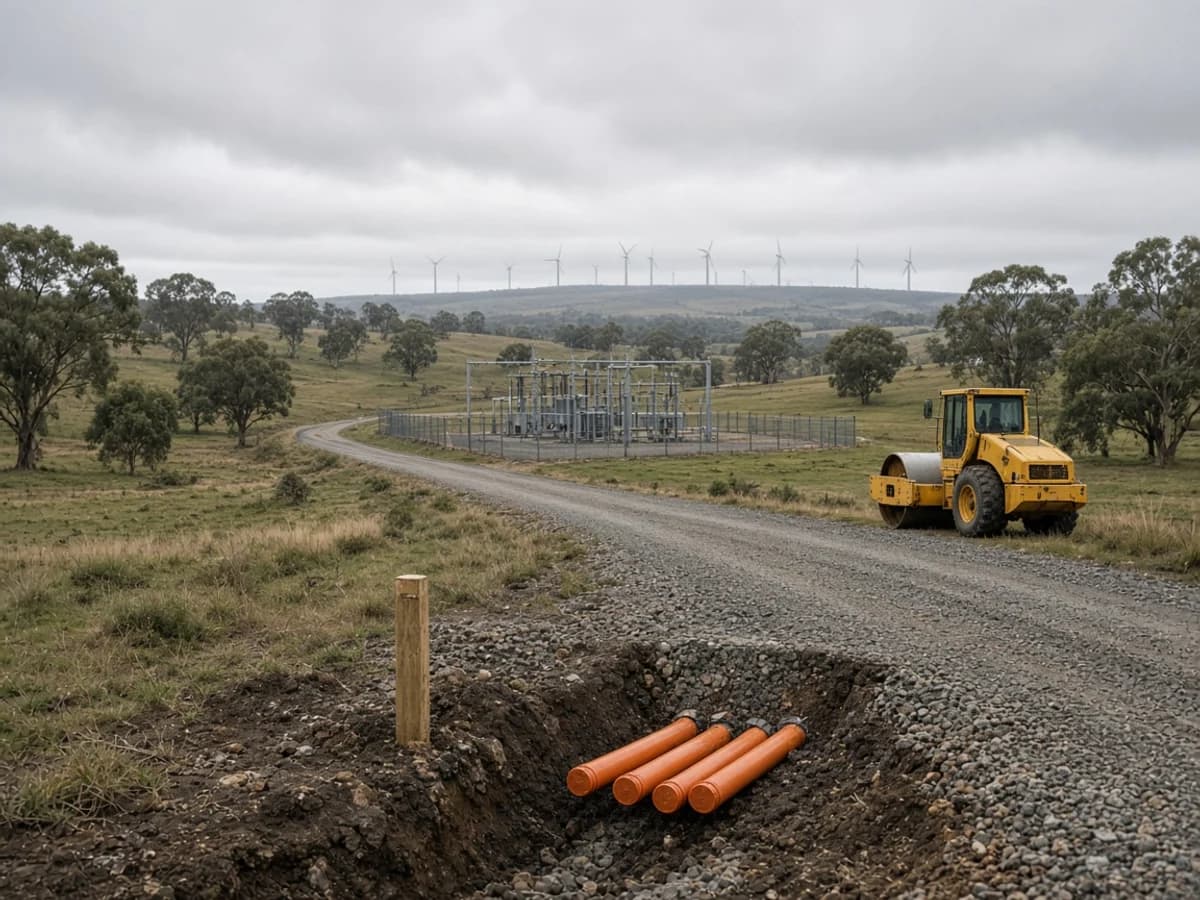
Renewable access roads carry tippers, cranes, and delivery trucks for months. Install conduits at every planned crossing before the pavement is built, backfill and compact the trench to the road specification, and mark each crossing so later trenches use it rather than cutting the finished surface.
Drainage is the other common clash. A cable trench that follows a table drain or crosses a culvert low point becomes a drain itself after rain, washing out bedding and softening the road edge. Coordinate trench levels with the drainage design before either is built.
Battery storage civil works add a compact, heavily loaded yard with many cable entries. Set conduit risers and pits before the hardstand is placed, so the yard is never cut open for a missed entry.
Where cable trenching meets grid connection civil works at the compound
Every collector circuit ends at the site substation or switching station, where grid connection civil works take over. This fence line is where cable trenching most often goes wrong: conduit banks arrive at the wrong level, entries are missed before the slab is poured, or trenches cross the transformer's heavy-haul route.
Agree one interface drawing showing conduit bank positions, entry levels, pits, and who owns each trench up to and inside the fence. Then hold to it—late changes at the compound cost more than anywhere else on the route.
Node pads, conduit entries, and heavy-plant access are covered in grid connection civil works NSW. This guide stays on the site-wide cable network that feeds the node.
Records to hand over—and how to brief NEXTGEN on cable trenching
Handover should let anyone find every buried cable without a locator sweep. Expect surveyed as-built alignments and depths, conduit mandrel results, compaction tests at crossings, photographs at each hold point, and drawings that show spare conduits, pits, and marker posts.
NEXTGEN is currently mobilised on cable trenching, conduit placement, and inverter pad preparation at Blind Creek Solar Farm (client confidential), with survey verification and hold points before backfill. Common questions about multi-trade packages are answered in the project FAQ.
To price a package, send the cable layout and schedule, trench and conduit details, geotechnical data, grading and drainage design, access road layout, and the compound interface drawing. Then contact NEXTGEN for a project inquiry and ask for trenching to be programmed with earthworks and roads, not after them.