

What solar farm drainage NSW must prove before earthworks lock the catchment
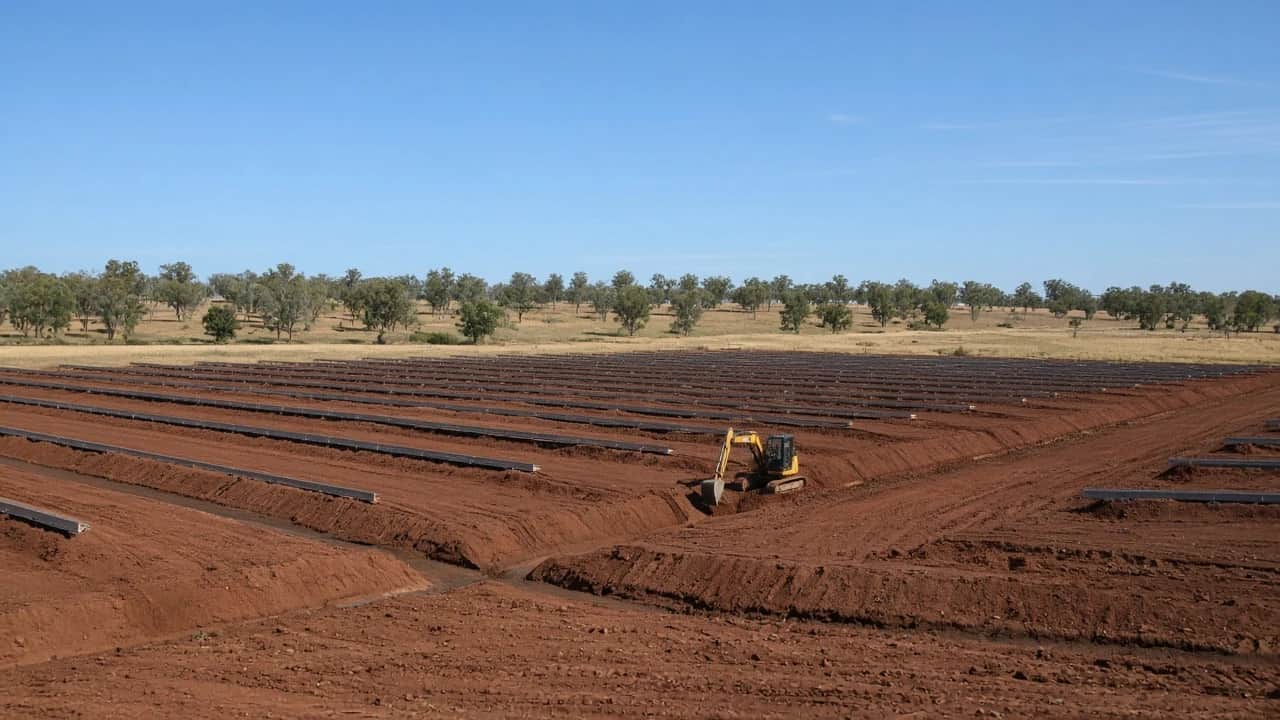
Solar farm drainage NSW succeeds when civil design sets where water travels across array benches, renewable access roads, and compound pads before bulk earthworks close those choices—not when the first wet week cuts ruts through freshly graded rows and ponds against inverter or battery yards.
Large solar footprints behave as engineered catchments. Sheet flow between tracker rows, table drains along haul spines, temporary sediment paths, and permanent outlets must share one level story so construction plant can keep working and O&M crews can still reach the asset years later.
NEXTGEN stages solar drainage through its renewable energy civil division so array grading, access, and pad interfaces stay on one survey-controlled critical path. Named mobilisation evidence sits in the project showcase, including Blind Creek Solar Farm (client confidential).
How array grading turns sheet flow into a civil design brief
Solar farm civil works NSW are not a building pad with a perimeter drain. Row benches, pile datums, and cable corridors create long, shallow catchments that concentrate runoff the moment topsoil is stripped. If falls between rows are accidental, water invents channels through soft formation and sterilises the same benches installation needs next.
Civil design should name longitudinal and crossfall intent, low-point collection, and where temporary dirty water sits while permanent swales or pipes are incomplete. Hold points that only check finished contours miss the construction-phase story that decides whether tippers and pile rigs can return after rain.
Treat drainage as part of the full solar package—not a late environmental tidy-up. Broader formation, trench, and pad scope sits in solar farm civil works NSW: earthworks, access and drainage; sediment sequencing detail for renewable catchments is covered in stormwater controls for renewable projects.
Construction water versus operational drains: design both on day one
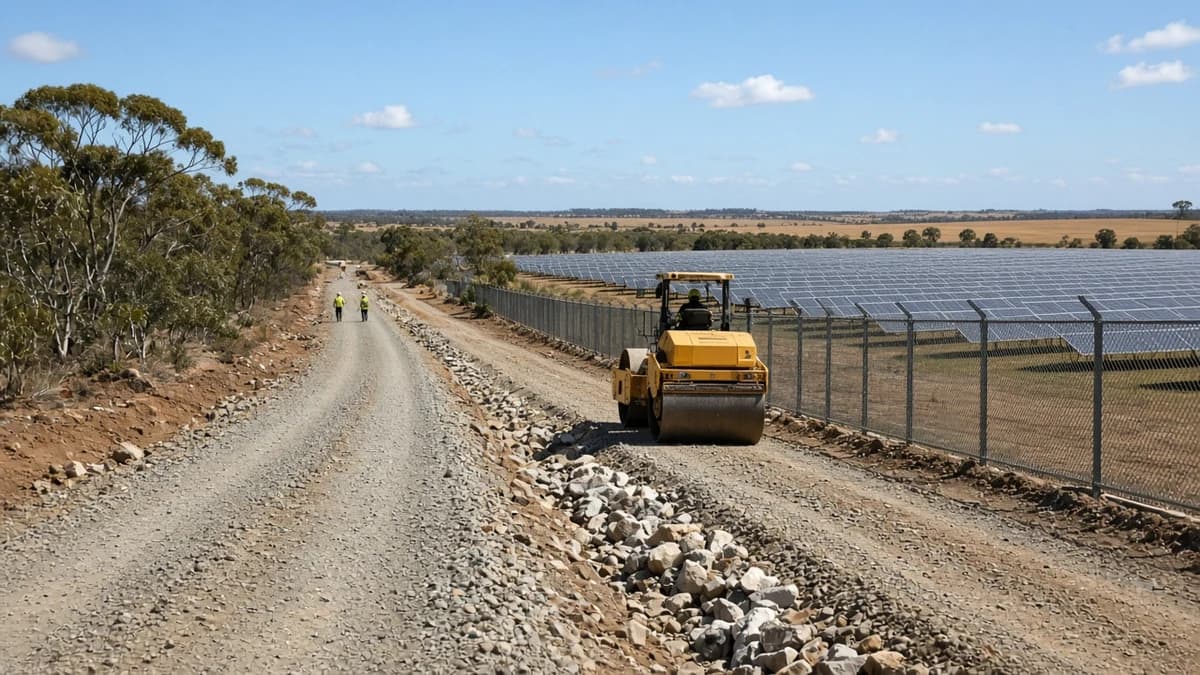
Construction drainage keeps plant moving: temporary diversions, sediment basins, check dams, and sacrificial haul shoulders that can be reshaped as the workfront advances. Operational drainage keeps the energised farm dry: permanent swales, culverts, dissipaters, and pad falls that O&M can maintain without reopening finished rows.
The failure mode is treating those as sequential afterthoughts. Soft "trim later" shoulders become permanent ponds under delivery traffic; permanent outlets installed too early get crushed by tippers that never had a named crossing cover depth.
Write ownership on one drawing set: which assets are temporary until vegetation or surfacing establishes, which outlets stay for the asset life, and who maintains dirty-water paths between demobilisation and practical completion. Ambiguity here is how solar farm drainage NSW becomes three tenders with three different water stories.
- Temporary diversions and basins sized for each earthworks stage—not only the final network.
- Permanent swale and pipe levels locked to array and pad survey control.
- Named cover depths at crossings before haul or crane plant commits.
- A written split between construction sediment assets and operational drains at handover.
Where renewable access roads decide whether drains survive traffic
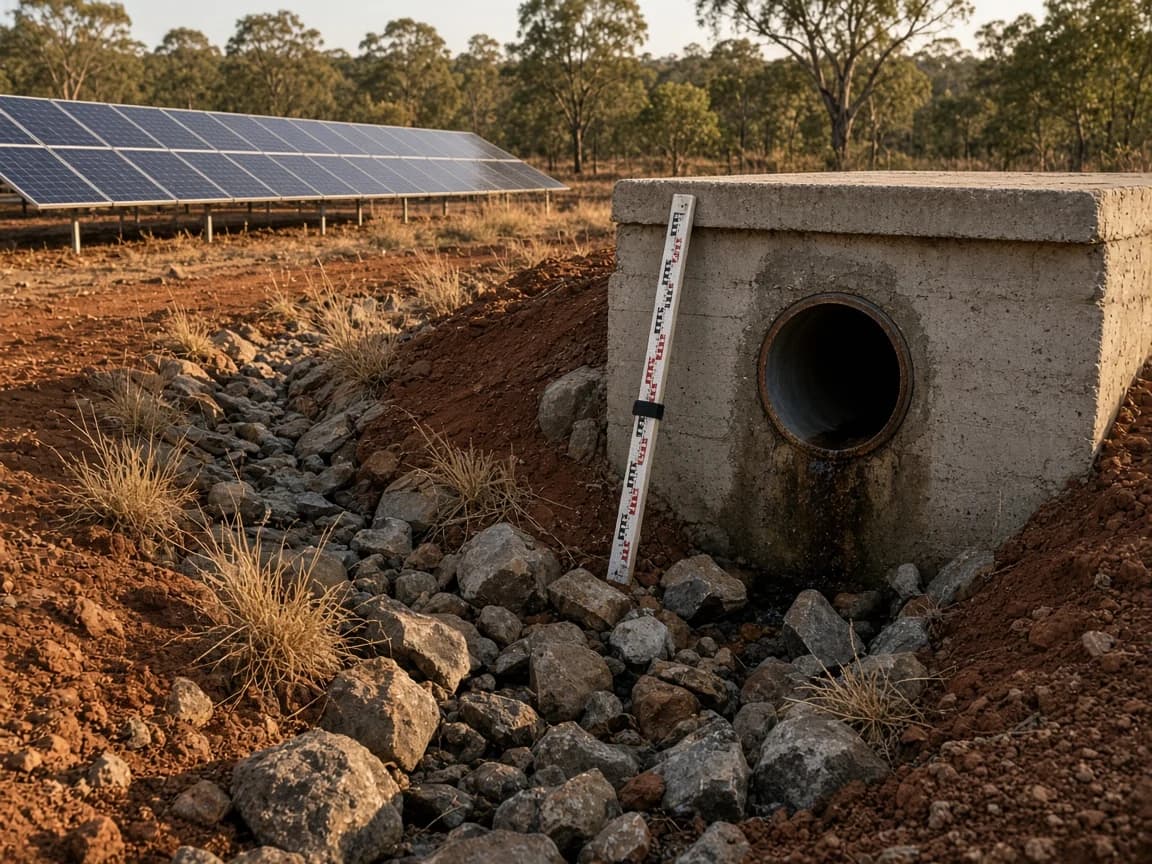
Renewable access roads are the spine of construction and the first place drainage failures show up. Table drains, crossfalls, and low-point outlets must be designed for tipper and crane loads as well as lighter O&M vehicles—soft shoulders and blocked drains turn module deliveries into recovery jobs.
Separate temporary haul spines from permanent O&M routes when traffic loads differ, but keep both inside the same catchment model. A drain that works for light maintenance can still fail under construction peak flows if culverts and check dams were never sized for that stage.
Geometry, turning, and corridor staging for solar and BESS sites are covered in renewable energy access roads NSW. Permanent corridor pavement strength may also brief NEXTGEN Roads when the public-road interface owns the critical path.
Battery storage civil works need pad falls that arrays do not teach
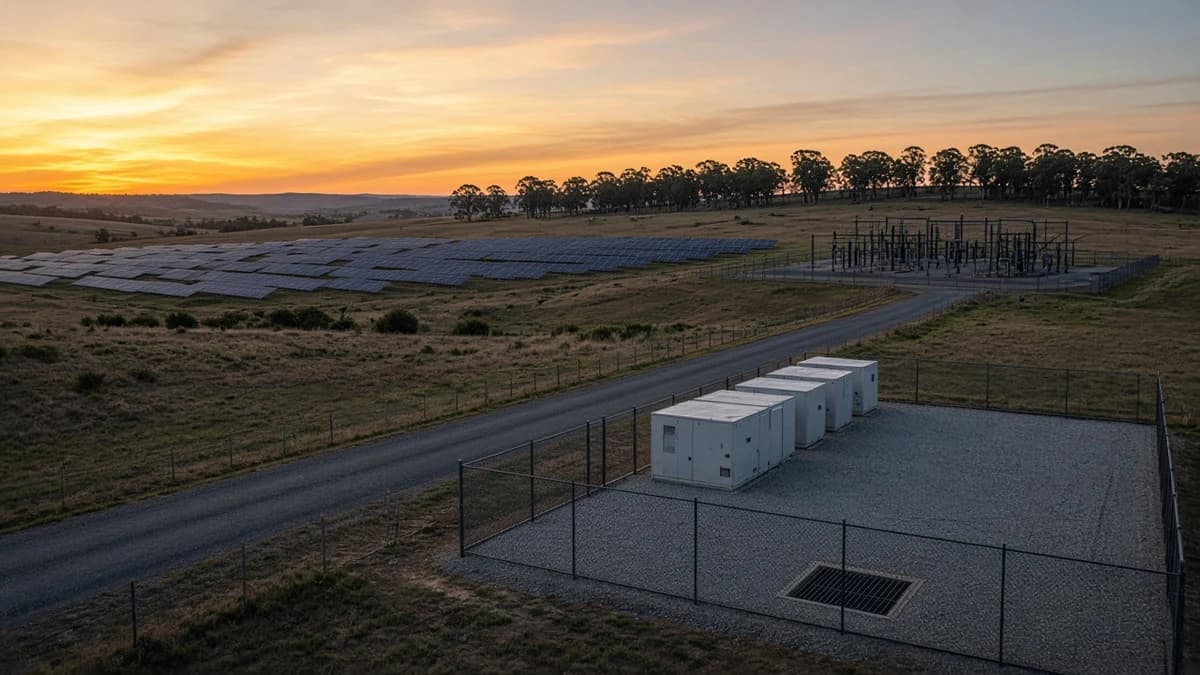
Battery storage civil works concentrate loads, fire access, and cable entries on a compact yard. Copying open-array sheet-flow habits onto a hardstand leaves water against container footprints and cable pits—even when the BESS sits on the same landholding as the solar field.
Design yard falls, grated inlets, and bund ties as part of the solar drainage brief when the packages share a fence. Soft edges left for "solar demobilisation first" become the wet-weather failure that delays container set-down.
Hardstand loading and foundation proof before installation are detailed in BESS hardstand construction NSW and battery storage site preparation NSW. Keep drainage ownership visible on the shared interface drawing so solar earthworks do not sterilise the yard outlet.
How grid connection civil works inherit—or break—the site water story
Grid connection civil works at the substation or switching-station fence need controlled access, pad falls, and conduit corridors that do not become uncontrolled watercourses after rain. Trenches cut after concrete, or fencing started before pad drainage is proven, force rework at the highest-risk interface on the farm.
Name who owns surface water at the fence line: array-side swales, compound pits, and the public-road verge. Mismatched lid levels and overland flow paths are how energisation windows slip after civil thought the drains were finished.
Pad, conduit, and handover sequencing for the network node sits in grid connection civil works NSW and substation civil works NSW. Ask for one drainage register across solar, storage, and grid—not three packages arguing after formation looks complete.
Design checklist: construction holds versus O&M readiness
Use this checklist when civil design and site method approach a drainage hold point. It is cheaper to catch gaps here than after arrays, fences, or hardstands close the corridor.
- Array sheet-flow and low-point collection match the current grading plan—not a superseded contour only.
- Temporary diversions and sediment paths are working while permanent drains are incomplete.
- Renewable access road table drains, culvert cover depths, and crossing owners are survey-checked.
- Battery storage civil works yard falls, inlets, and bund ties agree with finished hardstand levels.
- Grid connection civil works pad drainage and trench reinstatement have named owners at the fence.
- As-built mark-ups and photographic evidence exist before backfill or gravel hides the work.
How to brief NEXTGEN on solar farm drainage NSW
Bring layout drawings, catchment or stormwater intent, geotech notes, access-track geometry, BESS and substation pad plans, and any authority conditions that name outlets or discharge limits. State whether temporary basins stay after energisation or must be removed before practical completion.
Say who owns pavement edges, fence lines, and grid-connection pads after drainage backfill. Ambiguity here is how solar farm drainage NSW becomes a late tidy-up instead of a design-led package.
When the brief is ready, contact NEXTGEN for a project inquiry. Delivery expectations for multi-trade packages are summarised in the project FAQ.