

What grid connection civil works NSW must deliver
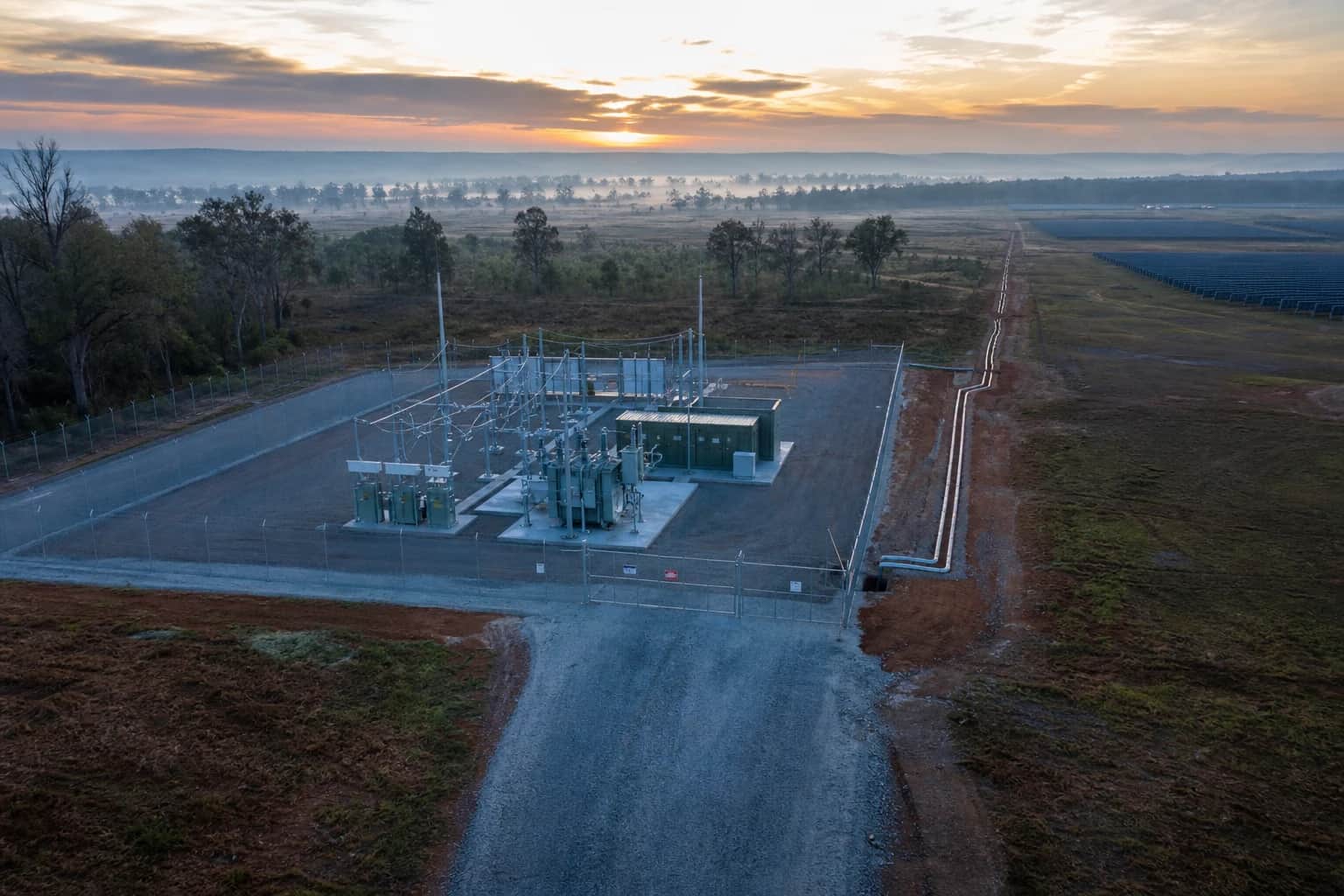
Treat grid connection civil works NSW as the node package: substation or switching-station pads, trench and conduit routes from the array or BESS yard, and access routes that can carry transformers, cranes, and later O&M plant.
Grid connection civil works fail when earthworks demobilise after row grading or a BESS hardstand, leaving the fence-line compound, cable entries, and heavy haul gate unresolved. Electrical programmes then inherit soft pads and incomplete corridors.
NEXTGEN stages these interfaces through its renewable energy civil division so pads, conduits, and access share one survey-controlled critical path with the wider renewable site.
Substation pads that take heavy plant after wet weather
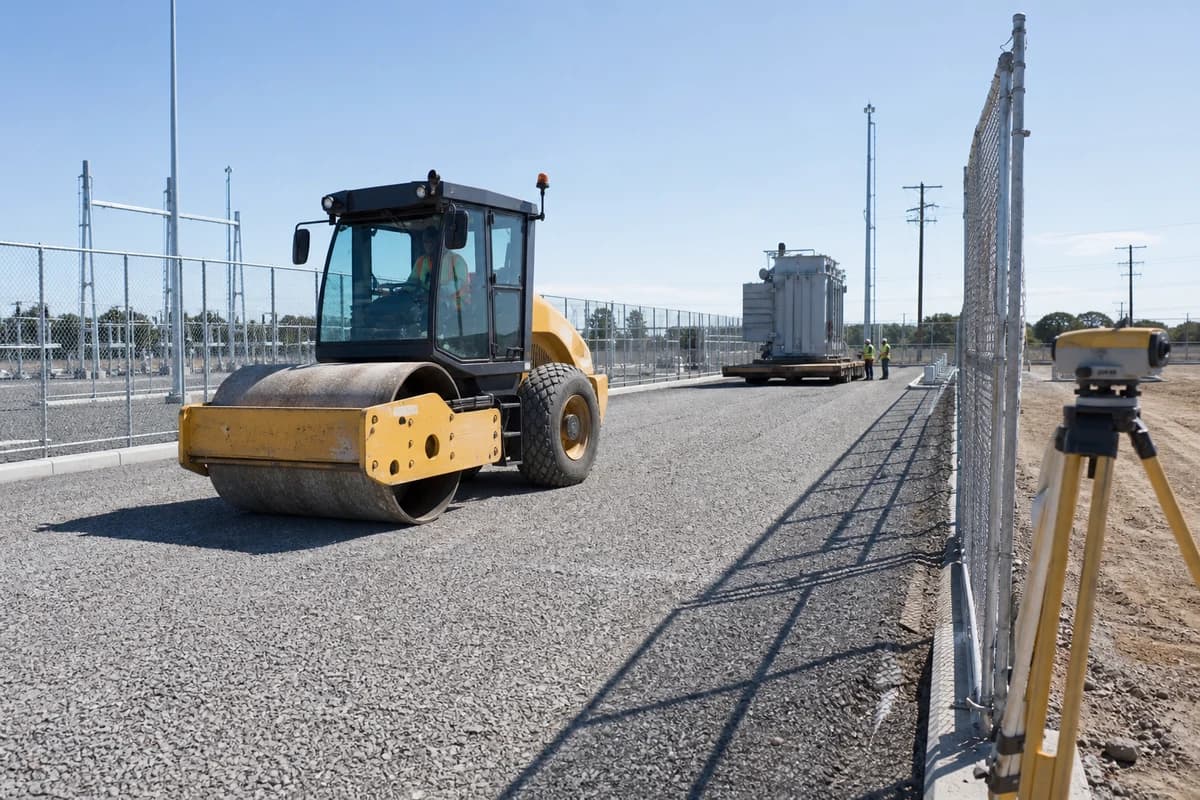
Substation pads need formation, pavement or hardstand criteria, and edge drainage that match transformer and crane loads—not solar row earthworks tolerances. Confirm finished levels, working space for lifting, and how temporary construction traffic is kept off sealed surfaces.
Where bunds, oil containment, or fence set-outs apply, lock civil extents early so electrical GA changes do not rebuild pad edges after concrete or pavement is placed.
Separate concentrated pad criteria from array earthworks using solar farm civil works NSW: earthworks, access and drainage, then deliberately upgrade the connection compound to industrial loading. Named NSW solar mobilisation evidence is on Blind Creek Solar Farm.
Conduit corridors between generation, storage, and the grid node
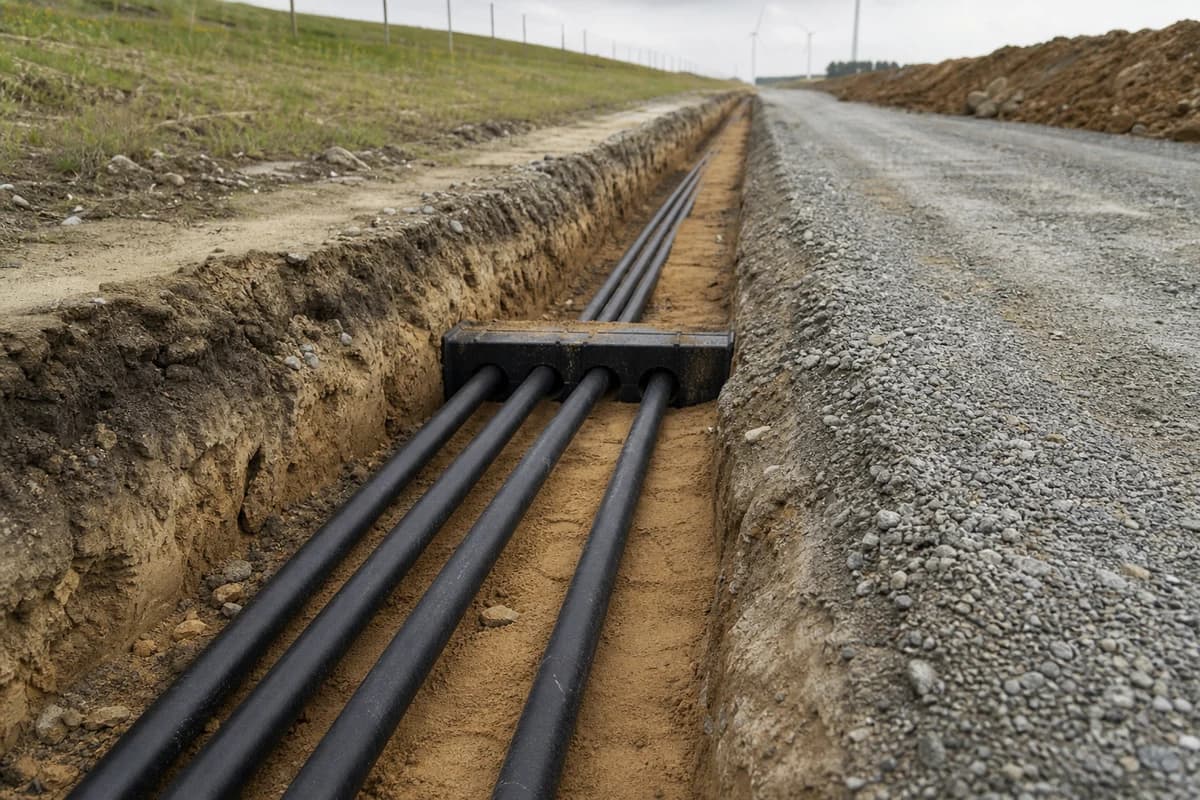
Conduit and trench corridors connect solar inverters or battery storage civil works to the connection compound. Agree route ownership, trench depths, crossing of renewable access roads, bedding, and backfill standards before digs sterilise finished formation.
Name who proves conduits, who reinstates pavement layers after crossings, and how spare capacity is left for later circuits. Late trench claims through a sealed access route are among the costliest renewable civil rework items.
When the yard feeding the node is a BESS hardstand, align trench edges with battery storage site preparation NSW so pad drainage and cable entries are not redesigned mid-install.
Renewable access roads to the connection compound
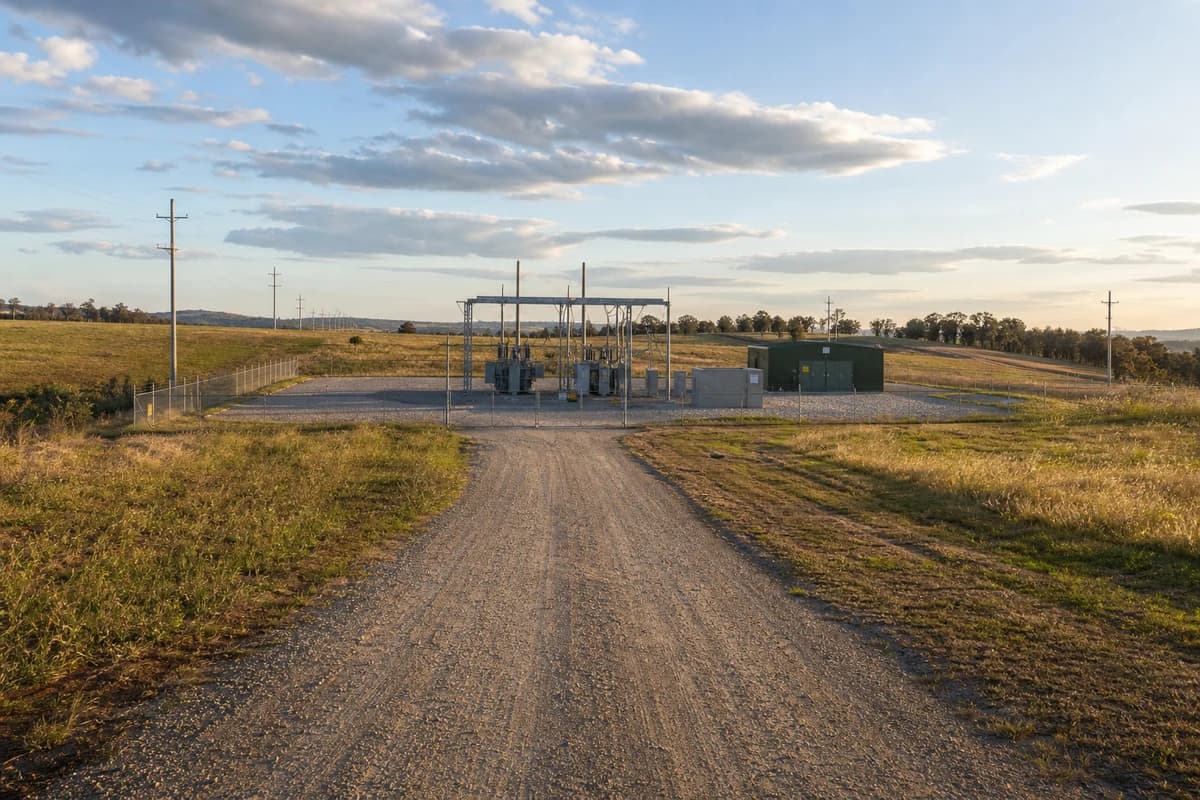
Renewable access roads into the substation or switching station must handle delivery vehicles and crane set-downs—not only light O&M traffic. Width, turning, compaction, and gate geometry should match the heaviest temporary plant.
Keep construction haul tracks separate from permanent compound access where loads differ. Crushing the finished pad perimeter with site traffic undoes grid connection civil works programme gains.
Corridor formation and pavement sequencing is covered in access road construction NSW; combine those holds with NEXTGEN’s roads capability when public-road ties sit on the same critical path.
How solar and battery packages should hand into the connection node
Solar farm civil works NSW and battery storage civil works should publish interface drawings for levels, access, and trench entries before each package demobilises. The grid node is not a leftover tidy-up after array or container installation.
Ask EPCs and principals to freeze a short interface register: pad owner, conduit owner, access owner, and who holds sediment controls through each handover. Ambiguous shared fences create the longest clarification cycles.
For compound pad proof, drainage, trenching, and EPC hold points at the substation fence, see substation civil works NSW.
Brief checklist before you inquire for grid connection civil works
Before you request a quote, attach compound GA and levels, design vehicle notes, conduit schedule assumptions, drainage at pad edges, and how solar or BESS packages meet the fence line.
Send that pack through NEXTGEN’s contact pathway and, if helpful, review delivery shapes in the project showcase so estimating prices pads, conduits, and access as one grid connection civil works NSW package.