

What substation civil works NSW must finish before network plant arrives
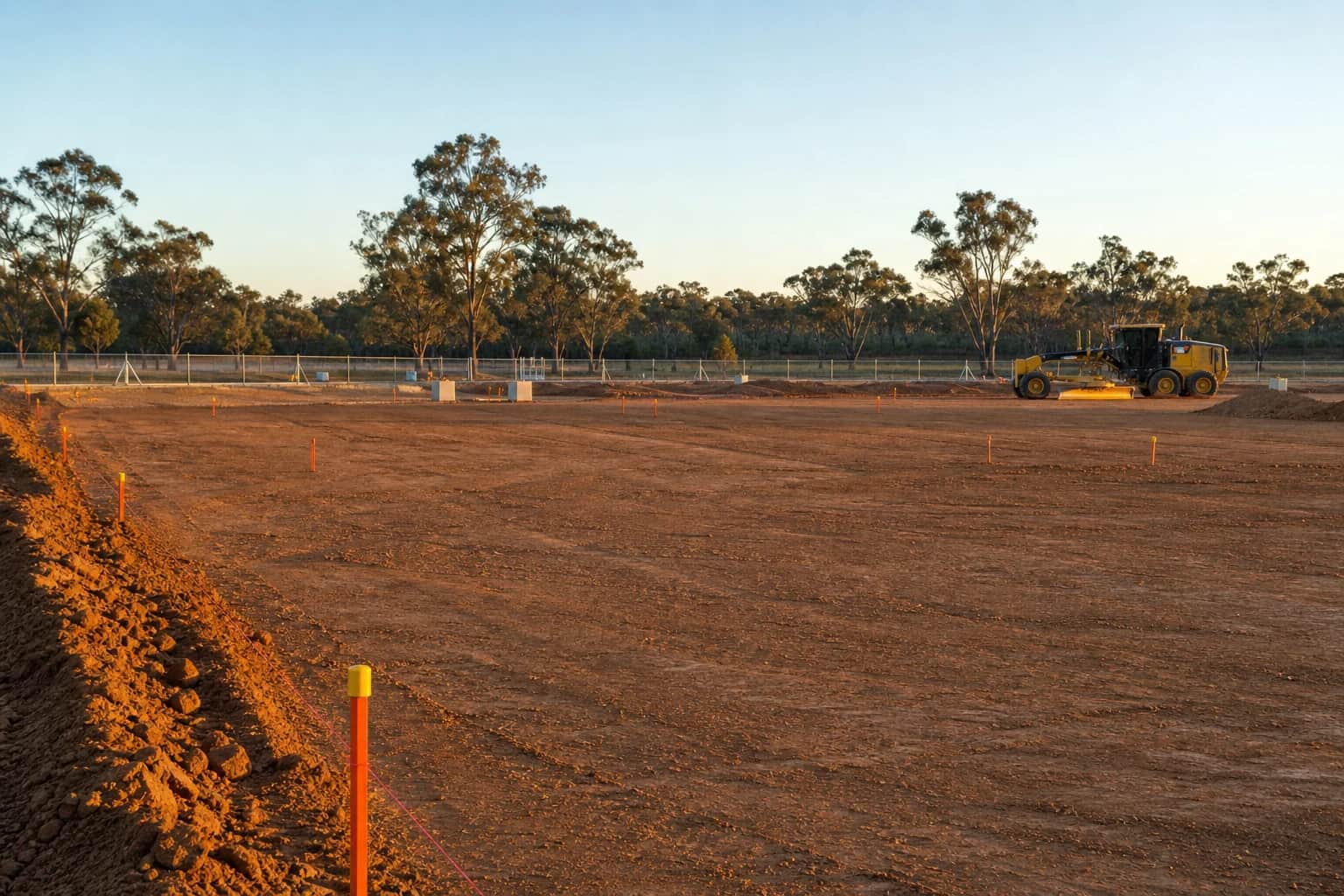
Substation civil works NSW is the compound package that must be proven before transformers, switchgear, and cable terminations land: graded and compacted pads, working drainage, open trench and conduit corridors, and controlled access that heavy plant can use after wet weather.
The work applies wherever generation or storage meets the network—co-located solar and BESS substations, standalone switching stations, and connection compounds at the fence line of larger renewable precincts. Civil fails when teams treat the compound as a tidy-up after array earthworks or container yards.
NEXTGEN delivers these packages through its renewable energy civil division so pad, drainage, trench, and access scopes share one survey-controlled sequence with solar farm civil works NSW and battery storage civil works at the interface fence.
Typical civil scope at the substation compound
A substation civil package usually spans formation and subgrade improvement for equipment pads; hardstand or pavement layers where specified; fence-line and gate foundations; compound drainage including pits, channels, and discharge points; cable trenches and conduit banks from array or BESS yards; temporary and permanent renewable access roads into the gate; and reinstatement where civil crosses public or third-party land.
Scope boundaries matter. Clarify whether civil owns oil-containment bunds, fire-access geometry, or only the earthworks and pavement beneath them. Ambiguous GA notes create the longest rework cycles once electrical layout is frozen.
Broader enabling packages—array grading, yard hardstands, and corridor earthworks—sit with civil infrastructure capability when the brief includes wider site development beyond the compound fence.
Site information and ground conditions EPCs should attach early
Before civil mobilises, attach compound GA and finished levels, geotechnical reports for pad and trench zones, design vehicle and crane notes, conduit schedule assumptions, drainage intent and discharge approvals, service location plans, and a short interface register naming solar, BESS, network, and civil owners at the fence.
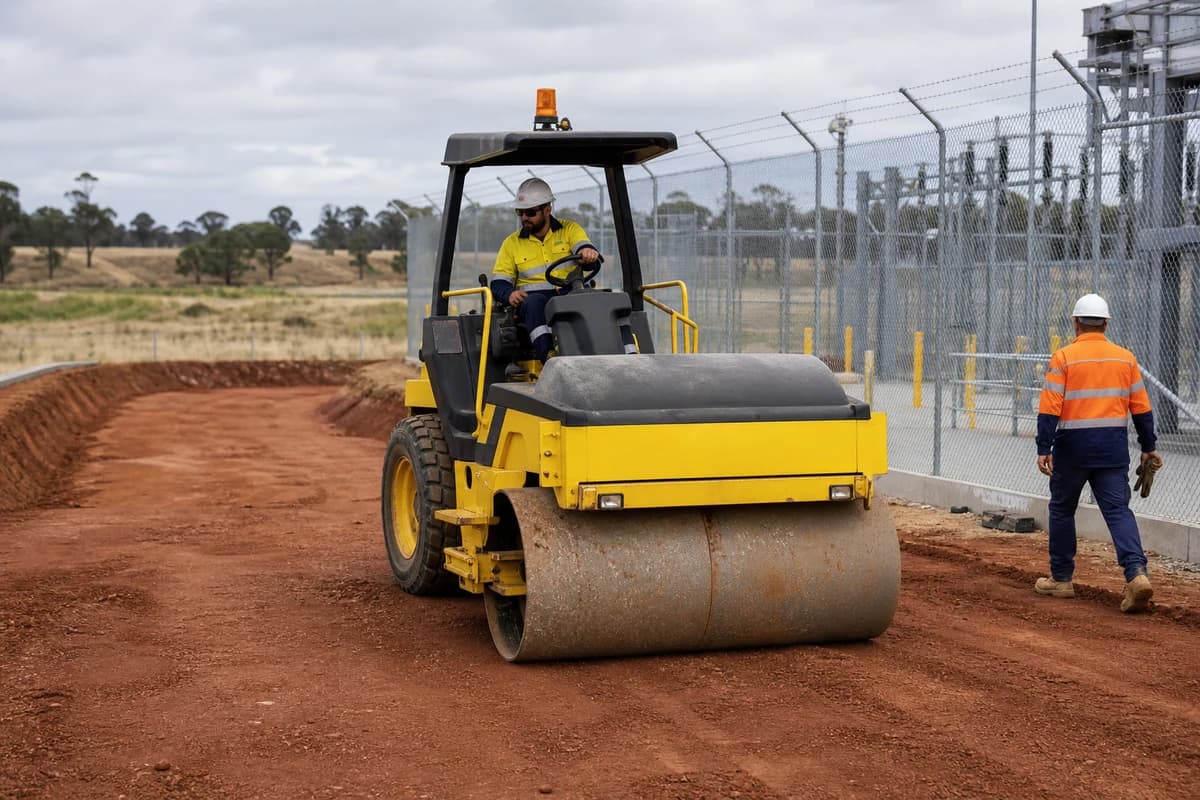
Ground conditions drive cost and programme more at substations than on long tracker benches. Soft clays, collapsible soils, or high groundwater near trench invert need treatment before pads are declared ready—not after transformers are on route.
Ask for proof of how moisture, density, and bearing were tested in pad and trench zones. Brochure earthworks language without hold-point records is incomplete for substation civil works NSW where concentrated loads sit on a small footprint.
Access roads and compound drainage that survive wet weather
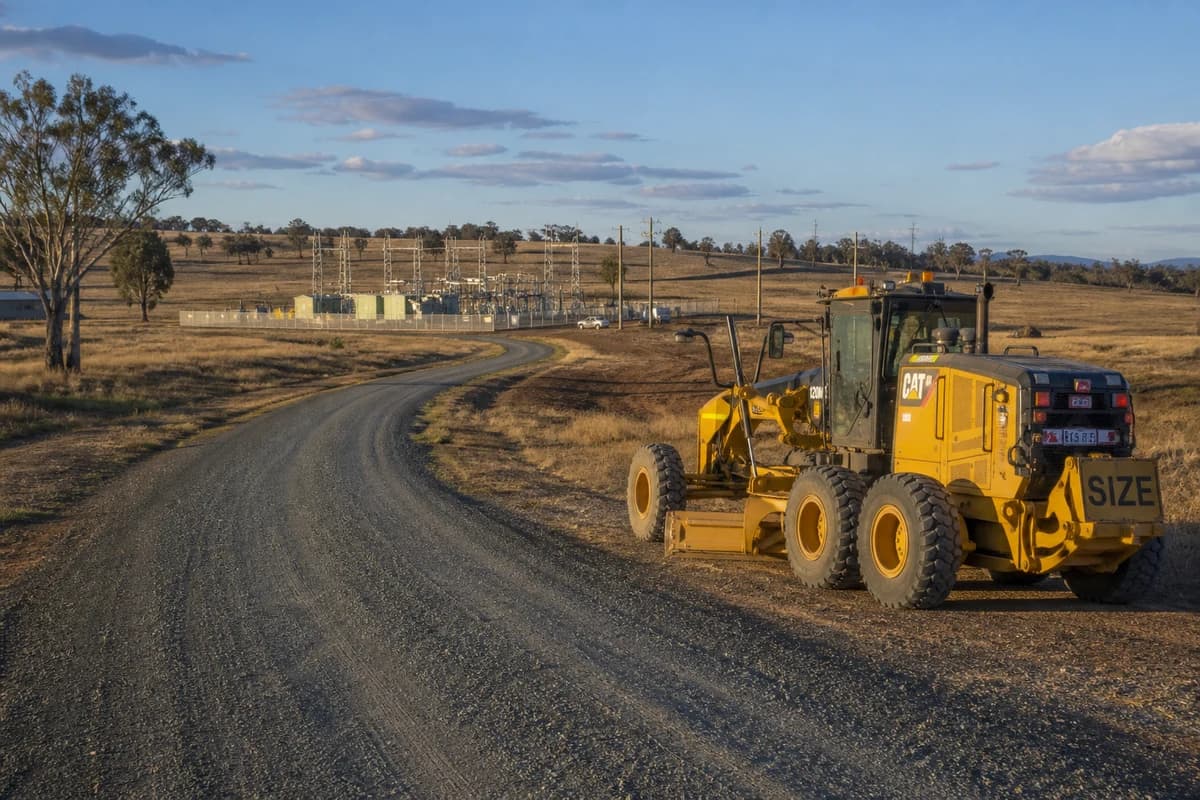
Renewable access roads into the substation gate must carry the heaviest delivery and crane plant—not only light O&M utes. Width, turning radii, gate set-out, and set-down geometry should match design vehicles named in the brief.
Separate temporary construction haul from permanent compound access where loads differ. Crushing finished pad perimeters with site traffic undoes civil programme gains and forces reinstatement under electrical possession windows.
Compound drainage must keep water away from cable entries, trench inverts, and pad edges. Tie pits and channels to agreed discharge points before pavement seals close over hidden falls. Poor edge drainage is a common cause of soft spots after the first heavy rain event.
Corridor formation and heavy-duty pavement sequencing aligns with NEXTGEN roads capability and the access guidance in renewable energy access roads NSW when public-road ties or long haul routes sit on the same critical path.
Cable trenches, conduit banks, and crossing interfaces
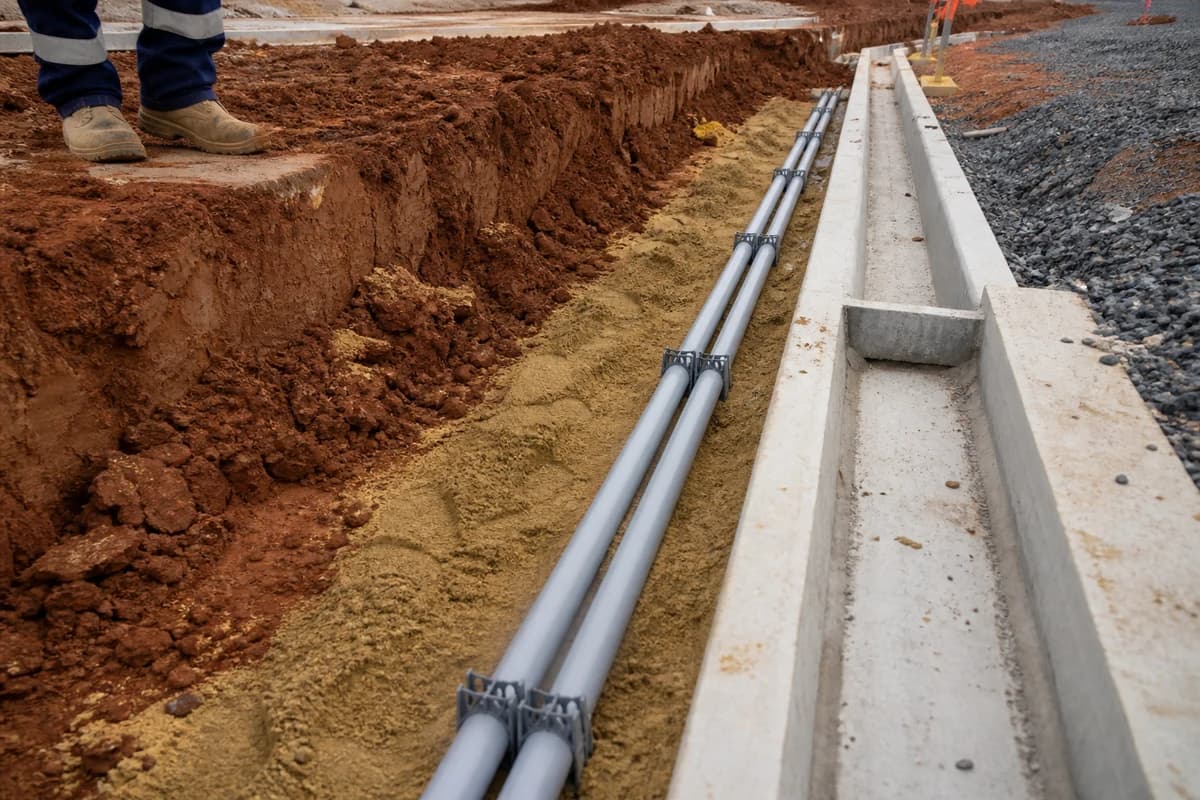
Trenching and conduit corridors connect inverters, battery yards, or collector systems to the substation compound. Agree route ownership, depth, separation, bedding, backfill standards, and who reinstates pavement after crossings before digs sterilise finished formation.
Name spare duct capacity, entry positions at the fence, and how crossings of renewable access roads are cut and reinstated. Late trench claims through a sealed access route are among the costliest rework items on NSW renewable programmes.
Node-level staging language is expanded in grid connection civil works NSW; this guide focuses on trench and conduit interface control at the substation fence where multiple packages meet.
Hardstands, foundations, and pad tolerances
Substation pads and plinths carry concentrated industrial loads—not solar row earthworks tolerances. Confirm finished levels, working space for lifting, edge protection, and how temporary construction traffic is kept off sealed surfaces until strength is proven.
Fence posts, gate structures, and equipment foundations must sit on formation that already meets bearing criteria. Pouring or placing footings on unproven soft spots forces rework when switchgear cannot sit within OEM tolerances.
Where co-located BESS yards share the same landholding, align pad criteria with BESS hardstand construction NSW so container loads and substation equipment loads are not designed on conflicting pavement assumptions.
EPC programme interfaces and quality hold points
Substation civil works NSW sits on the critical path between array or BESS enabling and network construction. Publish interface drawings for levels, access, trench entries, and drainage before each upstream package demobilises.
Freeze a short programme register: pad owner, trench owner, access owner, sediment control owner, and who holds the gate during transformer deliveries. Ambiguous shared fences create clarification cycles that outlast the civil contract.
Quality hold points should be named in the ITP before excavation starts—not negotiated after compaction fails. Ask for redacted ITP samples and how hold-point delays are managed in the programme.
For hold-point language owners can compare across packages, see civil works inspection and test plans NSW and ISO-aligned civil delivery controls.
- Subgrade proof and any treatment in pad and trench zones before pavement or footings.
- Compaction and level checks on pads, hardstands, and crane set-downs after wet weather.
- Trench depth, bedding, duct placement, and backfill before permanent reinstatement.
- Drainage falls, pit levels, and discharge paths before pavement seals close over channels.
- Access geometry and gate set-out proven against design vehicle notes.
- Interface survey at the fence where solar farm civil works NSW or battery storage civil works meet the compound.
Handover records and how to brief a substation civil package
Handover is more than a level certificate. Leave as-built survey for pads and trenches, compaction and test records, drainage as-built, reinstatement photos at crossings, and an interface sign-off the electrical and network packages can rely on.
Review representative delivery shapes in the project showcase, including grid connection enabling works and renewable hybrid civil works package—all describe package shapes, not named completed assets. Delivery expectations sit in the project FAQ.
When compound GA, geotechnical data, conduit assumptions, and programme windows are ready, contact NEXTGEN to review substation civil works NSW scope against realistic pad, drainage, trenching, and interface holds.