
Why asphalt and drainage fail together on NSW corridors
Asphalt and drainage fail at the same place when levels, outlets, and shoulders are treated as separate packages. The practical answer is to appoint an asphalt drainage contractor NSW scope that owns crossfall, kerb tie-ins, pit levels, and pavement edges before asphalt works NSW close the corridor—not after the paver leaves.
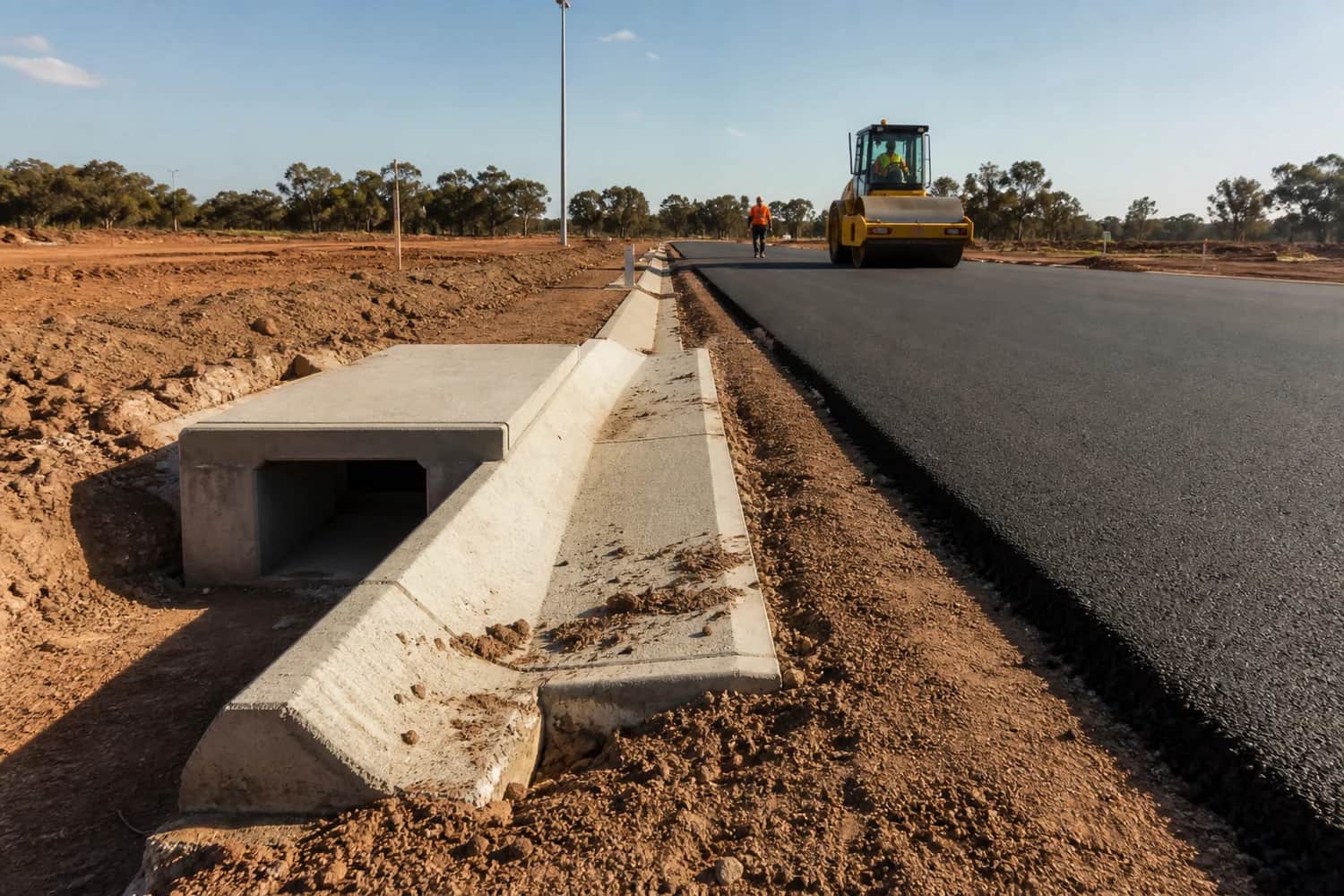
Access road construction NSW, industrial spines, and renewable site entries all share the same risk: water ponds against a fresh seal while the subgrade underneath softens. A pavement contractor NSW crew cannot fix a drain that sits high or a shoulder that traps runoff with another layer of asphalt.
NEXTGEN coordinates these interfaces through its roads and pavement division when the running surface and drainage share one critical path, and through civil infrastructure when lot drainage and utility trenches cross the pavement box.
What an asphalt drainage contractor NSW scope should include
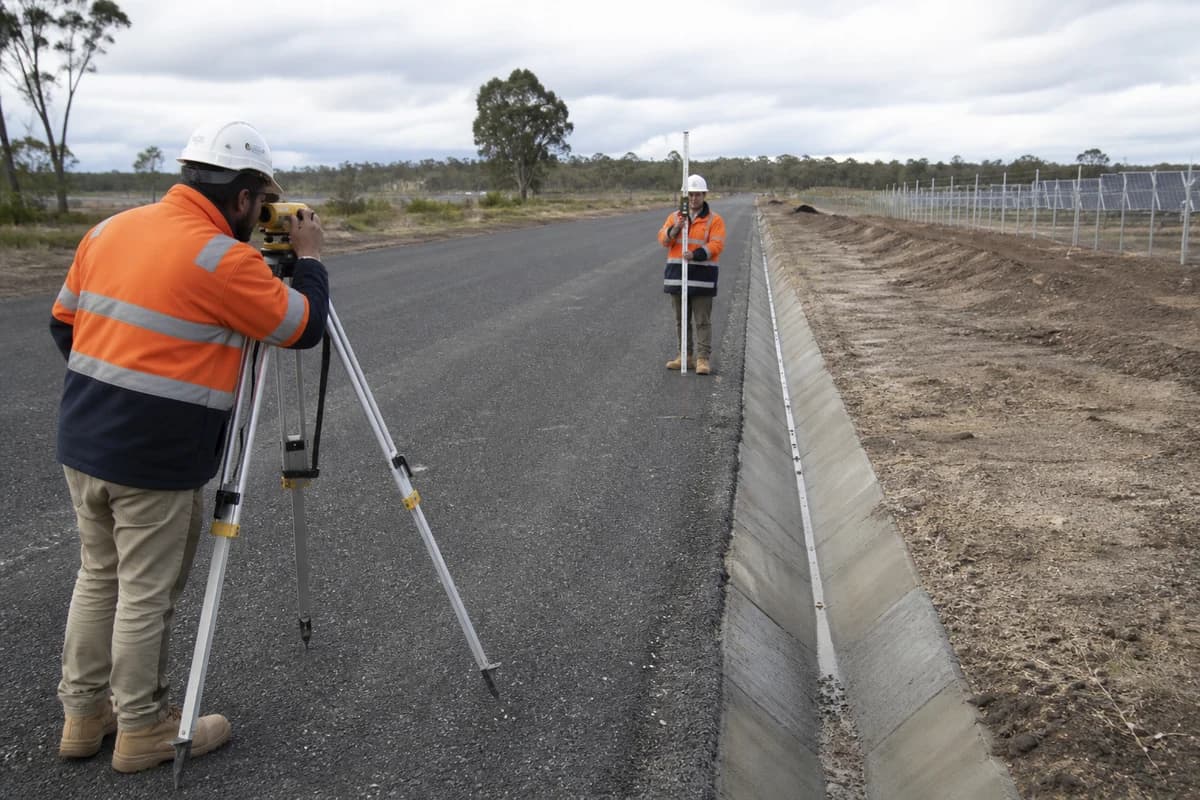
Treat the scope as a corridor interface package—not a pit schedule alone. It should cover survey control from subgrade through seal, kerb and inlet levels relative to finished pavement, temporary diversions during construction, and how a road drainage contractor hands over outlets that shed water away from the edge.
Asphalt works NSW belong inside that box: pavement thickness does not change where water must leave the surface. If the brief splits "drainage" and "pavement" without naming who owns the edge detail, both contractors will assume the other holds the level mismatch.
On access road construction NSW routes, include culvert headwalls, table drains, and any authority tie-ins in the same interface drawing set. Industrial yards need dock aprons and turning bays in the same level story as spine-road kerbs.
Why project owners should care before practical completion
Interface failures show up after handover when they are expensive to fix under live traffic. Owners inherit edge breakdown, ponding at lot entries, and repeated asphalt cuts when drains were finished after seal or shoulders were left soft.
Tender comparisons also distort when one return prices asphalt only and another prices drainage only. Without a shared interface brief, the lowest lump sum often hides the cost of reopening pavement to reset a pit or regrade a table drain.
Delivery expectations for multi-trade packages are summarised in the project FAQ. Where procurement is still open, how to evaluate civil tender returns helps owners test whether interface assumptions are priced or buried.
Common interface risks on asphalt and drainage packages
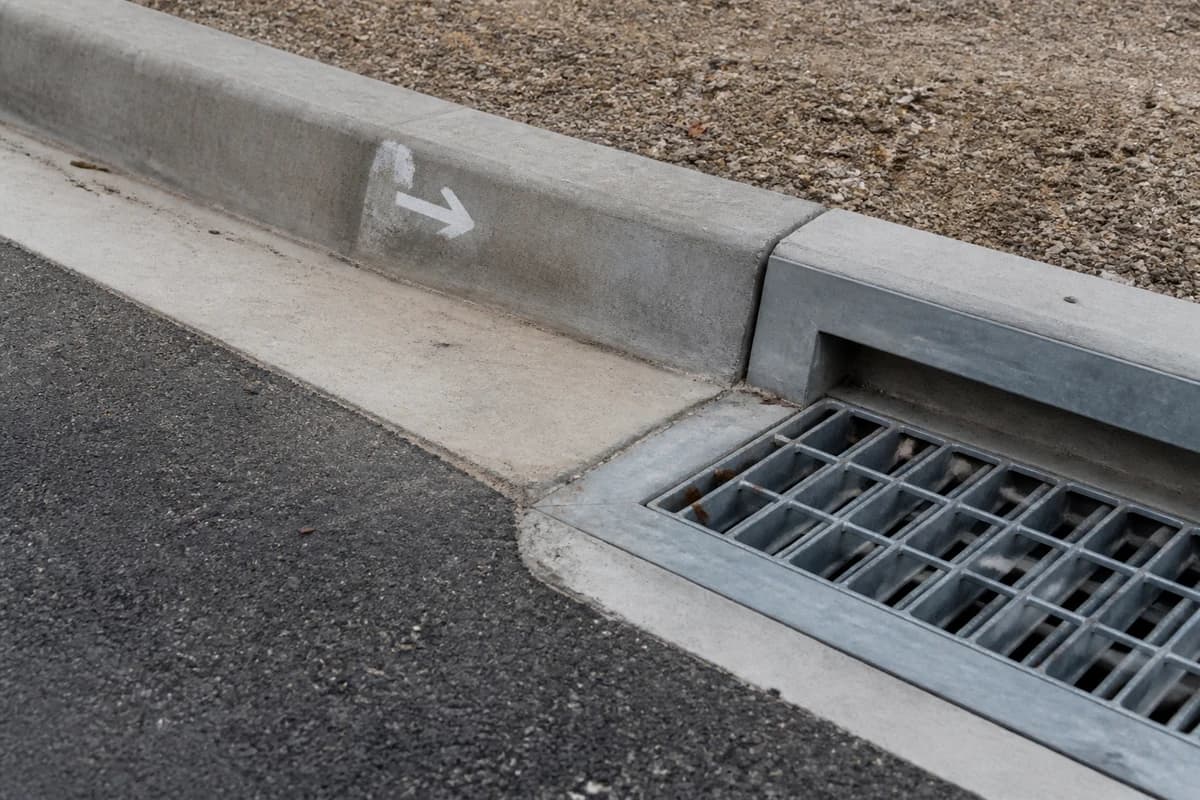
Pits and kerb inlets set high relative to finished pavement—water sits against the seal and infiltrates the shoulder.
Table drains or culvert outlets left below pavement edge without a defined shoulder transition—edges pump and rut under heavy vehicles.
Asphalt works NSW staged before temporary diversions are workable—runoff cuts unfinished layers during the first storm.
Utility trenches reopened through new seal because services were not closed before a pavement contractor NSW placed the final lift.
Different survey datums between a road drainage contractor and the paving crew—crossfall looks correct on paper and ponds in the field.
Access road construction NSW tie-ins at public roads where kerb and gutter levels from council assets do not match the new seal profile.
Sequenced hold points between drainage and asphalt
Use this sequence before traffic returns to a corridor. It keeps asphalt works NSW and road drainage contractor scopes accountable to the same levels—not to verbal coordination on site.
Step 1 — Accept subgrade and formation width against design traffic and drainage overflow paths. Soft shoulders planned "to be trimmed later" become permanent ponds.
Step 2 — Set pit, kerb, and outlet levels from the same stringline or model the pavement crew will use. A road drainage contractor should not hand over assets measured from a different benchmark.
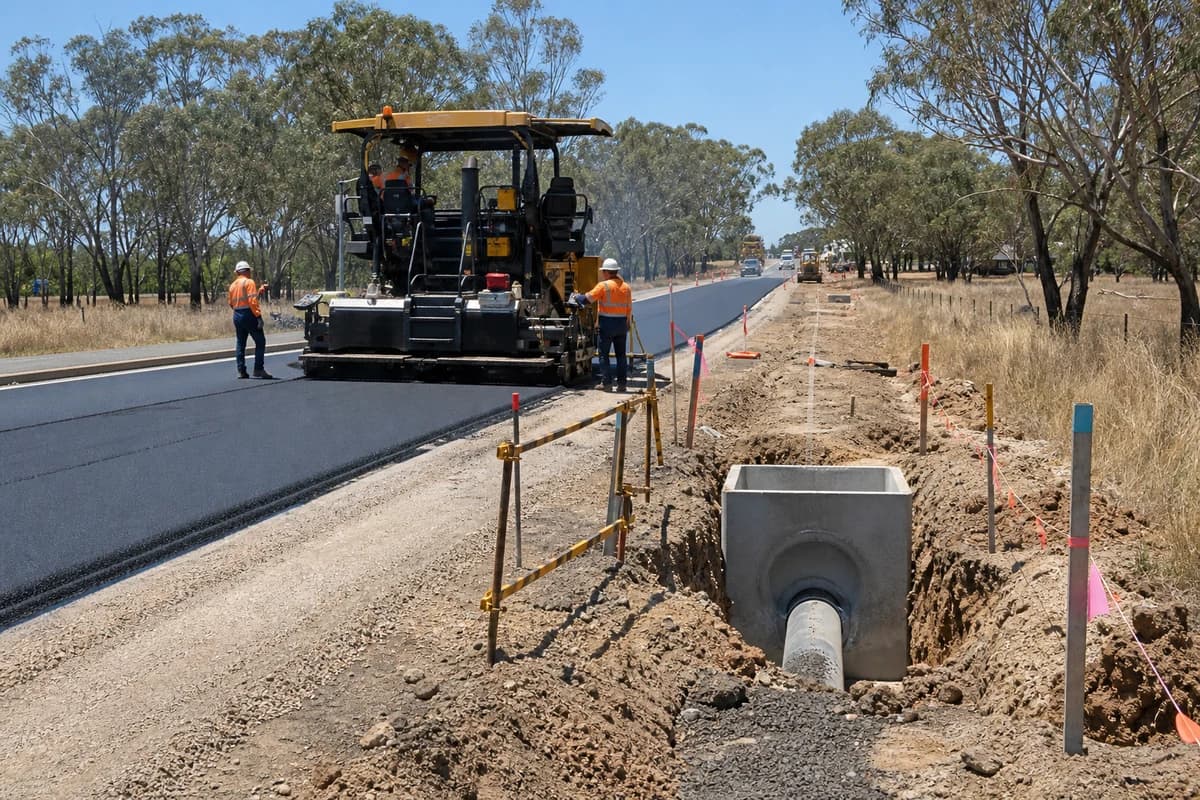
Step 3 — Complete pipes, headwalls, and table drains that sit under or beside the pavement box before base and asphalt lifts close access.
Step 4 — Prove shoulders, kerb transitions, and temporary diversions shed water at each lift—not only at final seal.
Step 5 — Pave with joint and edge detail tied to the drainage mark-up. Cold joints at inlets and lot entries are where traffic and water concentrate first.
Project information to include in the brief
Owners get comparable returns when these items sit in the tender pack—not as a post-award variation list:
- Finished pavement levels, design traffic, and crossfall intent for the full corridor—including lot entries and temporary construction access.
- Drainage layout: pits, kerbs, table drains, culverts, basins, and authority tie-ins with invert and lip levels relative to pavement.
- Survey datum, control points, and who owns interface setting-out between a pavement contractor NSW and a road drainage contractor.
- Staging plan for live traffic, temporary diversions, and weather holds that affect both asphalt works NSW and open drains.
- Utility records under the pavement box and reinstatement rules if trenches must cross the seal.
- Hold-point sign-off list and ITP references for subgrade, layers, drainage assets, and seal.
Decision criteria: one contractor or coordinated trades?
Appoint one accountable team when the corridor is short, traffic is heavy, and edges must stay trafficable through wet weather—typical access road construction NSW into industrial or renewable sites. Split packages only when interface levels, survey, and hold points are still written into both scopes with a named coordinator.
Choose asphalt-first sequencing only when drainage outlets and shoulders are proven and temporary diversions are signed off. If pits are still being adjusted, defer seal until the road drainage contractor closes levels—not until the programme "needs" a photo of blacktop.
Escalate to rehabilitation thinking when existing pavement edges already show pumping or chronic ponding. Resurfacing without fixing the water path repeats the failure; see dedicated guidance when dig-out is the real scope.
Formation and layer proof habits sit in pavement construction contractor NSW quality checks. Estate-scale staging overlaps with industrial pavement works NSW when tenants and construction traffic share the same spine.
Quality checks before handover and traffic release
Close these checks while the crew and survey gear are still on site—not from a drive-through after demobilisation.
- Crossfall and level survey at pit lips, kerb throats, and low points matches the drainage design—not only the pavement centreline.
- Outlets and table drains flow freely with no ponding against asphalt edges or soft shoulders.
- Asphalt works NSW density, joint, and temperature records align to the paving shift for each lot.
- Shoulder and kerb transitions are compacted and tied so water does not undercut the seal.
- Temporary diversions are removed or signed as permanent with updated levels on the as-built.
- Photographic and test records for hold points are indexed to chainage before practical completion.
Project evidence and how to brief NEXTGEN
Compare corridor delivery shapes in NEXTGEN's industrial estate pavement program and renewable project access road upgrade when you judge whether asphalt and drainage were sequenced as one interface.
Method depth for formation-first access routes sits in access road construction NSW. Where stormwater crosses larger sites, align with stormwater drainage contractor NSW confirmation habits so lot and road drainage share one discharge story.
When drawings, traffic staging, and interface levels are ready, contact NEXTGEN with the checklist above so Roads or Civil Infrastructure can review asphalt drainage contractor NSW scope against your programme.