

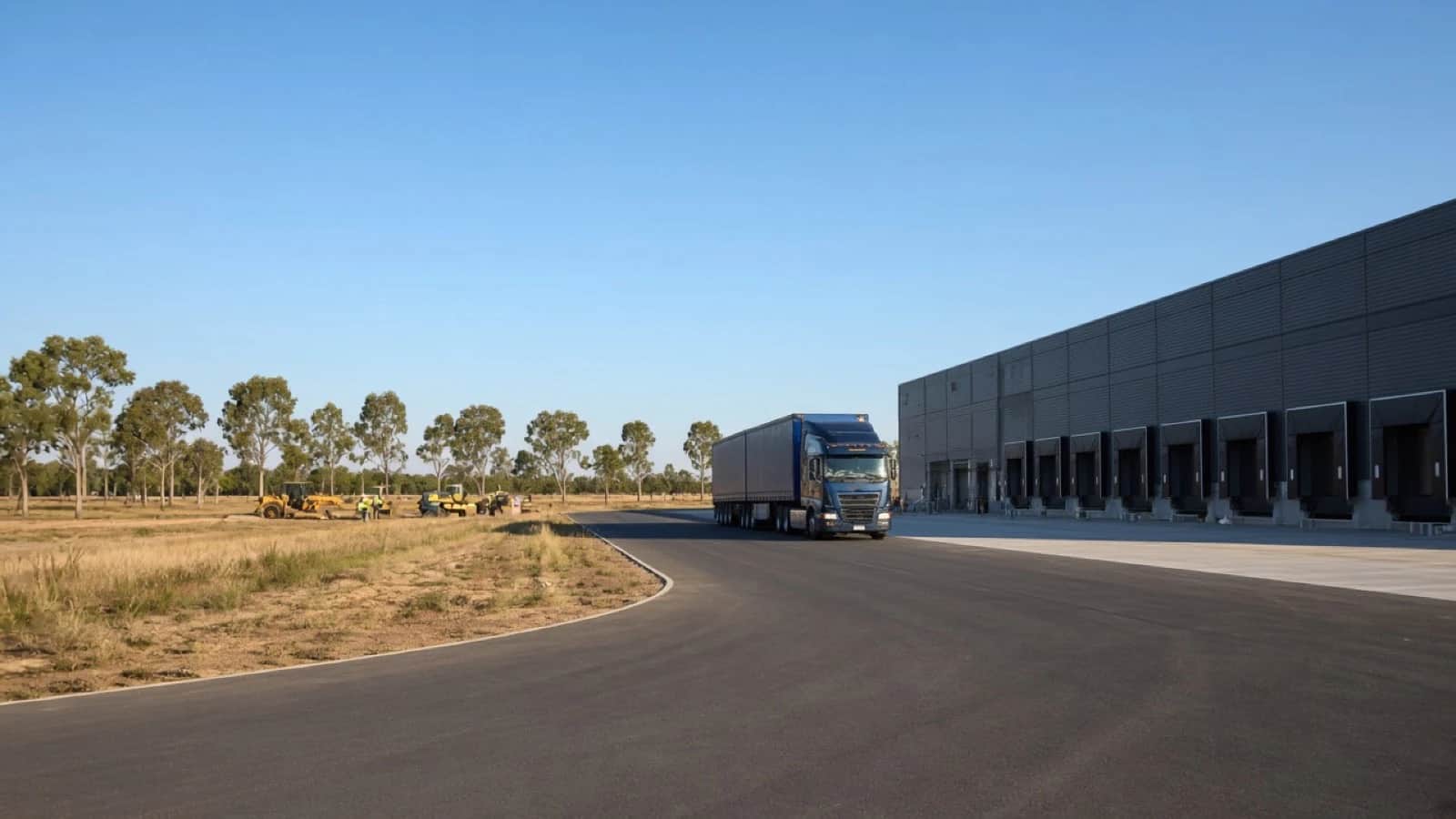
Why heavy vehicle pavement NSW fails without a written logistics plan
Heavy vehicle pavement NSW on logistics and industrial sites fails when owners treat the yard as "asphalt somewhere near the docks" instead of a planned load path. The practical answer is to lock design vehicles, pavement zones, drainage outlets, and access geometry before a pavement contractor NSW prices layers—because B-doubles, low loaders, and forklifts punish thin assumptions in the first wet week of occupation.
Logistics estates concentrate axle cycles on the same wheel paths every day. A spine road that looks adequate for light commercials will rut where trailers land, where trucks wait at the gate, and where forklifts turn on dock aprons. Planning is the cheapest place to catch those mismatches.
NEXTGEN stages these corridors through its Roads roadworks package so heavy-vehicle geometry, a road drainage contractor sequence, and asphalt works NSW share one critical path. This guide supports that hub with a logistics-first planning brief—not a live-estate staging playbook or a layer-by-layer construction method.
What belongs in the design-vehicle brief before anyone quotes thickness?
Name the heaviest regular vehicle, the exceptional delivery (transformer, plant, or oversized trailer), daily truck cycles, and where each vehicle turns, queues, and parks. Turning templates that clip pit lids, dock thresholds, or unfinished shoulders destroy edges faster than axle-load tables alone predict.
Separate construction haul assumptions from permanent logistics traffic. Using a finished dock apron as a tipper turning circle during earthworks is a common reason heavy vehicle pavement NSW needs mid-programme dig-outs before tenants even arrive.
When the corridor is still a temporary haul route, align interim rules with haul road construction NSW so construction loads do not contaminate the pavement box the logistics plan is trying to protect.
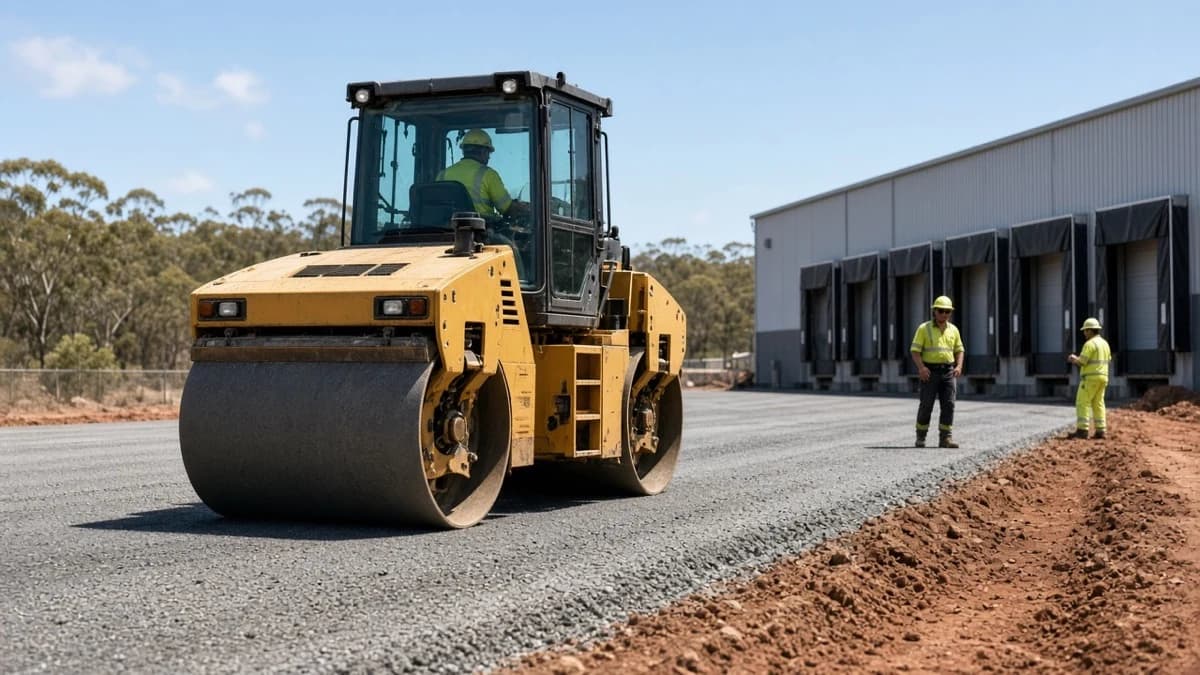
Map pavement zones: dock apron, yard spine, and marshalling
Logistics pavement is not one thickness across the title. Dock aprons take concentrated trailer landing gear and forklift turns. Yard spines take repeated B-double wheel paths. Marshalling and gate queues take slow, heavy braking on the same patch of pavement every morning.
Plan each zone with its own geometry, drainage, and surface intent—even when one pavement contractor NSW team builds them in sequence. A single "industrial asphalt" line item without zone notes usually underprices the apron and overprices the quiet back of house.
Warehouse enabling geometry that must precede pavement is covered in civil enabling works for warehouses and logistics estates. Keep pad earthworks and dock-court formation aligned with the heavy vehicle pavement NSW plan so levels do not fight at the dock threshold.
How should access road construction NSW feed the logistics yard?
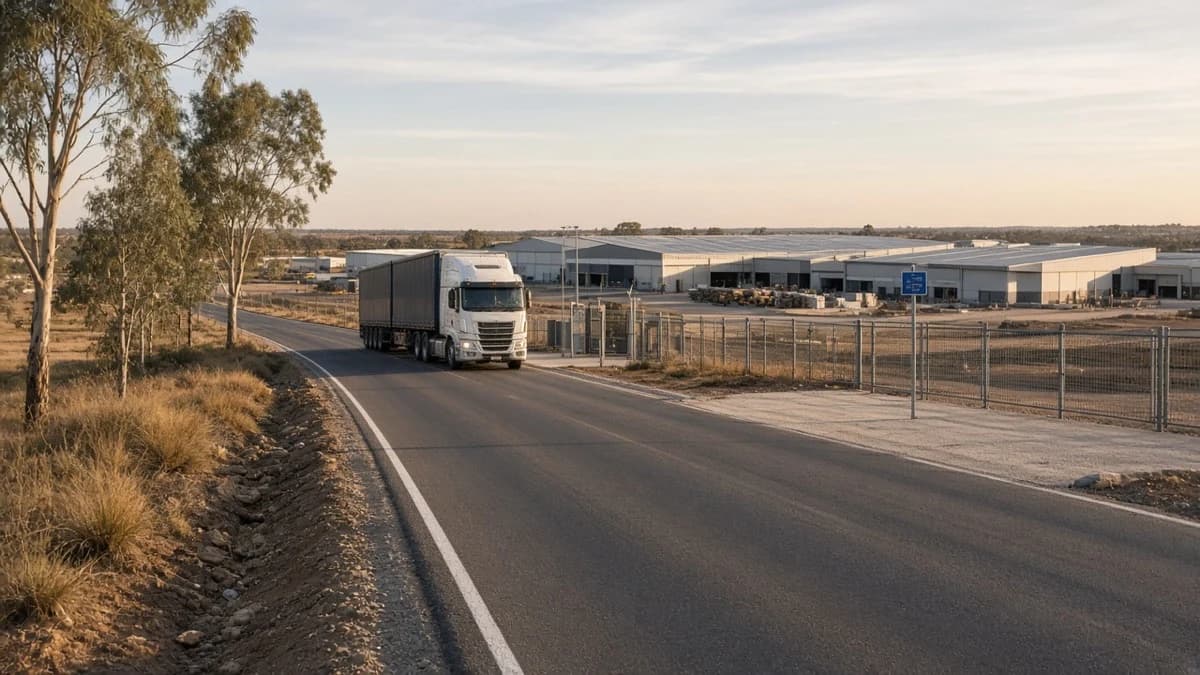
Access road construction NSW into a logistics site is the first pavement the public and carriers judge. Formation width, crown, gate marshalling, and verge drainage decide whether trucks queue on the public road or enter cleanly onto a surface that can take the design vehicle.
Treat the gate-to-yard corridor as one accountable sequence with internal heavy vehicle pavement NSW. Different contractors owning the entry road and the dock apron usually leave a level mismatch at the fence—and a pond after the first storm.
Formation-first corridor rules sit in access road construction NSW: formation, pavements and drainage. Where the estate is still being bulk-earthworked, lock civil extents before pavement layers close options.
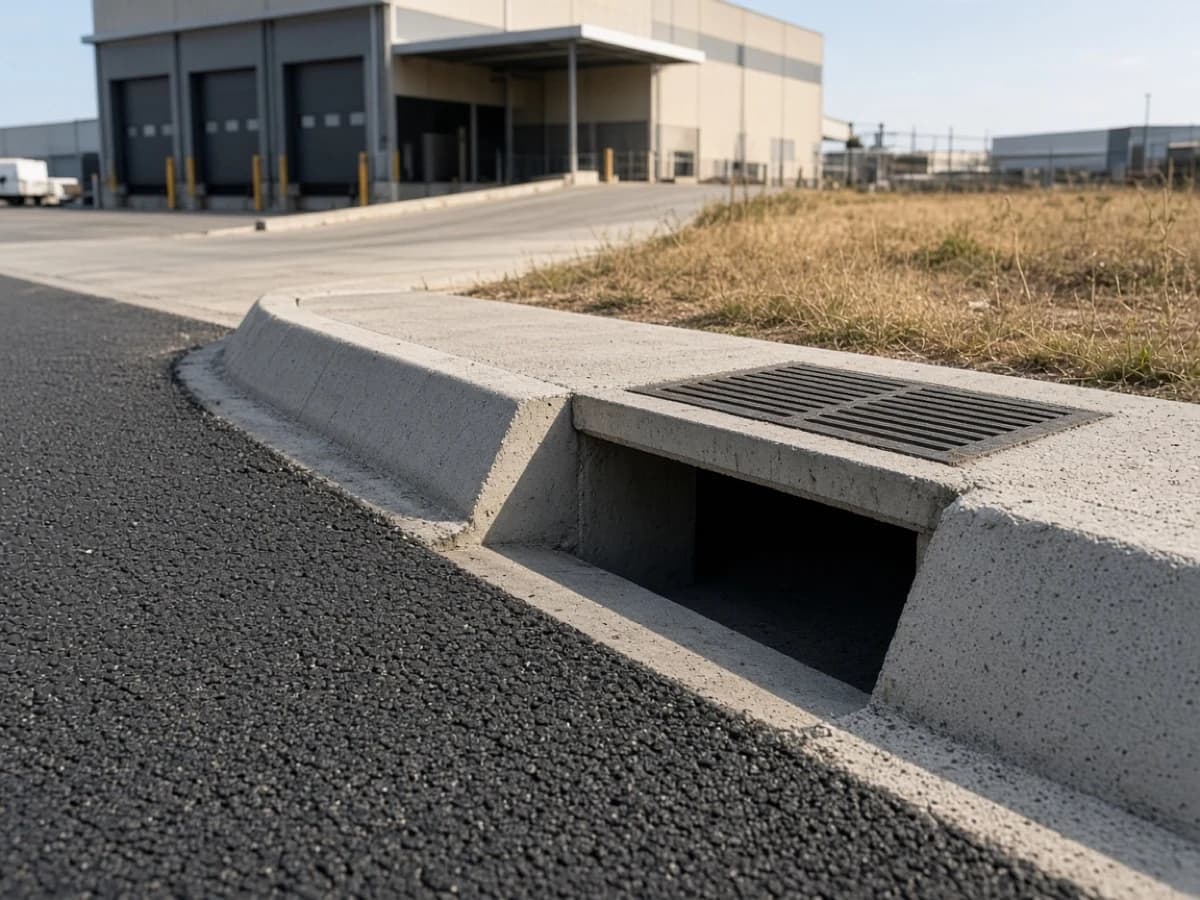
Put a road drainage contractor on the planning critical path
A road drainage contractor should set pits, kerb inlets, table drains, and outlets relative to finished pavement levels before asphalt works NSW close any logistics zone. Water trapped at dock aprons and gate queues softens subgrade that QA already signed off.
Large warehouse roofs and sealed yards concentrate runoff. Overland paths, pit capacity, and temporary diversions during construction need the same survey control as the running surface—not a cleanup after occupation.
Edge failures between seal and drains are dissected in asphalt works and drainage interface failures. Lot stormwater that meets the yard pavement should stay visible with NEXTGEN's civil infrastructure team so road and site drains tell one water-path story.
Logistics pavement planning checklist before tenders close
Clear these gates while tender returns are still comparable:
- Design vehicles, turning templates, and axle cycles are named for dock aprons, yard spines, marshalling, and the public-gate access road.
- Access road construction NSW shares survey datums and drainage outlets with internal heavy vehicle pavement NSW zones.
- A road drainage contractor owns pit, kerb, and outlet levels relative to finished pavement—not as a post-seal fix.
- A pavement contractor NSW method states proof criteria, layer specs, and fail actions for each logistics zone—not one generic asphalt rate.
- Asphalt works NSW timing, joints at dock entries, and temporary running surfaces are written against construction and early-occupation traffic.
- Utilities under future pavement are closed or protected so trenches are not cut through new seal in the first month of operation.
When do asphalt works NSW belong on the logistics critical path?
Asphalt works NSW belong on the critical path once formation, drainage levels, and utilities under the pavement box are proven—not when the builder simply wants a black surface for photos. Sealing over soft edges or unfinished pits locks in the failure mode logistics traffic will exploit first.
Plan joints and tie-ins at dock thresholds carefully. Cold joints at trailer landing zones become the first crack under repeated heavy cycles. Staging should keep one trafficable heavy-vehicle route while each zone closes.
Layer proof and hold-point discipline sit in pavement construction contractor NSW: subgrade, layers and quality checks. Use that method after the logistics plan is locked—so construction quality is proving the right pavement, not a generic estate road.
How to brief NEXTGEN on a heavy vehicle pavement NSW package
Send design-vehicle notes, zone sketches (dock, spine, marshalling, access), drainage concept levels, and whether the site must stay trafficable during works. Brochure layer descriptions without axle and zone assumptions are incomplete for logistics pavement planning.
Compare multi-interface delivery shapes in NEXTGEN's project showcase and delivery expectations in the project FAQ. Live-estate staging depth for occupied industrial roads sits in industrial estate pavement works when tenants are already operating beside the works.
When drawings, vehicle assumptions, and programme windows are ready, contact NEXTGEN to review heavy vehicle pavement NSW against realistic logistics loads, access road construction NSW, drainage holds, and asphalt works NSW sequencing.