

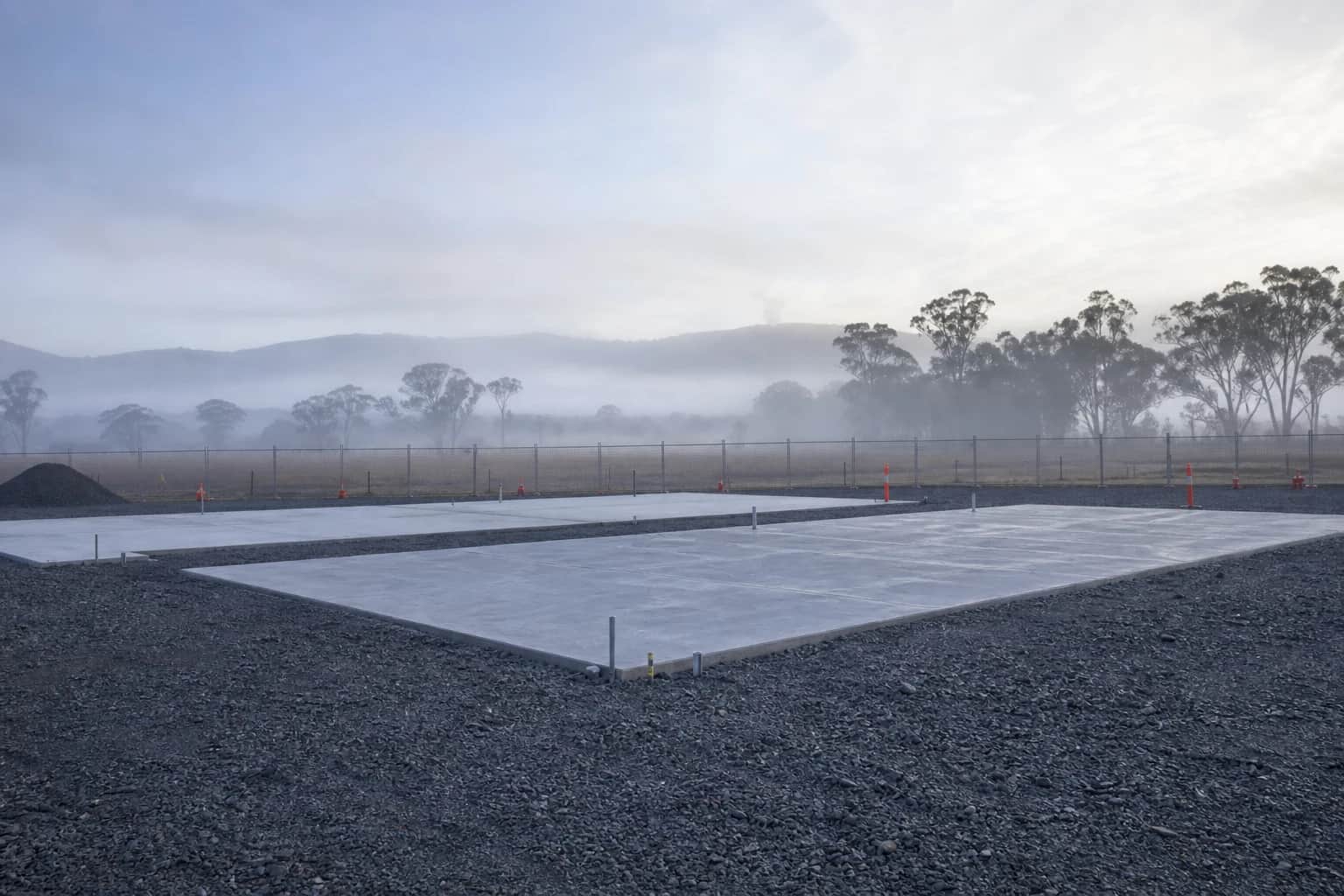
What battery storage site preparation NSW must prove before containers arrive
Treat battery storage site preparation NSW as a discrete enabling package: formation, hardstand pavement, containment or bund details where specified, yard drainage, renewable access roads for heavy lifts, and trench corridors for grid connection civil works.
BESS yards fail when teams copy solar row earthworks methods onto a concentrated industrial pad. Loads, fire access, and drainage differ from tracker benches—even when the asset sits beside solar farm civil works NSW on the same landholding.
NEXTGEN frames these packages through its renewable energy civil division so hardstand, access, and grid interfaces share one mobilisation plan.
Hardstands for battery storage civil works
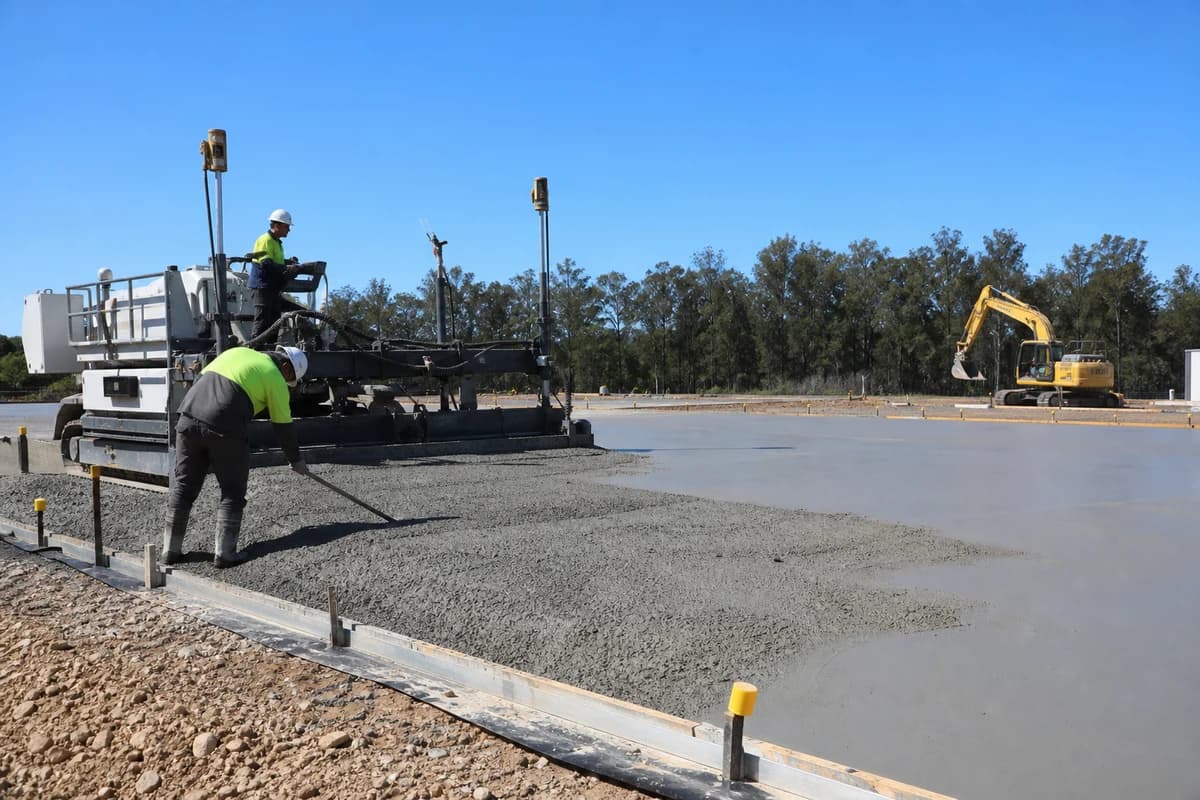
Battery storage civil works start with a pad that can take container, inverter, and crane loads without deformation after rain. Confirm subgrade improvement, pavement design, dimensional tolerances, and how temporary construction traffic is kept off finished surfaces.
Where bunds, fire walls, or separation distances apply, lock civil extents early so electrical layout changes do not force pad edge reconstructions. Ambiguous “approx hardstand” notes on a GA drawing are not a construction method.
Compare open-array earthworks language in solar farm civil works NSW: earthworks, access and drainage—then deliberately separate BESS pad criteria from row grading.
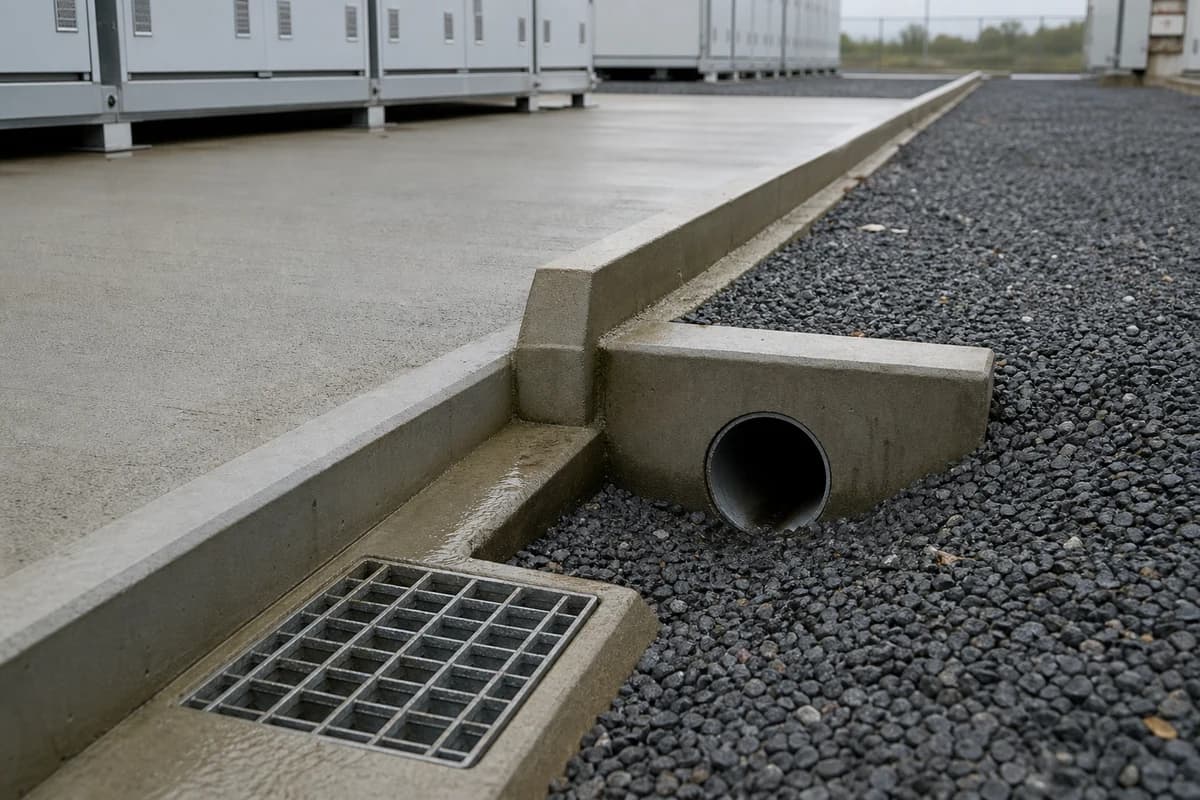
How should drainage protect a BESS yard?
Yard drainage must move water away from containers, cable entries, and access lanes without creating erosion at bund edges. Overland paths and pits need the same survey control as the hardstand surface.
Agree temporary sediment controls while earthworks are open, then when permanent drains become the only path. Incomplete transitions leave water against electrical footprints after demobilisation.
Owner confirmation habits for stormwater packages in stormwater drainage contractor NSW checks apply when BESS catchments are small but critical.
Renewable access roads for heavy vehicles and O&M
Renewable access roads into a BESS yard must handle construction cranes and later maintenance vehicles. Width, turning, compaction, and gate geometry should be named against the heaviest temporary plant—not only light O&M utes.
Separate temporary haul tracks from permanent access where loads differ. Ruining the finished hardstand perimeter with construction traffic is a common BESS programme setback.
Formation and pavement sequencing for access corridors is covered in access road construction NSW; align those hold points with NEXTGEN’s roads capability when public road ties sit next to the yard.
Grid connection civil works at the BESS fence line
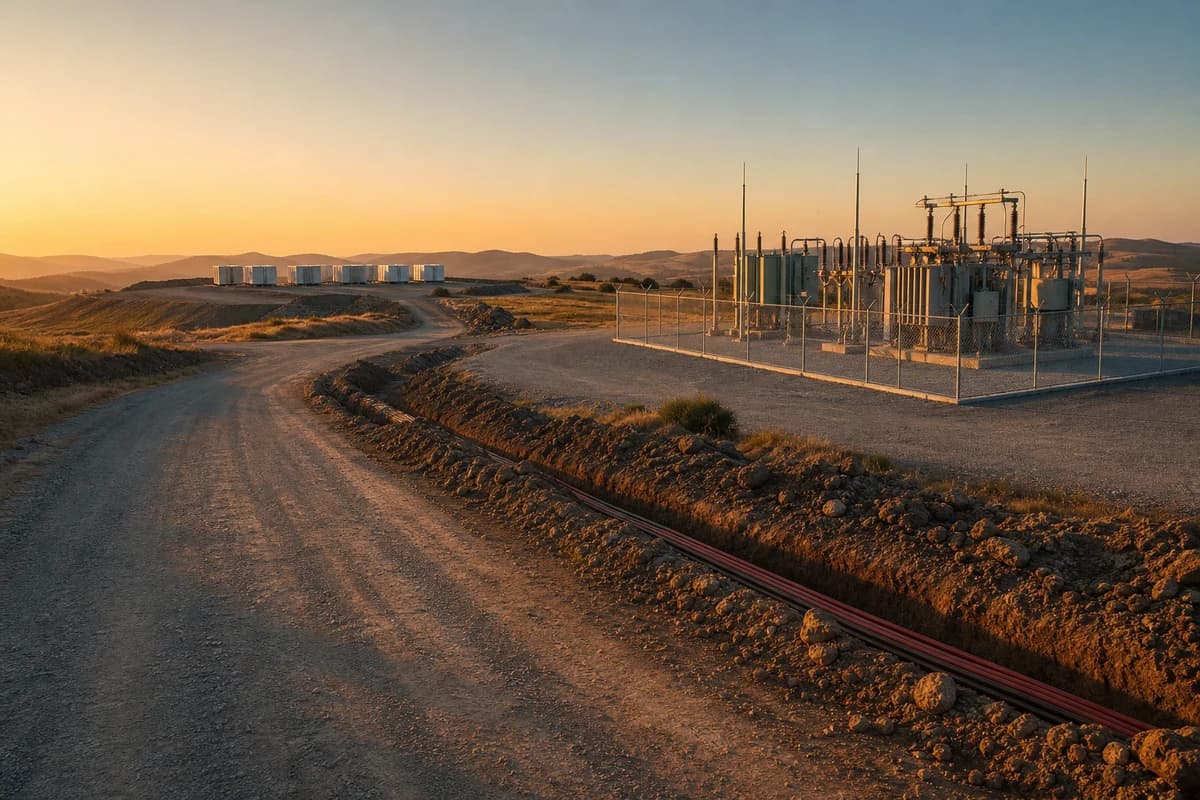
Grid connection civil works for battery projects typically include compound pads, conduit corridors, trench sequencing, and controlled access to switching or transformer assets. Civil and electrical boundaries must appear on one interface drawing.
Confirm whether trenches cross finished hardstands, when concrete can be poured relative to conduits, and who owns fence foundations. Late cable routes cut through completed pads are expensive to reverse.
Scope substation pads, conduit corridors, and heavy-vehicle access in substation civil works NSW and wider node staging in grid connection civil works NSW before electrical plant programmes commit to the yard.
Browse comparable renewable enabling works in NEXTGEN’s project showcase when assessing whether the contractor has delivered grid-adjacent civil packages.
EPC checklist before BESS civil mobilisation
Pad loads, crane outrigger zones, and exclusion areas are written against the electrical layout.
Drainage, bund, and fire access details share hold points with hardstand completion.
Renewable access roads and grid connection civil works are named package lines—even if specialists deliver them later.
Assurance questions before mobilisation sit in NEXTGEN’s delivery FAQ; bring the same themes into kick-off with the EPC.
Brief NEXTGEN on NSW battery storage civil works
Share layout drawings, geotech notes, access constraints, and programme drivers when you contact NEXTGEN. A clear brief lets hardstands, drainage, and grid interfaces be reviewed as one battery storage site preparation NSW scope.
If broader civil enabling works sit outside the BESS yard, route them through the civil infrastructure pathway alongside the energy division so interfaces stay owned.