

What an Eastern Creek civil works contractor should lock before the warehouse package
The practical answer is to brief one staging plan, not a suburb-name capability claim. An Eastern Creek civil works contractor should price earthworks, drainage, and roadworks against the same gate, the same haul route, and the same handover date, because the warehouse or freight package inherits whatever the civil package leaves behind.
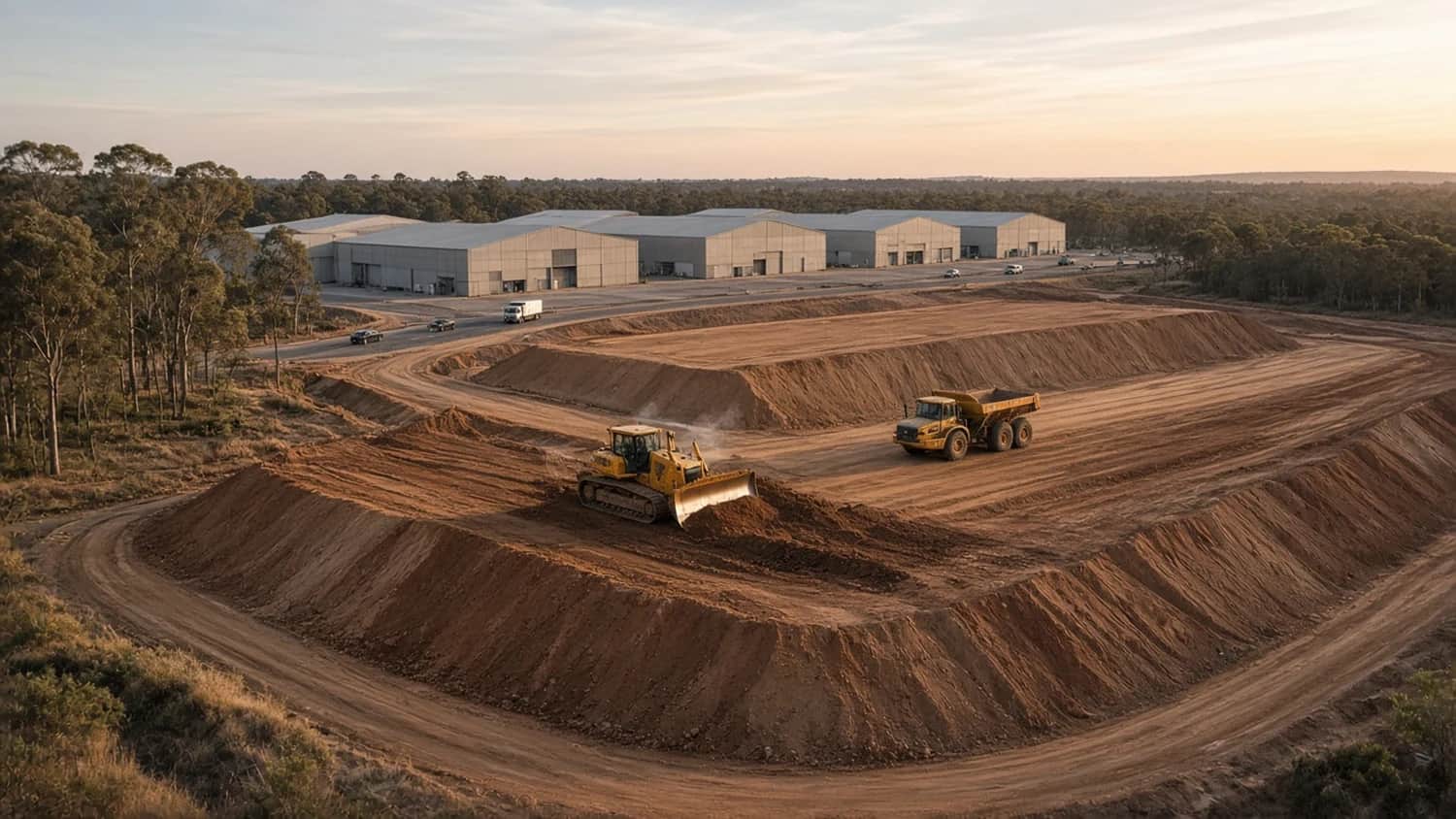
Blacktown and Eastern Creek logistics land sits on Cumberland Plain clay beside the M4 and M7 corridors, and the estates around it already run heavy-vehicle shifts. NEXTGEN delivers these packages through Civil Infrastructure when formation, drainage, and utilities own the critical path, and through Roads when estate pavements or public-corridor ties sit on the programme.
Which freight links shape Blacktown and Eastern Creek access?
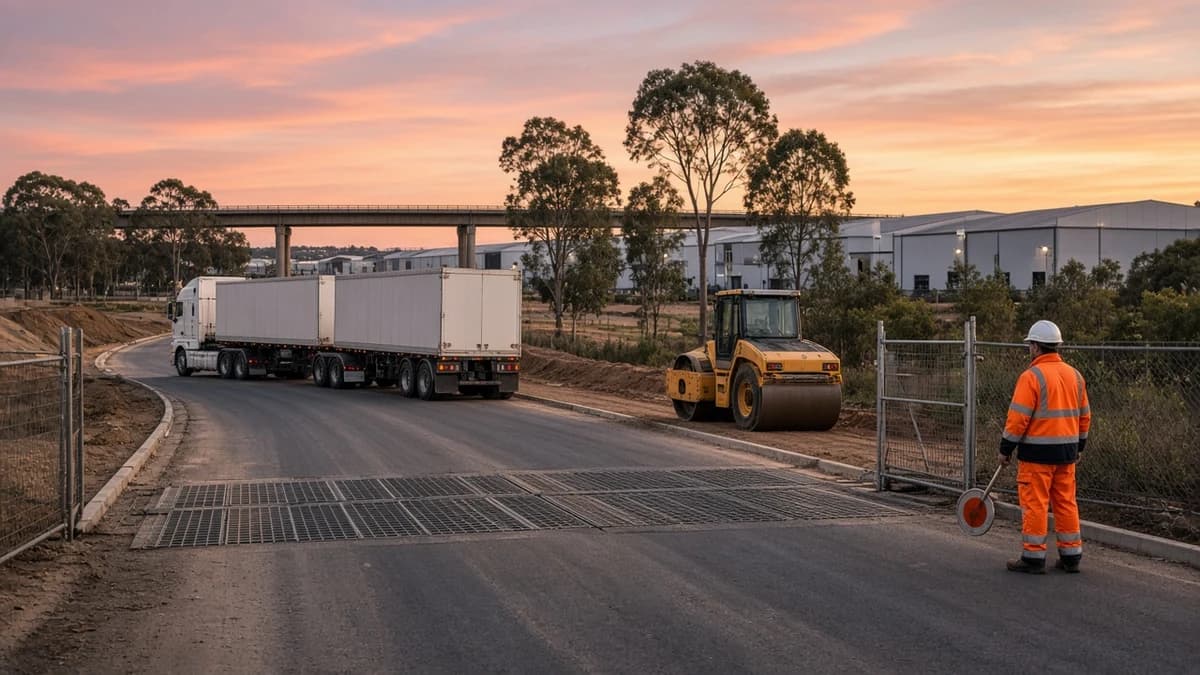
Eastern Creek is a freight junction before it is a suburb. Lots near the M4 and M7 interchange see B-doubles, concrete trucks, and plant floats using the same approaches, so a construction entry that works for a ute and a skip bin will fail on the first heavy-vehicle shift.
Blacktown adds a different mix: established industrial pockets such as Huntingwood, newer release land toward Marsden Park, and neighbours who already turn trucks every day. Name which estate road the lot meets, who owns the first metres inside the boundary, and whether plant floats in from NEXTGEN's Illawarra base or stages from a western Sydney compound.
Broader tender preparation for Western Sydney sits in the Greater Sydney civil infrastructure guide; this page stays on logistics and industrial lots around Blacktown and Eastern Creek.
Logistics-estate checklist before you issue the tender
Use this list before you issue or evaluate an infrastructure contractor Eastern Creek return. It sits in the middle of the article so the earthworks, drainage, and roadworks sections that follow can deepen the items that usually break estate programmes.
- Parcel: Blacktown, Eastern Creek, or a named estate—with current survey, flood notes, geotechnical information, and drawings.
- Earthworks: cut-fill intent, clay moisture holds, pad proof for the warehouse slab, and spoil or import destinations.
- Drainage: lot pits and pipes, basin or trunk connection status, and who maintains temporary sediment controls.
- Roadworks: design vehicles, temporary versus permanent gate, and which public road the estate access meets.
- Neighbours: operating freight yards, shared gates, mud-tracking controls, and laydown that does not chew a finished pad.
- Handover: survey, test records, and hold-point sign-off the next trade can rely on.
Earthworks Eastern Creek: clay, moisture, and pad proof
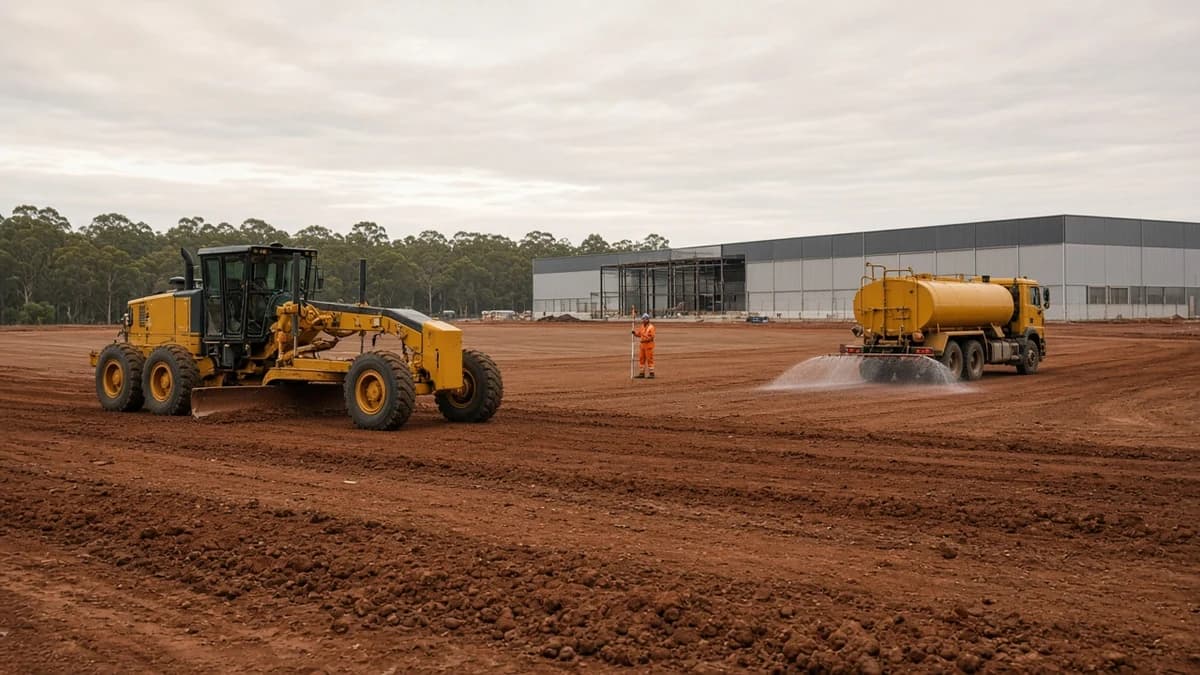
Earthworks Eastern Creek scopes are won or lost on clay behaviour. Cumberland Plain soils often hold water after storms and then shrink in a dry spell, so cut-fill priced as a dry-weather bulk dig will reopen when the first wet week arrives.
Ask for moisture-conditioning rules, proof-roll criteria, and a written recovery method for soft spots before the slab contractor mobilises. Name where spoil goes and whether haul can leave the lot without destroying the formation it just finished.
Method depth for bulk digs and formation proof sits in the earthworks contractor NSW guide; the local hold here is estate-scale haul, shared gates, and a pad that stays proven until the builder arrives.
How should a drainage contractor Eastern Creek own temporary outlets?
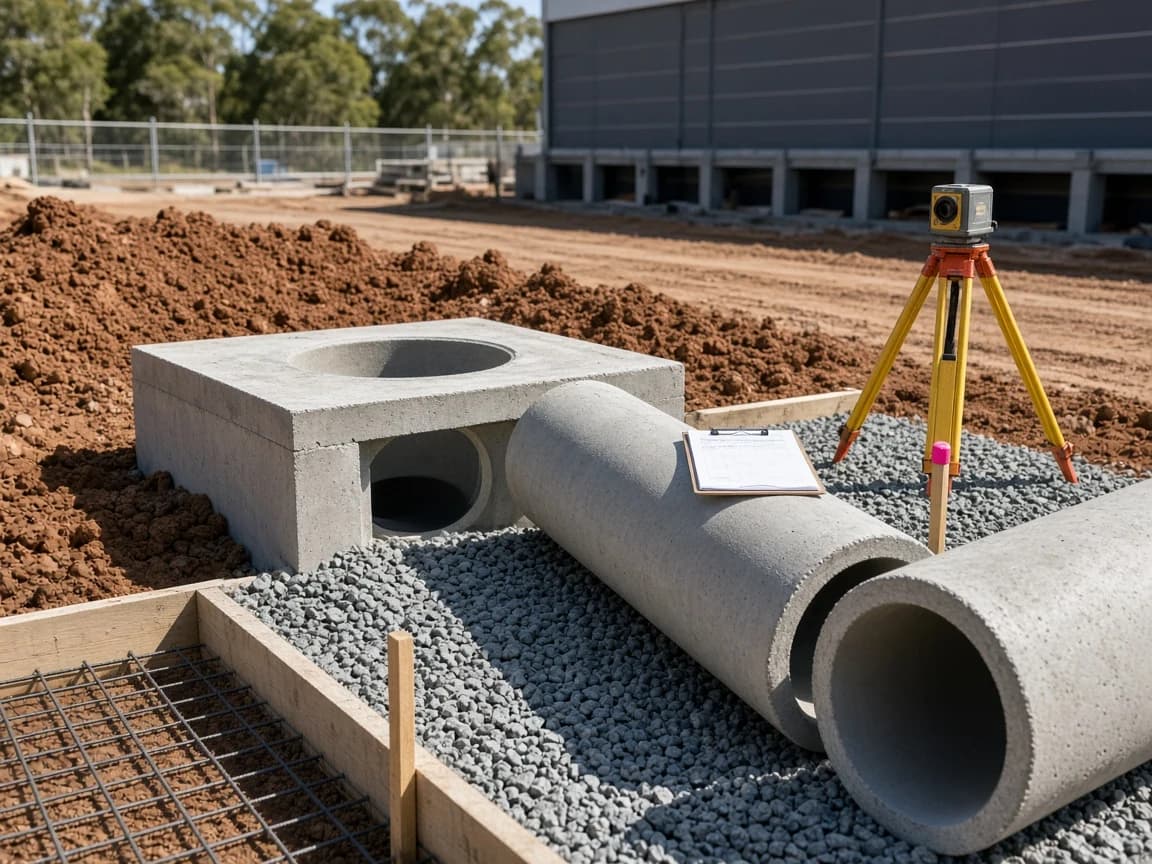
A drainage contractor Eastern Creek developers appoint should own pits, pipes, temporary diversions, and a legal discharge point—not only a pipe schedule. Large logistics platforms often finish regrading before basin outlets or trunk connections are available, so interim controls need a named owner.
Overland flow changes after cut-fill on a big hardstand. If the temporary path crosses a future heavy-vehicle pavement or a neighbour's lot, sequence drainage ahead of the pavement so the finished surface is not left holding water.
Yard-scale drainage detail, including how falls and pits interact with pavements, sits in the industrial yard drainage guide. An Eastern Creek brief should still attach the parcel's outlet design and any flood constraints that change stockpile and compound locations.
Roadworks Eastern Creek: subgrade, gates, and heavy-vehicle geometry
Roadworks Eastern Creek packages for logistics estates turn on subgrade as much as asphalt thickness. A hardstand that carries laden B-doubles needs a proven formation, drained edges, and turning paths sized for the real design vehicle—not a car-scaled gate that collapses under the first month of construction traffic.
Separate the temporary construction access from the permanent estate road and the final kerb and apron ties, and name who maintains each surface until acceptance. Water carts, sweeping, and wheel-cleaning controls are part of the scope, not an afterthought.
Pavement build-up and loading assumptions are covered in the heavy vehicle pavement guide; frame estate road scope against NEXTGEN's roads and pavement division so roadworks sit beside earthworks and drainage in one inquiry.
How to brief an infrastructure contractor Eastern Creek inquiry
Send the parcel address, drawings, geotechnical information, known services, target dates, and the freight route through the NEXTGEN project inquiry form. Say whether formation, drainage, or roadworks owns the first critical path.
Ask NEXTGEN to confirm scope fit, the relevant division, mobilisation from the Illawarra base, and availability for the stage you need released first. Published project examples and the delivery FAQs explain how inquiries and handover expectations are handled.
A clear answer on pad proof, outlets, and gate geometry gives the developer, designer, and following trades a shared basis—not a lump sum that hides clay, drainage, or haul risk.