

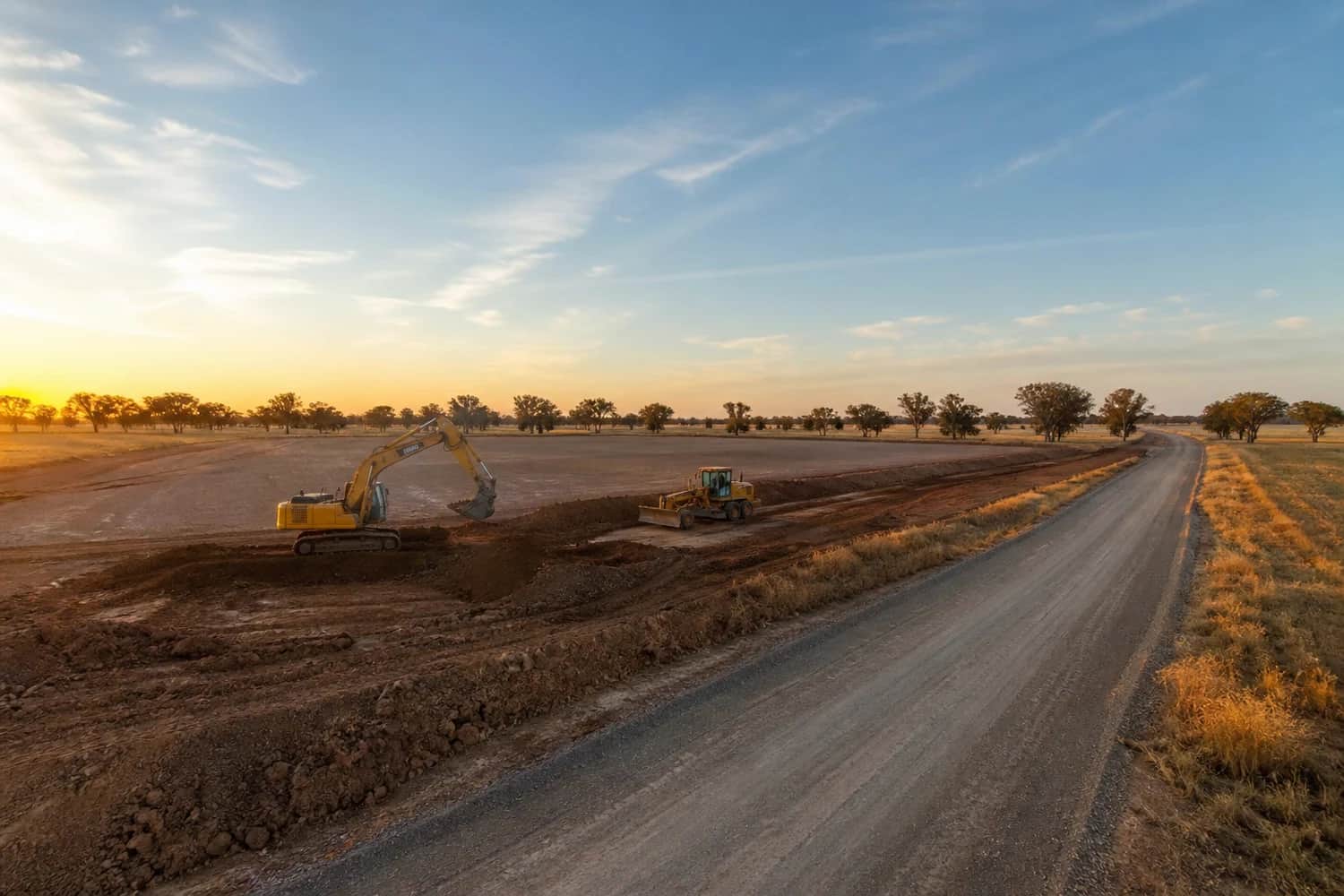
What a renewable energy zone civil contractor NSW must own for developers
A renewable energy zone civil contractor NSW succeeds when formation, drainage, renewable access roads, solar farm civil works NSW rows, battery storage civil works pads, and grid connection civil works share one critical path—not when each asset package invents its own earthworks method after the others demobilise.
REZ landholdings punish fragmented civil scopes. Array grading that sterilises cable routes, soft compound entries after wet weather, and unfinished haul corridors between generation and the connection node all show up as EPC delay—even when each drawing looked complete in isolation.
NEXTGEN frames renewable packages through its renewable energy civil division and routes broader earthworks, utilities, drainage, and structural enabling through Civil Infrastructure when the landholding needs a civil contractor NSW package owner beyond the energy critical path. Named solar mobilisation context sits on NEXTGEN project delivery; this guide stays on how developers should package and test a REZ civil contractor.
Why REZ scale changes civil packaging
REZ projects are rarely a single paddock job. Corridor length, shared access with neighbouring lots, staged land access, and multiple electrical packages mean civil work must protect temporary haul and permanent O&M routes while several contractors mobilise.
Treat the civil contractor as the party that proves trafficable formation, sediment controls, and interface datums across the landholding—not only as a machine-hours supplier for the first earthworks claim. When developers leave access, drainage, and pad criteria to later specialists without a named civil lead, soft spots migrate to the highest-value interfaces.
Delivery habits that keep workfronts honest are covered in NEXTGEN’s project FAQs and about NEXTGEN pages—use those expectations when you score REZ civil tenders, not brochure plant lists alone.
How should solar farm civil works NSW sit inside a REZ brief?
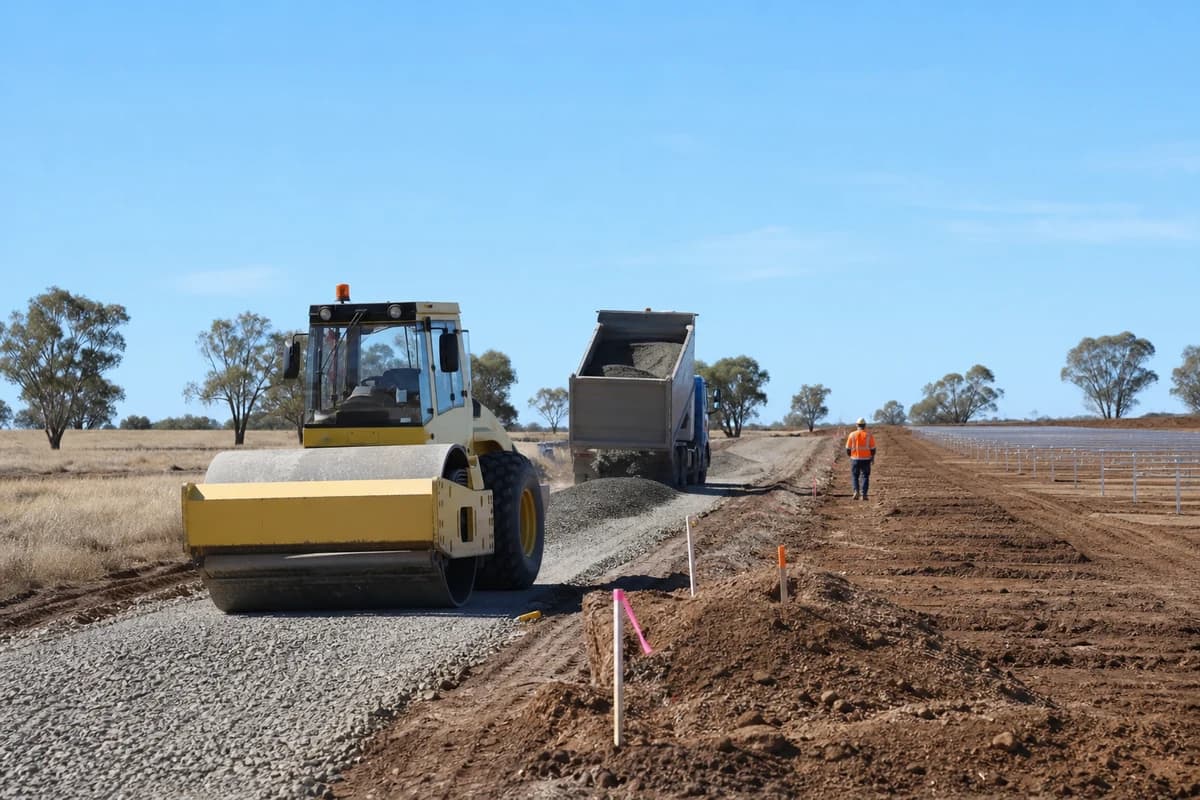
Solar farm civil works NSW inside a REZ still need row and corridor grading, cable trenches, inverter pads, and drainage that leave tracker installation buildable. The developer difference is sequencing: array earthworks must not close renewable access roads or sterilise the BESS and grid connection footprints that arrive later on the same title.
Name temporary versus permanent tracks early. Tipper haul that destroys the corridor needed for module delivery creates a mid-programme rebuild that looks like a solar problem but started as an unowned access item.
Deep package language for array earthworks and drainage sits in solar farm civil works NSW: earthworks, access and drainage. Use that guide for scope depth; use this REZ brief to force one civil owner across solar and the adjoining packages.
Battery storage civil works on shared REZ yards
Battery storage civil works fail on REZ sites when teams treat the pad as a leftover edge of solar grading. Container loads, fire-access geometry, crane set-downs, and yard drainage differ from tracker benches—even when the hardstand sits inside the same fence line.
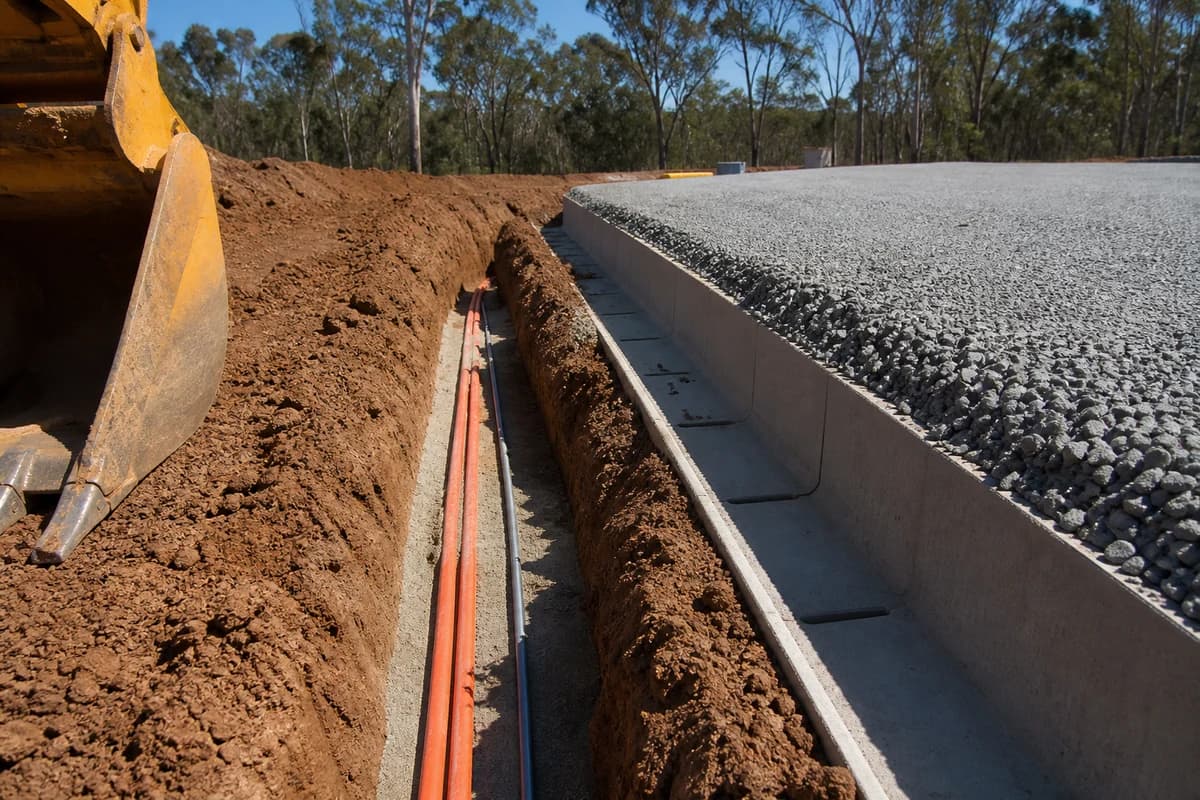
Developers should require named pad proof criteria, temporary traffic control off finished hardstand edges, and trench entries that open before containers are booked. Incomplete cable corridors force installation crews to cut pavement the civil package just finished.
Hardstand and site-preparation hold points are detailed in battery storage site preparation NSW and BESS hardstand construction NSW. On a REZ brief, attach those criteria as mandatory interfaces—not optional extras after solar demobilises.
Renewable access roads as the REZ spine
Renewable access roads are the spine that keeps solar farm civil works NSW, battery storage civil works, and grid connection civil works moving after wet weather. Width, turning, passing bays, culvert crossings, and low-point drainage should be locked against the heaviest temporary vehicle—not only light O&M utes.
Separate construction haul from permanent O&M surfaces when loads differ. Many REZ programmes lose weeks when haul traffic destroys the corridor later needed for transformers, cranes, or emergency access into the connection compound.
Formation and pavement sequencing for renewable corridors is covered in renewable energy access roads NSW; align those holds with NEXTGEN’s roads and access capability when public-road interfaces or pavement upgrades sit in the same package.
Grid connection civil works at the REZ node
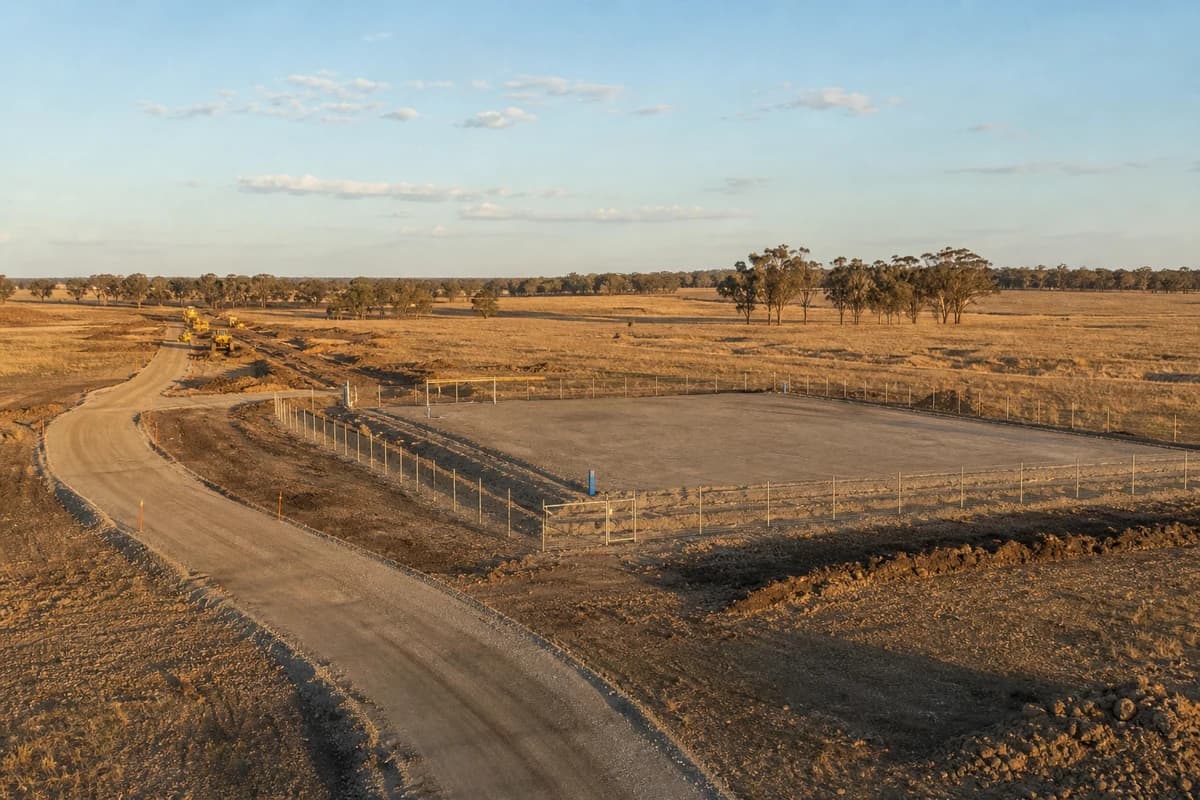
Grid connection civil works at a REZ node include substation or switching-station pads, fence and gate foundations, conduit banks from generation or storage yards, and controlled heavy-vehicle access from the public road. The node fails when array or BESS earthworks demobilise with soft pad edges and incomplete trench entries still open.
Developers should name who proves pad bearing, who owns spare duct capacity, and when crossings of renewable access roads may be cut and reinstated. Late trench claims through a sealed compound approach are among the costliest renewable civil rework items.
Compound and conduit sequencing is expanded in grid connection civil works NSW and substation civil works NSW. On REZ landholdings, treat those guides as interface specs under one civil contractor—not as three unrelated tenders.
Developer checklist before you appoint a REZ civil contractor
Score a renewable energy zone civil contractor NSW on evidence of multi-package staging, not on earthworks rates alone. Ask for redacted ITP samples, wet-weather recovery methods, and a programme that names solar, BESS, access, and grid holds on one drawing set.
- One survey datum and formation proof standard across solar farm civil works NSW rows, battery storage civil works pads, and the connection compound.
- Temporary versus permanent renewable access roads named against design vehicles, including crane and transformer deliveries.
- Drainage and sediment controls that stay live while packages hand over—not only while the first earthworks claim is open.
- Trench and conduit ownership at every fence where generation, storage, and grid connection civil works meet.
- Handover records (levels, compaction, as-builts) that following EPC trades can use without re-surveying soft spots.
- A single point of contact for wet-weather holds so soft corridors are not left between demobilising packages.
How to brief NEXTGEN on a REZ civil package
Send landholding plans, known geotech, design-vehicle assumptions, provisional solar and BESS footprints, and the intended grid connection civil works location. Note staged access constraints and any shared corridor with neighbouring REZ lots.
A clear brief lets NEXTGEN review earthworks, renewable access roads, and network interfaces as one renewable energy zone civil contractor NSW package. Start the conversation through NEXTGEN contact when you need a construction-ready REZ civil sequence before EPC packages lock conflicting hold points.