

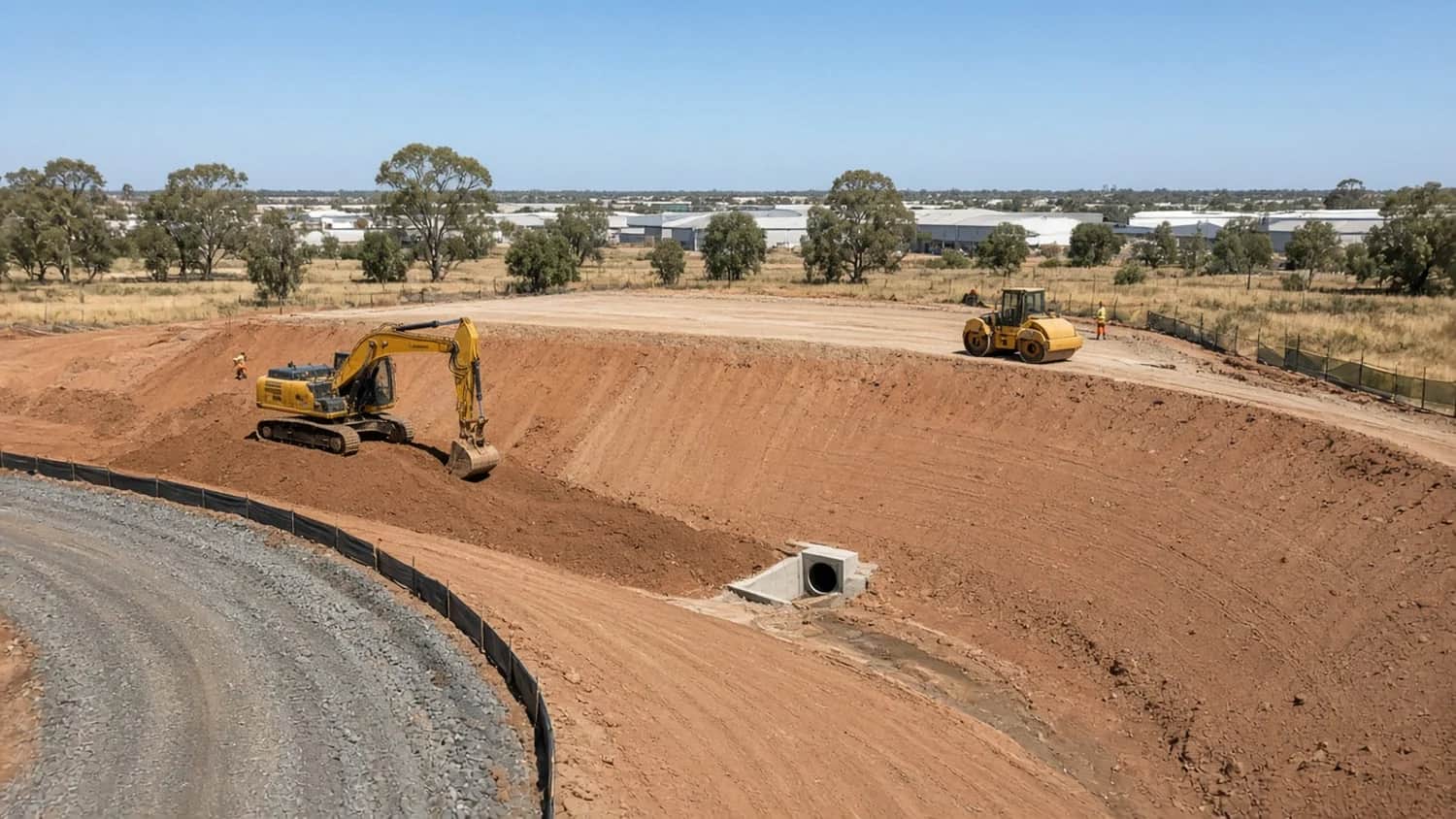
What retarding basin civil works NSW developers should settle first
A retarding basin holds stormwater temporarily and releases it through a controlled outlet, so a developed site does not send faster or larger flows downstream than the design allows. The practical answer for developers is to fix the basin's location, levels, and outlet early, because lot grades, pavement falls, and the pipe network all hang off that low point.
Retarding basin civil works NSW packages sit on the critical path for that reason. If the footprint moves after bulk earthworks start, inlet levels, pad grades, and the temporary sediment strategy move with it. Confirm the council or authority discharge conditions, the approved drawings, and who owns the basin after handover before earthworks are priced.
This guide treats the basin as one package: where it sits, how it is built, and what proves it works. The pits, pipes, and catchments feeding it sit in the stormwater drainage contractor guide, and road crossings sit in the culvert installation NSW guide. Developers who want earthworks, drainage, and services briefed together can start with NEXTGEN's Civil Infrastructure division.
How should inlet pipes and service trenches be sequenced into the basin?
Stormwater drainage NSW networks deliver flow to the basin, so the inlet pipes need somewhere safe to discharge from the first day they carry water. Build the low point, outlet, and inlet apron early enough that trenches upstream are not left discharging onto bare clay.
Utility trenching NSW work is the second sequencing risk. Services that cross the basin floor or the embankment need engineered details, because a trench through compacted fill is a seepage path if it is backfilled like a verge. Locate live services before the footprint is stripped, and agree who approves any penetration through the embankment.
- Basin footprint, invert, and outlet level surveyed and signed off before inlet trenches open.
- Inlet apron or energy dissipation built with the pipe, not added after the first storm.
- Service crossings of the basin or embankment shown on the drawings, with the engineer's detail.
- Temporary discharge for open trenches named in the sequence, with an owner on site.
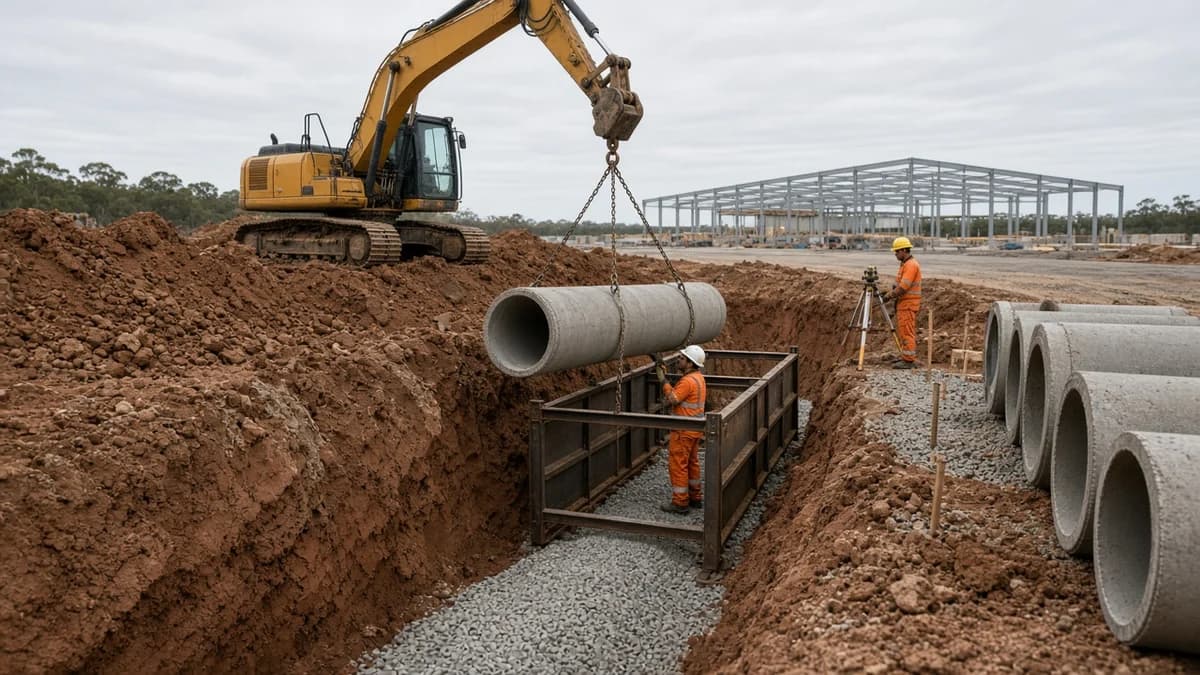
Embankment fill and compaction: where basin defects start
A basin embankment is a structure, not a spoil heap. It is built in controlled layers with fill that suits the design, compacted to the specified standard, and tested before the next lift covers the evidence.
Where geotechnical advice flags reactive or dispersive soils, fill selection and treatment come from the engineer and the geotechnical report—not from whichever material is nearest the basin. Rain on an unprotected batter is how erosion rills form before the grass has a chance.
Moisture control matters as much as roller passes. Fill that is too wet or too dry will not achieve the compaction the drawings assume, and a failed test on a buried lift is expensive to reopen.
- Fill source and suitability confirmed against the geotechnical report before placement.
- Lift thickness, moisture, and compaction testing recorded against chainage and level.
- Batter slopes surveyed as built, with stabilisation planned for the first rain.
- Hold point before any pipe, headwall, or service penetration is backfilled in the embankment.
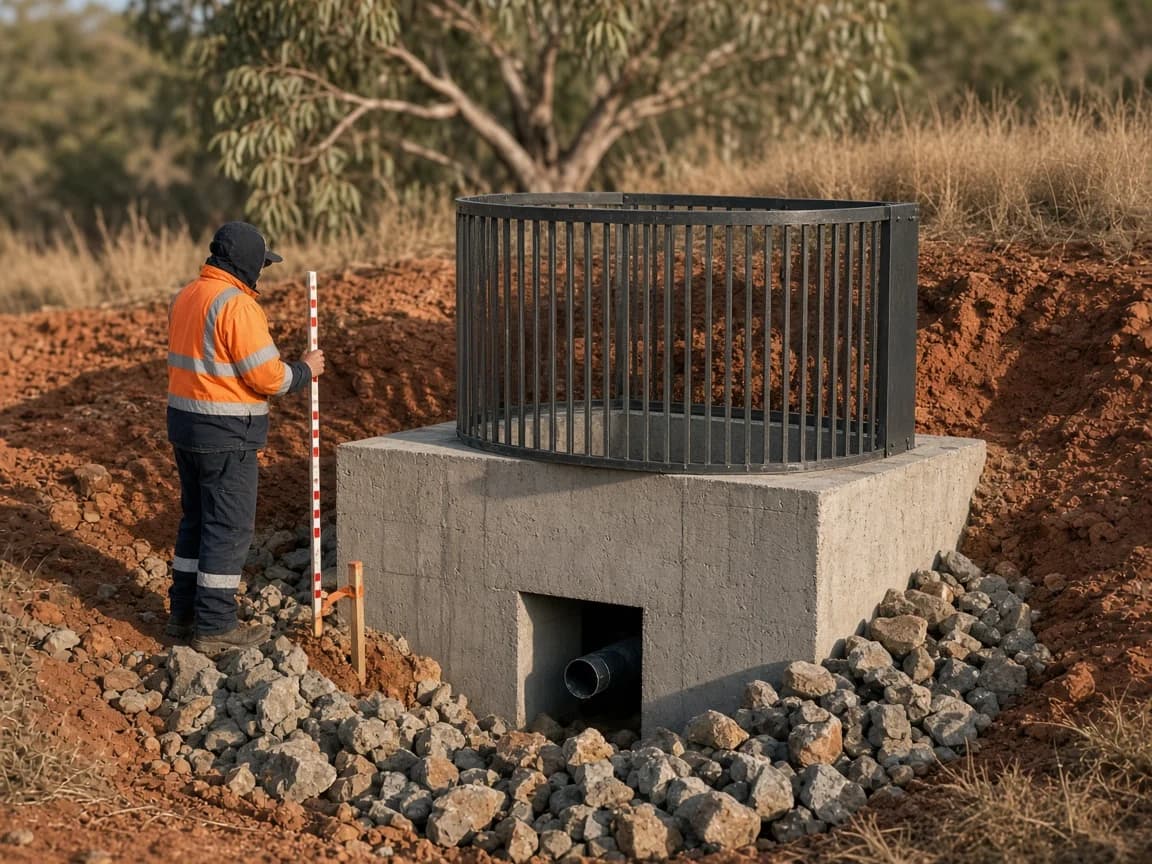
Outlet control, trash screen, and spillway: build the control, not just the hole
The outlet is what makes a retarding basin work. Its invert level, opening size, and screen decide how fast the basin drains, so they should be set out by survey and checked against the drawings before concrete or backfill hides them.
Plan the overflow path as well. A basin that fills beyond its design event needs a defined spillway or overflow route to a safe place, with scour protection where flow concentrates. An undefined overflow tends to find its own path across a neighbouring lot.
A civil drainage contractor should show how outlet levels, screens, and scour protection are inspected and recorded, and who verifies them against the design before the basin is accepted.
Using the basin during construction without wrecking the design
Sites often use the permanent basin footprint as a temporary sediment basin while earthworks run. That can work, but the conversion to the final outlet, levels, and clean-out needs its own step in the program, with an owner for inspection after rain.
Dirty water, silt, and spoil moving with the workfront are covered in the environmental controls guide for civil construction. Sediment captured in the basin must be removed before the design volume is relied on, and the outlet must be proven clear before handover.
Basin earthworks also change how bulk and detailed excavation are split on the site. The bulk earthworks versus detailed excavation guide is a useful reference when pricing the basin shaping, inlet trenches, and outlet structure.
Maintenance access, grassing, and handover records
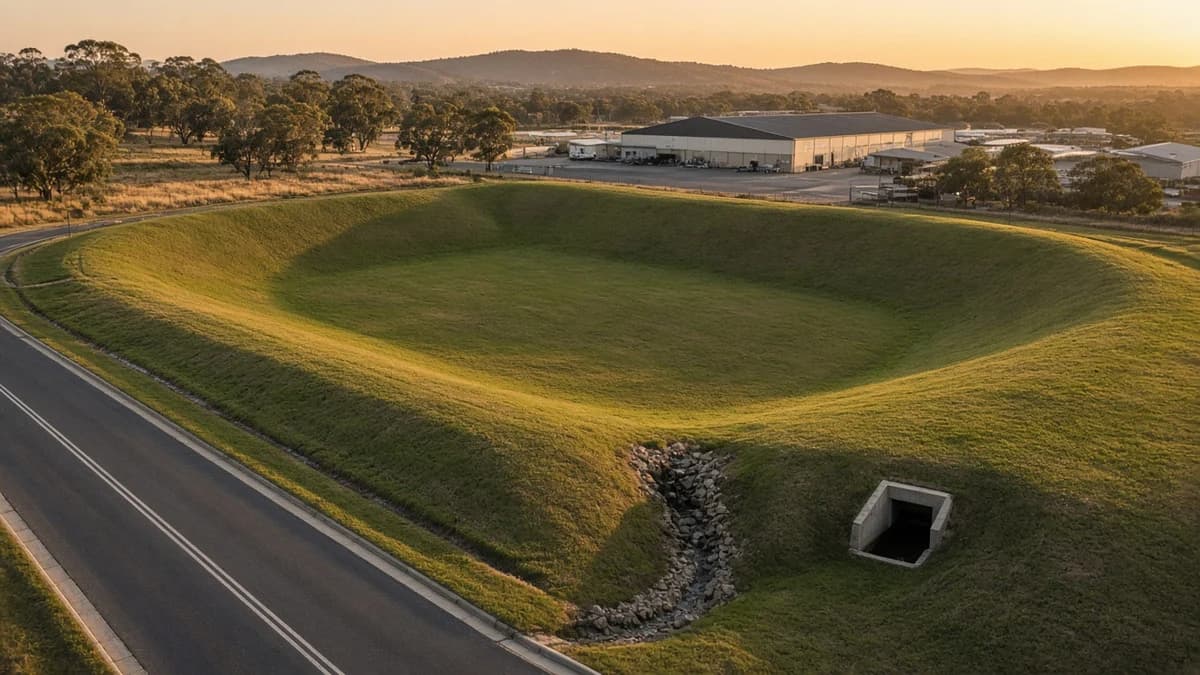
A basin is only useful if someone can inspect and maintain it. Confirm a maintenance access track or ramp, a mowable batter, and a clear route to the outlet, and confirm who maintains the basin after practical completion.
Handover records should let the next owner prove the basin was built as designed. Ask for as-built survey of the floor, batters, outlet, and spillway; compaction and testing records; photographs of buried works; and an outstanding-works list.
Grassing and stabilisation belong in the same package. Bare batters left to the landscaping contractor are where erosion starts, so confirm who stabilises them and when.
Questions to put to a tenderer before you award the basin package
Ask tenderers to answer in writing against your drawings. General statements about drainage capability do not show how a basin will be built or recorded.
Bring the catchment plan, basin drawings, geotechnical report, services information, and any authority conditions to the first conversation. Where the basin sits inside a multi-stage estate, the industrial site development package shows the kind of staged scope NEXTGEN briefs for (representative scope, not a named project). Then contact NEXTGEN with the drawings and your program drivers, or review the NEXTGEN FAQ first.
- Who sets out and surveys the basin floor, outlet, and spillway levels?
- What fill, lift thickness, and compaction testing will the embankment use, and how is it recorded?
- How are inlet trenches, service crossings, and the outlet sequenced with the basin?
- Who inspects sediment controls after rain while the basin is used during construction?
- What handover records, as-builts, and maintenance access come with the package?