

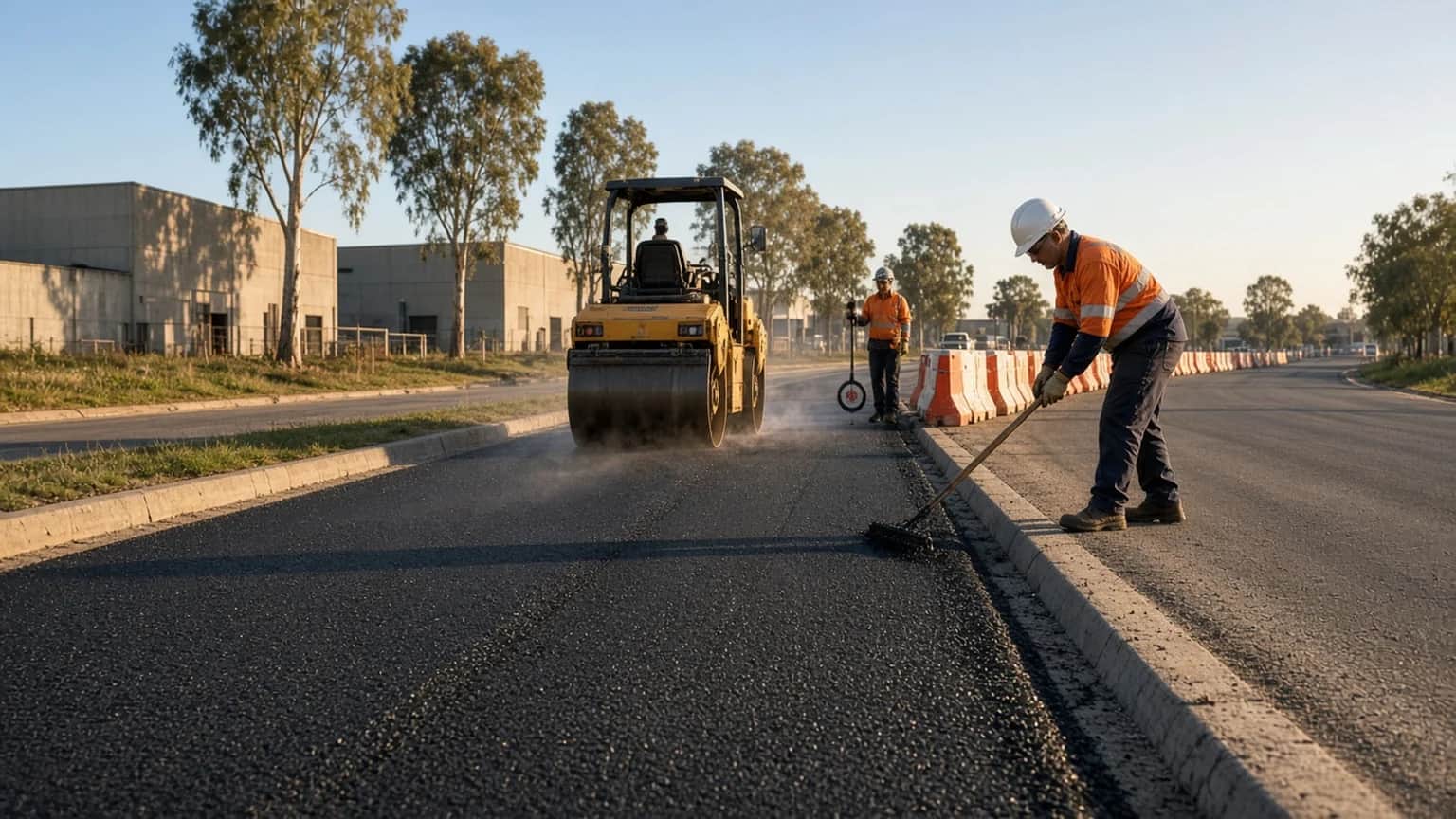
What should a trenching reinstatement contractor NSW prove?
A trenching reinstatement contractor NSW should prove three things before a utility corridor is accepted: the backfill was placed and compacted in tested lifts, the finished surface matches the road or asset owner's specification, and the trench stays level through the agreed defects period. If any of the three is missing, the corridor is closed but not finished.
Dips, cracked surface patches or raised pit surrounds can indicate reinstatement defects. Review backfill, surface preparation and the records for that location before deciding what caused the movement or how it should be repaired.
This guide covers the closing half of the job—backfill, testing, surface restoration, and settlement. Excavation, bedding, and service-class protection are covered in the guide to utility trenching NSW. Where both halves sit in one package, the crew that opens a trench is also accountable for how it closes.
Agree the reinstatement standard before the first saw cut
Reinstatement quality is set before excavation, not after. Confirm who owns each surface the trench will cross—council road, state road, private hardstand, footpath, or verge—and obtain that owner's reinstatement specification. The specification usually decides the backfill material, compaction targets, surface layers, edge treatment, and how far the restored area must extend beyond the trench.
Works in a public road generally need consent from the roads authority under section 138 of the Roads Act 1993. That is usually the local council; works on classified roads may also involve Transport for NSW. Some councils complete the permanent restoration themselves and charge the permit holder, while others let the contractor reinstate to the council specification and inspect the result. Establish which applies before pricing, because it changes who owns the final surface.
Agree whether a temporary surface is acceptable while the corridor is still active. Cold-mix asphalt or compacted crushed rock can keep a lane or driveway trafficable between stages, but the programme should show when the permanent surface follows and who inspects the changeover.
Backfill in lifts that can be tested, not just filled
Backfill placed in excessive lifts can leave poorly compacted material below the surface, allowing later settlement under traffic or rain. Use the lift thickness and compaction method specified for the trench, and verify each required hold before placing the next layer.
Match the material to the location. Inside a road or hardstand, owners commonly require imported crushed rock or another approved granular fill rather than reused excavated spoil. In a verge, suitable site material may be accepted below the topsoil layer. Control moisture as well: material that is too wet or too dry will not reach density however long the plant runs.
Choose compaction plant for the trench width and the services below. Trench rammers and plate compactors suit narrow trenches, while heavier rollers can damage shallow pipes or conduits if they are used before enough cover is in place. Keep the pipe-zone bedding and first layer of cover to the service designer's details before any heavy compaction starts.
Where a trench runs beside or across pit-and-pipe drainage, compact around pit surrounds by hand and keep backfill out of open inlets. Bedding and inspection holds for the drainage network itself are covered in the guide to stormwater drainage NSW pits, pipes, and site water.
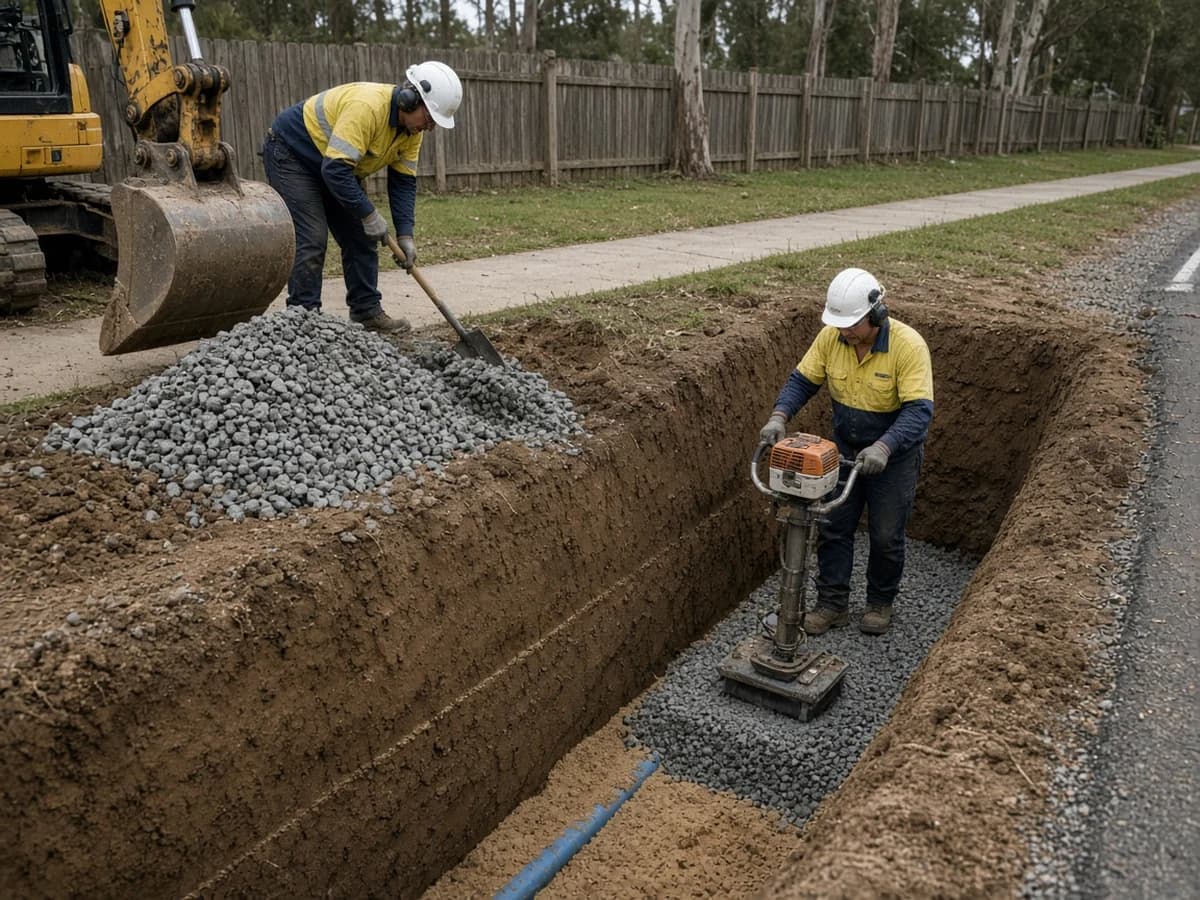
How should compaction be proven at each lift?
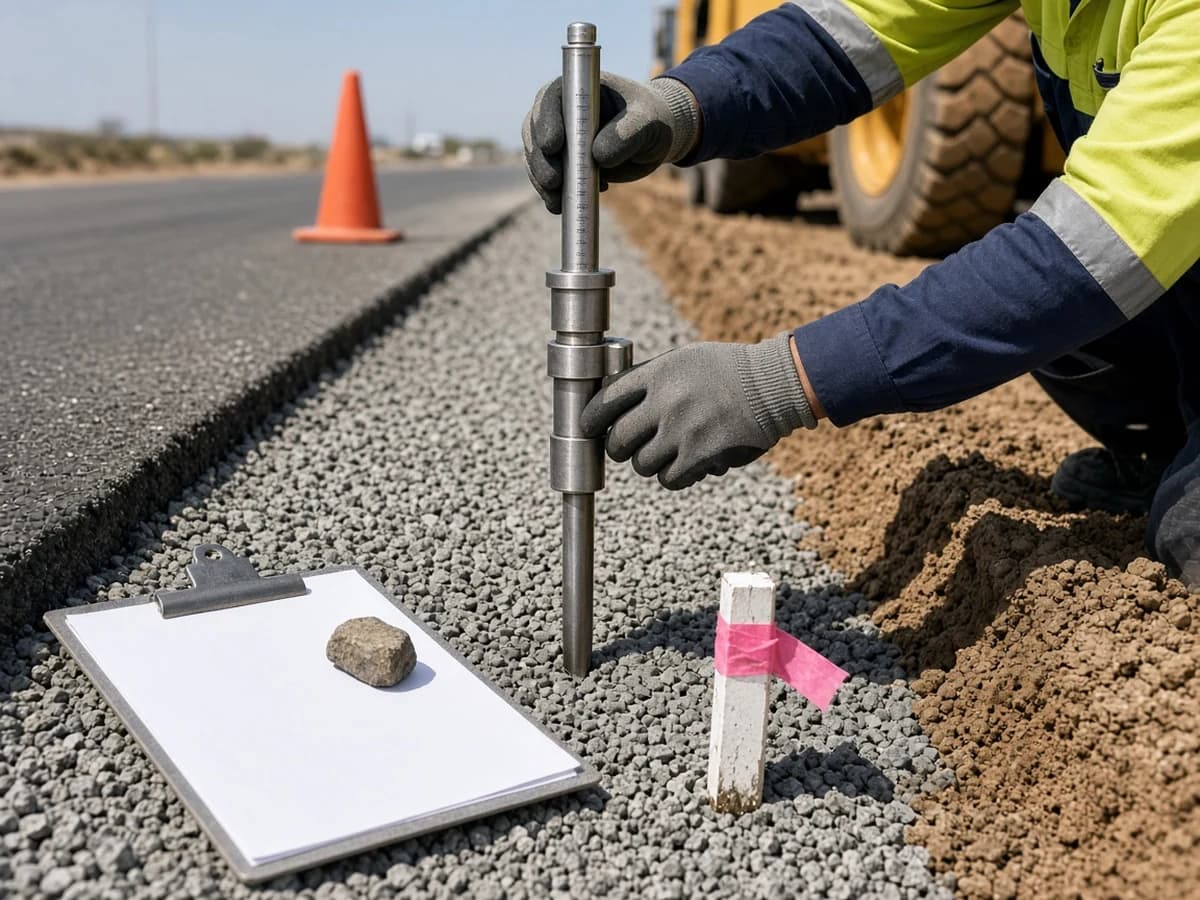
Ask for test evidence tied to location, depth, and lift—not a single test at the surface. The specification should name the test method, the target density or penetration result, and how often tests are taken along the trench. Density testing to AS 1289 methods is common on road and hardstand reinstatement, with penetrometer checks often used between density tests or in narrow trenches.
Treat a failed test as a hold, not a note. Remove or rework the affected lift, retest, and record both results. Placing the next layer over a failed lift and hoping the surface course will bridge it is how settlement gets built in.
Record each test by chainage or a marked location, with the lift depth, material, and date. A test report that cannot be matched to a position along the trench is hard to rely on if the surface later moves. Photograph each tested lift with a reference peg or marker so the image can be traced to the report.
Where trench lines cross drainage structures and kerbs
Crossings concentrate risk because two assets share the same ground. Where a trench passes over or beside a drainage barrel, keep the cover depth and bedding the drainage designer specified, and do not undermine headwalls or end structures while the trench is open. The guide to culvert installation NSW explains the cover and end-structure details that reinstatement must preserve.
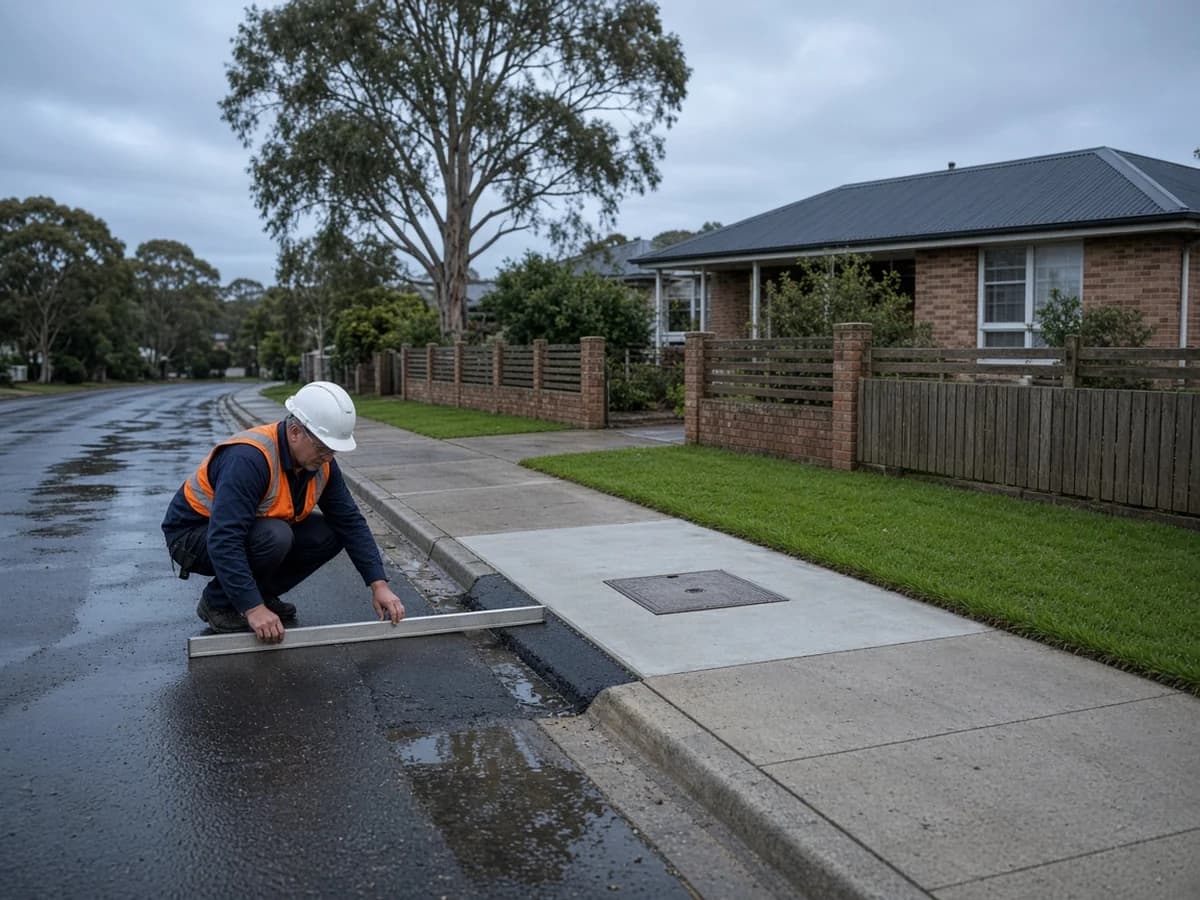
Kerb and gutter crossings need level control as much as compaction. Reset kerb sections to the original line and grade so water still reaches the next inlet, and reinstate the gutter invert without a lip that traps flow. Pit lids and surrounds inside the trench line should finish flush with the restored surface.
When a corridor combines new trenches, drainage, and crossings, brief one civil drainage contractor to own the interfaces. Splitting backfill and drainage between separate crews is where crossing levels most often drift.
Surface reinstatement checklist by surface type
Use this checklist at the surface hold point, before traffic or the public returns. Confirm each item against the owner's specification; the points below are common expectations, not a substitute for it.
- Asphalt road or hardstand: saw-cut straight, square edges beyond the disturbed zone, apply a bond coat to the cut faces, match the existing layer depths, compact each layer, and seal the joints.
- Concrete footpath or driveway: replace full bays to the nearest existing joints rather than patching, match the thickness and finish, and cure before reopening.
- Kerb and gutter: restore line and grade so water reaches the next inlet without ponding against the new section.
- Unsealed road or track: reinstate with matching compacted gravel or crushed rock, shaped to shed water off the trench line.
- Grass verge: replace topsoil, re-turf or seed, and finish slightly below adjoining hard edges so water does not pond on paths.
- Line marking, signs, and pit lids: reinstate markings and road furniture, and set lids flush with the finished surface.
Settlement checks through the defects period
A trench that looks perfect on the day it reopens can still move. Settlement usually shows first after heavy rain or the first weeks of traffic, as a dip along the trench line, cracking at the saw-cut joint, or a footpath bay that rocks. Plan inspections for those moments rather than waiting for the end of the defects period.
Check the reinstatement with the agreed inspection method and record movement or open joints by location. Compare the findings with compaction, material and surface records; a passed or missing test alone does not establish the cause of settlement. Agree any further investigation and repair with the asset owner.
Keep a defects register for the corridor with the location, likely cause, agreed repair, and the date it was verified. Where temporary surfaces were used, record when each was replaced and who inspected it. Confirm the length of the defects period and the repair responsibility in the contract, not after the first complaint.
Records to request and how to brief NEXTGEN on reinstatement
At handover, ask for a reinstatement record set that a road or asset owner could audit: permits and consent conditions, the specification used, compaction results by location and lift, surface layer records, photos of each hold point, temporary-to-permanent changeover dates, and the defects register. Where a record is missing, say so and agree how the work will be verified.
To brief NEXTGEN, send the trench alignment, the surfaces it crosses, any owner specifications or permit conditions you already hold, the expected staging, and who is responsible for permanent restoration. The NEXTGEN delivery FAQs explain how inquiries are routed, and the project inquiry form is the place to describe the corridor. NEXTGEN will confirm scope fit, testing arrangements, and availability against the actual project requirements.