

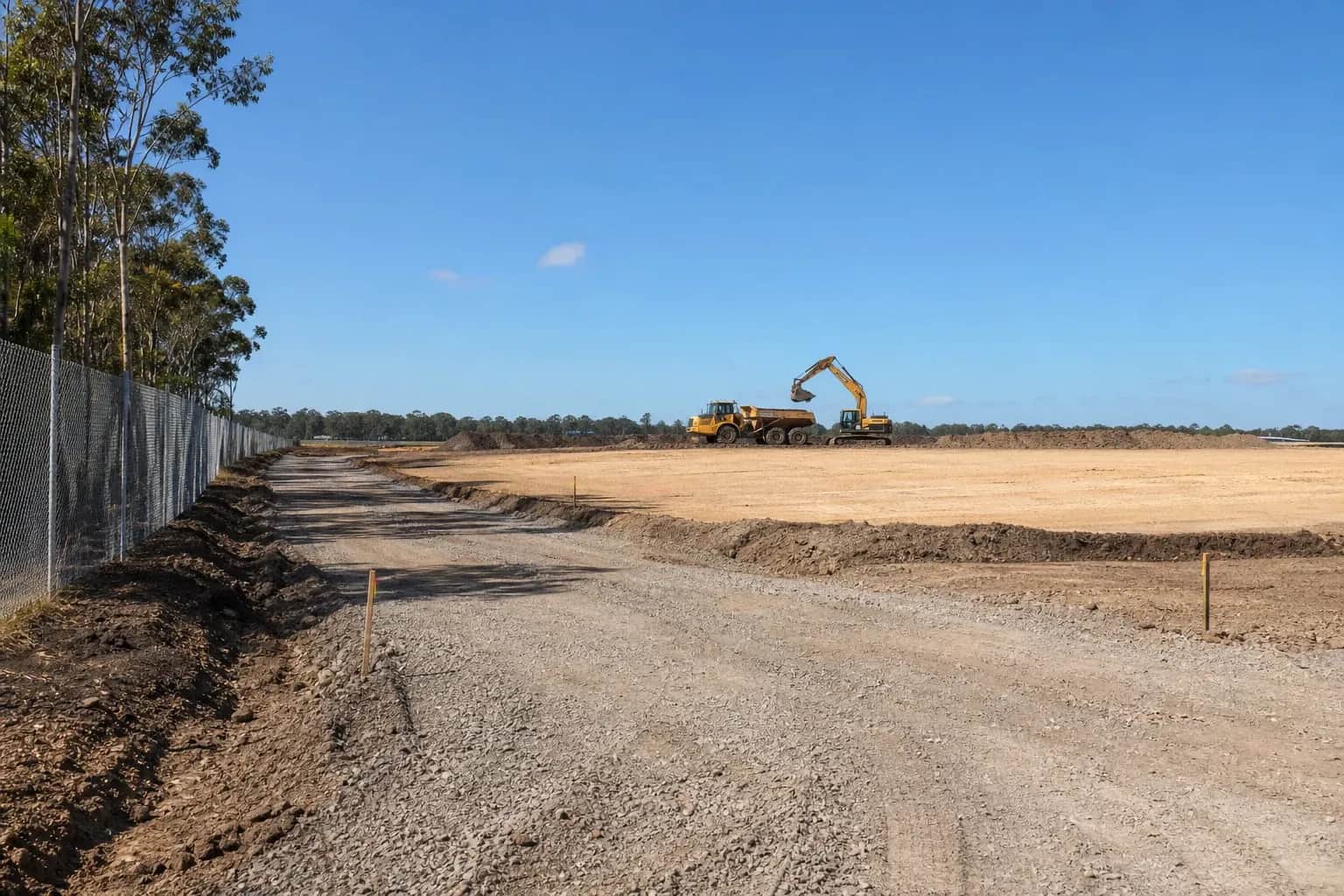
What an industrial site development contractor NSW must settle before builders mobilise
Appoint an industrial site development contractor NSW early enough that civil scope is closed before building, warehouse, or plant packages start. Industrial lots fail when earthworks, drains, and pads are still provisional while steel or slabs are already booked.
Before construction means more than a rough grade. It means surveyed formation, proven compaction, named drainage and utilities NSW corridors, trafficable access for heavy vehicles, and civil handover documentation the following trades can trust.
NEXTGEN frames these packages through its civil infrastructure division so industrial enabling works stay under one accountable staging plan—not a stack of disconnected dig and drain quotes. Airport-adjacent precinct lots should also read Western Sydney Aerotropolis civil works for roads, utilities, and enabling-package holds.
Industrial loads change earthworks contractor NSW assumptions
An earthworks contractor NSW package on an industrial lot must design for tippers, cranes, and later forklift or B-double cycles—not light residential traffic. Cut-fill, temporary haul, and soft-spot treatment should match hardstand and pavement design loads from day one.
Name weather holds and which benches stay open for drainage crews. Formation that looks finished from the gate but ponds overnight is not ready for warehouse pads or yard pavement.
For bulk versus detailed excavation language, use earthworks contractor NSW: bulk, detailed and site preparation, then upgrade vehicle and pad assumptions to industrial use.
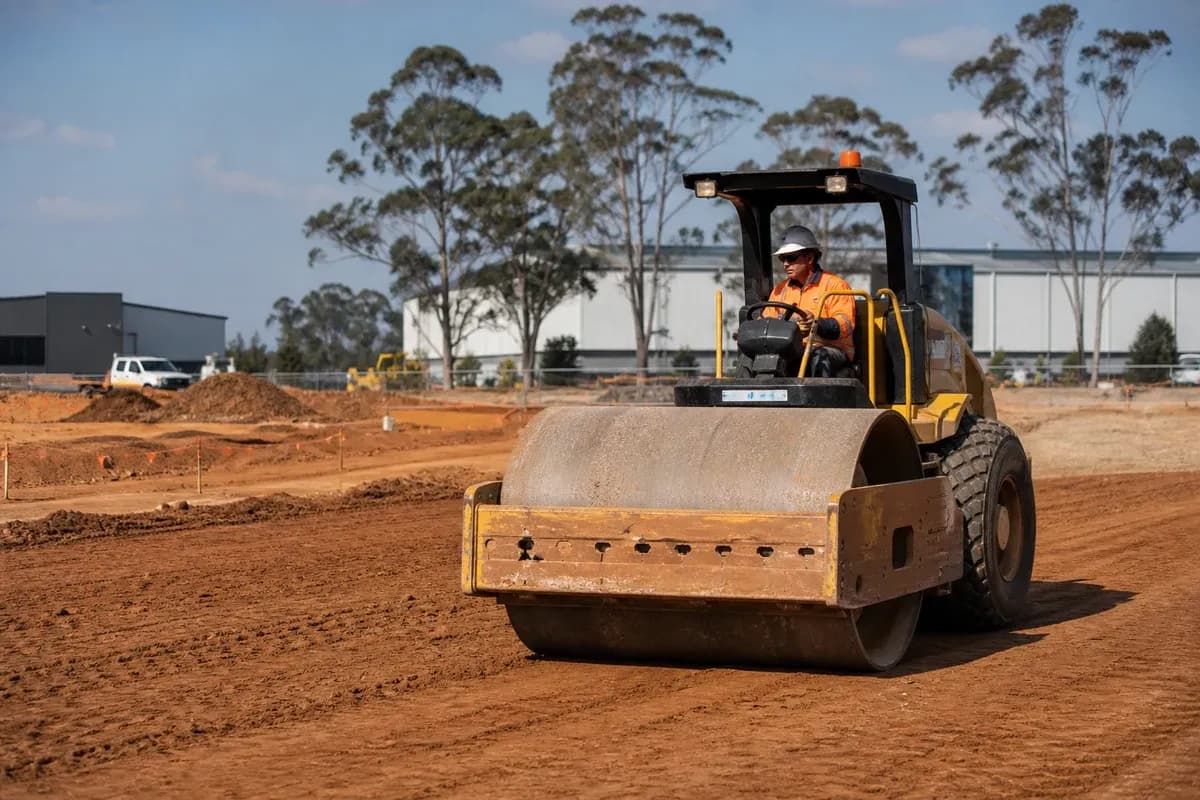
Civil site preparation NSW for warehouses, yards, and hardstands
Civil site preparation NSW on industrial sites is the readiness layer: final trim, density and moisture proof, temporary access that will not destroy the pad, and a surface builders or pavement crews can start on without first fixing soft patches.
Separate temporary construction tracks from permanent yard entries when loads differ. Many industrial programmes burn time when haul traffic ruins the same surface needed for slab or pavement delivery later.
Where foundations, retaining, or hardstand structure sit inside the enabling package, align holds with structural civil works NSW so pad proof is not treated as an afterthought after bulk dig.
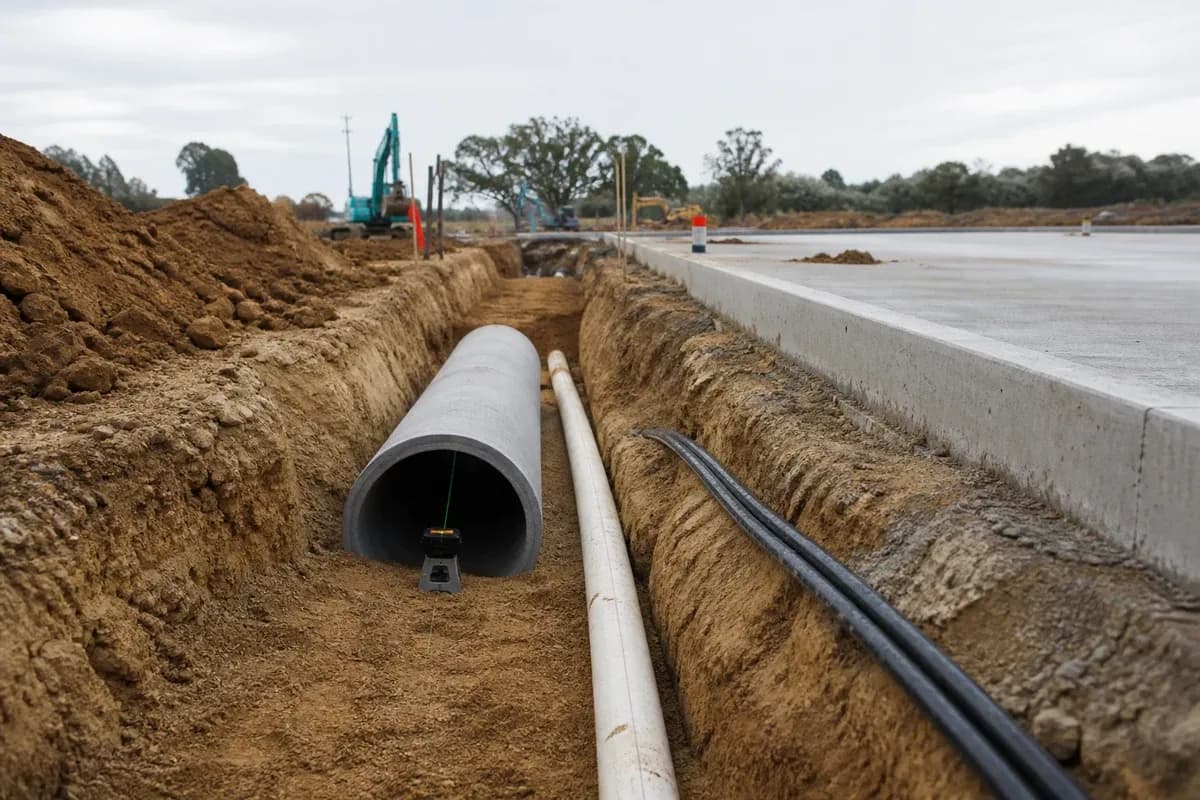
Drainage and utilities NSW before pavements and slabs close options
Drainage and utilities NSW corridors must be locked before industrial pavements and building slabs sterilise trench routes. Pit inverts, temporary diversions, and service clearances decide whether the yard stays dry after the first wet week of operations.
Require a single interface drawing for stormwater, water, sewer, power, and communications relative to hardstand edges and gate geometry. Orphan interfaces at kerbs and crossings are a leading cause of incomplete industrial civil packages.
Corridor sequencing before pavements is covered in service corridors for industrial sites; apply those gates when your industrial site development contractor NSW owns both trenches and formation.
Scope map owners should demand before construction contracts are let
Ask the industrial site development contractor NSW to restate inclusions and exclusions in plain language: clearing, bulk and detailed earthworks, civil site preparation NSW holds, drainage and utilities NSW, temporary works, and pavement or hardstand interfaces.
List design vehicle assumptions, neighbour and public-road constraints, contamination unknowns, and who owns soft-spot treatment when ground differs from tender information. Silence on those lines becomes variation noise after mobilisation.
Cross-check appointment habits in what project owners should look for in a NSW civil contractor and browse interface-heavy examples in the project showcase before you lock the industrial enabling package.
Civil handover documentation that lets construction start cleanly
Civil handover documentation for industrial enabling works should include as-built levels, compaction and testing records, drainage and utility as-builts, photographic evidence of key interfaces, and an outstanding-works register with ownership.
Weak handover forces builders to probe soft spots again or delay slabs while someone searches for a missing ITP. Strong handover makes day-one construction decisions faster because evidence already exists.
For record discipline at practical completion, align expectations with why ITPs matter at civil handover and assurance themes in the delivery FAQ.
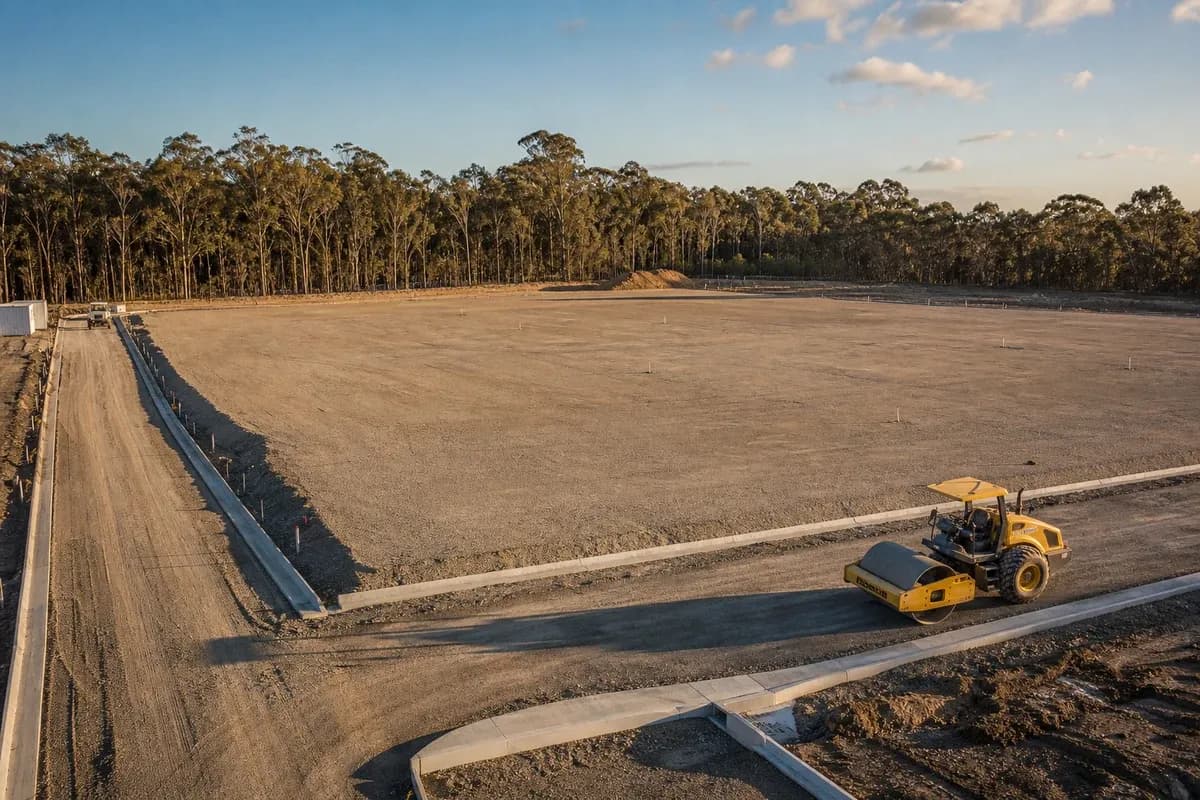
Pre-construction checklist for industrial civil scope
Use this gate before building contracts mobilise:
Earthworks contractor NSW formation criteria match industrial hardstand and pavement loads.
Civil site preparation NSW density, moisture, and finish holds are signed.
Drainage and utilities NSW corridors are complete or clearly outstanding with ownership.
Civil handover documentation is assembled for the same chainages as the drawings.
When the package is ready for review, contact NEXTGEN with drawings, geotech, design vehicles, and programme drivers so an industrial site development contractor NSW scope can be checked before construction starts.